10 Famous Lakes in Gilgit-Baltistan and How to Reach Them
From Attabad and the Kachura lakes to Sheosar, Rush and Karambar: altitude, access, best months and how to fit them into one trip.
Which are the most famous lakes in Gilgit-Baltistan? The ten best known are Attabad and Borith in Hunza, Upper Kachura, Shangrila and Satpara around Skardu, Sheosar on the Deosai Plains, Rama below Nanga Parbat, the Naltar lakes near Gilgit, and the two high trekking lakes, Rush (4,694 m) and Karambar (4,272 m). Six of them you can drive to. The other four need a jeep track, a walk or a proper trek.
Gilgit-Baltistan has hundreds of lakes, from roadside pools to glacier tarns that only a handful of trekkers see each year. This list sticks to the ten that people actually search for and travel to, ordered roughly from easiest to hardest to reach. For each one you get the altitude, where it is, how you get there and when it is worth going. We run trips to all of them, so the access times below are what our drivers and guides work with, not brochure figures.
The 10 lakes at a glance
| Lake | Altitude | Area | Access | Best months |
|---|---|---|---|---|
| Attabad Lake | about 2,400 m | Gojal, Hunza | On the Karakoram Highway | May to October |
| Upper Kachura Lake | about 2,500 m | Skardu | 30 to 45 min drive, short steep walk | June to October |
| Shangrila (Lower Kachura) | about 2,500 m | Skardu | 30 to 45 min drive | April to October |
| Satpara Lake | about 2,600 m | Skardu | 20 to 30 min drive | May to October |
| Borith Lake | about 2,600 m | Gulmit, Gojal | 2 km road from Hussaini | May to October |
| Sheosar Lake | about 4,142 m | Deosai Plains | 3 to 4 h jeep from Skardu | Mid June to mid September |
| Naltar lakes | about 3,100 to 3,250 m | Naltar, Gilgit | 2 h jeep, then about 1 h track | June to September |
| Rama Lake | about 3,500 m | Astore | 1 h jeep, then 1 to 2 h walk | June to September |
| Karambar Lake | 4,272 m | Broghil / Ishkoman | 2 days' trek | July to September |
| Rush Lake | 4,694 m | Nagar | 3 to 4 days' trek | July to September |
1. Attabad Lake, Hunza
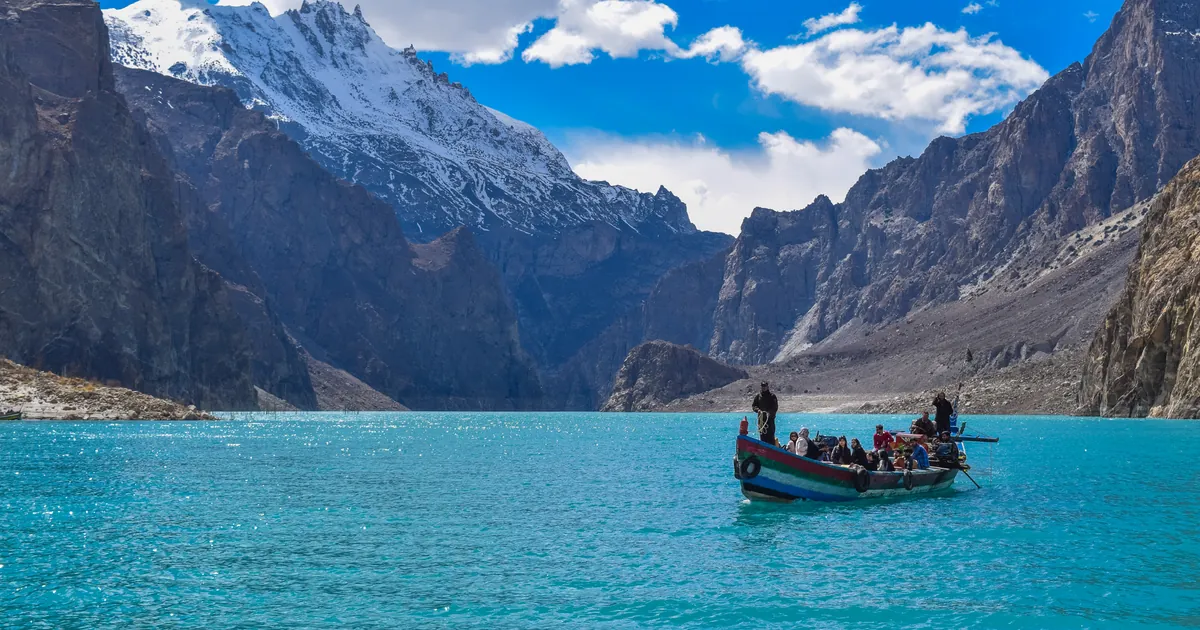
Attabad is the lake everyone has seen on their phone before they arrive. It did not exist before 4 January 2010, when a landslide at Attabad village blocked the Hunza River, killed 20 people and drowned a stretch of the Karakoram Highway along with the villages upstream. The water backed up into a lake about 21 km long and up to 109 m deep, covering roughly 13.5 km², which makes Attabad the largest lake in Gilgit-Baltistan. For five years people and trucks crossed it by boat, until five tunnels (about 7 km in total) reopened the highway on 14 September 2015.
Today the road runs right along the shore, about 45 minutes north of Karimabad. The colour is the draw: a milky turquoise that is brightest from June to August, when glacier silt is suspended in the water. You can take a boat, hire a jet ski or just stop at one of the cafés near the tunnels. In some winters the lake freezes in December and January. Our Attabad Lake guide covers boating prices, viewpoints and where to stay.
2. Upper Kachura Lake, Skardu
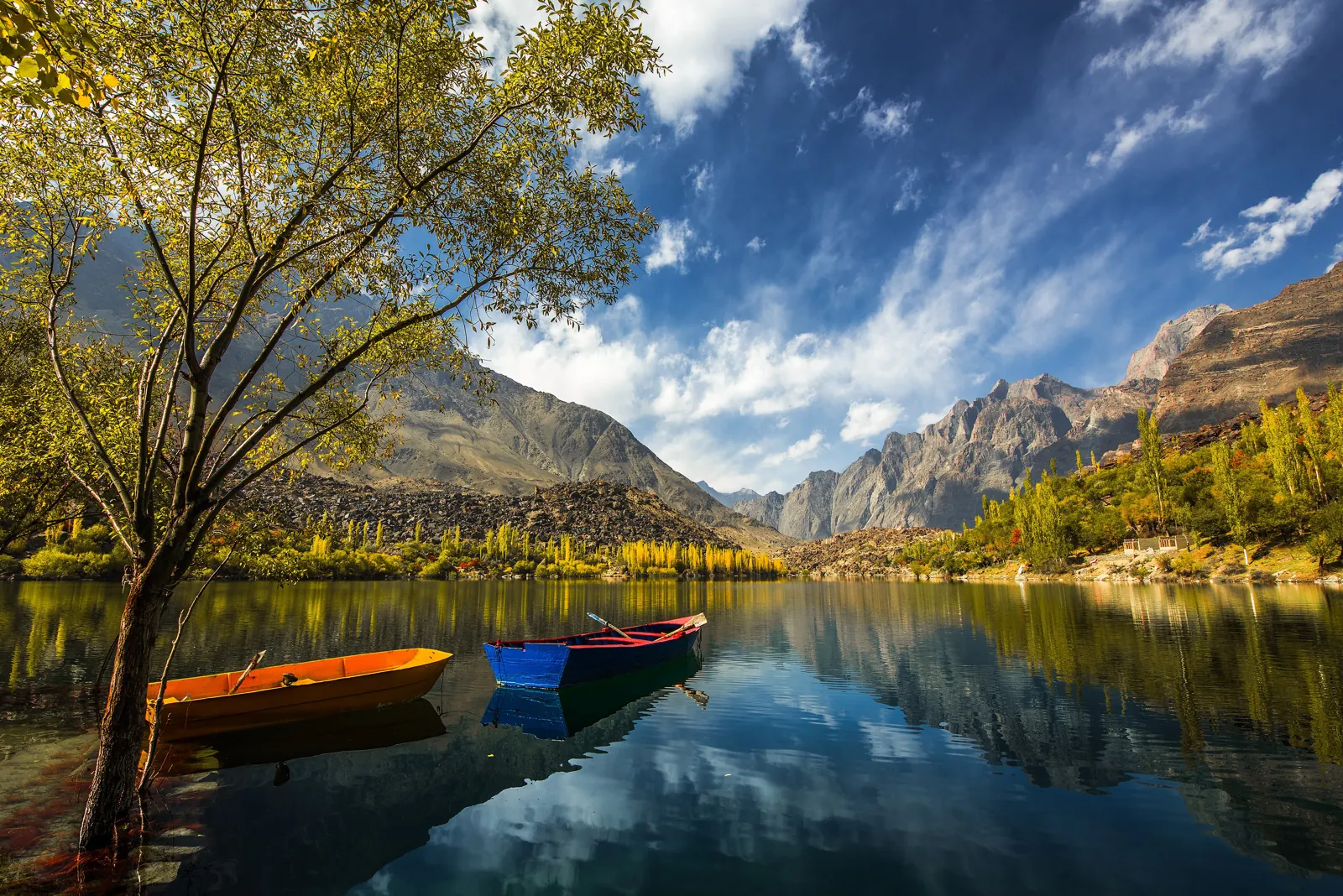
Upper Kachura is the Skardu lake people mean when they say "the deep blue one". It sits at about 2,500 m, roughly 25 to 30 km from Skardu town, a drive of 30 to 45 minutes. From the road a short, steep path drops down to the water through apricot trees, and the walk back up is the only real effort involved.
The lake is about 70 m deep, clear and very cold, with the Indus flowing past below it. Local boatmen row visitors out, and the lake is known for trout fishing. In winter the surface freezes solid. It is quietest early in the morning, before the day trippers from Skardu arrive.
3. Shangrila Lake (Lower Kachura), Skardu
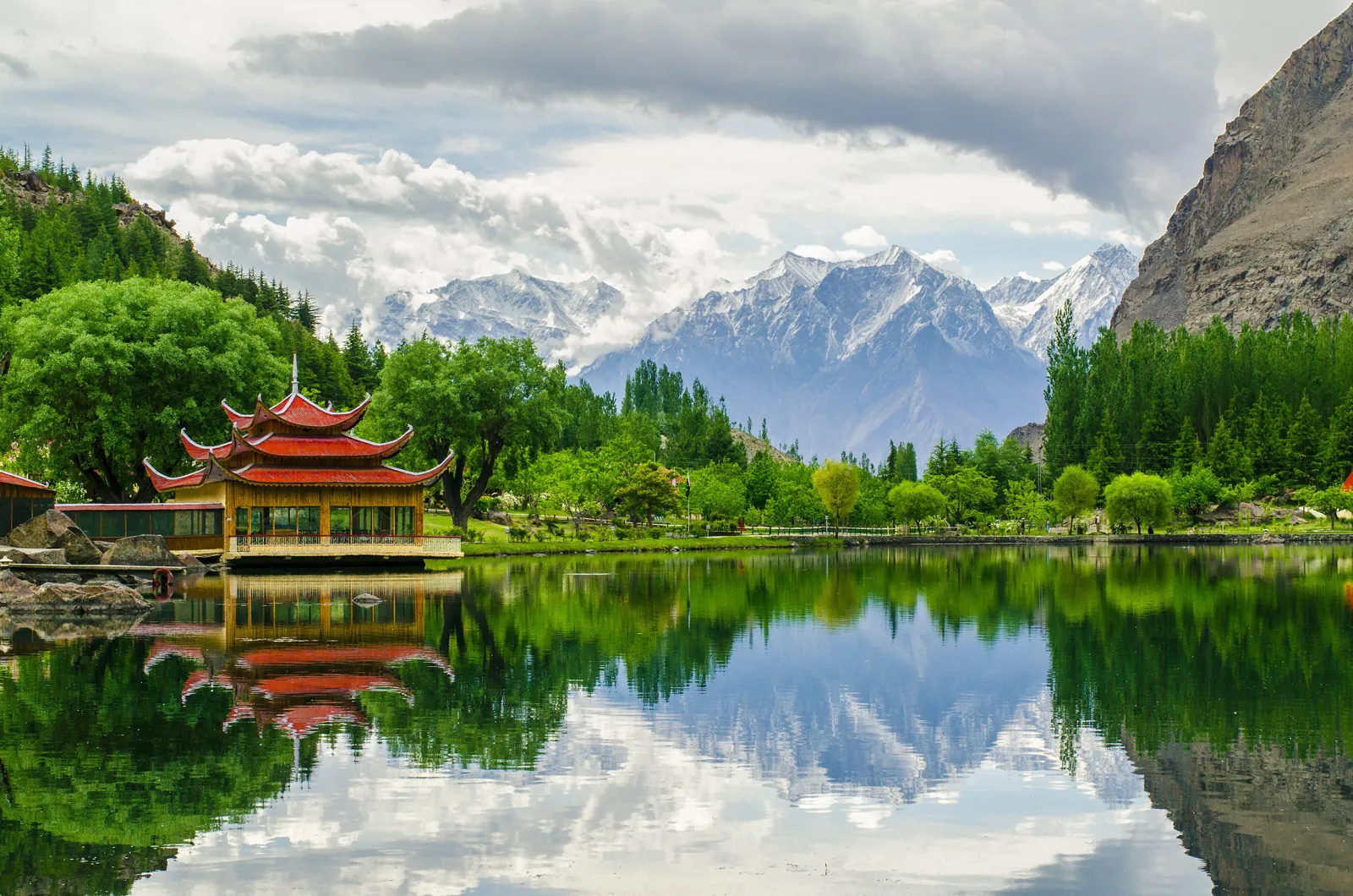
A few minutes below Upper Kachura is Lower Kachura, better known as Shangrila after the resort built around it. The Shangrila Resort opened in 1983 and was the first resort in Skardu. Its founder, Brigadier Aslam Khan, had been the first commander of the Northern Scouts. Its odd landmark is a restaurant built inside the fuselage of a crashed aircraft. The pagoda-roofed buildings, the willows and the heart-shaped lake make it the most photographed spot near Skardu.
It is a resort lake rather than a wild one, so expect neat lawns, paddle boats and a lot of visitors in summer. Since the resort controls the grounds, non-guests may be charged an entry fee. If you want to stay right on the water, this is the place. Shangrila and Upper Kachura fit easily into one morning, and most Skardu itineraries do both.
4. Satpara (Sadpara) Lake, Skardu
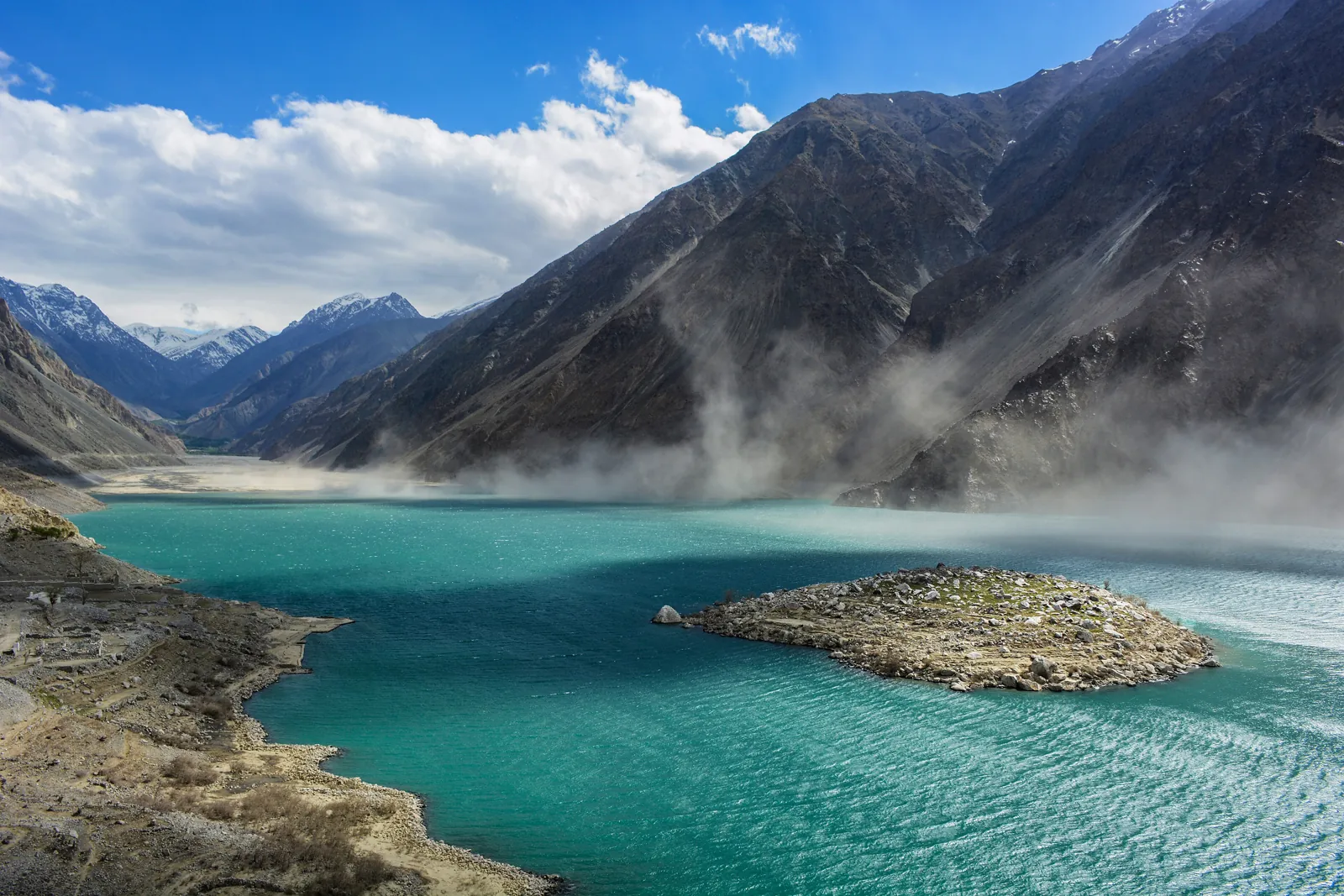
Satpara, also spelled Sadpara, is the closest lake to Skardu: about 8 to 9 km south of town, a 20 to 30 minute drive up the road towards Deosai. It sits at about 2,600 m and supplies Skardu with water. The Satpara Dam was begun in 2003 and was fully working by 2013, and it raised the lake and added a small hydropower plant.
The water is a deep green blue below bare brown mountains, and there is a small island you can reach by boat. On the way up you pass the Manthal Buddha Rock, a large carved rock about 3 km from town that dates from roughly the 8th to 10th century. Satpara is also the natural first stop on the drive to the Deosai Plains, and a good place to spend an afternoon acclimatising before going higher.
5. Borith Lake, Gulmit
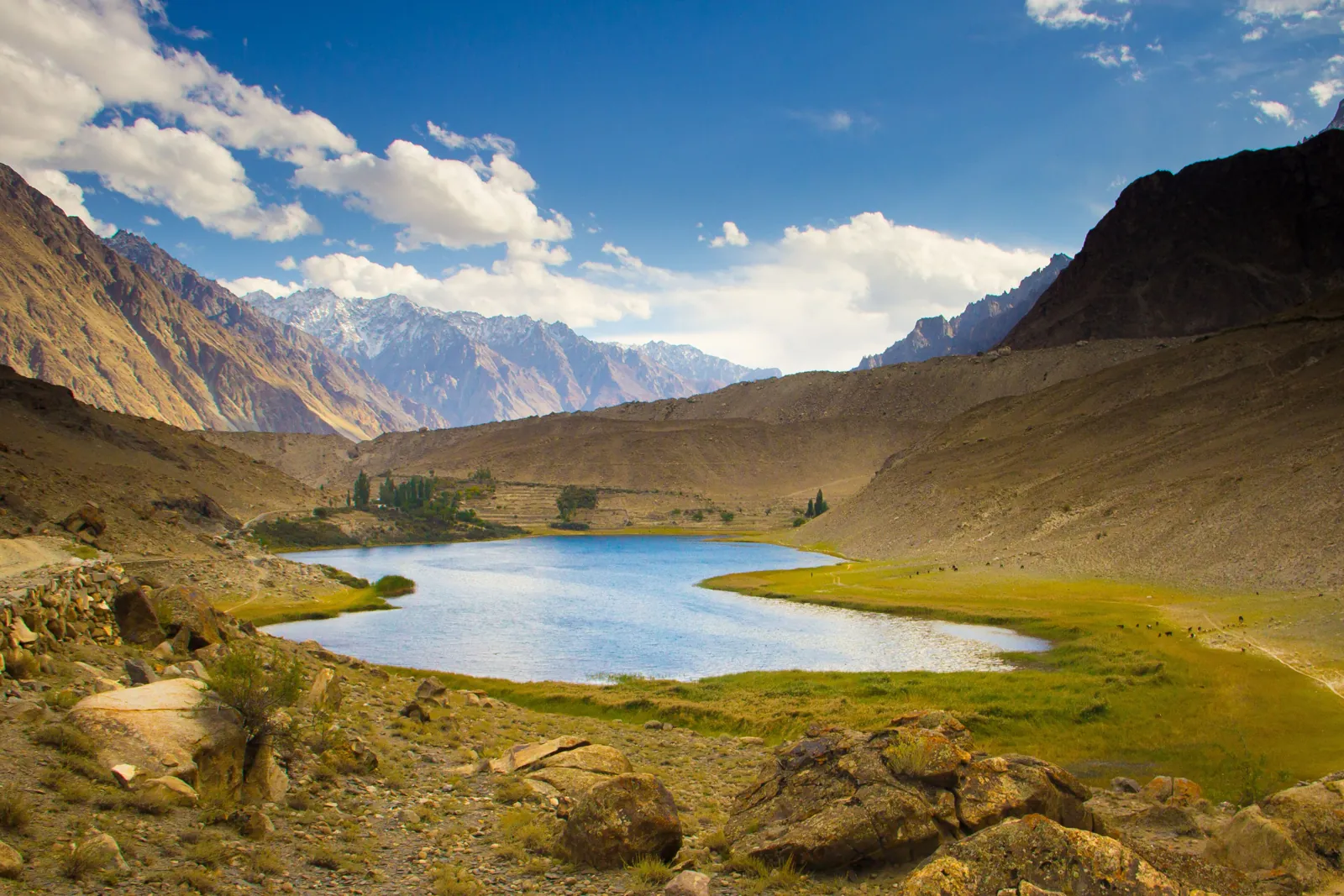
Borith is the quiet alternative to Attabad, about 2 km above the Karakoram Highway near Gulmit in Gojal. A short road climbs from Hussaini village, or you can walk up from Gulmit in 2 to 3 hours past the snout of the Ghulkin Glacier. The lake sits at about 2,600 m, measures roughly 850 by 270 m, and is slightly saline.
That salinity is why birds like it. Borith is a stopover for migrating ducks from March to June and September to November, which makes it one of the few places in Hunza with real birdwatching. There is a small guesthouse by the water, and the Passu Cones fill the skyline to the north. It also makes a good base for the Patundas and Passu glacier walks.
6. Sheosar (Shausar) Lake, Deosai Plains
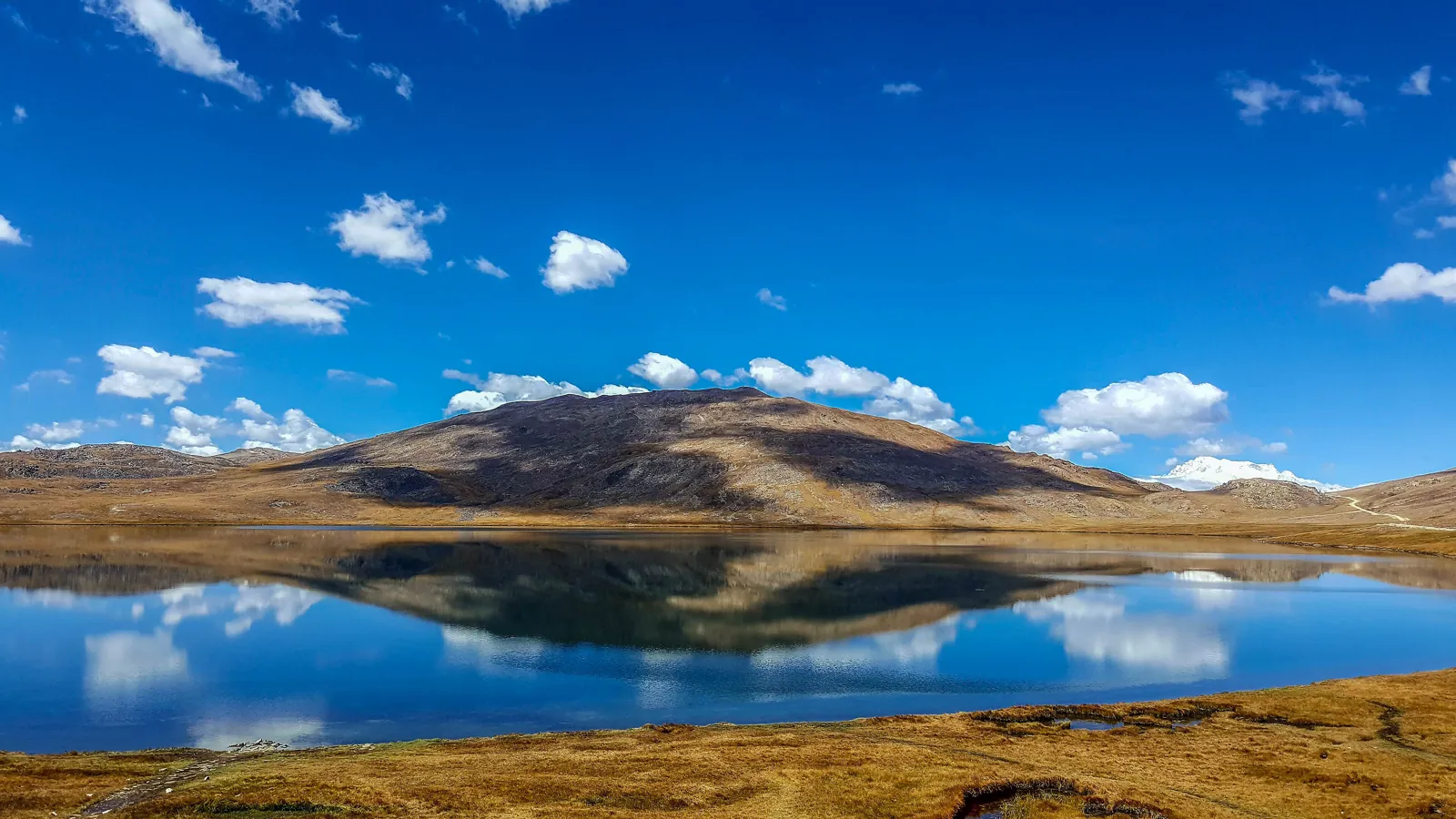
Sheosar, also written Shausar and often just called Deosai Lake, sits on the western edge of the Deosai Plains, one of the highest plateaus in the world, at about 4,142 m. Its name is usually explained as "blind lake" in Shina. It is about 2.3 km long and 1.8 km wide, and on a clear morning Nanga Parbat appears over the far shore.
Getting there takes 3 to 4 hours by jeep from Skardu across the plateau, or 2 to 3 hours from Astore via Chilim. Deosai is under snow from about November to May, and the road usually opens in mid June and closes by mid September. Camping beside the lake is one of the best nights in Gilgit-Baltistan. Bring warm layers, though, because it freezes at night even in August, and keep food sealed: this is Himalayan brown bear country. Read our Deosai National Park guide for the route, permits and camps.
7. Naltar lakes: Satrangi and Blue Lake, Gilgit
Naltar Valley, about 2 hours by jeep from Gilgit, has a chain of small lakes at about 3,100 to 3,250 m above the village of Naltar Bala. From the village a rough track of 12 to 13 km, about an hour by jeep, runs up through pine forest to the lakes. The best known is Satrangi, the "seven-coloured" lake, named for the bands of green and blue you see in its shallows. Above it are the smaller Blue (Pari) and Feroza lakes. Even the locals disagree on which name goes with which lake.
Naltar is also Pakistan's main ski area, with a Pakistan Air Force ski resort lower in the valley, so in winter the upper track is closed by snow. Go from June to September for open roads, wildflowers and reflections of the forest in still water. Our Naltar Valley guide has the jeep rates and where to stay.
8. Rama Lake, Astore
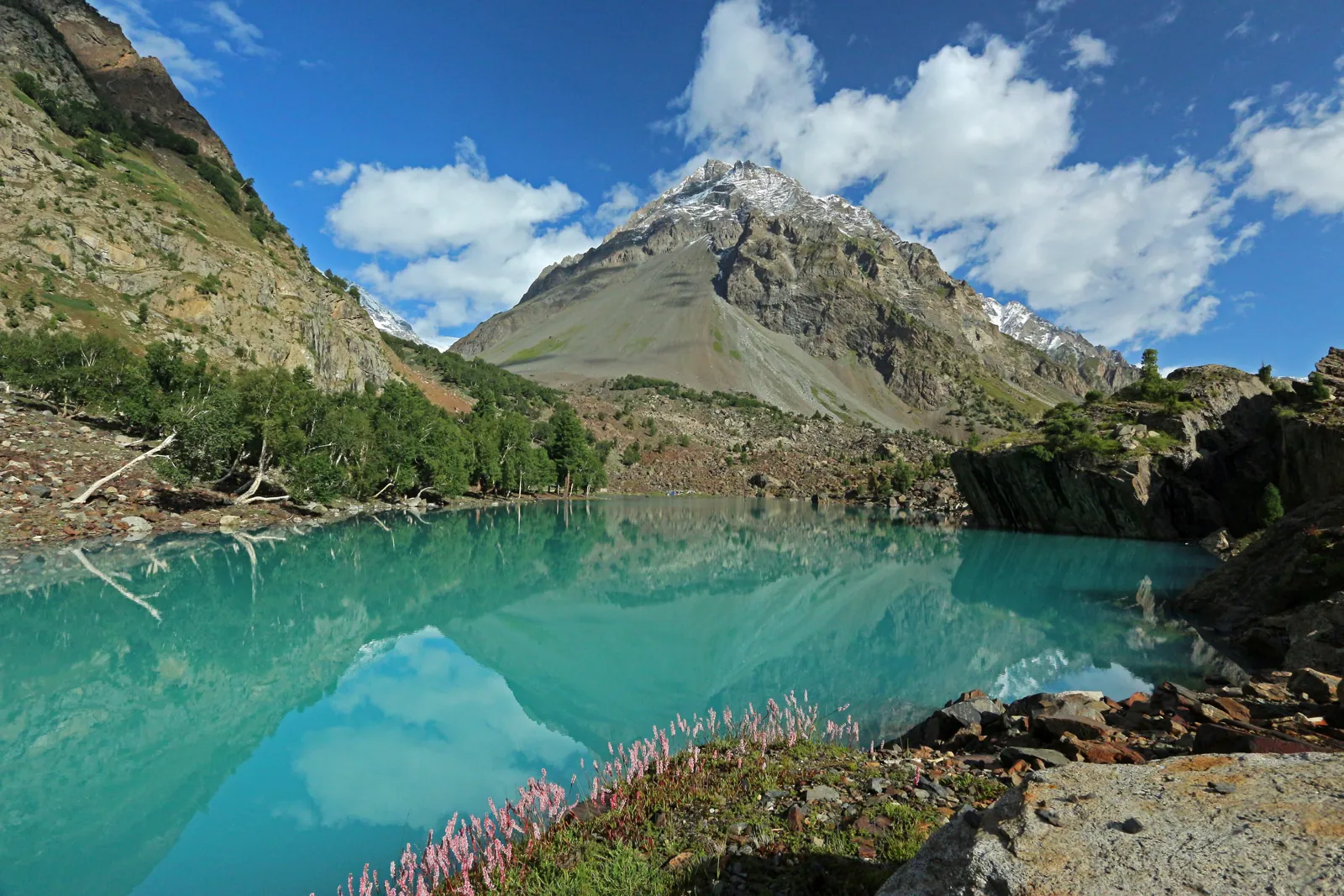
Rama Lake sits at about 3,500 m under the east face of Nanga Parbat, above the Astore Valley. The official tourism figure is about 25 km, an hour by jeep, from Astore town to Rama Meadow, a wide pine-fringed meadow with a rest house. From there a further 1 to 2 hours on foot (or a rough jeep track) brings you to the lake itself, fed by meltwater from the Sachen Glacier.
The valley is under snow for seven or eight months a year, so the season is short, from June to September. Rama is a good place to see Nanga Parbat without trekking to Fairy Meadows, and it combines well with Minimarg and the Deosai crossing. See our Astore Valley guide for the full route.
9. Karambar Lake, Broghil and Ishkoman
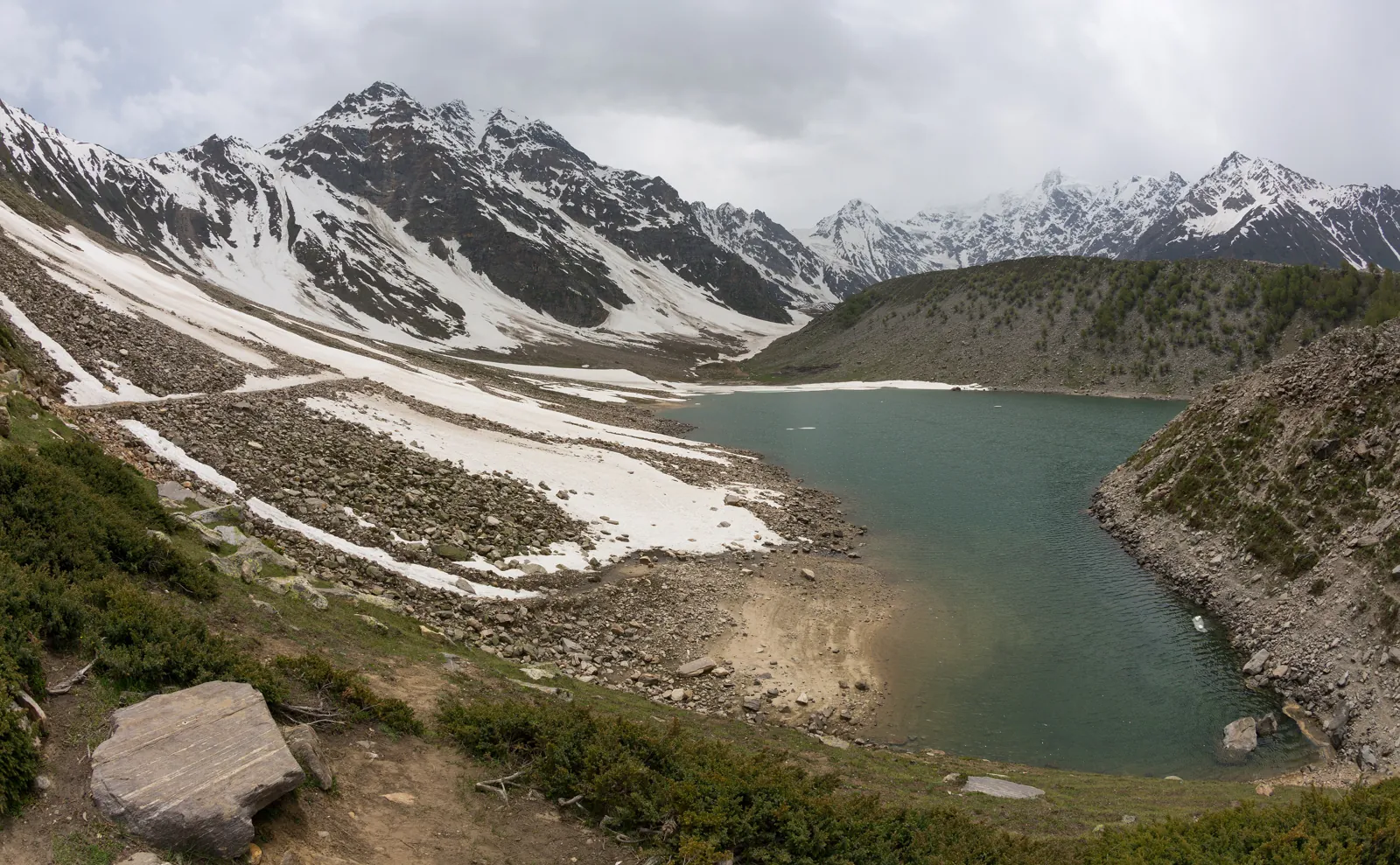
Karambar Lake lies at 4,272 m on the watershed between the Broghil Valley in Chitral and the Ishkoman Valley in Ghizer, right on the border of Gilgit-Baltistan. At about 2.6 km², it is the second-largest lake in northern Pakistan after Attabad, and its water is a striking blue against yellow grass and Wakhi summer pastures.
No road reaches it. The usual approach is from Chitral: a 7 to 9 hour jeep drive to Lashkargaz in Broghil, then about two days of trekking. The Ishkoman side, via Imit, is longer and harder. Chitral district needs a No Objection Certificate (NOC), and the trek is only practical from July to September, with August the safest bet. Our Karambar Lake trek guide has the day-by-day plan.
10. Rush Lake, Nagar
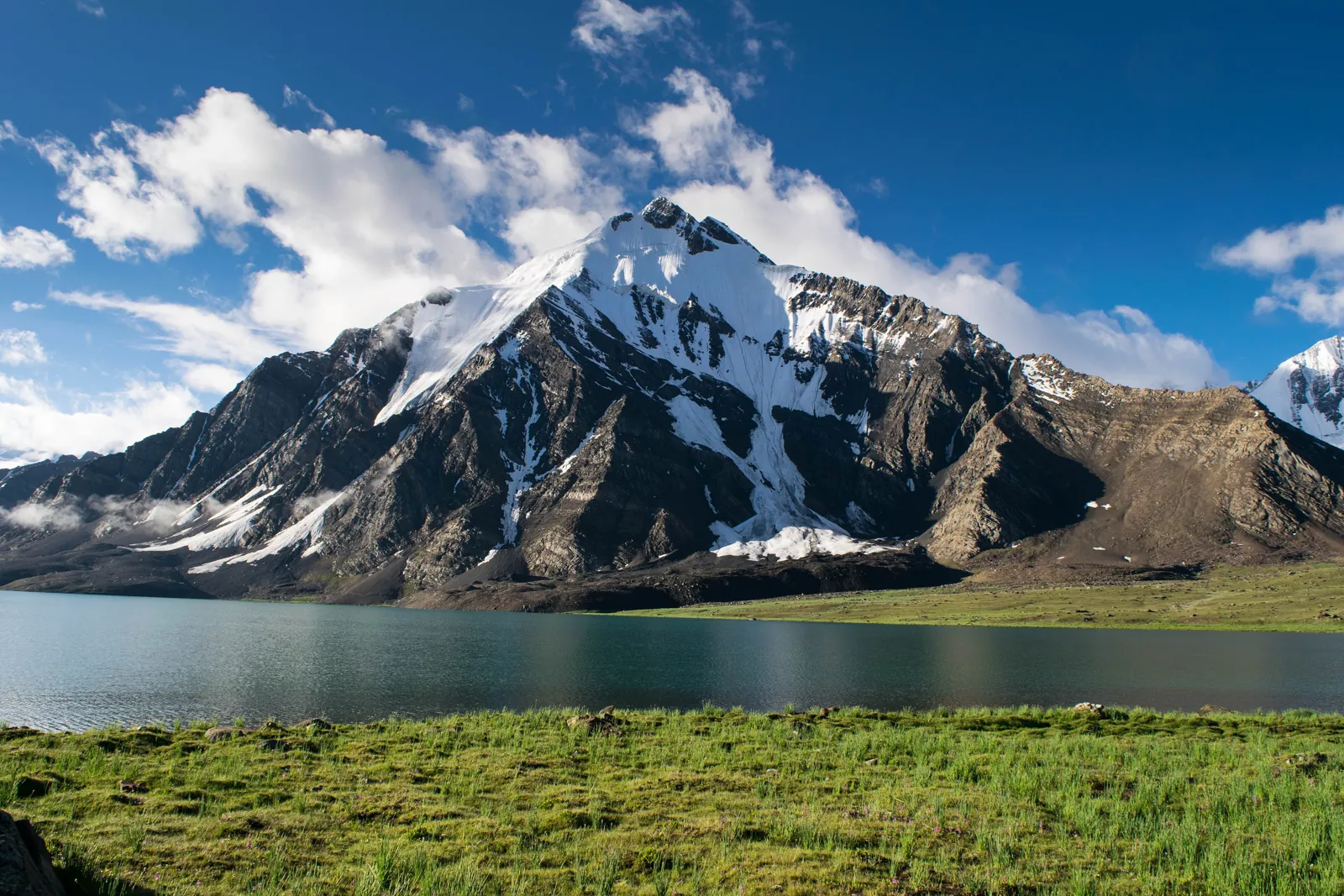
Rush Lake, at 4,694 m, is the highest lake on this list and the hardest to reach. It sits on a ridge above the Miar and Barpu glaciers in Nagar, with views of Spantik, Malubiting and Ultar Sar. It is often called the highest lake in Pakistan, but that is not quite right: Wikipedia's list puts Dakholi, Paristan and Shimshal lakes slightly higher. It is certainly the highest lake that trekkers regularly visit.
The trek starts at Hopar, a short jeep ride from Nagar, and climbs 3 to 4 days over moraine and glacier, so the round trip takes about a week. It is a serious high-altitude trek, best done from July to September with a guide and porters, and you need a few nights above 3,500 m to acclimatise properly. We run it as a guided trek: see the Rush Lake trek for dates, camps and price.
Seven more lakes worth the detour
- Katpana Lake (about 2,226 m), Skardu: a small lake beside Skardu airport at the edge of the Katpana cold desert, ten minutes from town, with glamping sites and sand dunes next to the water. See our Skardu cold desert guide.
- Rainbow Lake, Minimarg, Astore: the name usually given to the lake at Domel near Minimarg (2,844 m), green under cloud and turquoise in sun. Minimarg is close to the Line of Control, so every traveller needs written permission from the Deputy Commissioner in Astore, checked at Chilam. The road is open roughly late June to September.
- Phandar Lake (about 2,900 m), Ghizer: a quiet, trout-filled lake about 900 m long, three hours west of Gahkuch on the road to Shandur. See our Phandar Valley guide.
- Khalti Lake, Ghizer: a widening of the Ghizer River beside the road past Gupis, about 52 km from Gahkuch. It freezes hard in winter.
- Blind Lake (about 2,500 m), Shigar: no visible inlet or outlet, 25 to 30 km from Skardu on the Shigar road. Read the Blind Lake guide.
- Kutwal Lake (about 3,300 m), Haramosh: a jeep ride from Sassi, then a walk of one to two days. See the Kutwal Lake guide.
- Kacheli Lake (3,970 m), Minapin: about two hours above Rakaposhi Base Camp, with Rakaposhi reflected in it. See the Kacheli Lake trek.
Looking for Saiful Muluk, Lulusar or Dudipatsar? Those three are often listed with the northern lakes, but they are in the Kaghan Valley in Khyber Pakhtunkhwa, not in Gilgit-Baltistan. If you drive to Gilgit-Baltistan over the Babusar Pass in summer, Lulusar is right beside the road. See our Babusar Pass guide.
How many lakes are there in Gilgit-Baltistan?
Nobody has a single official count of every lake, but the glacier inventories give a sense of scale. Melting glaciers in the Hindu Kush, Karakoram and Himalaya have formed 3,044 glacial lakes across Gilgit-Baltistan and Khyber Pakhtunkhwa, according to the UNDP glacial flood programme. Of these, 33 to 36 are rated hazardous, because they could burst through their moraine dams and flood the villages below. Most are small tarns high on glaciers that no visitor ever sees. The famous lakes in this guide are a tiny fraction of them, picked because you can reach them and they are worth the trip.
For comparison, the largest lake in Pakistan is not in the mountains at all. It is Manchar Lake in Sindh, the country's largest natural freshwater lake, whose area swings with the monsoon from a few dozen to several hundred km². In Gilgit-Baltistan, Attabad (about 13.5 km²) is the largest, and Karambar (about 2.6 km²) is the next largest in the north.
Best time to visit the lakes of Gilgit-Baltistan
For the roadside lakes (Attabad, Borith, the Kachura lakes and Satpara), May to October is the season. June to August gives the brightest colours, and late September and October add autumn poplars and clearer air. The high lakes have a much shorter window. Sheosar opens with the Deosai road in mid June and closes by mid September, while Rama and Naltar are reliable from June to September. Rush and Karambar are really July to September only. In winter most of the lakes freeze, and the high ones cannot be reached at all.
Lakes by region, and how to combine them
The lakes fall into three clusters, which makes them easy to link on a single road trip.
Lakes in Skardu
Skardu has the most lakes within easy reach: Upper Kachura, Shangrila and Satpara are all within an hour of town, Katpana is beside the airport, and Blind Lake is on the way to Shigar. Add a day trip or an overnight camp at Sheosar on the Deosai Plains in summer. Our Skardu tours cover all of them in four to six days, and the best places to visit in Skardu guide has the rest of the valley.
Lakes in Hunza
In Hunza, Attabad and Borith are a few kilometres apart on the Karakoram Highway, so both fit into one afternoon from Karimabad or Gulmit. For something harder, Rush Lake starts from Nagar, across the river, and Kacheli Lake from Minapin.
Lakes near Gilgit and Astore
From Gilgit, Naltar is a day trip or an easy overnight, and Kutwal is reached through Haramosh. Rama is a side trip from Astore, which also gives you the western road onto Deosai in summer. A 10 to 12 day road trip can link Hunza and Skardu via Gilgit, or via Astore and Deosai, and take in seven or eight of these lakes without any trekking. For current road conditions, check the Gilgit-Baltistan Tourism Department before you go.
Frequently asked questions
What is the most famous lake in Gilgit-Baltistan?
Attabad Lake in Hunza is the most famous and most visited lake in Gilgit-Baltistan. It formed when a landslide blocked the Hunza River on 4 January 2010, and it is now about 21 km long and up to 109 m deep, with the Karakoram Highway running along its shore through five tunnels that opened in September 2015. Its milky turquoise colour, brightest from June to August, has made it the region's best known photograph. It is easy to reach: about 45 minutes north of Karimabad by road, with boats, jet skis and lakeside cafés. Around Skardu, Upper Kachura and Shangrila are the best known lakes, and Sheosar on the Deosai Plains is famous among campers. Attabad, though, is the one most travellers put on their list first, and it is on almost every Hunza itinerary we run.
Which is the largest lake in Gilgit-Baltistan?
Attabad Lake in Hunza is the largest lake in Gilgit-Baltistan, with an area of about 13.5 km². It is about 21 km long and up to 109 m deep, and it only formed in January 2010, when a landslide at Attabad village blocked the Hunza River. Karambar Lake on the Broghil and Ishkoman border is the next largest lake in northern Pakistan, at about 2.6 km². Sheosar Lake on the Deosai Plains, about 2.3 km long and 1.8 km wide, is another of the larger ones. The largest lake in Pakistan as a whole is not in the north at all. It is Manchar Lake in Sindh, the country's largest natural freshwater lake, whose area changes a great deal with the monsoon. So if someone asks for the biggest lake in the mountains, the answer is Attabad, which is also the easiest of the big lakes to visit, right on the Karakoram Highway.
How many lakes are there in Gilgit-Baltistan?
There is no single official count of every lake in Gilgit-Baltistan, but there are thousands. According to the UNDP glacial flood programme, melting glaciers in the Hindu Kush, Karakoram and Himalaya have created 3,044 glacial lakes across Gilgit-Baltistan and Khyber Pakhtunkhwa, and between 33 and 36 of them are rated hazardous because they could burst and flood villages downstream. Most of these are small tarns high on glaciers that visitors never see. Only a few dozen lakes are regularly visited, and the ten in this guide are the best known: Attabad, Upper Kachura, Shangrila, Satpara, Borith, Sheosar, the Naltar lakes, Rama, Karambar and Rush. Several more, including Phandar, Khalti, Katpana, Blind Lake, Kutwal, Kacheli and Rainbow Lake at Minimarg, are well worth a detour if you have the time.
Which is the highest lake in Gilgit-Baltistan?
Of the lakes that visitors regularly reach, Rush Lake in Nagar is the highest, at about 4,694 m. It sits above the Miar and Barpu glaciers and takes a trek of three to four days from Hopar, so the round trip is about a week. Rush Lake is often called the highest lake in Pakistan, but Wikipedia's list of Pakistani lakes puts a few remote lakes, including Dakholi, Paristan and Shimshal, slightly higher, so that claim is not quite accurate. Karambar Lake at 4,272 m and Sheosar Lake on the Deosai Plains at about 4,142 m are the next highest on this list. All three are only accessible in summer. Rush and Karambar are realistically July to September, while Sheosar follows the Deosai road, which usually opens in mid June and closes by mid September. Anyone going to Rush Lake should plan for proper acclimatisation above 3,500 m.
Which lakes in Gilgit-Baltistan can you reach by car?
Six of the ten lakes in this guide can be reached by car or jeep without a long walk. Attabad Lake sits right on the Karakoram Highway in Hunza, and Borith Lake is a 2 km road up from Hussaini near Gulmit. Around Skardu, Satpara Lake is a 20 to 30 minute drive, and Upper Kachura and Shangrila are 30 to 45 minutes away, with only a short steep walk down to Upper Kachura. Sheosar Lake on the Deosai Plains is reached by jeep in 3 to 4 hours from Skardu, but only between about mid June and mid September. Naltar and Rama need a jeep for the last stretch and then a short walk or rough track. Karambar and Rush Lake have no road at all: Karambar is about two days' trek from Broghil and Rush Lake three to four days from Hopar.
When is the best time to visit the lakes in Gilgit-Baltistan?
The best time for most lakes in Gilgit-Baltistan is June to September, with May and October also good for the lower, roadside lakes. Attabad, Borith, Satpara and the Kachura lakes are open from about May to October, and their colours are brightest from June to August when glacier silt is in the water. Late September and October bring yellow poplars, clear skies and fewer crowds. The high lakes have a shorter season. Sheosar depends on the Deosai road, which usually opens in mid June and closes by mid September. Rama and the Naltar lakes are best from June to September. Rush Lake and Karambar Lake are only practical from July to September because of snow on the approach. In winter most lakes freeze, and some, such as Attabad, can freeze over in December and January.
Is Attabad Lake or Upper Kachura Lake better to visit?
They are different trips, and most people who have time visit both. Attabad Lake in Hunza is large, turquoise and right on the Karakoram Highway, with boats, jet skis and cafés, so it suits a quick, lively stop on a Hunza road trip. It is about 21 km long and at its best from June to August. Upper Kachura, near Skardu, is much smaller and deeper, at about 70 m, with dark blue water among apricot trees and a short steep path down from the road. It is calmer, better for photography early in the morning, and you can combine it with Shangrila Lake next door in a single morning. If you are only going to Hunza, choose Attabad. If you are in Skardu, Upper Kachura is the one not to miss. A 10 to 12 day route through Hunza and Skardu covers both.
Can you swim or go boating in the lakes of Gilgit-Baltistan?
Boating is easy to arrange on the main lakes, but swimming is not a good idea. Attabad Lake has motorboats and jet skis for hire near the tunnels, and local boatmen row visitors on Upper Kachura, Shangrila and Satpara, where you can also reach the small island by boat. The water in all of these lakes is glacier-fed and very cold even in July, and Attabad is up to 109 m deep with no lifeguards, so swimming carries a real risk of cold shock. Life jackets should be worn on every boat, and it is fair to ask for one before you get in. Fishing is another option: Upper Kachura and Phandar Lake are known for trout. On the high lakes, such as Sheosar, Rush and Karambar, there are no boats at all, and the attraction is camping on the shore and the mountain views.
Do you need a permit to visit the lakes in Gilgit-Baltistan?
Most of the lakes in Gilgit-Baltistan need no special permit for foreign tourists beyond a valid Pakistan visa. Attabad, Borith, the Kachura lakes, Satpara, Naltar and Rama are all in open areas, though police may record your passport details at checkpoints on the Karakoram Highway and around Skardu. Deosai National Park, home of Sheosar Lake, charges an entry fee at the park checkposts. Rush Lake is in an open trekking zone, but going with a registered guide is strongly advised. Karambar Lake is the main exception: the usual approach is from Broghil in Chitral district, which needs a No Objection Certificate. Rainbow Lake at Minimarg in Astore also needs written permission from the Deputy Commissioner, checked at Chilam. Shangrila Lake is inside a private resort, which may charge non-guests an entry fee. Check the current rules before you go, or let your tour operator arrange the paperwork.
Ready for Your Next Adventure?
Join our community of explorers and discover the journey of a lifetime. Our expert team is ready to help you plan your perfect expedition.