Naltar Valley Guide: Lakes, Weather, Road & Hotels
How to reach Naltar from Gilgit on the new expressway, what a jeep to Satrangi Lake costs, the lakes and their altitudes, weather month by month, skiing and where to stay.
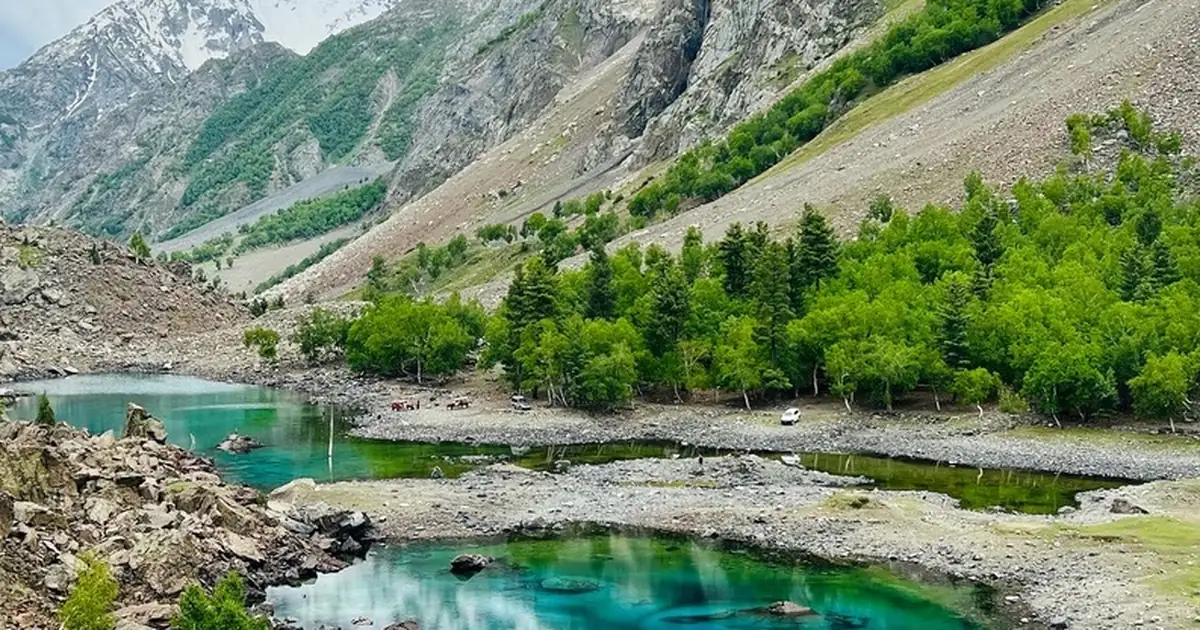
Naltar Valley is a pine-forested valley in Gilgit District, Gilgit-Baltistan, 34 km from Gilgit by road. The main village, Naltar Bala, sits at about 2,900 m, and a rough 4×4 track climbs another 12 to 13 km to the Naltar (Bashkiri) Lakes at 3,050 to 3,150 m, including the much-photographed Satrangi Lake. Go May to October for the lakes, or January to March for snow and skiing.
Naltar is the easiest proper mountain valley to reach from Gilgit, and it feels nothing like the dry, rocky country around it. You leave the Karakoram Highway at Nomal, follow a stream up a narrow gorge, and within the hour you are among spruce and pine with snow peaks on three sides. Most visitors do it as a long day trip. It deserves a night.
This guide gives you the numbers other Naltar pages leave out: the road and what it costs to hire a jeep, the lakes one by one with their altitudes, the weather by month, and what you will actually pay for a room.
Where is Naltar Valley?
Naltar lies in Gilgit District, Gilgit-Baltistan, north-west of Gilgit city and west of the Karakoram Highway. The valley runs up from the Hunza River at Nomal towards the Naltar Pass, which crosses into the Ishkoman Valley.
There are two villages, and the names confuse people:
- Naltar Bala (upper Naltar), about 34 km from Gilgit at roughly 2,900 m. This is where the hotels, the Pakistan Air Force ski slope and the jeep stand for the lakes are.
- Naltar Paeen (lower Naltar), about 40 km from Gilgit by the old road and further down the valley. Most visitors drive straight through.
The people are mainly Shina speakers, with Gujjar herding families who speak Gojri and bring their animals up to the high pastures in summer. The whole upper valley has been the Naltar Wildlife Sanctuary since 22 November 1975. Astore markhor, Himalayan ibex, snow leopard and brown bear all live here, although you are far more likely to meet yaks and goats on the track.
How to reach Naltar: the road from Gilgit
Everything starts in Gilgit. Fly from Islamabad (about an hour, and often cancelled when the weather closes in) or drive the Karakoram Highway in one long day or two easy ones.
The road itself has changed. For years the drive from Nomal up to Naltar Bala was a slow, rutted jeep track that took about two hours. The new Naltar Expressway, a blacktopped road through Nomal, was inaugurated on 7 November 2024. You can now reach Naltar Bala in an ordinary car in about an hour from Gilgit. The 4×4 jeep only becomes necessary beyond Naltar Bala, on the track to the lakes.
| From | To | Distance | Driving time | Vehicle |
|---|---|---|---|---|
| Islamabad | Gilgit | ~600 km (KKH) | 14 to 18 hrs, or 1 hr by air | Car / flight |
| Gilgit | Naltar Bala (via Nomal) | ~34 km | ~1 hr | Any car |
| Karimabad, Hunza | Naltar Bala | ~90 to 100 km | 2.5 to 3 hrs | Any car |
| Naltar Bala | Satrangi & Blue Lake | 12 to 13 km | 1 to 1.5 hrs | 4×4 jeep only |
What a jeep to the lakes costs
Prices in the valley rise each season with fuel, so treat these as 2025 guide prices and confirm before you set off. A Prado or Land Cruiser for the round trip to the lakes runs about Rs 15,000 to 18,000 from Gilgit, Rs 12,000 to 15,000 from Nomal, and Rs 17,000 to 20,000 from Hunza. Local Willys jeeps waiting at Naltar Bala are cheaper and built for exactly this track, with stiff suspension and drivers who know every rock.
The track is honest 4×4 work: loose stones, a couple of stream crossings and some big boulders. Do not try it in a saloon car, however confident the hotel staff sound.
The Naltar Lakes, one by one
Locally the lakes are the Bashkiri Lakes, numbered from the bottom of the valley up. They sit in a chain between 3,050 and 3,150 m, so the altitude is noticeable but not a worry for most people who have spent a night in Gilgit or Hunza first.
| Lake | Also called | What it looks like | Access |
|---|---|---|---|
| Satrangi Lake | Bashkiri I | The largest. Green and blue bands from water plants, ringed by forest | Jeep, ~12 km from Naltar Bala |
| Blue Lake | Bashkiri II | Small, startling turquoise pool among boulders | Jeep, short walk |
| Feroza Lake | Bashkiri III | Azure water (feroza means turquoise in Urdu) | Jeep, short walk |
| Upper lakes | Pari, Dhudia, Bodlok | Higher, quieter, fewer visitors | On foot; local guide advised |
Satrangi means "seven colours", and on a still, sunny morning you can see why: the shallows show greens, teals and deep blue at once, with dead tree trunks standing in the water. The colours are strongest before about 11 a.m., before the wind ruffles the surface. Afternoon cloud often builds over the head of the valley, so leave Naltar Bala early.
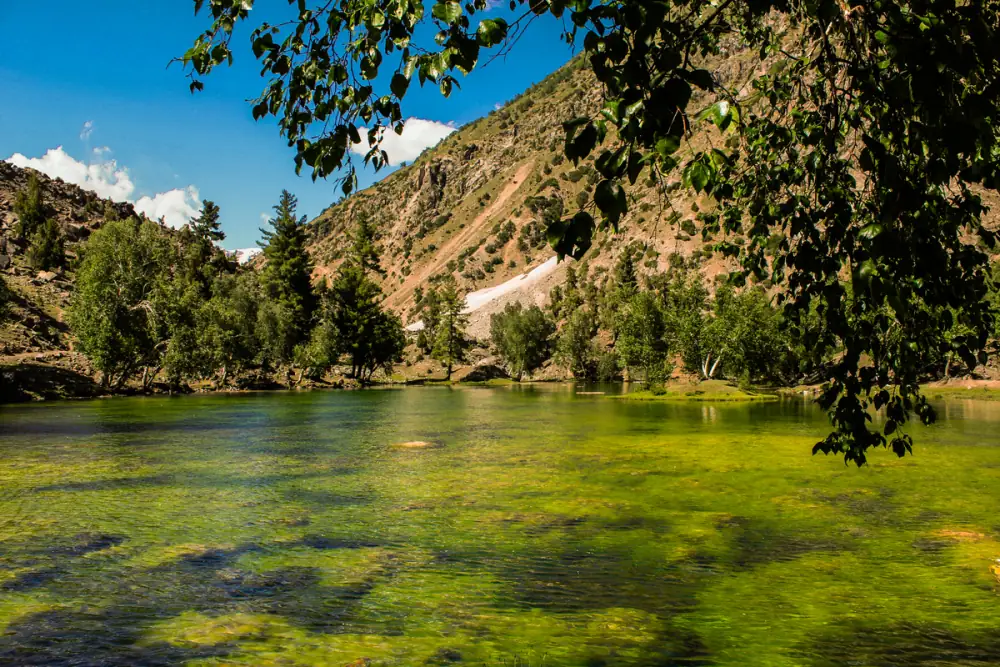
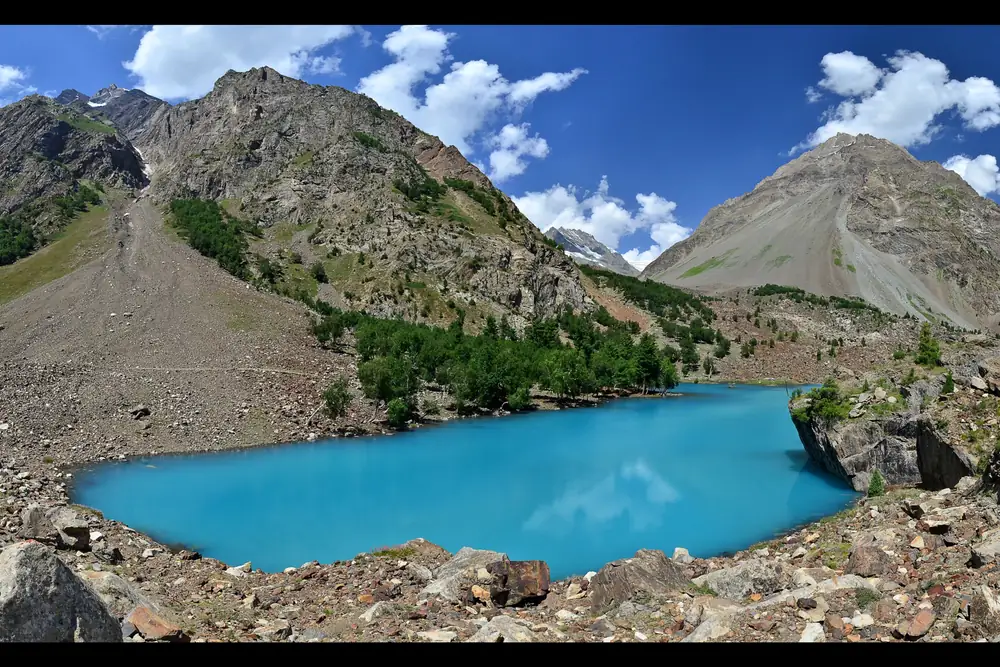
Blue Lake is the one on most postcards. It is tiny, a few minutes from where the jeeps park, and the colour comes from fine glacial silt. Spend an hour at the lakes at the very least. With a picnic and a walk around Satrangi's shore, half a day goes easily.
Naltar Valley weather by month
Naltar sits about 1,400 m higher than Gilgit, so it is roughly 8 to 10°C cooler. That is the whole point in July, when Gilgit bakes at over 35°C. The figures below are typical ranges for Naltar Bala; the lakes are a few degrees colder again.
| Months | Day | Night | What to expect |
|---|---|---|---|
| Dec to Feb | -5 to 3°C | -15 to -8°C | Deep snow; lakes frozen and cut off; ski season |
| Mar to Apr | 3 to 12°C | -6 to 1°C | Snow melting; lake track usually still blocked |
| May to Jun | 13 to 22°C | 2 to 9°C | Track opens; meadows green up; wildflowers |
| Jul to Aug | 20 to 27°C | 9 to 13°C | Warmest, busiest; occasional afternoon rain |
| Sep to Oct | 10 to 20°C | -2 to 6°C | Clear skies, golden birch and willow, fewer people |
| Nov | 3 to 10°C | -8 to -2°C | First snow; lake track can close any day |
For a live forecast, check one for Naltar Bala itself, not Gilgit. Gilgit's numbers will mislead you by about ten degrees.
When is the best time to visit Naltar?
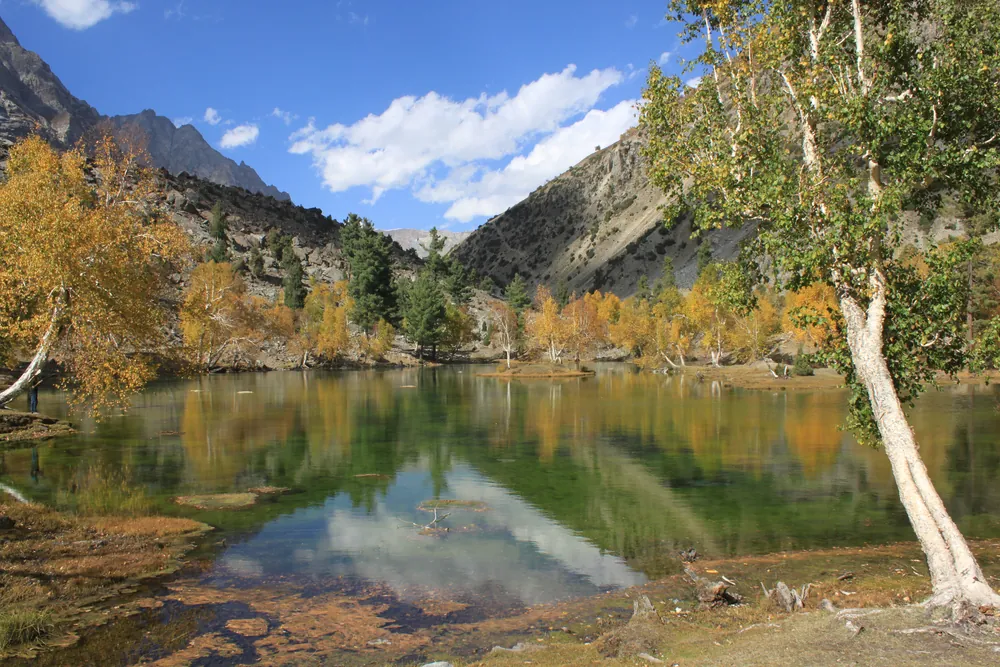
For the lakes: mid-June to mid-October. The track to the lakes is normally clear of snow from late May, but June and early July can still bring snowmelt that turns stream crossings deep. Late September to mid-October is our favourite window: settled weather, the Pakistani summer holiday crowds have gone, and the birch and willow along the stream turn yellow.
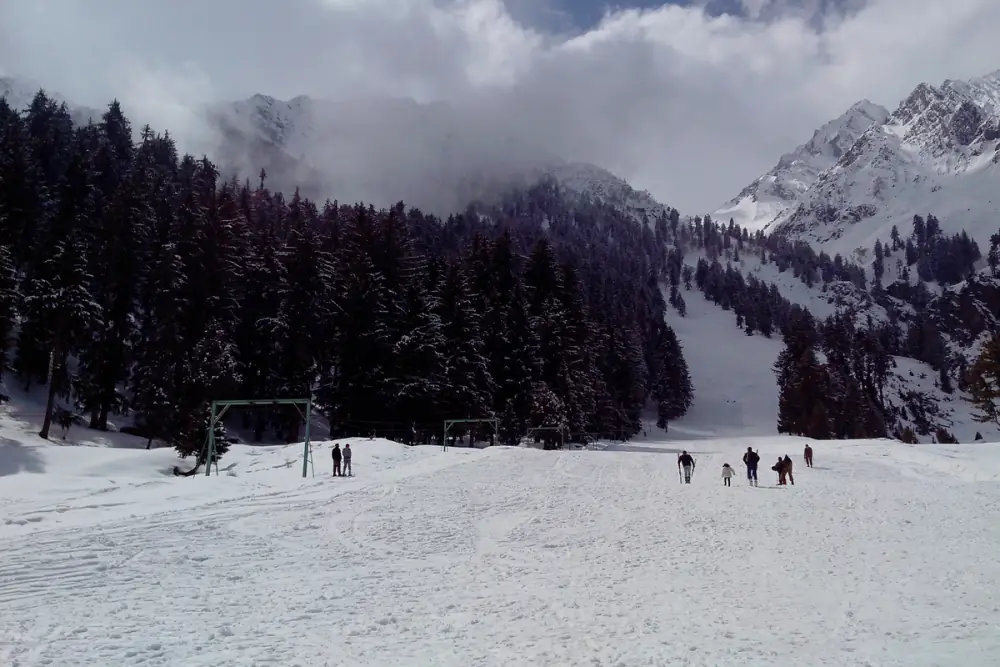
For snow: January to March. Winter brings 3 to 4.5 m (10 to 15 ft) of snow to the upper valley. The road to Naltar Bala is cleared, but the lakes are out of reach by vehicle. Come in winter for the skiing and the quiet, not for the lakes.
Naltar Ski Resort
Naltar is Pakistan's oldest ski resort, run by the Pakistan Air Force on the slope above Naltar Bala. The run is short by Alpine standards (the resort lists a base of about 2,870 m and a top of 2,950 m) but it is where Pakistani skiing grew up. Muhammad Abbas, Pakistan's first Winter Olympian at Vancouver in 2010, and four-time Olympian Muhammad Karim both come from this valley. A chairlift was added in 2015.
The Pakistan National Ski Championship is held here most winters, and the PAF has hosted international races such as the Karakoram Alpine Ski Cup. Equipment hire is limited and depends on who is running the slope that season, so serious skiers should bring their own gear and check access with the PAF in advance. In summer the same meadow is where the yaks graze.
Where to stay in Naltar Valley
Everything is in or around Naltar Bala. Expect simple, clean rooms rather than luxury; hot water and heating vary, and power cuts are normal.
- Hotels such as Naltar Palace, Green Pak and Naltar Continental: roughly US$60 to 95 a night on the booking sites in 2025, usually less if you book direct.
- Guesthouses: from about US$40 a night, often with home-cooked dinner included.
- Camping near the lakes is popular in summer. Nights drop close to freezing even in August, so bring a proper sleeping bag, and carry out every bit of rubbish.
If you would rather sleep somewhere with more choice, stay in Gilgit or Hunza and visit Naltar on a day trip. You lose the quiet early morning at the lakes, though.
Things to do in Naltar Valley
- Lake day: Satrangi, Blue and Feroza lakes by jeep, then a walk along the shore.
- Hike to the upper lakes (Pari and beyond) with a local guide, or cross the Naltar Pass (roughly 4,600 to 4,700 m) to Ishkoman on a multi-day trek.
- Trout fishing in the Naltar stream; ask locally about the current permit from the GB Fisheries Department.
- Skiing and snow from January to March.
- Photography: lakes at sunrise, the spruce forest and summer pastures with yaks.
Plan your trip
Naltar fits neatly into a northern itinerary: a day from Gilgit, or a detour on the way up the KKH. Most of our guests fold Naltar into a Hunza Valley tour, often combined with a morning at the Kargah Buddha on the edge of Gilgit. If you like quiet lake valleys, Phandar Valley, further west, is the next one to add. For background on the lakes, see the Naltar Lakes entry, and the GB government's Visit Gilgit-Baltistan portal for official updates.
Naltar Valley FAQ
Where is Naltar Valley?
Naltar Valley is in Gilgit District, Gilgit-Baltistan, in northern Pakistan, about 34 km from Gilgit city by road. You reach it by driving north from Gilgit on the Karakoram Highway to Nomal and then turning west up the Naltar stream. The upper village, Naltar Bala, sits at about 2,900 m and is where the hotels, the ski slope and the jeeps for the lakes are found. The lower village, Naltar Paeen, lies further down the valley about 40 km from Gilgit by the old road. The valley climbs north-west towards the Naltar Pass, which leads over to the Ishkoman Valley. Since 1975 the whole upper valley has been protected as the Naltar Wildlife Sanctuary, home to markhor, ibex, snow leopard and brown bear. From Karimabad in Hunza the drive is about 90 to 100 km, or two and a half to three hours.
How do you get to Naltar Valley from Gilgit?
From Gilgit you drive north on the Karakoram Highway to Nomal and turn onto the Naltar Expressway, a blacktopped road inaugurated on 7 November 2024. The 34 km trip to Naltar Bala now takes about an hour in an ordinary car, where the old jeep track took about two hours. A 4x4 is only needed beyond Naltar Bala, on the 12 to 13 km stony track to Satrangi and Blue Lake, which takes another hour to an hour and a half. A Prado or Land Cruiser for the round trip to the lakes costs roughly Rs 15,000 to 18,000 from Gilgit, Rs 12,000 to 15,000 from Nomal and Rs 17,000 to 20,000 from Hunza, at 2025 prices. Local Willys jeeps at Naltar Bala cost less and are built for the track. Confirm prices before you leave, because they rise with fuel each season.
Can you go to Naltar Valley by car?
Yes, as far as Naltar Bala. Since the Naltar Expressway opened in November 2024, the road from Gilgit through Nomal to Naltar Bala has been blacktopped, so an ordinary car reaches the village in about an hour. The road to Naltar Bala is cleared in winter too, so cars reach the village and ski slope even in January. The catch is the last stretch to the lakes. From Naltar Bala to Satrangi and Blue Lake is 12 to 13 km of loose rock, boulders and stream crossings, and only a high-clearance 4x4 manages it. Leave your car at Naltar Bala and hire a local jeep there, or book a Prado or Land Cruiser from Gilgit or Hunza for the whole day. Do not attempt the lake track in a saloon car, even in good weather, because a broken sump in that valley means a very long wait for help.
How many lakes are there in Naltar Valley?
Naltar has a chain of alpine lakes known locally as the Bashkiri Lakes, and most sources count between three and five. The three that most visitors see are Satrangi Lake (Bashkiri I, the largest and the one with the multicoloured water), Blue Lake (Bashkiri II, a small turquoise pool) and Feroza Lake (Bashkiri III, with azure water). All three are reached by jeep on the track from Naltar Bala, about 12 km away, followed by a short walk. They sit between 3,050 and 3,150 m. Above them are quieter lakes such as Pari, Dhudia and Bodlok, which you reach on foot and which see few visitors. For those, take a local guide, because the paths are faint and the weather higher up changes fast. The lower lakes are usually free of ice and reachable from late May to October.
What is the best time to visit Naltar Valley?
For the lakes, the best time is mid-June to mid-October, when the 4x4 track from Naltar Bala is free of snow and daytime temperatures sit around 13 to 27 degrees Celsius. Late September to mid-October is the sweet spot: the weather is settled, the birch and willow turn gold, and the summer holiday crowds from Pakistan's cities have left. July and August are the warmest and busiest months, with occasional afternoon rain. Snowmelt in June can make stream crossings on the lake track deep. For snow and skiing, go from January to March, when the upper valley holds three to four and a half metres of snow and the Pakistan National Ski Championship is often held at the PAF slope. In winter the lakes are frozen and cannot be reached by vehicle. November and April are shoulder months when the lake track can be closed.
Is there mobile signal in Naltar Valley?
Expect patchy mobile coverage in Naltar Bala and nothing reliable at the lakes. Signal in the village depends on your network and on exactly where you stand, and data is often slow when it works at all. Above Naltar Bala, on the 12 to 13 km jeep track and at Satrangi and Blue Lake, plan to be offline. Before you leave Gilgit, download offline maps, tell someone your plans and agree a return time with your jeep driver. Some hotels in Naltar Bala offer Wi-Fi, but power cuts are common, so do not count on it for work calls. For international visitors, a local SIM bought in Gilgit or Islamabad gives the best chance of a signal. Most travellers find a day or two without a phone is part of Naltar's appeal, but it matters for safety if you hike to the upper lakes.
Ready for Your Next Adventure?
Join our community of explorers and discover the journey of a lifetime. Our expert team is ready to help you plan your perfect expedition.