Kalash Festivals 2027: Chilam Joshi & Uchal | Go With Guide
Home
All Tours Cultural Tours Family Holidays Luxury Tours Camping Road Trips
K2 Treks Trending Treks High Passes Trekking Holidays All Treks
8000m Peaks 7000m Peaks 6000m Peaks High Passes
Cycle Touring Eco Tourism Motorcycle Touring Mountain Passes Festivals of Pakistan Ibex Hunting Snow Leopard International Travelers
About Us Vehicles Contact FAQs Blog
Plan Your Trip
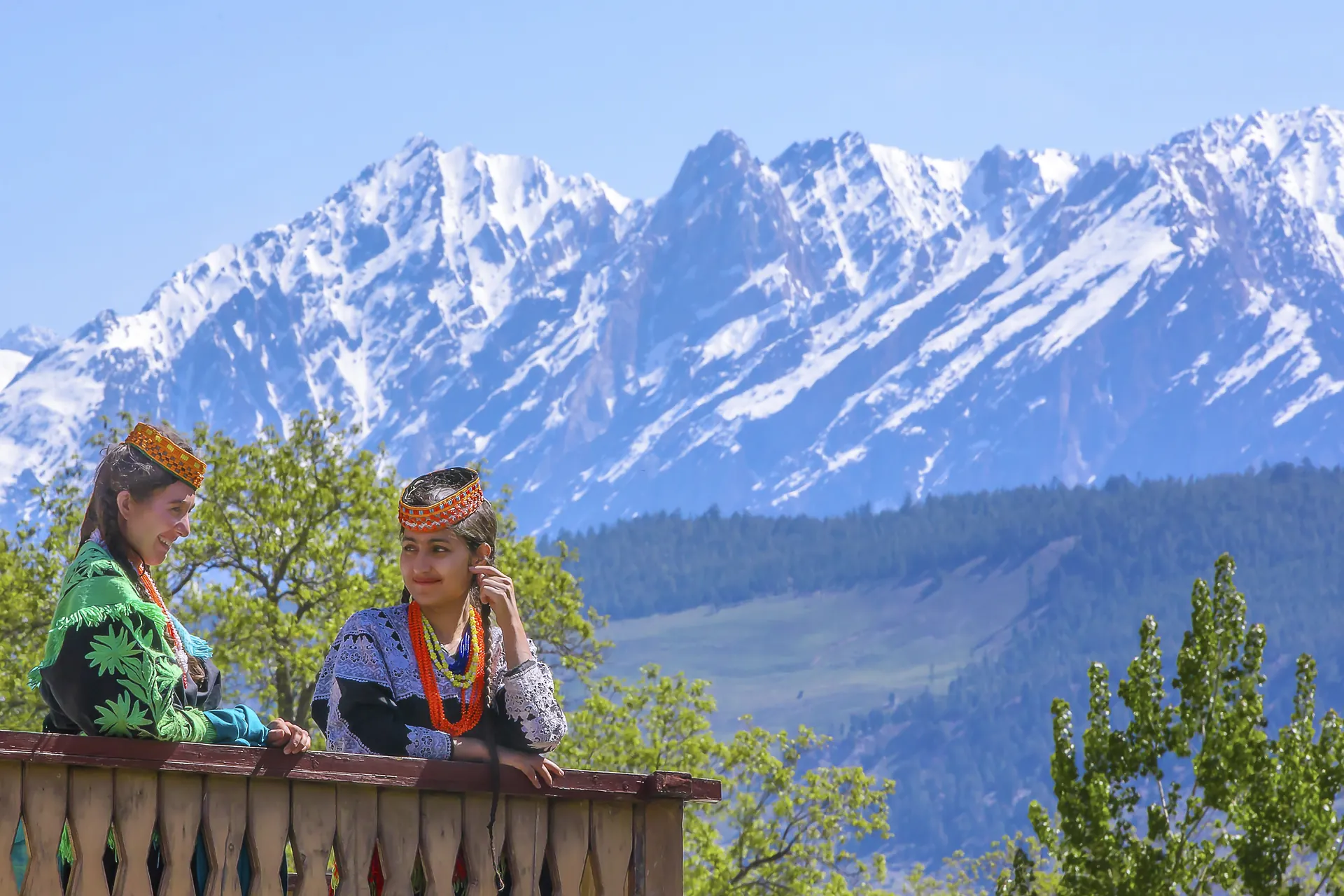
Kalash women in traditional embroidered dress with the snow-capped Hindu Kush behind, Bumburet valley, Chitral
Back to Tours
Festival Chitral

Kalash Festivals of Chitral

Three Festivals · May, August, December · Chitral
Two Kalash women in beaded traditional dress above the Bumburet valley, Chitral
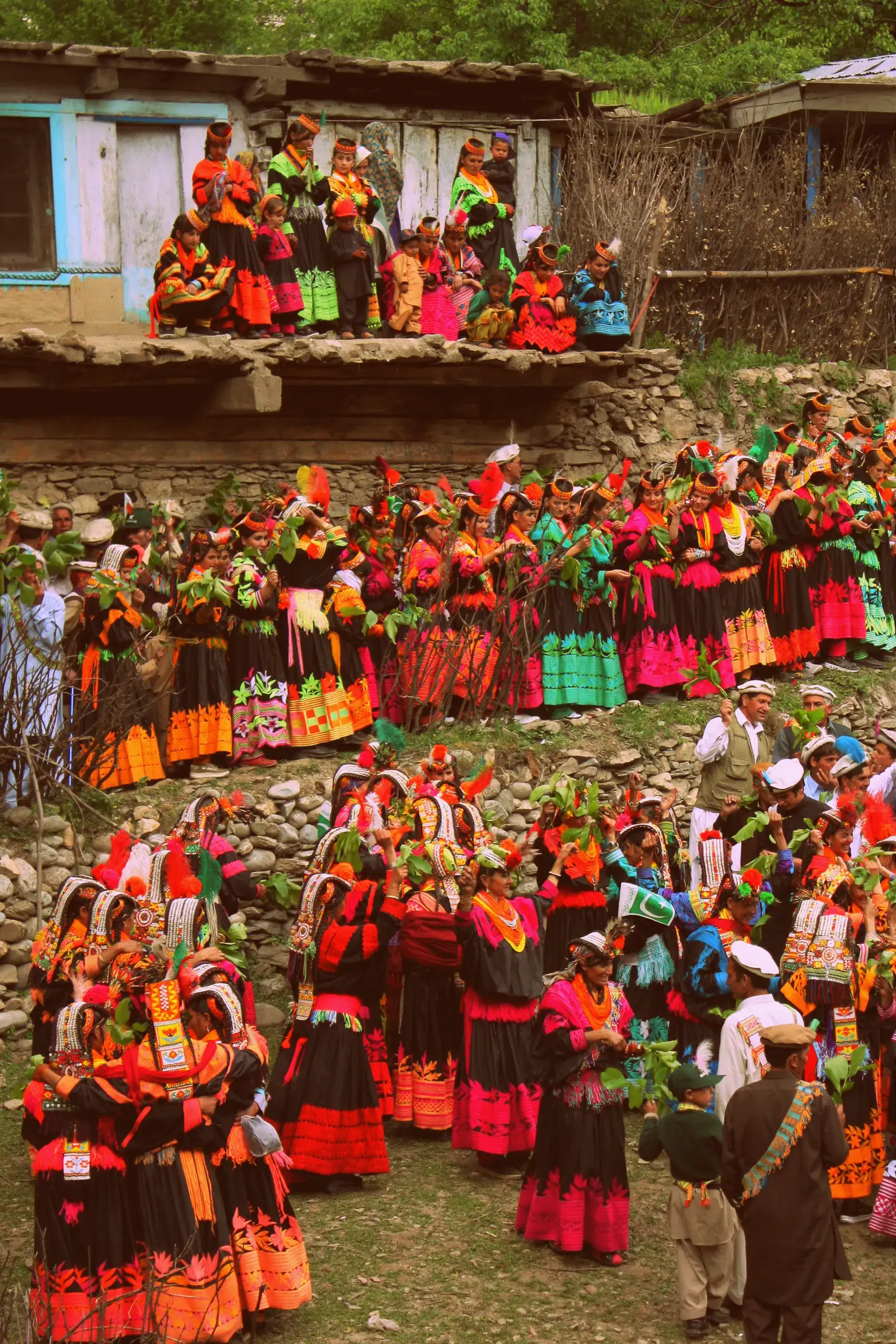
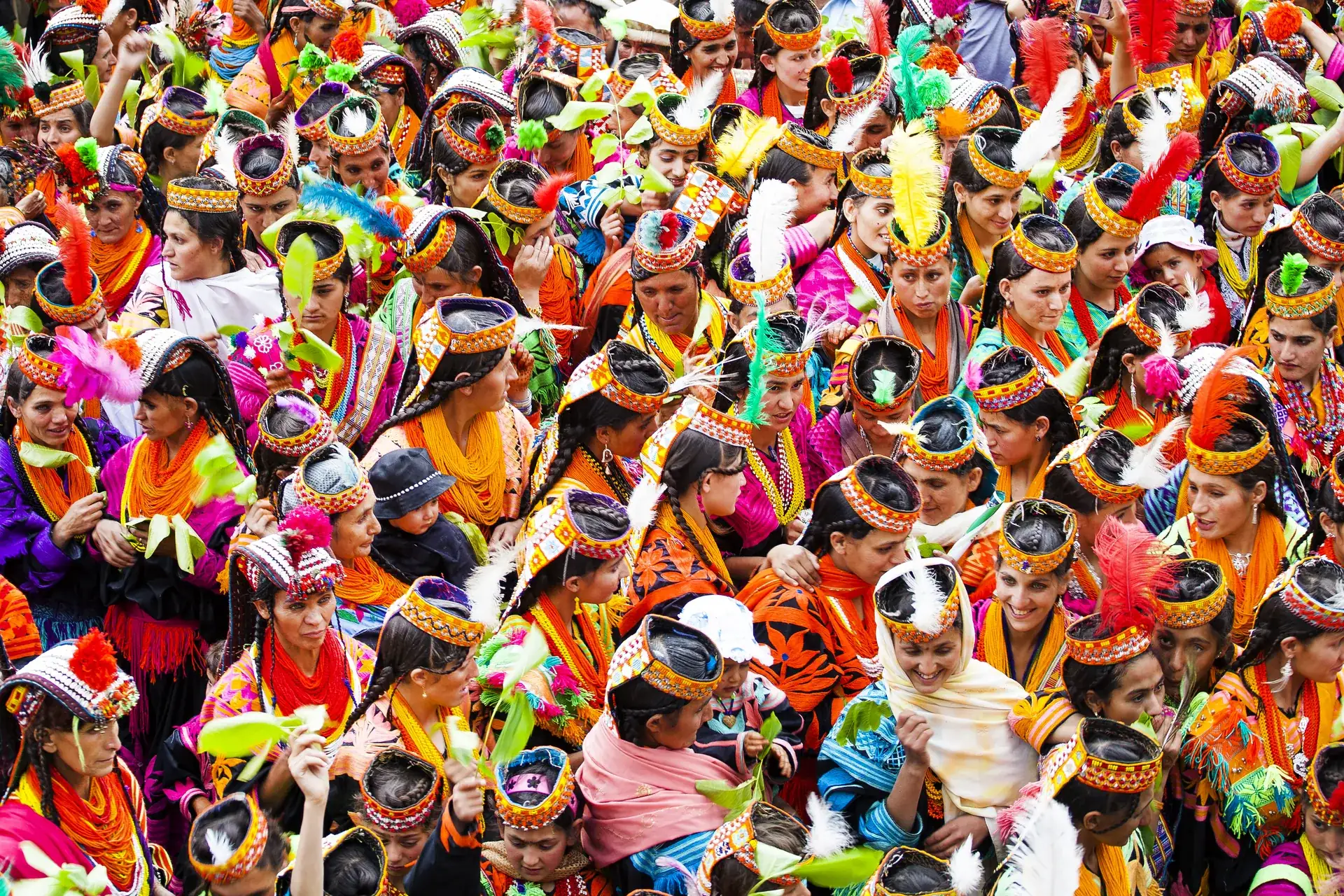
Kalash women in feathered headdresses at the Chilam Joshi spring festival in Chitral
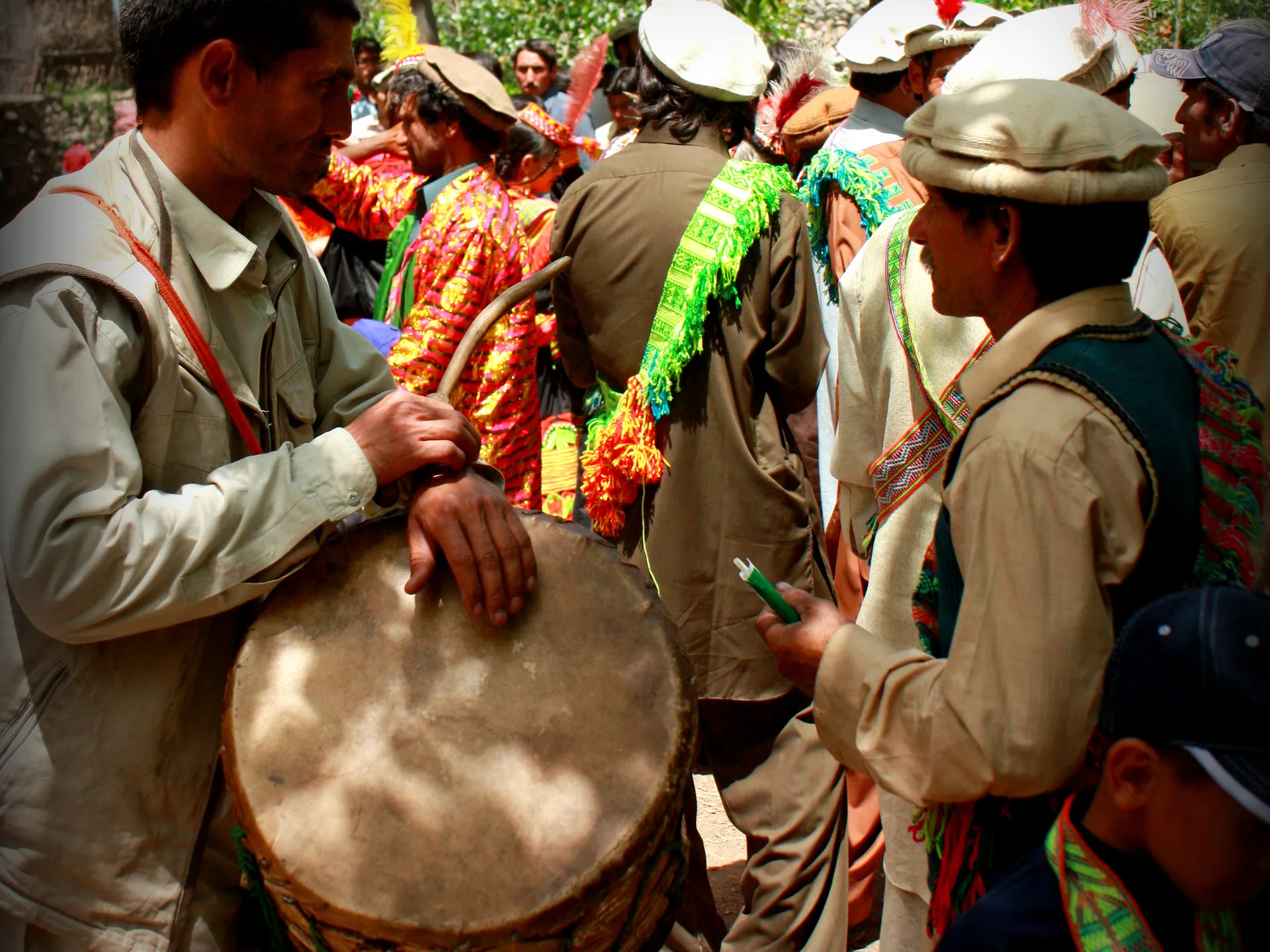
Kalash musicians drumming during a festival procession in Bumburet valley
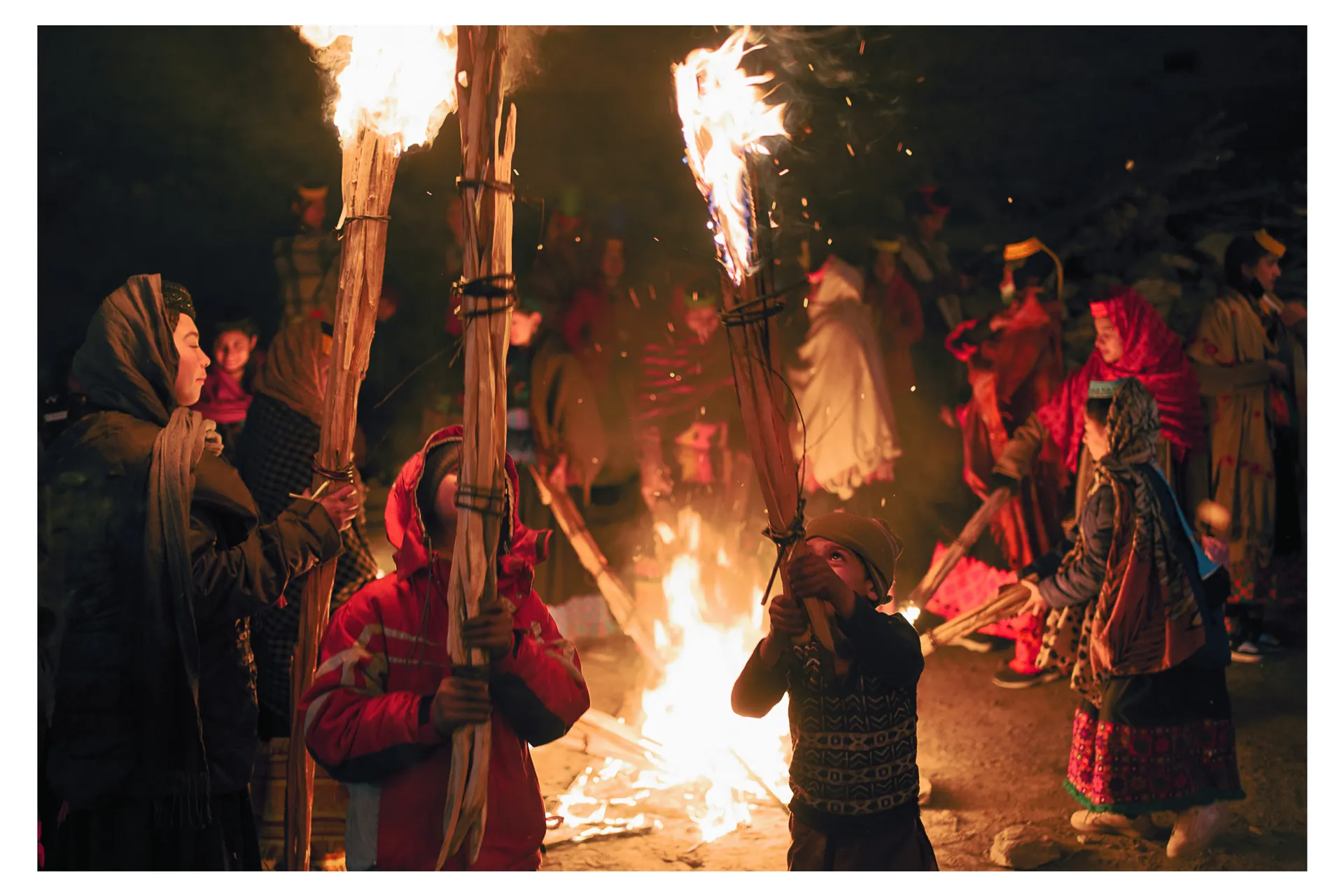
Kalash people carrying flaming torches at the Chowmos winter solstice festival
Kalash women dancing in a circle at the Joshi spring festival in Bumburet

Last updated: · Reviewed by Javeed Iqbal, Founder

Duration

7-10 Days

Difficulty

Easy-Moderate

Group Size

2-12 Travelers

Best Season

May / Aug / Dec

About This Tour

Three times a year, the Kalash valleys of Chitral stop ordinary work and give themselves over to festival. In May the spring rite of Chilam Joshi blesses the herds before they climb to the high pastures. In August, Uchal gives thanks for the wheat and barley cut from the terraced fields. And in the freezing weeks around the December solstice, Choimus, the holiest of them all, welcomes the god Balimain on his yearly visit and closes the books on the old year. Each one is a working religious ceremony, not a show staged for visitors.

The hosts are the Kalash, a community of about 4,000 people in the valleys of Bumburet, Rumbur and Birir who keep South Asia's last living polytheistic religion. Their year runs on a solar calendar read from the ridgelines by village elders, a practice called Suri Jagek that UNESCO listed in 2018 as urgently endangered heritage. The festivals are where that calendar becomes visible: drums, linked-arm circle dances, women in black piran robes and cowrie-shell kupas headdresses, wine poured from family barrels, and rites that outsiders are sometimes welcome to watch and sometimes asked to leave alone.

We run guided departures for all three festivals, each built on the same backbone: fly or drive from Islamabad to Chitral, then up the jeep track into the valleys, with nights in Kalash-run guesthouses and a guide who has sat through these ceremonies for years. The sections below tell you what each festival is, when it falls in 2027, and which one fits the trip you want.

The Three Kalash Festivals and Their 2027 Dates

The Kalash ritual year has three fixed points. Dates below are for 2027; the pattern repeats every year with a day or two of movement at the elders' discretion.

Chilam Joshi, the Spring Festival (12-17 May)

The loudest and most visited of the three. Six days of flower decoration, milk libations and massed dancing to welcome spring, with an open courtship tradition that ends in announced matches. It draws the biggest crowds of the year, especially in Bumburet. We run a dedicated departure for it; the full ritual sequence, dates and itinerary are on our Chilam Joshi Festival tour page.

Uchal, the Harvest Festival (20-22 August)

A thanksgiving for the wheat, barley and the summer's milk and cheese, held when the harvest is in. Ritual breads stuffed with walnuts and goat cheese, processions to the high pastures, and night dancing under far fewer visitors' eyes than May. If you want festival ritual without festival crowds, Uchal is the quiet choice, and August weather in the valleys is at its best.

Choimus, the Winter Solstice Festival (7-22 December)

The most sacred event of the Kalash year, two weeks long, dedicated to Balimain, who is believed to visit the valleys from the mythical homeland of Tsyam for the duration of the feast. The first week is for the community alone: purifications, initiations and the declaration of the new year. Outsiders may attend the second, public week, with its torch processions, goat sacrifices and dancing in the snow. Nights drop well below freezing and the passes can close, which is exactly why the valleys feel like another century in December.

Which Festival Should You Choose?

First time, and you want the full spectacle: Chilam Joshi, with the warning that several thousand other people had the same idea. Photographers who would rather share the dancing ground with hosts than with crowds: Uchal. The deep end, for travellers comfortable with real cold and a slower pace: Choimus, the one the Kalash themselves hold most important. Group size stays at twelve or fewer on every departure, and all three run from Chitral with the same valley logistics.

Day-by-Day Itinerary

1

Islamabad to Chitral

Fly to Chitral (about 50 minutes, weather permitting) or take the road through Swat and the Lowari Tunnel, a 10 to 12 hour day. Hotel in Chitral town and an evening briefing on the festival you have come for.
2

Chitral to Bumburet Valley

Passport registration at the checkpoint, then the 36 km jeep track into Bumburet (2,000 m). Meet your host family, walk the village, and watch the valley fill as families arrive for the festival.
3

Festival Opening

Opening ceremonies at the dancing ground: drums, chanting and the first circle dances. Your guide reads the schedule with the elders so you are in the right village at the right hour.
4

Festival Rituals and Feasting

The main rites, which differ by season: milk libations in May, harvest breads and pasture processions in August, torch processions in December. Communal feasting follows, and guests eat with their host families.
5

Rumbur Valley

A jeep stage to Rumbur, the quietest valley, and the village of Grom. Smaller ceremonies, ancient carved temples and evening dances where visitors are often pulled in.
6

Birir Valley

South to Birir, the most traditional valley. Visit the Kalash graveyard with its open-air carved coffins, meet artisans, and see how the smallest valley keeps the old ways with the least fuss.
7

Chitral Exploration

The Shahi Mosque, the fort above the river and the bazaar. Optional run to the Garam Chashma hot springs.
8

Return to Islamabad

Fly or drive back to Islamabad.

Getting There

Chitral sits behind the Lowari Pass, and getting there is half the story. The PIA flight from Islamabad takes about 50 minutes when the weather over the Hindu Kush cooperates; when it does not, the road takes over: a long but paved day through Swat, Dir and the 10.4 km Lowari Tunnel. For the December festival we plan the road from the start, since winter flights are the least reliable of all. From Chitral town a jeep covers the 36 km to Bumburet in about two hours. Foreigners need no NOC at present, just passport registration at the checkpoints and a small entry fee at the valley gate, and we track the rules so the paperwork never becomes your problem.

Visiting Responsibly

A festival audience of thousands lands on a community of four thousand, and the Kalash feel it. Our rules are short. Photograph people only with their permission, and take a refusal gracefully. Stay out of rites your guide tells you are closed, including the whole first week of Choimus, which belongs to the community alone. Sleep and eat in Kalash-owned houses so the festival economy pays its hosts. And buy the valley wine rather than bringing your own; it is better anyway.

Why Book With Us

We have taken small groups to every Kalash festival season since 2015. Our guides confirm ceremony timings with the villages themselves, our guesthouse partners in Bumburet and Rumbur hold rooms for us in festival week when beds are the scarcest thing in Chitral, and our drivers know the valley tracks in snow as well as in dust. Licensed operator, groups of twelve or fewer, road backup on every departure.

What's Included

Domestic flights Islamabad-Chitral-Islamabad (or ground transport)
All accommodation in Chitral and Kalash Valleys
Daily breakfast and dinner; festival feasts
English-speaking cultural guide with Kalash community connections
All entry permits and community fees
Local transport between valleys

Not Included

International flights
Travel insurance
Personal expenses and tips

Frequently Asked Questions

What are the three festivals of the Kalash people?

The Kalash hold three festivals a year: Chilam Joshi in May, Uchal in August and Choimus in December. Chilam Joshi, set for 12 to 17 May in 2027, is the spring rite that blesses the herds before they climb to the high pastures, with flower decoration, milk libations, massed dancing and an open courtship tradition. Uchal, around 20 to 22 August, gives thanks for the wheat and barley cut from the terraced fields, with ritual breads stuffed with walnuts and goat cheese and processions to the high pastures. Choimus, roughly 7 to 22 December around the winter solstice, is the holiest of the three: two weeks dedicated to the god Balimain, who is believed to visit from the mythical homeland of Tsyam. The first week is for the community alone, and outsiders may attend the second. Each one is a working religious ceremony, not a show. We run guided departures to all three from Chitral with the same valley logistics.

When do the Kalash festivals fall in 2027?

In 2027 Chilam Joshi runs 12 to 17 May, Uchal about 20 to 22 August, and Choimus from roughly 7 to 22 December, with the public celebrations in the second week. Exact days are set by Kalash elders, who read a solar calendar from the ridgelines, and the pattern repeats each year with a day or two of movement at their discretion. Our guides confirm ceremony timings with the villages themselves and read the schedule with the elders on the ground, so you are in the right village at the right hour. Beds are the scarcest thing in Chitral during festival week, so our guesthouse partners in Bumburet and Rumbur hold rooms for us, and it pays to book early. Trips run 7 to 10 days from Islamabad and start at $1,450 per person, with free cancellation up to 30 days before departure. For December we plan the road journey from the start, since winter flights are the least reliable.

Which Kalash festival is the biggest?

Chilam Joshi, the spring festival in mid-May, is the biggest by far. It lasts six days, 12 to 17 May in 2027, with flower decoration, milk libations and massed dancing, and it draws several thousand visitors, especially in Bumburet. If you want the full spectacle on a first visit, it is the one to choose, and we run a dedicated departure for it. Choimus in December matters most to the Kalash themselves, but its first week is closed to outsiders and the public second week is slower and cold. Uchal, around 20 to 22 August, is the smallest and calmest of the three: harvest breads, pasture processions and night dancing with far fewer visitors watching, and August weather in the valleys is at its best. Photographers who would rather share the dancing ground with hosts than with crowds usually prefer it. Whichever you pick, group size stays at twelve or fewer.

Can tourists attend the Choimus winter festival?

Yes, in the second week. Choimus runs roughly 7 to 22 December in 2027 and is the most sacred event of the Kalash year, dedicated to the god Balimain. The first week belongs to the community alone, with purifications, initiations and the declaration of the new year, and visitors are not admitted. The second, public week is open to outsiders: torch processions, goat sacrifices and dancing in the snow. Expect nights well below freezing, possible snow on the approach roads and passes that can close. Winter flights to Chitral are the least reliable of the year, so for December we plan the road from the start, a long paved day through Swat, Dir and the 10.4 km Lowari Tunnel. It is a slower, more intimate festival than May and suits travellers comfortable with real cold. Your guide will tell you which rites are closed, and we ask you to stay out of them.

Do I need a permit to attend?

No, foreigners currently need no NOC to attend the Kalash festivals. You register your passport at checkpoints on the way in, including the one on the drive from Chitral to Bumburet, and you pay a small entry fee at the valley gate that goes to community funds. All entry permits and community fees are included in the tour price, and your guide handles the registration, so the paperwork never becomes your problem. Rules in this region can change, so we track them before each departure and tell you if anything new applies to your dates. Beyond paperwork, some rites need permission of a different kind: photograph people only with their consent, take a refusal gracefully, and stay out of ceremonies your guide says are closed, including the whole first week of Choimus. We have taken small groups to every festival season since 2015 and know where those lines are.

How do I get to the Kalash valleys?

Fly from Islamabad to Chitral in about 50 minutes, or drive 10 to 12 hours through Swat, Dir and the 10.4 km Lowari Tunnel, then take a jeep 36 km up the track to Bumburet, about two hours. The PIA flight only operates when the weather over the Hindu Kush cooperates, so we always hold a road option, and for the December festival we plan the road from the start because winter flights are the least reliable of all. Your first night is in a Chitral hotel with a briefing on the festival you have come for. Day two brings passport registration at the checkpoint and the jeep ride into Bumburet at 2,000 m, then short jeep stages to Rumbur and Birir later in the week. Domestic flights Islamabad-Chitral-Islamabad, or ground transport instead, and local transport between the valleys are included in the price of the tour.

What should I pack for the December festival?

Serious winter layers, a warm sleeping bag liner for unheated guesthouse rooms, and boots with grip. Days can be clear and bright; nights drop well below freezing.

Is this the same tour as the Chilam Joshi tour?

This page covers departures to any of the three festivals. For the May festival we run a dedicated itinerary with the full ritual calendar; see the Chilam Joshi Festival tour page.

From

$1,450

per person

* Prices may vary. Contact us for accurate, customized pricing.

Duration7-10 Days
DifficultyEasy-Moderate
Group Size2-12 Travelers
Best SeasonMay / Aug / Dec
Max Altitude1,900-2,200 m
Book This Tour Ask a Question

Free cancellation up to 30 days before departure

Ready for Your Next Adventure?

Join our community of explorers and discover the journey of a lifetime. Our expert team is ready to help you plan your perfect expedition.