Shimshal Whitehorn
A serious snow-and-ice climb for experienced alpinists
Last updated: · Reviewed by Javeed Iqbal, Founder
Elevation
6,400m
Difficulty
Challenging
Duration
18 to 24 Days
Best Season
Jun to Aug
Shimshal Whitehorn (6,400m): the technical snow peak above Shimshal
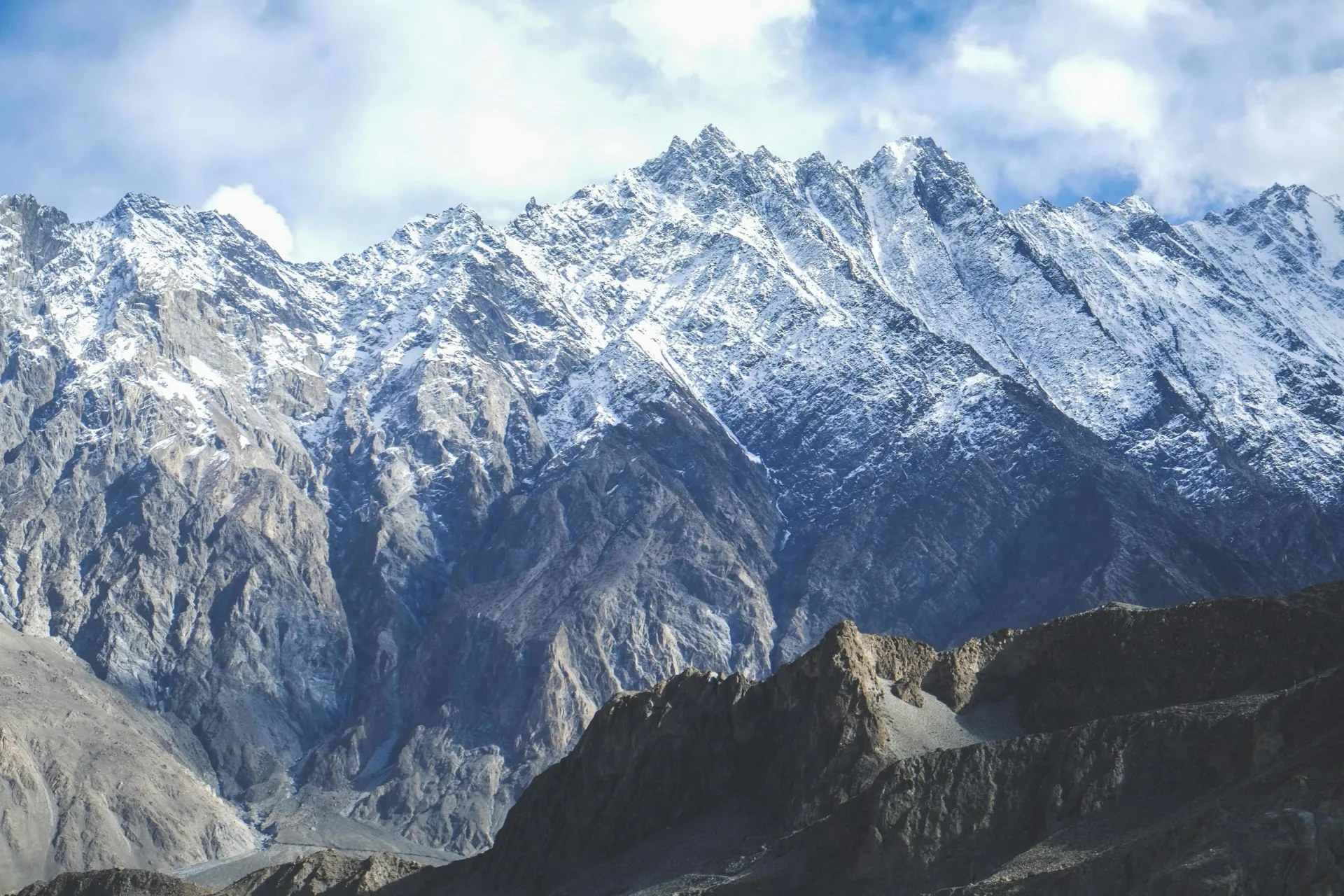
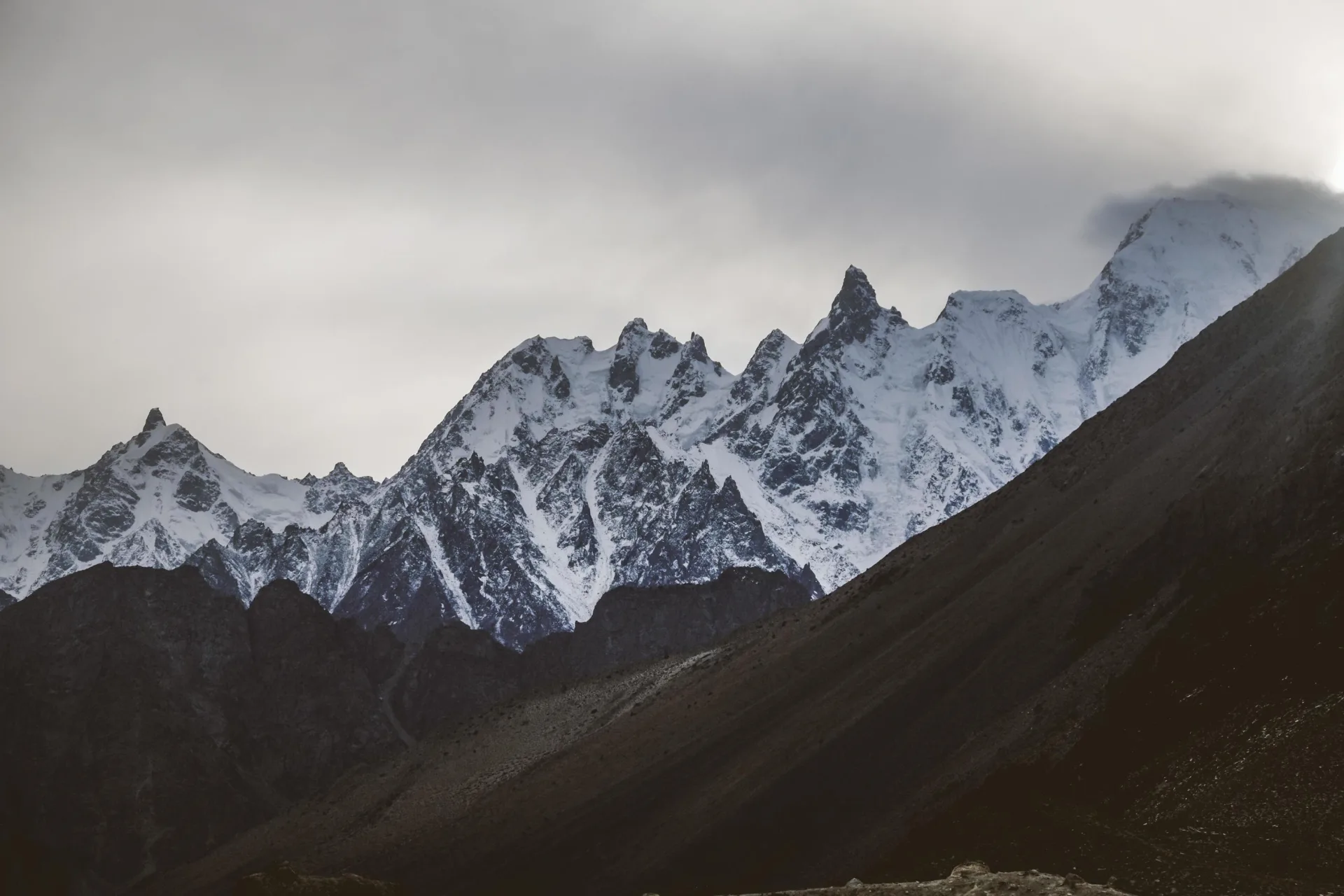
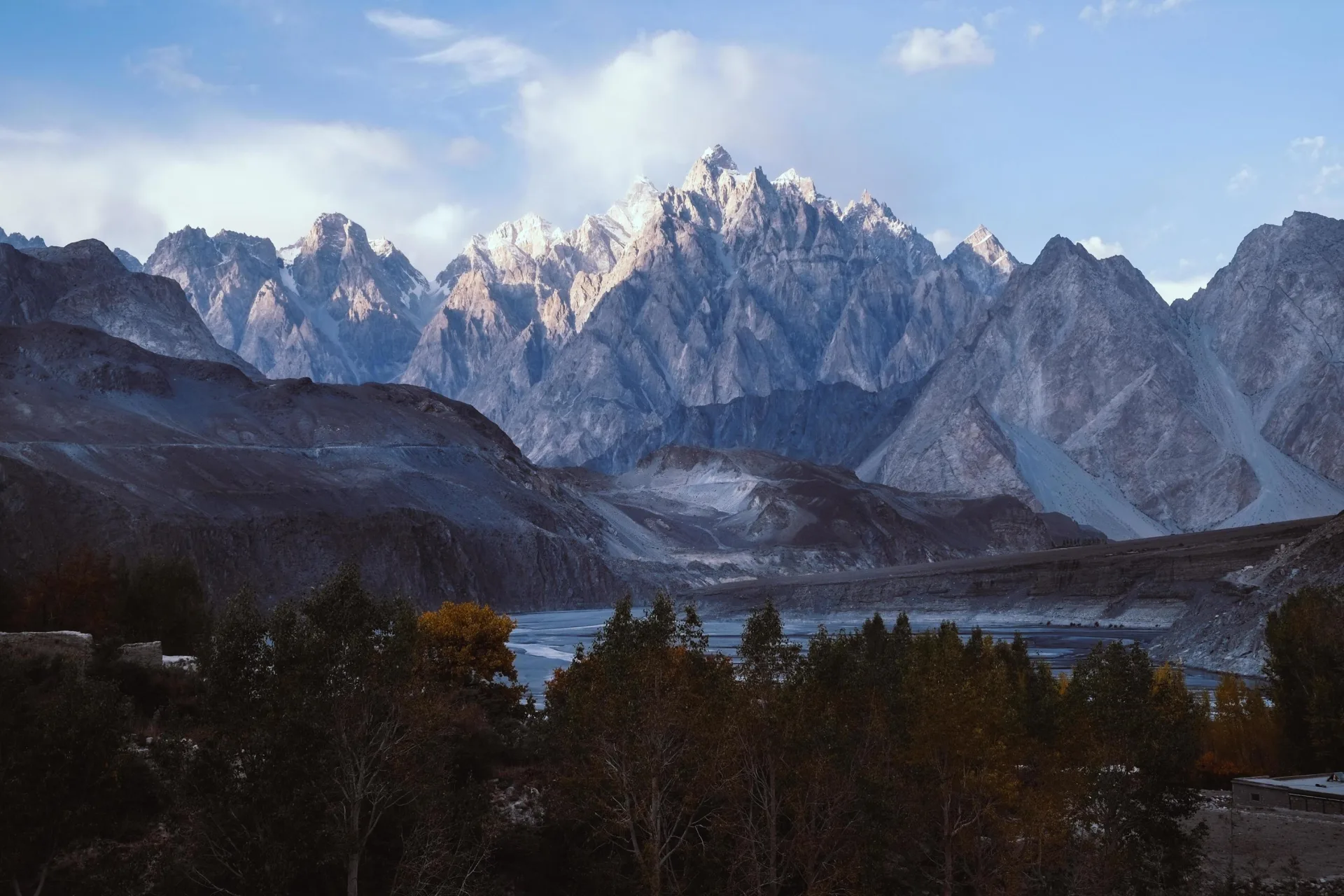
Shimshal Whitehorn is a steep, photogenic snow peak of about 6,400 metres at the head of the Shimshal valley, and despite the gentle-sounding name it is a serious technical mountain. It rises in the Hispar Muztagh among Karakoram giants such as Distaghil Sar and Kunyang Chhish, and it is also known by the local names Adver Sar and Ishpardin. First climbed by a British team in 1986, it has had only a handful of ascents since, and its hardest ridge is still unclimbed. This guide covers where it is, the history that gives it its reputation, and what an expedition involves.
Where is Shimshal Whitehorn?
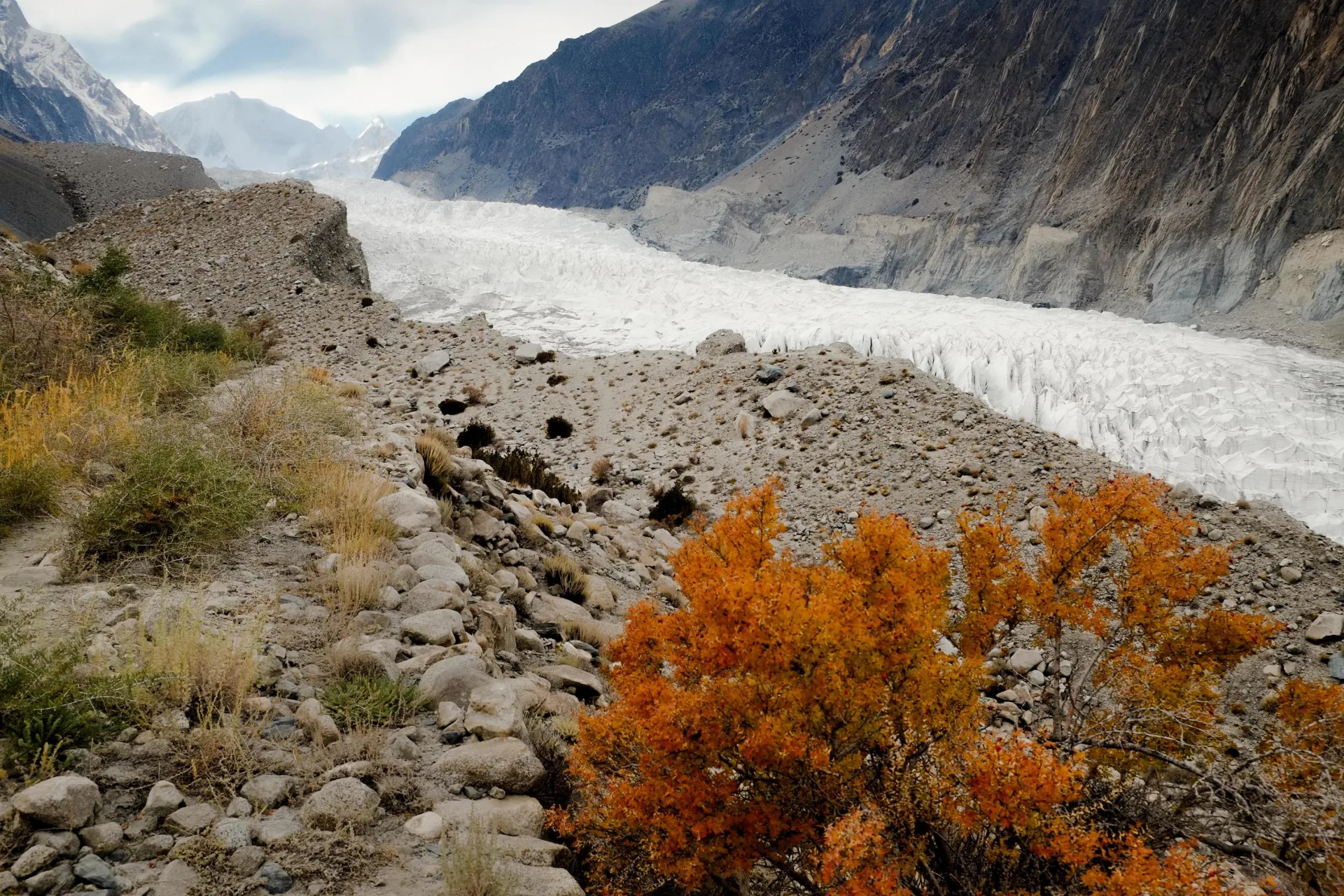
Shimshal Whitehorn stands at the head of the Shimshal valley, in the Hispar Muztagh subrange of the Karakoram, in the upper Hunza district of Gilgit-Baltistan. It is roughly a day's trek above Shimshal village, with base camp about 1,400 metres higher than the village, reached by way of the Malangutti and Madhil glaciers. From its slopes the view takes in some of the great peaks of the Hispar Muztagh, including Distaghil Sar (7,885m) and Kunyang Chhish (7,852m).
The names: Adver Sar and Ishpardin
"Shimshal Whitehorn" is the English name climbers use, a nod to its clean white profile, and you will also see it written as the Shimshal Weisshorn. Locally it is known as Adver Sar or Ishpardin. The height usually quoted is about 6,400 metres, measured by altimeter; satellite data suggests it may be a little higher, but 6,400 metres is the figure used in the climbing record, which is why it belongs in the 6,000-metre category.
How hard, and how dangerous?
This is not a beginner's snow plod. Shimshal Whitehorn is a committing technical climb, with steep snow and ice, knife-edge sections, seracs and crevassed ground, and it has a sobering history. The 1986 first ascent ended in tragedy on the descent, and a later attempt also cost a life near the summit. The peak demands real alpine experience, confident movement on steep snow and ice, and the judgement to manage objective danger in a remote setting with no rescue. It suits experienced mountaineers, not those stepping up from trekking.
First ascent: the 1986 British expedition
Shimshal Whitehorn was first climbed in 1986 by a British expedition: Chris Clark, Paul Metcalfe, Dave Robbins, John Burslem and Paul Allison, who climbed the North-West ridge after approaching via the Malangutti and Madhil glaciers. The expedition ended in tragedy: at around 5,950 metres Paul Metcalfe developed cerebral oedema, and on the descent near 5,500 metres an abseil anchor failed in a fall in which Dave Robbins died. That history has shaped the mountain's serious reputation ever since.
Later attempts and the unclimbed North Ridge
Ascents since 1986 have been rare. A 1999 attempt cost the life of the New Zealander Richard Ackerley, who fell just below the summit, and a German team made a second complete ascent in the 2000s by the East Ridge. The striking North Ridge, knife-edged and guarded by crevasses, has turned back several parties and remains unclimbed, one of the real prizes still left on the mountain.
The route and approach
An expedition begins at Shimshal village, about 3,100 metres, and treks up the valley to a base camp roughly 1,400 metres higher, on the glaciers below the peak. From there teams establish a high camp around 5,000 metres before the summit push on steep snow and ice. Because the mountain is climbed so seldom, there is no fixed-rope infrastructure; the route, the camps and the timing are planned around the specific party and the conditions of the season.
Best time to climb
The season is the Karakoram summer, broadly June to August, when the high snow is most stable and the weather windows are longest. Even then this is a serious objective, where a safe summit depends as much on conditions and patience as on fitness. Earlier and later in the year both the approach and the climb are far harder.
Getting to Shimshal
The journey runs up the Karakoram Highway to Passu in upper Hunza, then along the 56-kilometre mountain road into Shimshal, the highest village in the district. From Shimshal the climb continues on foot up the valley to base camp. A full expedition, including the drive, the trek in, acclimatisation, the climb and the return, is a multi-week undertaking, typically around 18 to 24 days. The gentler 6000ers of the same valley, such as Minglik Sar, make better first objectives.
Permits and cost
Shimshal Whitehorn is below 6,500 m, so Gilgit-Baltistan's published fee schedule sets no peak royalty for it, and Shimshal lies in the open zone, so no liaison officer is assigned; the climb still involves the environment fee for expeditions, park permits for the Central Karakoram National Park area and Shimshal community arrangements. The technical nature of the peak and its remoteness mean a fully supported, experienced team is essential. Costs depend on group size and length, so the figure on this page is indicative and we quote each expedition individually.
Go With Guide Pakistan runs Shimshal Whitehorn for experienced mountaineers, with Shimshali guides who know this valley and its glaciers intimately. Tell us your climbing background and dates and we will plan an expedition matched to the mountain's real demands.
Climbing History
1986
First ascent, and tragedy
First ascent, and tragedy
A British team, Clark, Metcalfe, Robbins, Burslem and Allison, made the first ascent by the North-West ridge; the expedition ended in tragedy on the descent when Dave Robbins died after an abseil anchor failed.
1999
A life lost near the top
A life lost near the top
A later attempt cost the life of the New Zealander Richard Ackerley, who fell just below the summit, deepening the peak's serious reputation.
2000s
Second complete ascent
Second complete ascent
A German team completed the second full ascent of the mountain by the East Ridge, one of only a handful of successes on Shimshal Whitehorn.
Today
The North Ridge still unclimbed
The North Ridge still unclimbed
Rarely attempted, Shimshal Whitehorn keeps its hardest line, the knife-edged North Ridge, unclimbed to this day.
Recommended Reading
And Death Walks With Them: Above Eight Thousand Metres with Pakistani Porters from Shimshal
by Christiane Fladt (2008)
And Death Walks With Them: Above Eight Thousand Metres with Pakistani Porters from Shimshal
by Christiane Fladt (2008)
Frequently Asked Questions About Shimshal Whitehorn
How high is Shimshal Whitehorn?
How high is Shimshal Whitehorn?
Shimshal Whitehorn is about 6,400 metres high. That figure comes from an altimeter reading, and satellite data suggests the true height may be slightly higher, but 6,400 m is the number used in the climbing record, which is why it sits in the 6,000-metre category. The peak is also known as Adver Sar or Ishpardin, and it stands in the Hispar Muztagh at the head of the Shimshal valley in upper Hunza. Its neighbours are much bigger: Distaghil Sar at 7,885 m and Kunyang Chhish at 7,852 m are both in view from its slopes. For planning, the other heights matter too. Shimshal village is at about 3,100 m, base camp is roughly 1,400 m higher on the glaciers, and teams place a high camp around 5,000 m before the summit push on steep snow and ice.
Is Shimshal Whitehorn a beginner peak?
Is Shimshal Whitehorn a beginner peak?
No, Shimshal Whitehorn is not a beginner peak, despite the gentle name. It is a committing technical climb with steep snow and ice, knife-edge ridges, seracs and crevassed ground, and it has a history of fatalities. The 1986 first ascent ended in tragedy on the descent when an abseil anchor failed, and in 1999 the New Zealander Richard Ackerley died after falling just below the summit. There is no fixed-rope infrastructure and no rescue. You need real alpine experience, confident movement on steep snow and ice, and the judgement to manage objective danger in a remote setting. It is for experienced alpinists, not trekkers taking a first step into mountaineering. If that is where you are, Minglik Sar in the same valley makes a better first 6000er, and we will look at what you have climbed before recommending either.
What are its other names?
What are its other names?
Shimshal Whitehorn is also called Adver Sar, Ishpardin and the Shimshal Weisshorn. Adver Sar and Ishpardin are the local names for the peak. Shimshal Whitehorn is the English name, a nod to the mountain's clean white profile, and Weisshorn is the German form of the same idea. You may meet any of the four in expedition reports and on maps, so it helps to know they all mean one mountain of about 6,400 metres at the head of the Shimshal valley, in the Hispar Muztagh of upper Hunza. Shimshal Whitehorn is still the name most used by climbers. Do not confuse it with the much higher neighbours seen from its slopes, such as Distaghil Sar at 7,885 m and Kunyang Chhish at 7,852 m. When you enquire, any of the names will do, and our Shimshali guides will know exactly which peak you mean.
Who first climbed Shimshal Whitehorn?
Who first climbed Shimshal Whitehorn?
A British team made the first ascent in 1986: Chris Clark, Paul Metcalfe, Dave Robbins, John Burslem and Paul Allison. They approached by the Malangutti and Madhil glaciers and climbed the North-West ridge. The expedition ended in tragedy. At around 5,950 metres Paul Metcalfe developed cerebral oedema, and on the descent near 5,500 metres an abseil anchor failed in a fall in which Dave Robbins died. That history has shaped the mountain's reputation ever since. Ascents after 1986 have been rare. In 1999 Richard Ackerley of New Zealand fell and died just below the summit, and a German team made the second complete ascent in the 2000s by the East Ridge. The knife-edged North Ridge, guarded by crevasses, has turned back several parties and is still unclimbed, one of the real prizes left on the mountain.
Where is it and how do you get there?
Where is it and how do you get there?
Shimshal Whitehorn stands at the head of the Shimshal valley in upper Hunza, in the Hispar Muztagh subrange of the Karakoram. You reach it by driving the Karakoram Highway to Passu, then taking the 56-kilometre mountain road into Shimshal, the highest village in the district. The village sits at about 3,100 metres. From there you continue on foot up the valley, by way of the Malangutti and Madhil glaciers, to a base camp roughly 1,400 metres above the village, about a day's trek away. Teams then set up a high camp around 5,000 metres for the summit push. Because so few parties go, there is no fixed-rope infrastructure, and the route and camps are planned around the specific group and conditions. We run it with Shimshali guides who know these glaciers well, and we sort out the permits and community arrangements.
How long is a Shimshal Whitehorn expedition?
How long is a Shimshal Whitehorn expedition?
A Shimshal Whitehorn expedition typically takes around 18 to 24 days from Islamabad. That covers the drive up the Karakoram Highway to Passu and along the mountain road into Shimshal, the trek from the village at about 3,100 metres to a base camp roughly 1,400 metres higher, acclimatisation, the climb and the return. The range is wide on purpose. Teams establish a high camp around 5,000 metres before the summit push, and on steep snow and ice you want the freedom to sit out a bad forecast rather than climb into it. There is no fixed itinerary, because the mountain is climbed so seldom that each trip is built around the party and the season. We quote every expedition individually, and the $10,000+ figure on this page is indicative, since the final cost depends on group size and length.
When is the best time to climb it?
When is the best time to climb it?
The best time to climb Shimshal Whitehorn is June to August, the Karakoram summer. In those months the high snow is most stable and the weather windows are longest, which matters on a peak with steep snow and ice, seracs and knife-edge ridges. Even in season this is a serious objective, and a safe summit depends as much on conditions and patience as on fitness. Earlier and later in the year both the approach up the Shimshal valley and the climb itself are far harder. The full trip runs about 18 to 24 days from Islamabad, so the start date needs to leave the summit attempt well inside the summer window, with spare days to wait for good weather. Tell us when you can travel and what you have climbed, and we will plan the dates around the mountain's real demands.
What's Included
Not Included
Ready for Your Next Adventure?
Join our community of explorers and discover the journey of a lifetime. Our expert team is ready to help you plan your perfect expedition.