Skardu, Pakistan: Guide, Weather & Tour | Go With Guide
Home
All Tours Cultural Tours Family Holidays Luxury Tours Camping Road Trips
K2 Treks Trending Treks High Passes Trekking Holidays All Treks
8000m Peaks 7000m Peaks 6000m Peaks High Passes
Cycle Touring Eco Tourism Motorcycle Touring Mountain Passes Festivals of Pakistan Ibex Hunting Snow Leopard International Travelers
About Us Vehicles Contact FAQs Blog
Plan Your Trip
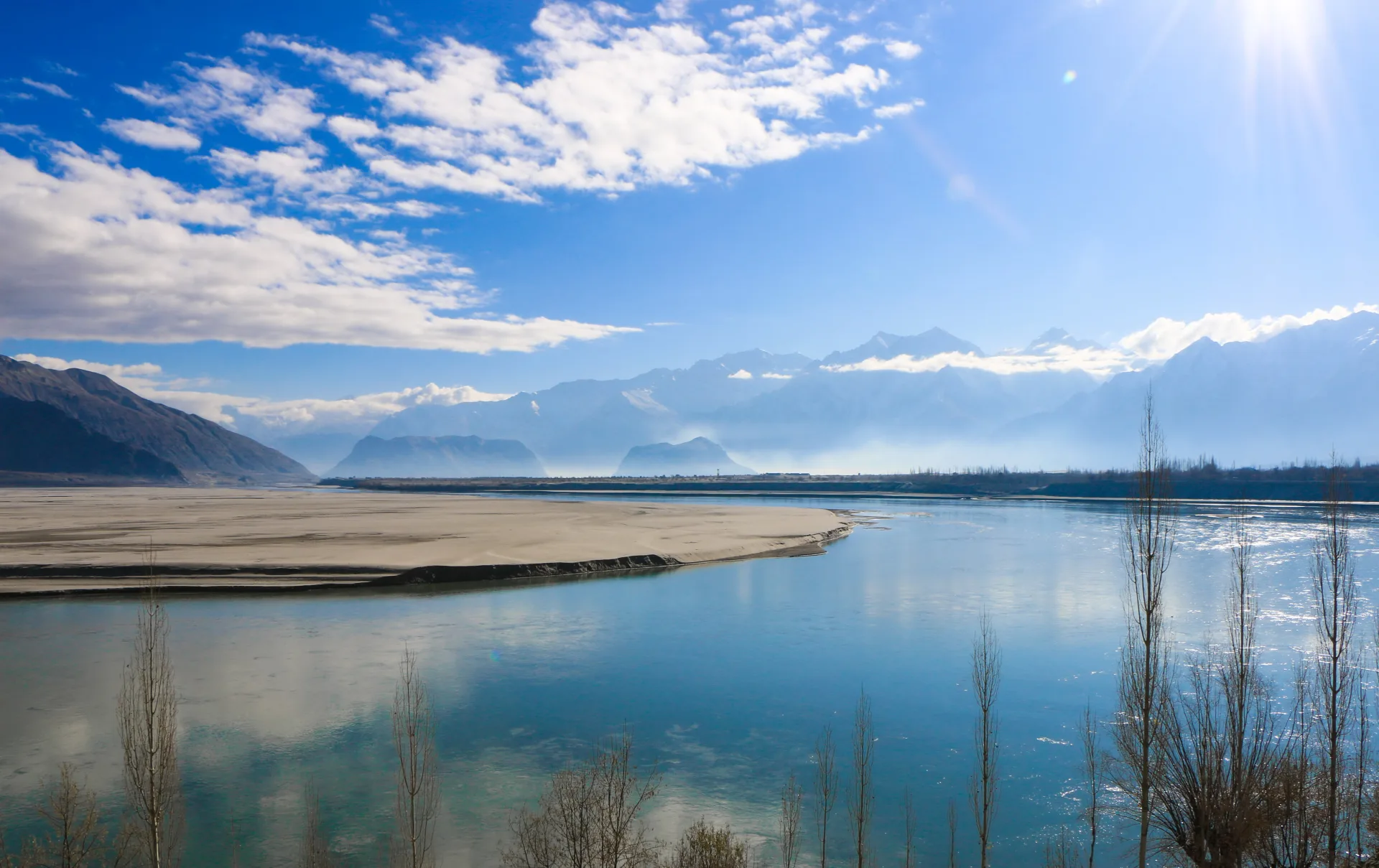
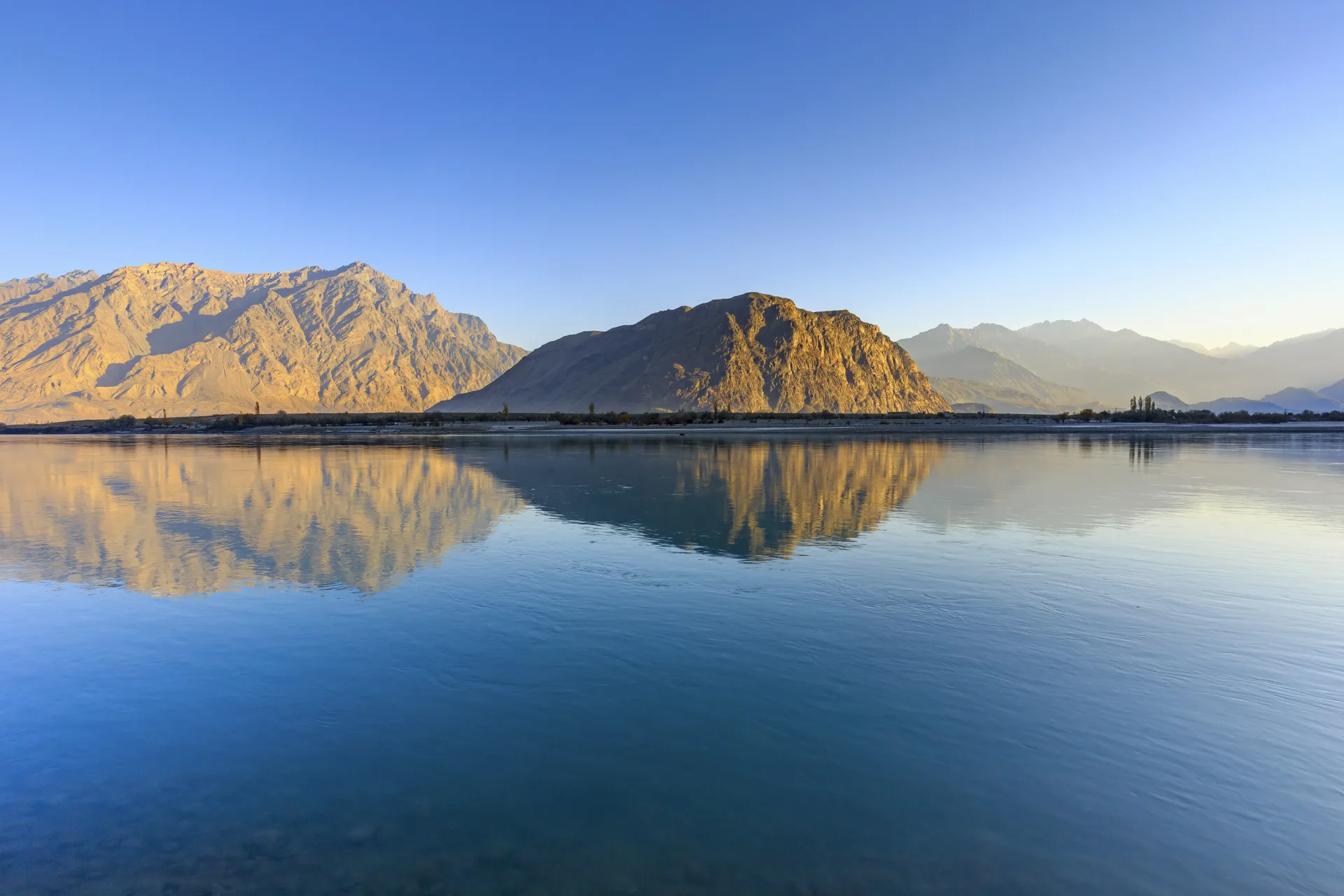
The Indus River at dawn near Skardu mirroring the surrounding mountains
Back to Tours
Cultural Skardu

Skardu

Skardu's lakes, forts and high desert on one circuit
The Indus River at dawn near Skardu, mirroring the surrounding mountains
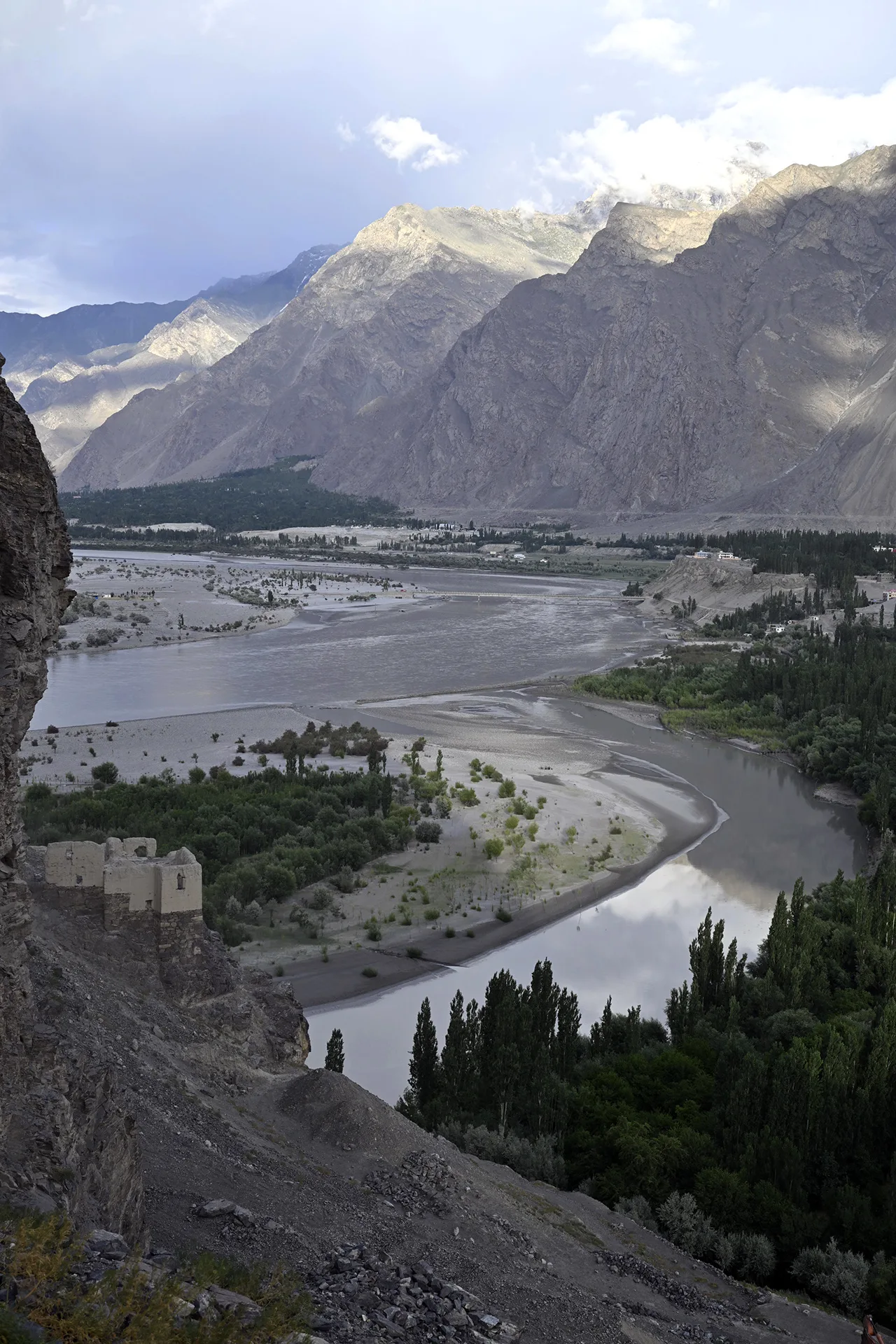
Aerial view of the Indus River winding through the Skardu valley along the Gilgit-Skardu road
The braided Indus River flowing past the arid mountains of Skardu
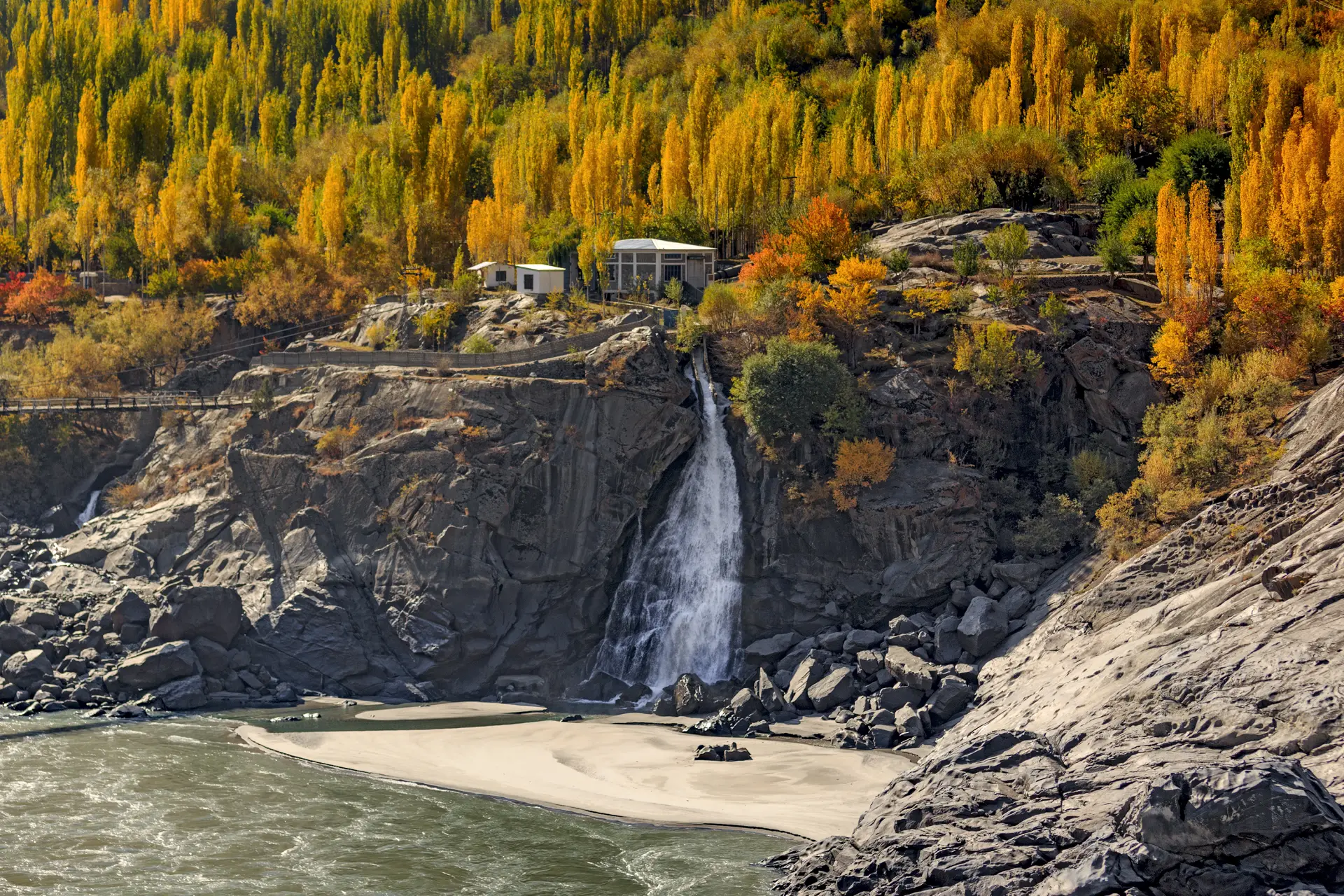
A roadside waterfall on the Gilgit-Skardu road framed by autumn colours
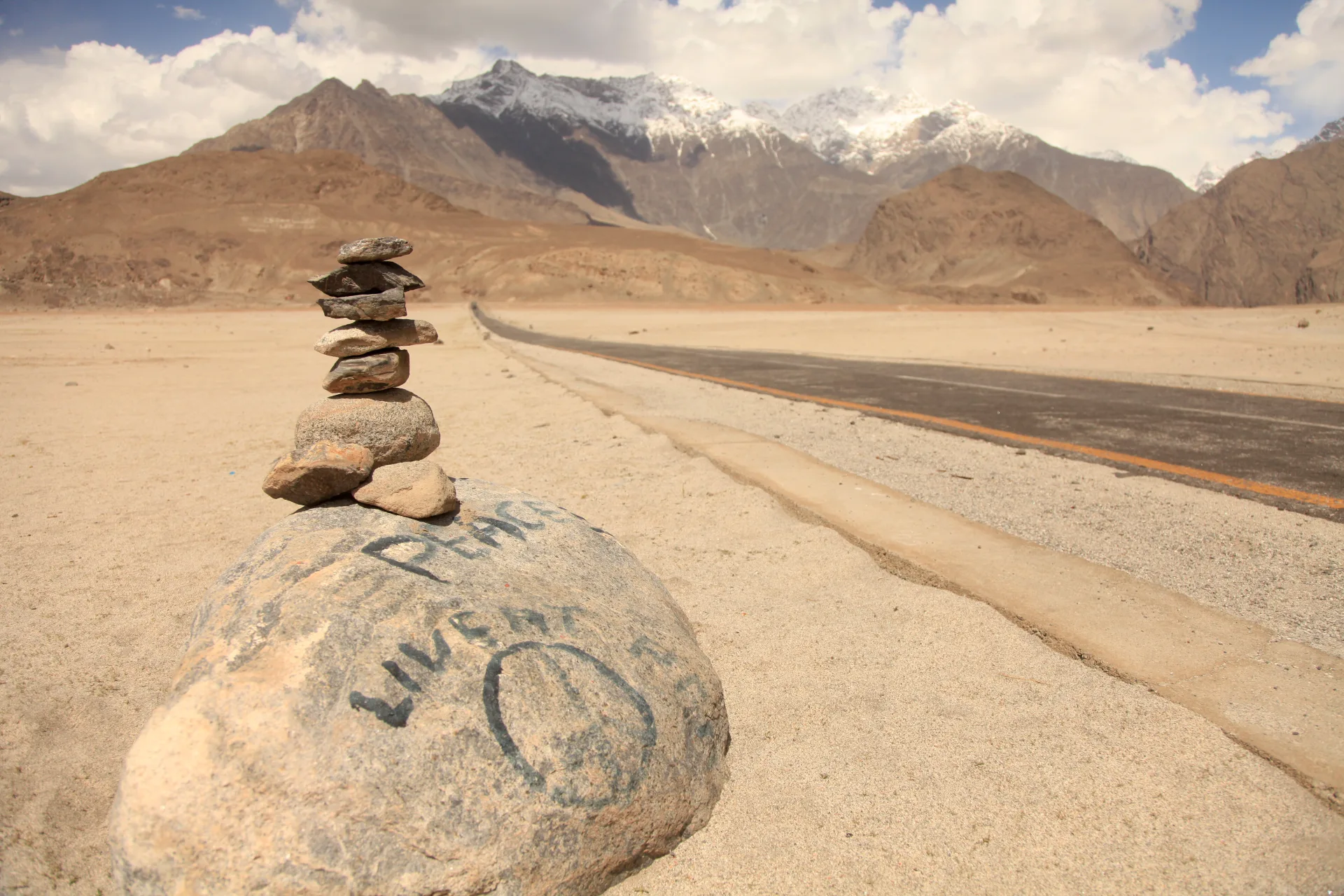
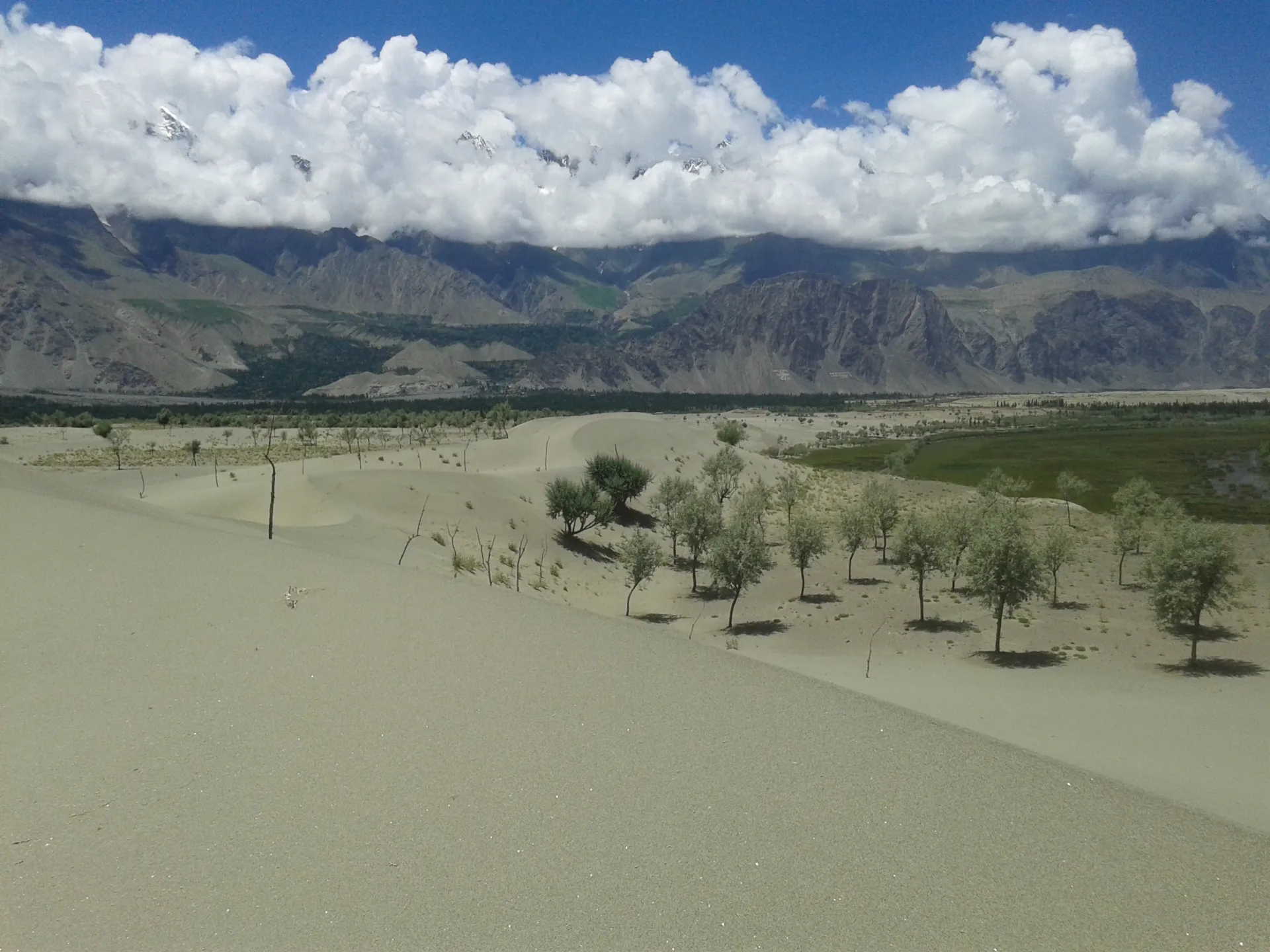
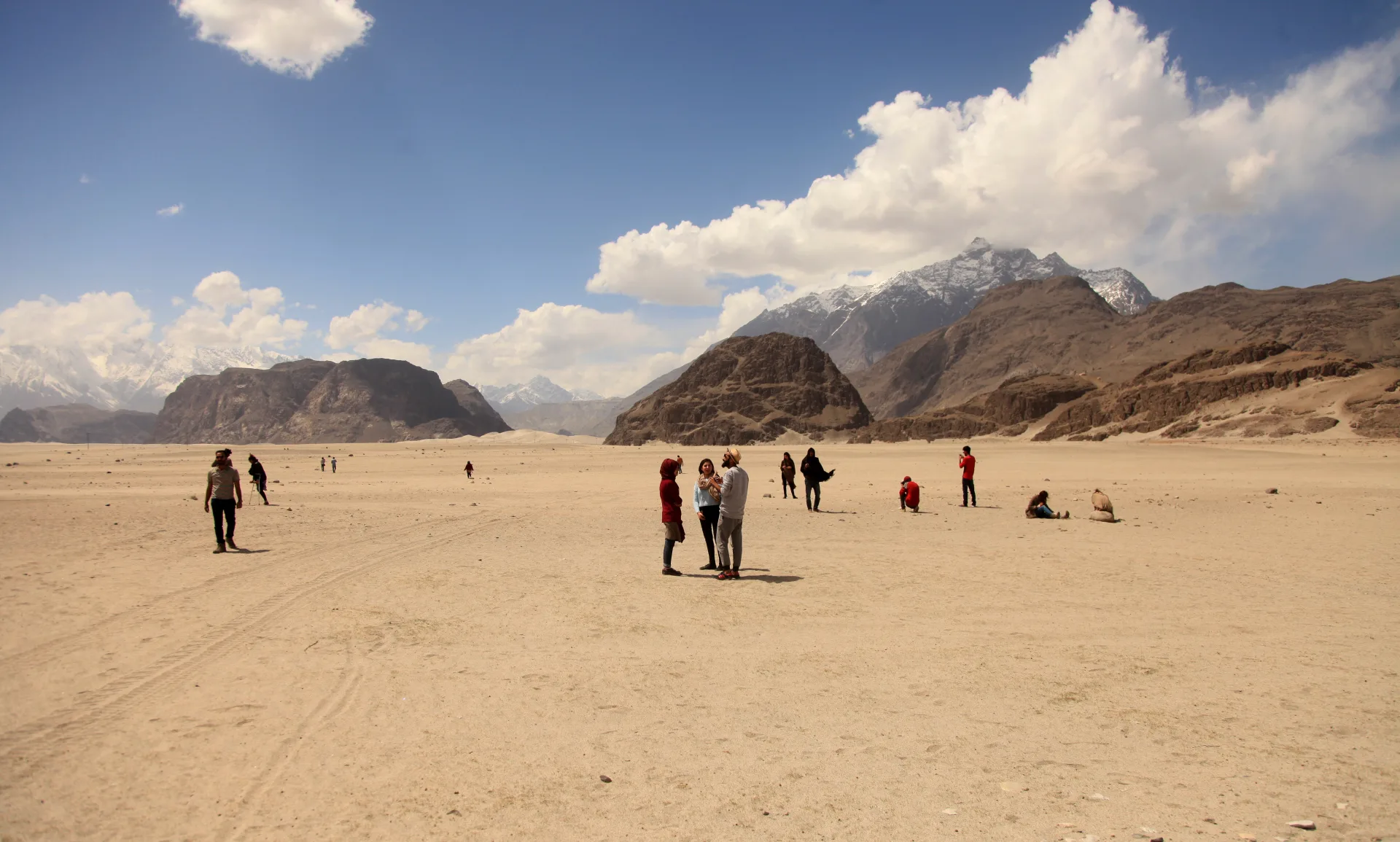
The Katpana Cold Desert near Skardu, with sand dunes below snow-capped peaks
Sand dunes of the Katpana Cold Desert set against the mountains of Skardu
Visitors walking across the high-altitude cold desert sands near Skardu
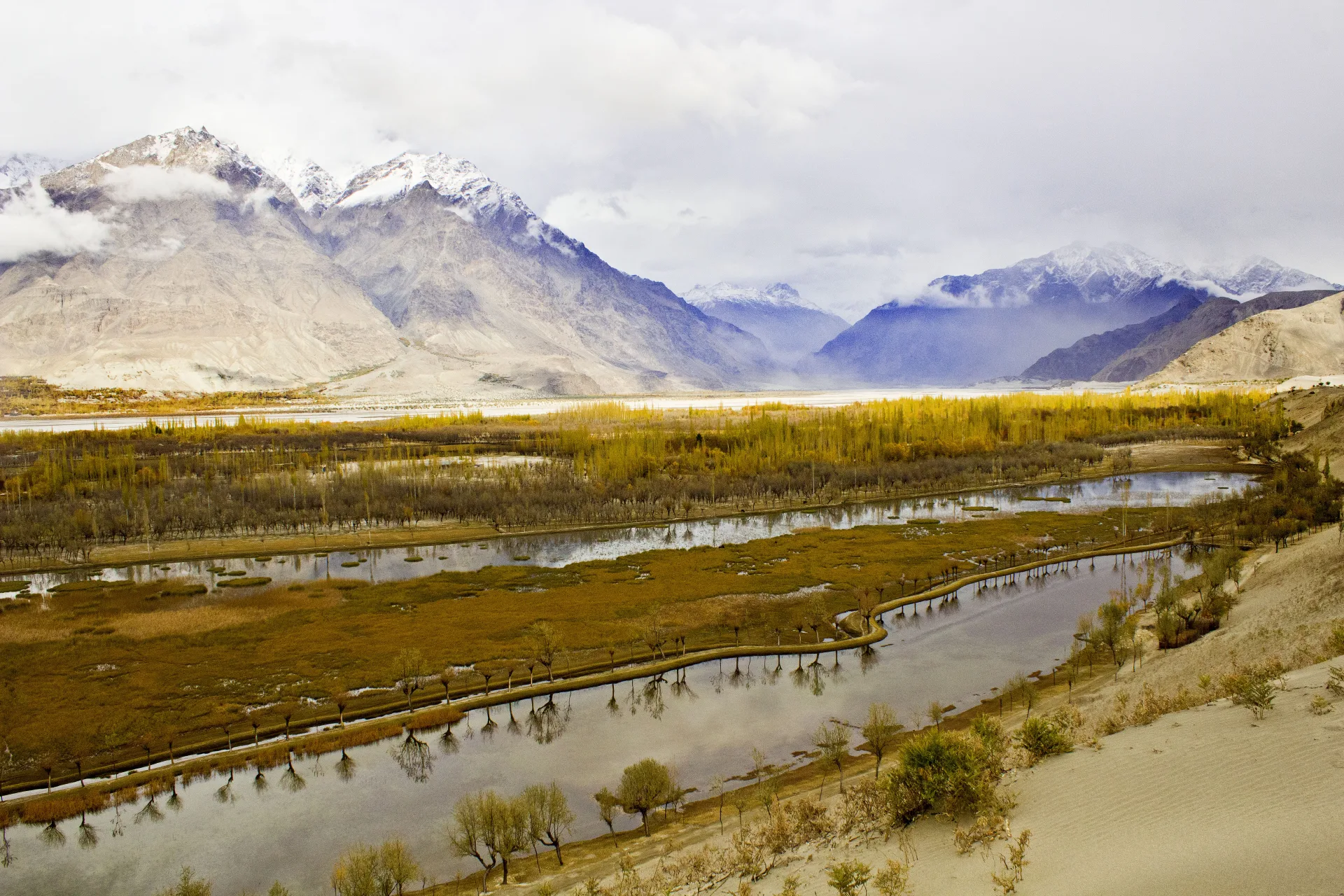
A stream winding through the green Skardu valley beneath snow-dusted peaks
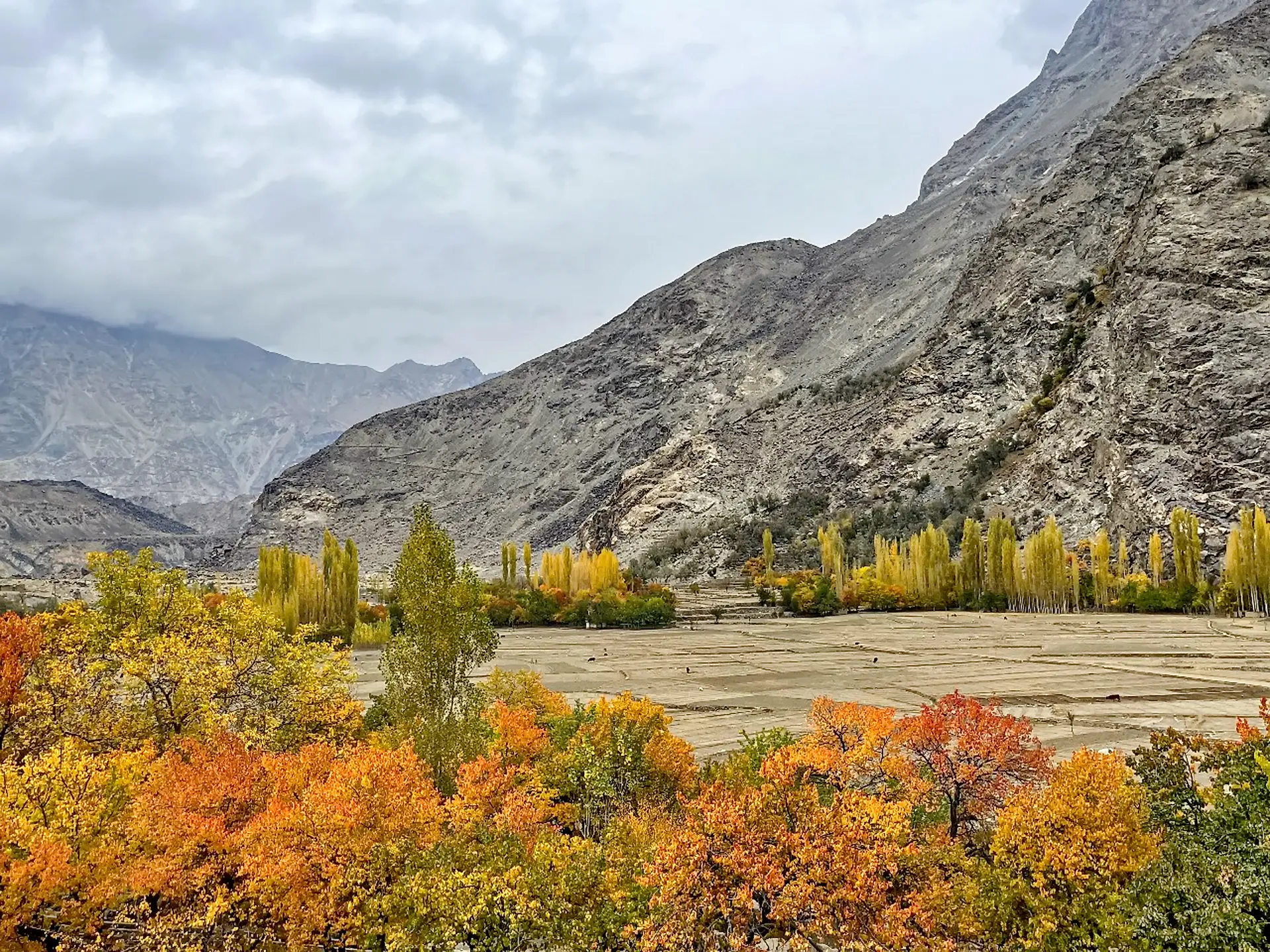
Golden autumn poplars in the Skardu valley
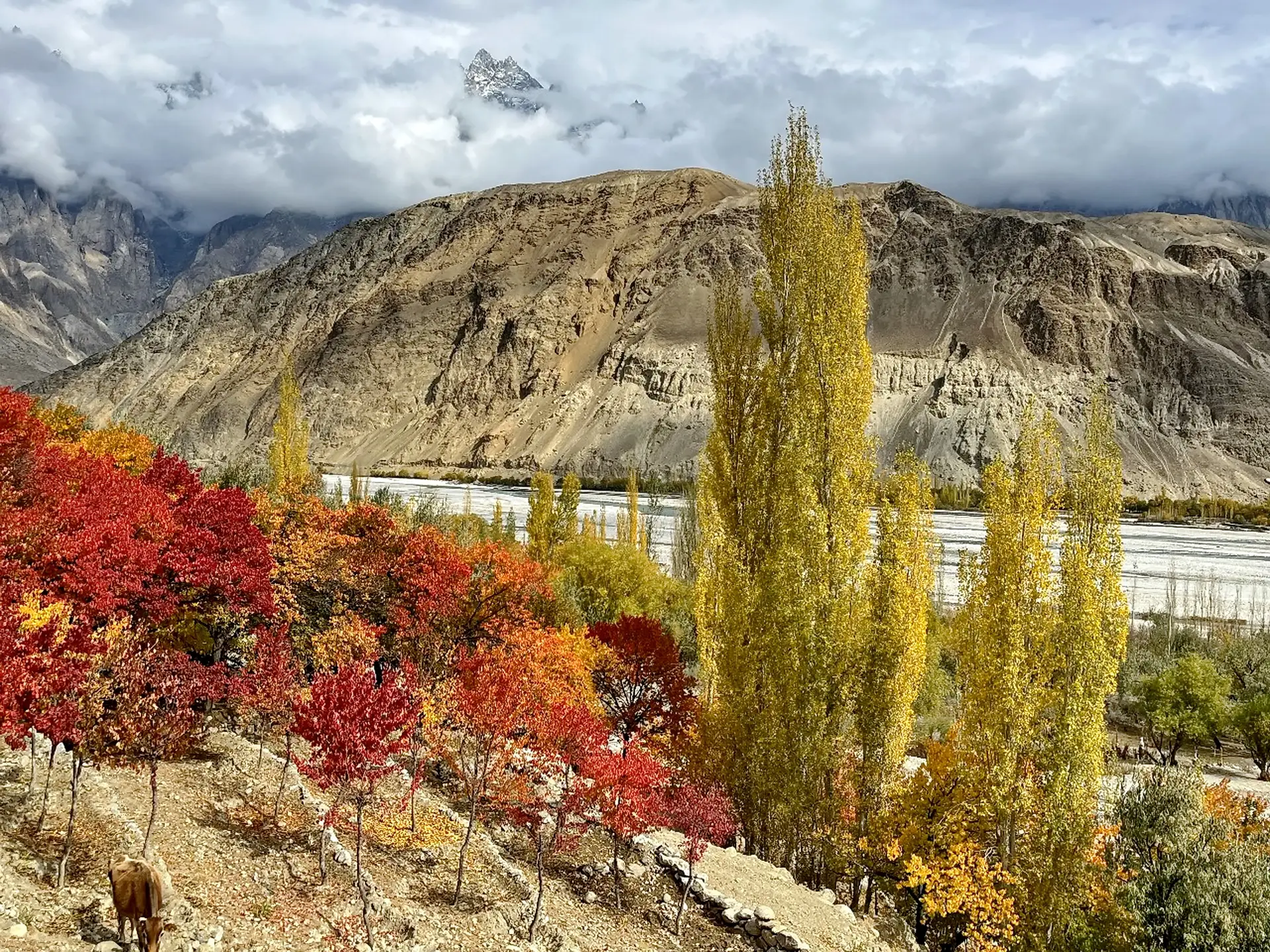
Red and gold autumn foliage along the Indus valley near Skardu
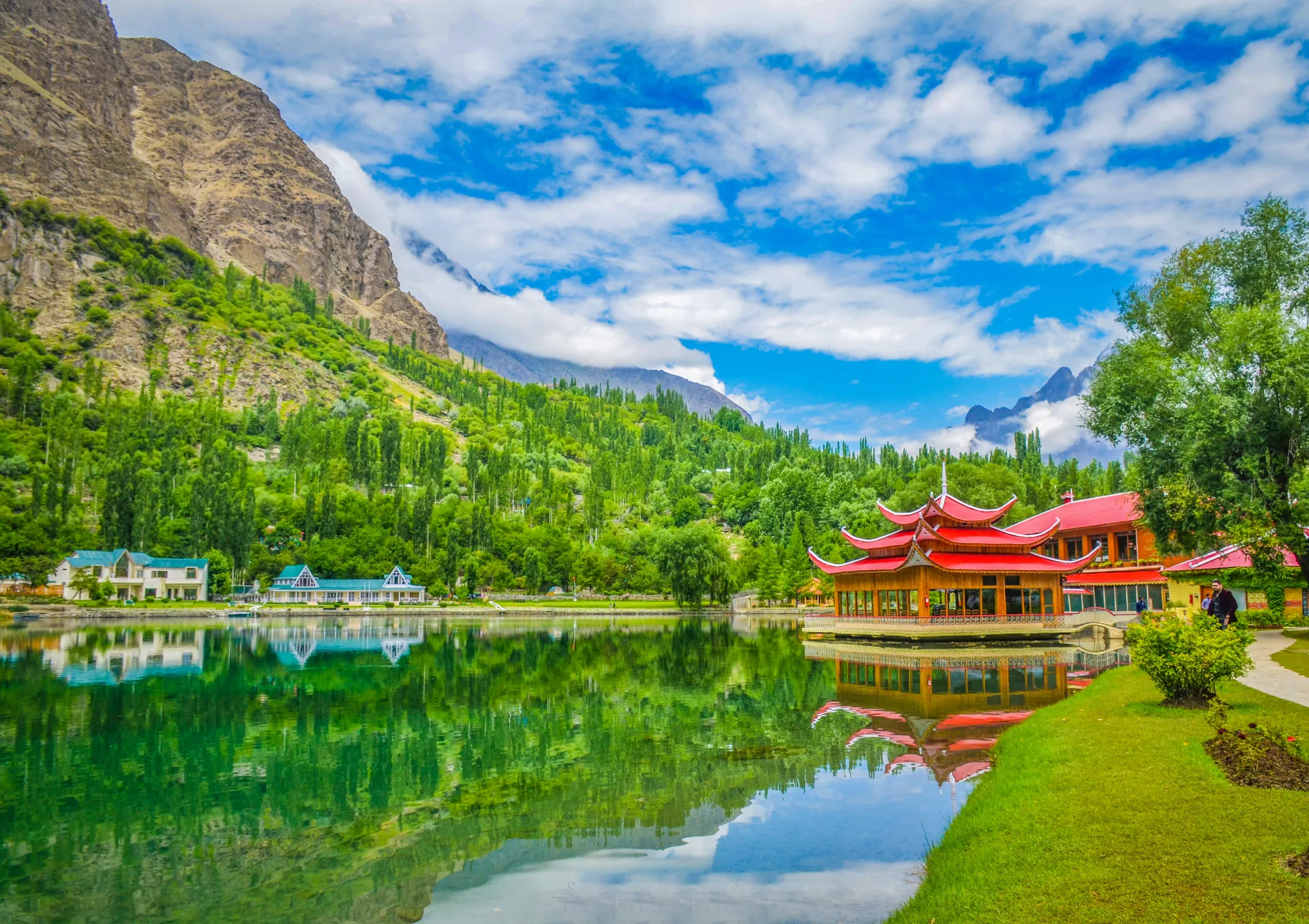
The red pagoda of Shangrila Resort beside Lower Kachura Lake, Skardu
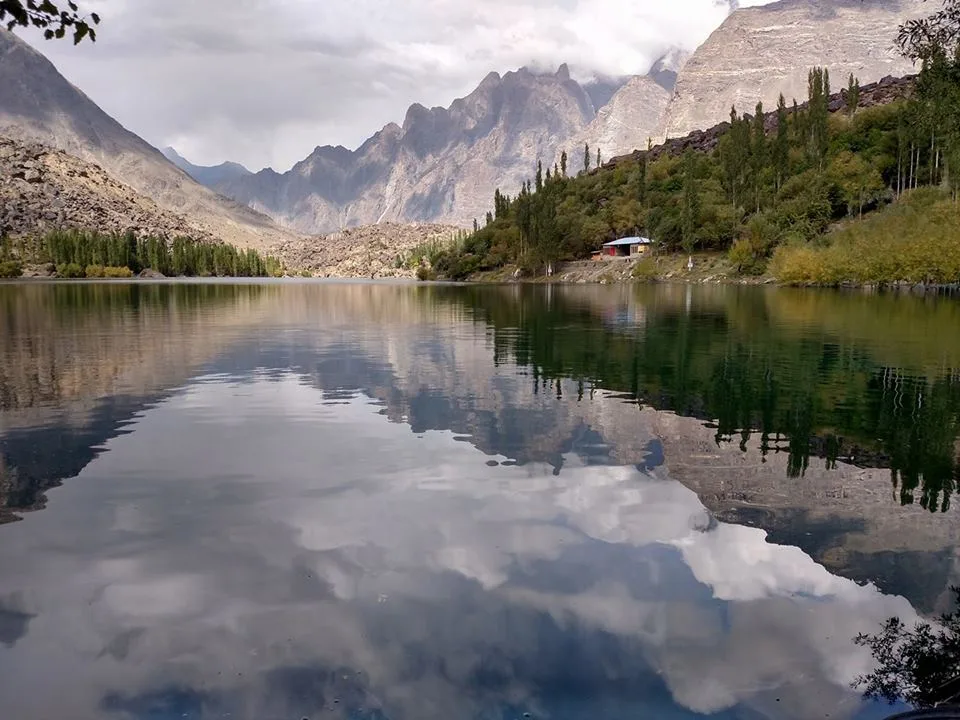
The calm waters of Upper Kachura Lake reflecting the mountains near Skardu

Last updated: · Reviewed by Javeed Iqbal, Founder

Duration

8-10 Days

Difficulty

Easy

Group Size

2-12 Travelers

Best Season

Apr-Oct

About This Tour

This tour bases you in Skardu, the wide sandy valley town at about 2,228 metres where the Indus and Shigar rivers meet, and runs a circuit of its best scenery over 8 to 10 days. Skardu is the heart of Baltistan, the part of Gilgit-Baltistan people call Little Tibet, and it packs an unusual range of landscapes into a short driving radius: clear lakes, a high cold desert, two old forts and Buddhist rock carvings from before the valley turned Muslim.

You work outward from town. The Kachura lakes sit a short drive out: Lower Kachura, the lake beside the well-known Shangrila resort at around 2,500 metres, and Upper Kachura, the deeper, clearer twin. Satpara Lake rises just above Skardu and feeds the town's water. Shigar Fort, about an hour out, is a 17th-century Raja's palace of the Amacha dynasty, restored by the Aga Khan and now run as a heritage hotel and museum. Add the two cold deserts at roughly 2,300 metres, among the highest on Earth (Sarfaranga across the Indus on the Shigar road, and the smaller Katpana near the airport), the Kharpocho Fort above town, and the Manthal Buddha rock with its 8th-century carvings, and you have the circuit.

Skardu wears its seasons well. May to October is the window: spring brings blossom to the valley orchards, summer the warmest and clearest weather, and autumn turns the poplars and apricots gold. The cold desert is at its best on clear nights, when the dunes sit under a full sky of stars with no town light to drown them, and the lakes hold their mountain reflections still in the early morning before the wind comes up.

Over 8 to 10 days we run the circuit in a private 4x4 with a local driver and guide. The one honest variable is how you get in. We can fly you Islamabad to Skardu when the weather cooperates, but we always build the trip with a road fallback, because the flight is the part of any Skardu plan most likely to slip.

Things You See and Do Around Skardu

The lakes come first for most guests. Lower Kachura, beside the Shangrila resort at about 2,500 metres, is the easy, photogenic one; Upper Kachura, a short walk or boat away, is deeper and clearer and quieter. Satpara Lake, just above town, is the third, sitting in a bowl that feeds Skardu's water supply.

Then the heritage. Kharpocho Fort, the 'King of Forts' in Balti, was built around 1500 by Ali Sher Khan Anchan and stands on a rock spur over the Indus and the town. Shigar Fort, an hour out, is the restored 17th-century Amacha palace. And the Manthal Buddha rock, on the edge of Skardu, carries 8th-century Buddhist carvings from the valley's pre-Islamic, Little-Tibet past.

Set against all that are two separate cold deserts at around 2,300 metres, sand dunes on the floor of the Indus valley with snow peaks behind them and among the highest in the world: Sarfaranga, the larger, across the river on the Shigar road, and Katpana, near the airport. We time a visit for late afternoon into the evening, when the light goes long across the dunes and, on a clear night, the stars come out hard.

Where is Skardu?

Skardu is the main town of Baltistan, in the Gilgit-Baltistan region of northern Pakistan, sitting at about 2,230 metres on a wide bend of the Indus River and ringed by the peaks of the Karakoram. It gives access to the greatest concentration of high mountains on Earth, including K2, and is the launch point for Deosai, the Baltoro glacier and the Shigar and Khaplu valleys. From Islamabad it is roughly 600 km by road, a long 14 to 16 hour drive up the Karakoram Highway and the Jaglot-Skardu road, or a one-hour flight when the weather allows.

Skardu Weather and Temperature

Skardu has a cold high-desert climate: dry, with big swings between day and night and four clear seasons. Summer (June to August) is the warm, busy season, with daytime highs around 20 to 27°C and cool nights, ideal for travel and trekking. Spring (April to May) brings apricot and cherry blossom and mild days. Autumn (September to October) is crisp and clear with cold nights and golden poplars. Winter (November to March) is harsh, with heavy snow and temperatures well below freezing; Skardu stays reachable by air and the Jaglot road, but the Deosai route closes. Pack warm layers whatever the season, as nights are cold even in midsummer.

Where to Stay in Skardu

Skardu has the widest choice of accommodation in Baltistan, from budget guesthouses in the bazaar to comfortable mid-range hotels and a few well-known resorts. The lakeside Shangrila Resort at Lower Kachura and the Shigar Fort Residence, a restored 17th-century fort run as a heritage hotel, are the standout stays. Most hotels cluster in Skardu town near the Indus, handy for the airport and onward jeeps to Deosai, Shigar and Khaplu. Standards are simple but improving, and the best rooms in peak summer book out early, so reserve ahead. On our tours we hold rooms in places we know and trust.

Day-by-Day Itinerary

1

Arrive Skardu (Flight or Drive)

Fly Islamabad to Skardu when the weather holds, or drive in down the repaved Indus gorge from the Jaglot junction, roughly 2.5 to 3 hours from the turn-off. Settle into Skardu at about 2,228 metres and find your feet in town.
2

Kharpocho Fort and Lower Kachura

Climb to Kharpocho Fort, the 'King of Forts' built around 1500 by Ali Sher Khan Anchan, for the panorama over the Indus and the town. In the afternoon, drive out to Lower Kachura Lake beside the Shangrila resort at about 2,500 metres for boating on clear water.
3

Shangrila and Upper Kachura

A slower day at the Kachura lakes. Visit the Shangrila resort on Lower Kachura, then walk or boat across to Upper Kachura, the deeper and clearer of the twin lakes and the quieter one to swim or sit beside.
4

Shigar Fort and Valley

Drive about an hour to Shigar Fort, the restored 17th-century Amacha-dynasty palace now run as a heritage hotel and museum, and explore the old village and orchards of Shigar around it.
5

Satpara Lake and Manthal Buddha Rock

Visit Satpara Lake in its bowl above Skardu, then the Manthal Buddha rock on the edge of town, carved with 8th-century Buddhist figures from the valley's Little-Tibet past. The afternoon is free for the Skardu bazaar.
6

Sarfaranga Cold Desert

Spend the day at the Sarfaranga cold desert, across the Indus on the Shigar road at around 2,300 metres and one of the highest cold deserts in the world, with a stop at the smaller Katpana dunes near the airport. We stay into the late light and, on a clear night, the dark-sky stars over the dunes.
7

Skardu to Chilas

Begin the return drive out of Skardu, back up the Indus gorge to the KKH and south to Chilas for the overnight. On a flight-out plan, this becomes a leisure day in Skardu instead.
8

Return to Islamabad

Complete the KKH drive back to Islamabad, or take the scenic Skardu-Islamabad flight when the weather allows and the schedule favours it.

Getting to Skardu: Flight or Road?

There are two ways in, and we plan for both. The PIA flight from Islamabad to Skardu is short and scenic, passing close to Nanga Parbat, but it is weather-dependent and frequently delayed or cancelled, especially in peak season. We book it when it makes sense and we always hold a road contingency, because a grounded flight should not end your trip.

The road option is the Karakoram Highway north and then the turn for Skardu down the Indus gorge from the Jaglot junction. That gorge road was widened and repaved around 2021 and now takes roughly 2.5 to 3 hours from the Jaglot turn-off, against the six to seven hours and real danger of the old road. Driving the whole way from Islamabad is a long two-day journey on the KKH, but it removes the flight gamble entirely.

Best Time to Visit Skardu

May to October is the season. Spring opens with blossom in the valley orchards, summer brings the warmest, most settled weather and the best chance of clear flights, and autumn through October turns the poplars and fruit trees gold against the bare peaks.

For the cold desert specifically, go for the clear nights: the Sarfaranga and Katpana dunes, two separate deserts on opposite banks of the Indus, are among the best dark-sky spots in the region, and a moonless clear night there is the reason many guests remember the trip. Winter is cold and access tightens, so we keep this tour to the May-to-October window.

Who This Tour Is For

This suits travellers who want scenery and heritage without hard trekking. The driving is easy in effort and the altitude stays moderate, mostly between about 2,200 and 2,600 metres around Skardu, so it works for a wide range of fitness and for families who are comfortable with long drive days.

It is a good fit if you want lakes, forts, desert and Buddhist history on one calm circuit, and if you accept that the flight in may need to become a drive. It is less suited to anyone set on a fixed flight schedule, or to travellers who specifically want high-altitude treks, which this tour does not include.

Why Book With Us

We are based in Gilgit-Baltistan and we run Skardu every season, which means we plan around its one real weak point: the flight. Every Skardu itinerary we sell carries a road fallback down the repaved Indus gorge from Jaglot, so a cancelled PIA flight reroutes rather than ruins the trip. Our drivers and guides are local Baltis who know the forts, the lakes and the desert beyond the standard stops, and who can tell you the difference between Upper and Lower Kachura before you waste a morning on the wrong one. We pace the circuit so you see the cold desert in the right light and the lakes before the wind.

What's Included

Private 4x4 vehicle with experienced driver for entire route
7-9 nights in hotels and guesthouses
Daily breakfast and dinner
English-speaking guide
Sarfaranga Cold Desert and Manthal Buddha excursions
All fort and lake entry fees

Not Included

International flights
Travel insurance
Personal expenses and tips

Frequently Asked Questions

Is Skardu worth visiting?

Yes, Skardu is worth visiting if you want a lot of scenery in a small radius without hard trekking. From one base town at about 2,228 metres you reach clear lakes, a high cold desert, two old forts and 8th-century Buddhist carvings, all within an easy drive. Lower Kachura sits beside the Shangrila resort, Upper Kachura is its deeper and quieter twin, and Satpara Lake rises just above town. Kharpocho Fort, built around 1500, looks down on the Indus, while Shigar Fort, an hour out, is a restored 17th-century Amacha palace now run as a heritage hotel and museum. The Sarfaranga and Katpana dunes at around 2,300 metres are among the highest cold deserts in the world. Skardu is also the launch point for Deosai, the Baltoro glacier and the Shigar and Khaplu valleys. Our 8 to 10 day circuit runs in a private 4x4 with a local driver and guide, from $1,300 per person.

What is the best time to visit Skardu?

April to October is the season for Skardu, and we keep this tour inside that window because winter brings heavy snow and access tightens. Spring (April to May) brings apricot and cherry blossom to the valley orchards and mild days. Summer (June to August) is the warm, busy season, with daytime highs around 20 to 27°C, the most settled weather and the best chance of the Islamabad flight actually going. Autumn (September to October) is crisp and clear, with cold nights and the poplars and apricot trees turning gold against the bare peaks. If the cold desert is on your list, aim for clear, moonless nights, when the Sarfaranga and Katpana dunes sit under a full sky of stars with no town light to drown them. The lakes are best early in the morning, when they hold their mountain reflections before the wind comes up. Nights are cold in every month, so pack warm layers even in midsummer.

Should I fly or drive to Skardu?

Fly if the weather cooperates, but always plan for the road, because the flight is the part of any Skardu trip most likely to slip. The PIA flight from Islamabad takes about an hour and passes close to Nanga Parbat, but it is weather-dependent and frequently delayed or cancelled, especially in peak season. The road runs up the Karakoram Highway and then down the Indus gorge from the Jaglot junction. That gorge road was widened and repaved around 2021 and now takes roughly 2.5 to 3 hours from the turn-off, against six to seven hours and real danger on the old road. Driving the whole way from Islamabad is roughly 600 km and a long two-day journey, usually broken at Chilas, but it removes the flight gamble entirely. Every Skardu itinerary we sell carries this road fallback, so a grounded plane reroutes the trip rather than ending it.

What is the difference between Upper and Lower Kachura lakes?

Lower Kachura is the easy, photogenic lake beside the Shangrila resort at about 2,500 metres, while Upper Kachura is the deeper, clearer and quieter twin a short walk or boat ride away. Lower Kachura is the most photographed of the two and the one with boating on clear water. Upper Kachura is where you go to swim or simply sit without the crowd. On our circuit we give the lakes two days so you do not have to choose. Day 2 pairs Kharpocho Fort in the morning with an afternoon on Lower Kachura, and day 3 is a slower day at Shangrila before crossing to Upper Kachura. We time the visits for early in the day, when the water holds its mountain reflections before the wind comes up. Satpara Lake, the third lake, sits in a bowl just above Skardu and feeds the town's water supply.

How high is Skardu and will I feel the altitude?

Skardu sits at about 2,228 metres, and most travellers feel little or no altitude effect on this circuit. The route stays moderate, mostly between about 2,200 and 2,600 metres, and the highest point on the tour is roughly 2,600 metres. Lower Kachura beside the Shangrila resort is at about 2,500 metres and the Sarfaranga and Katpana cold deserts are at around 2,300 metres, so you never sleep or walk far above town level. That is why the difficulty is rated easy and why the tour works for a wide range of fitness. The days are drives, short walks and lakeside time rather than treks, which keeps the effort low. Carry a warm layer for the cold evenings. If you want real altitude, Skardu is the launch point for Deosai and the Baltoro, but this tour does not include high-altitude treks.

Is this tour suitable for families?

Yes, this tour suits families who are comfortable with long drive days. The effort is rated easy, the altitude stays moderate at mostly between about 2,200 and 2,600 metres, and the highlights are drives, short walks and lakeside time rather than treks. The easiest days for children are boating on Lower Kachura, the climb to Kharpocho Fort for the view over the Indus, and the dunes of the Sarfaranga cold desert in the late light. Groups run from 2 to 12 travellers in a private 4x4 with a local driver and an English-speaking guide, and you stay 7 to 9 nights in hotels and guesthouses with breakfast and dinner included. The two things families should accept before booking are the long road days, and the real chance that the Islamabad flight is cancelled and becomes a drive. We build every itinerary with that road fallback so the trip carries on either way.

Do I need permits for the Skardu route?

No special trekking permits are needed for the Skardu circuit. The forts, lakes and desert sites charge standard entry fees, and we include all fort and lake entry fees in the price. You do need your passport and national ID for the routine registration points on the journey in and out. Because this tour stays in and around Skardu at mostly 2,200 to 2,600 metres and includes no high-altitude treks, it avoids the permit paperwork that comes with trekking and mountaineering further into the Karakoram. The price from $1,300 per person also covers the private 4x4 with an experienced driver for the whole route, 7 to 9 nights in hotels and guesthouses, daily breakfast and dinner, an English-speaking guide, and the Sarfaranga Cold Desert and Manthal Buddha excursions. International flights, travel insurance, personal expenses and tips are not included.

What is the cold desert near Skardu?

The cold desert near Skardu is actually two separate areas of sand dunes on the floor of the Indus valley, both at around 2,300 metres and among the highest cold deserts in the world. Sarfaranga, the larger, lies across the river on the road to Shigar. Katpana is a smaller patch near Skardu airport, on the opposite bank. Both set their dunes against snow peaks. On our circuit, day 6 is given to Sarfaranga with a stop at the Katpana dunes, and the excursion is included in the price. We time the visit for late afternoon into the evening, when the light runs long across the sand, and on a clear night we stay on for the stars. A moonless clear night there, with no town light to drown the sky, is the reason many guests remember the trip. Bring a warm layer, because the temperature drops quickly once the sun goes.

How far is Skardu from Islamabad?

Skardu is roughly 600 km from Islamabad by road, a long 14 to 16 hour drive, or about an hour by air when the weather allows. The road goes north up the Karakoram Highway to the Jaglot junction, then down the Indus gorge on the Jaglot-Skardu road. That last section was widened and repaved around 2021 and now takes roughly 2.5 to 3 hours from the turn-off, against six to seven hours on the old road. Most people break the drive with an overnight on the way, and on our tour the return leg stops at Chilas. The PIA flight is short and scenic, passing close to Nanga Parbat, but it is weather-dependent and frequently delayed or cancelled, especially in peak season. For that reason every Skardu itinerary we run carries a road fallback, so a grounded flight turns into a drive instead of a lost day.

What is the weather like in Skardu?

Skardu has a cold high-desert climate: dry, with big swings between day and night and four clear seasons. Summer (June to August) is the warm, busy season, with daytime highs around 20 to 27°C and cool nights, and it is the best time for travel. Spring (April to May) brings apricot and cherry blossom and mild days. Autumn (September to October) is crisp and clear with cold nights and golden poplars. Winter (November to March) is harsh, with heavy snow and temperatures well below freezing. Skardu stays reachable by air and the Jaglot road in winter, but the Deosai route closes, and we keep this tour to the season from April to October. Afternoons in the sun can feel warm while the evening at the cold desert or by the lakes turns chilly fast. Pack warm layers whatever the month, because nights are cold even in midsummer, and weather also decides whether the Islamabad flight goes.

How do I get to Skardu by flight?

PIA flies Islamabad to Skardu in about an hour, with occasional flights from Lahore and Karachi, and the flight is short and scenic, passing close to Nanga Parbat. The catch is that it is weather-dependent and frequently delayed or cancelled, especially in peak season, so no Skardu plan should rely on it alone. Summer gives the most settled weather and the best chance of clear flights. We book the flight when it makes sense for your dates and we always hold a road contingency. If the plane is grounded, you drive in up the Karakoram Highway and down the repaved Indus gorge from the Jaglot junction, roughly 2.5 to 3 hours from the turn-off. On our tour, day 1 is built to work either way, and on the way out you can take the flight when the weather allows or the road via Chilas. International flights are not included in the price.

Where should I stay in Skardu?

Stay in Skardu town near the Indus if you want the widest choice and easy access, or book the Shangrila Resort or Shigar Fort Residence for something special. Skardu has more accommodation than anywhere else in Baltistan, from budget guesthouses in the bazaar to comfortable mid-range hotels and a few well-known resorts. Most hotels cluster in town, handy for the airport and onward jeeps to Deosai, Shigar and Khaplu. The lakeside Shangrila Resort sits at Lower Kachura, and the Shigar Fort Residence is a restored 17th-century Amacha palace run as a heritage hotel and museum, about an hour out. Standards are simple but improving, and the best rooms in peak summer book out early, so reserve ahead. On our tour you spend 7 to 9 nights in hotels and guesthouses we know and trust, with daily breakfast and dinner included, and we hold the rooms for you so you do not have to chase availability in the busy months.

From

$1,300

per person

* Prices may vary. Contact us for accurate, customized pricing.

Duration8-10 Days
DifficultyEasy
Group Size2-12 Travelers
Best SeasonApr-Oct
Max Altitude~2,600m
Book This Tour Ask a Question

Free cancellation up to 30 days before departure

Ready for Your Next Adventure?

Join our community of explorers and discover the journey of a lifetime. Our expert team is ready to help you plan your perfect expedition.