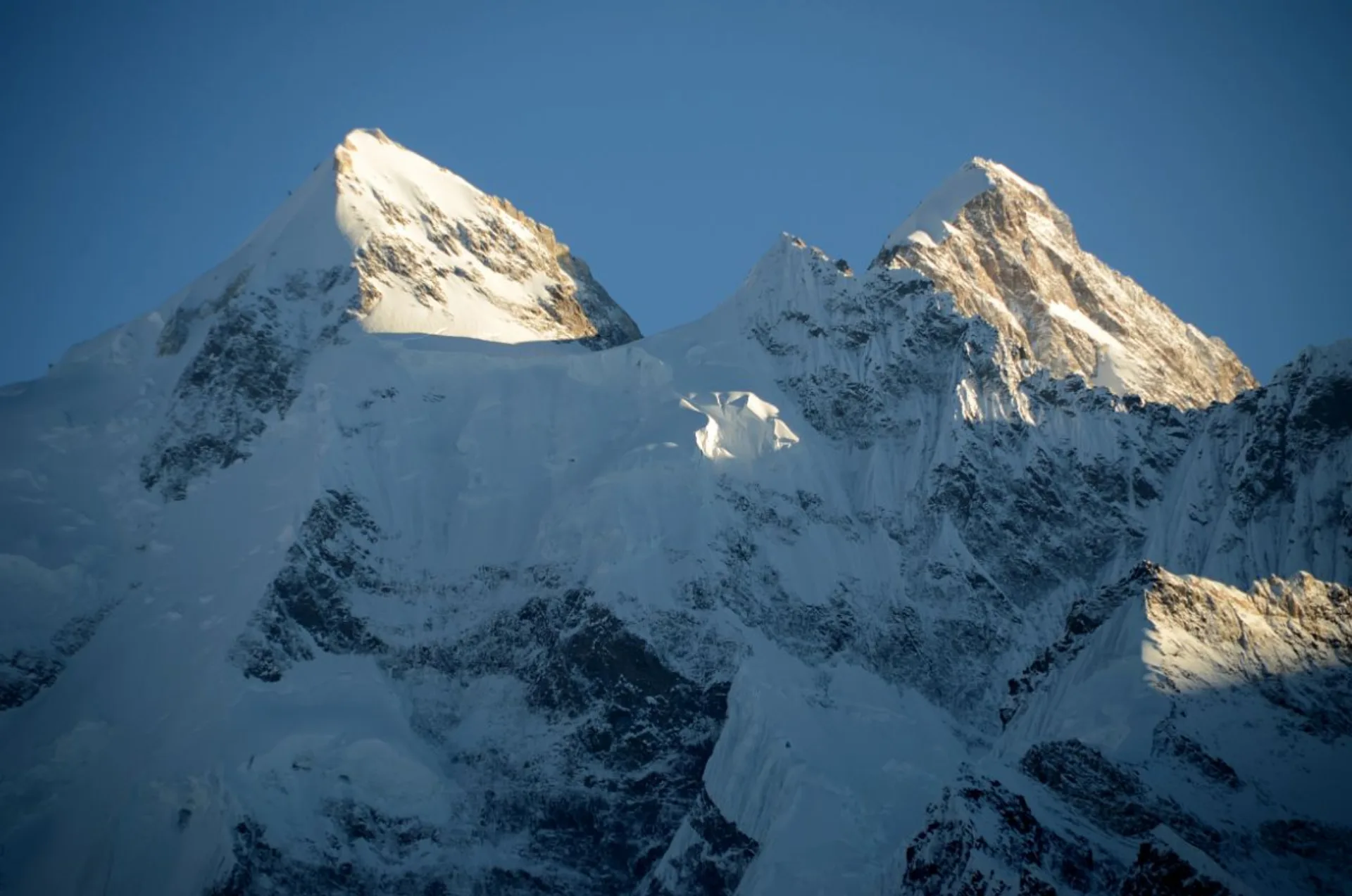
Gasherbrum II
The gateway to eight-thousander mountaineering
Last updated: · Reviewed by Javeed Iqbal, Founder
Elevation
8,035m
Difficulty
Extreme
Duration
40 to 50 Days
Best Season
Jun to Aug
Gasherbrum II Expedition: a complete guide to climbing Gasherbrum II
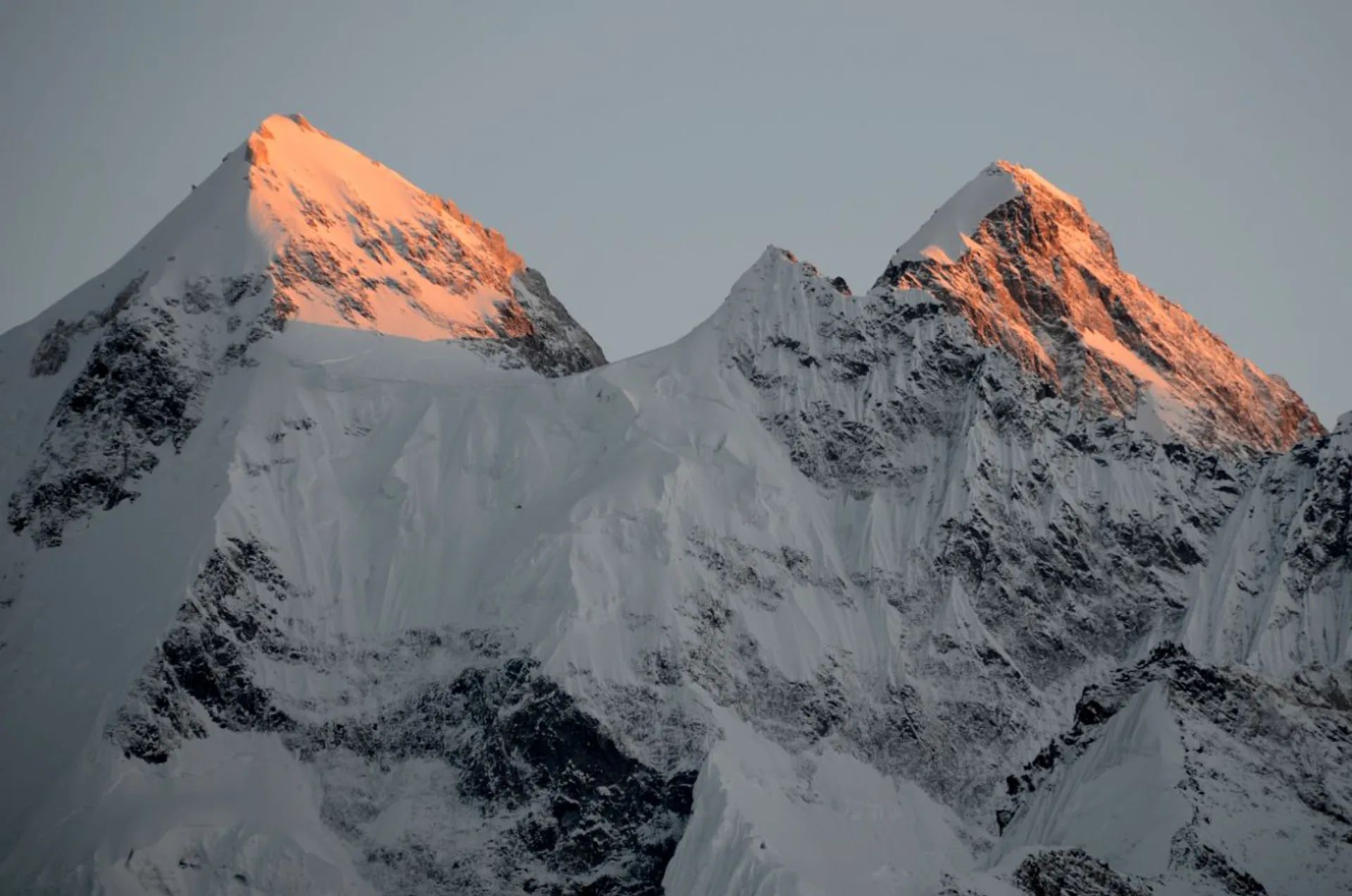
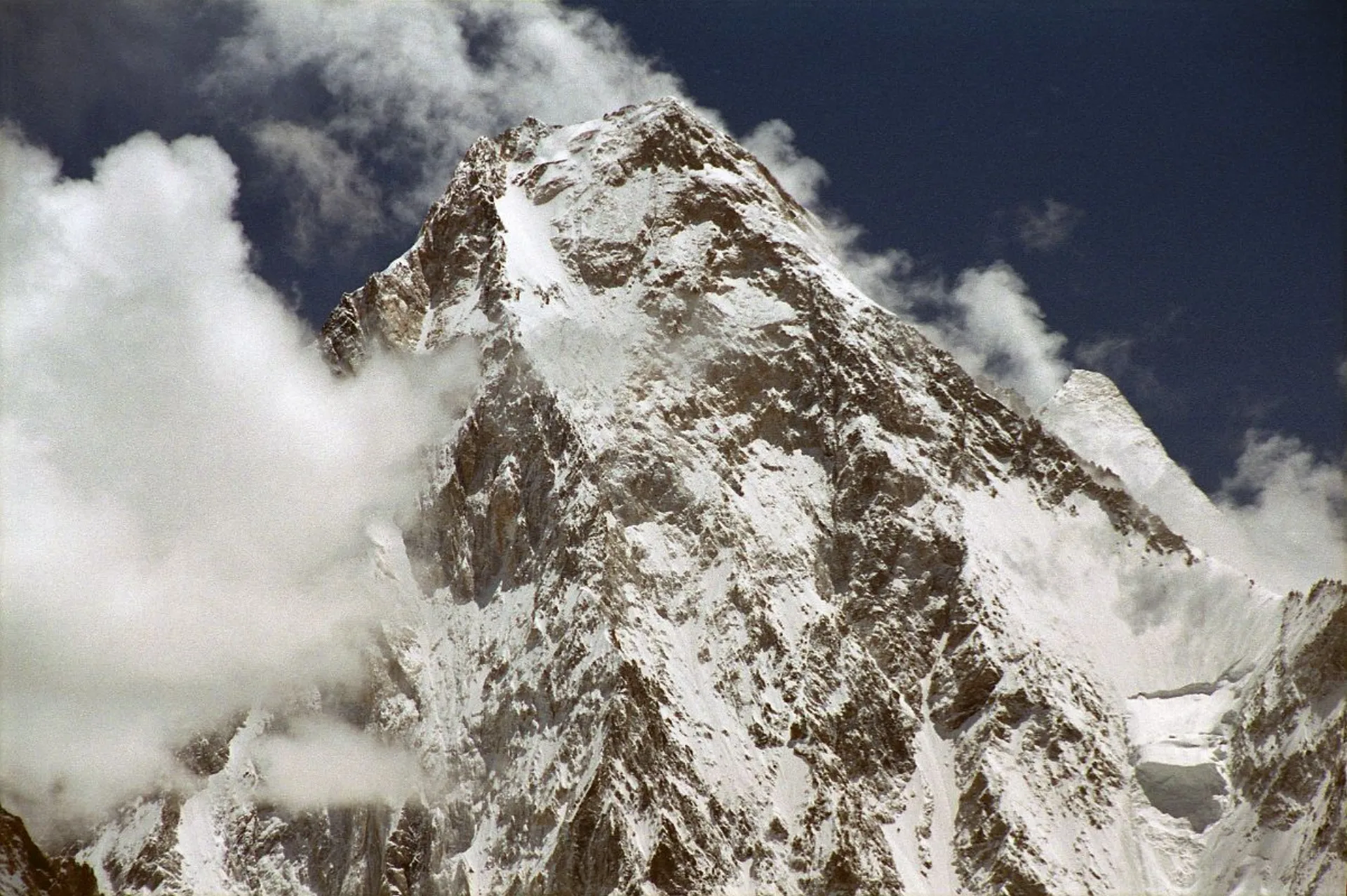
Gasherbrum II is the thirteenth-highest mountain on Earth at 8,035 metres, standing in the Karakoram on the Pakistan-China border beside its taller neighbour Gasherbrum I. It is widely regarded as the most accessible and safest of Pakistan's five eight-thousanders, and the usual choice for climbers attempting their first 8,000-metre peak. "Accessible" is relative, since it is still a high, serious, glaciated mountain, but a largely non-technical normal route and a strong summit record set it clearly apart from the harder Karakoram giants around it.
Where is Gasherbrum II?
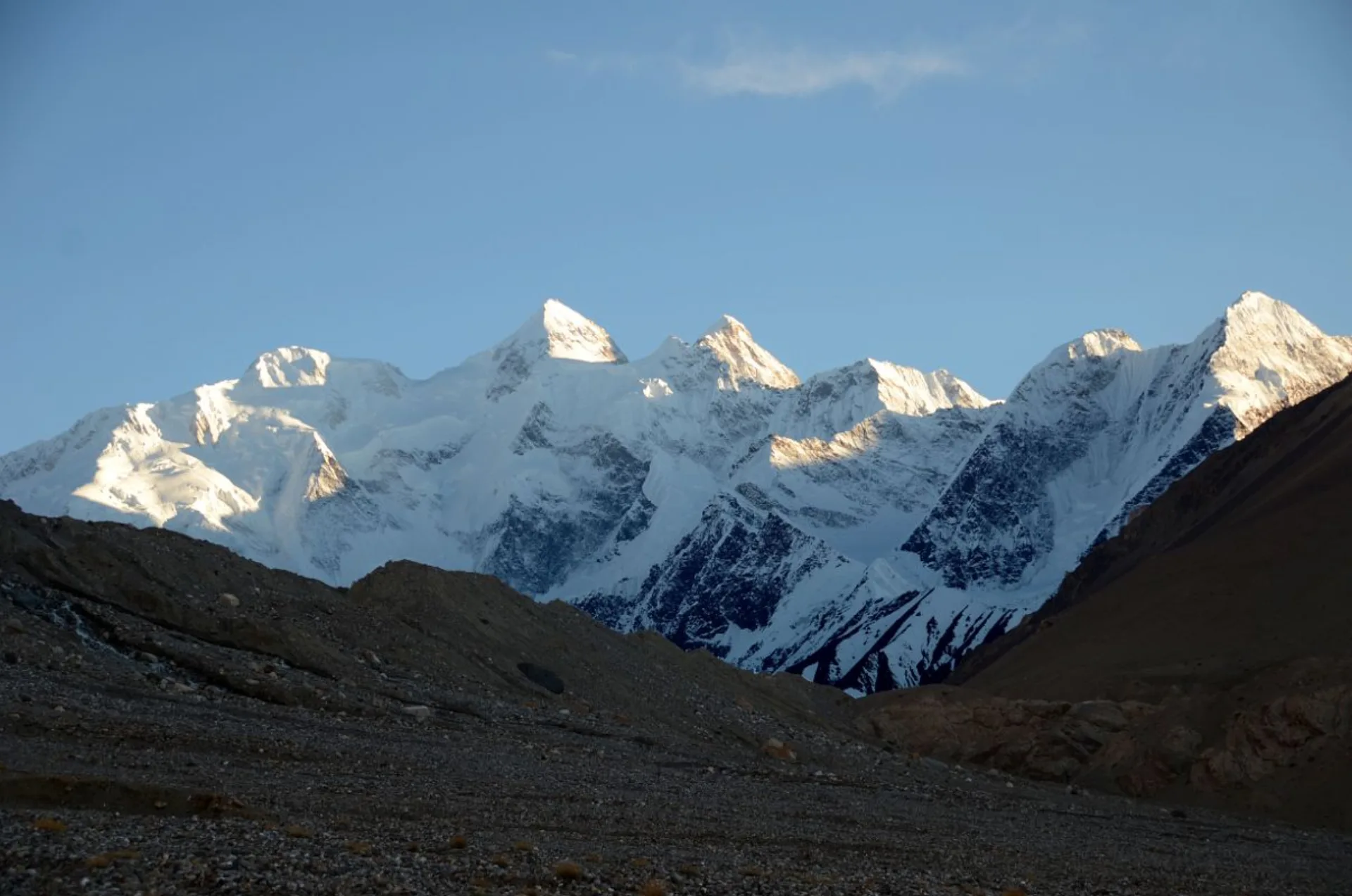
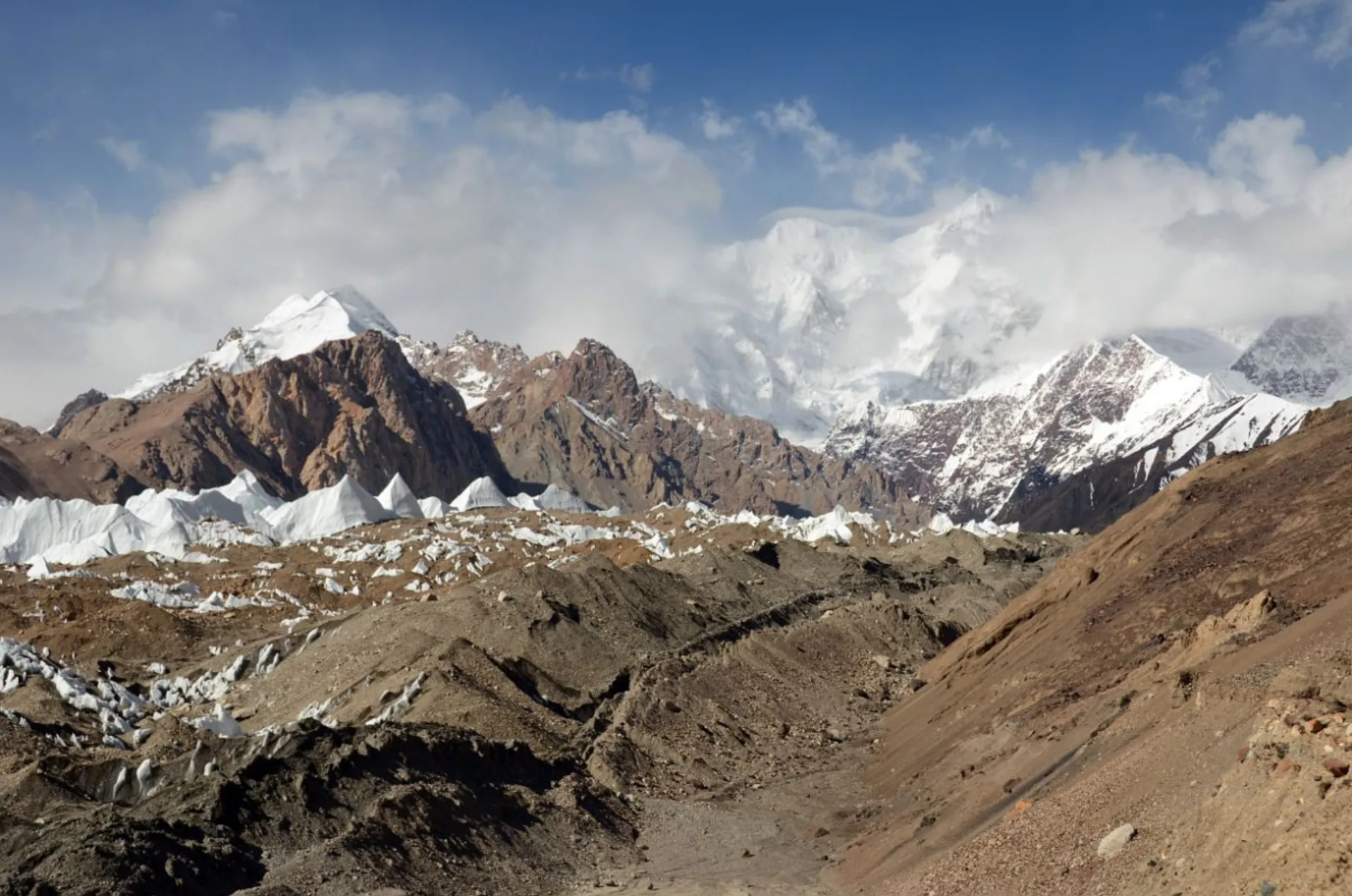
Gasherbrum II sits in the upper Baltoro region of the central Karakoram, part of the Gasherbrum massif right next to Gasherbrum I and within the same cluster of peaks as Broad Peak and K2. Expeditions follow the Baltoro Glacier to Concordia, then branch south up the Abruzzi and South Gasherbrum glaciers, with base camp at roughly 5,000 to 5,300 metres. The shared base camp with Gasherbrum I is why the two are so often climbed together.
The route: the Southwest Ridge
The normal route climbs the Southwest Ridge and is, for the most part, snow and glacier travel with no sustained technical or mixed climbing. That is the key to the mountain's reputation: because the route never throws hard technical ground at climbers, summit rates stay high even when the weather is only moderate. Teams typically place three camps above base camp, negotiate an icefall and crevasse field lower down, and then follow snow slopes and the ridge to the summit. It is straightforward by eight-thousander standards, not by any everyday standard.
Why it is the "easiest" 8000er
Gasherbrum II has recorded more than 930 successful ascents against around 21 deaths, a fatality rate near 2 percent, very low for an eight-thousander and a fraction of K2's. It is less steep and less technical than the other Karakoram peaks, and its summit can be reached in marginal conditions that would stop climbers elsewhere, which is exactly why it is so often chosen as a first 8,000-metre peak. "Easiest", though, should never be read as easy: altitude, hidden crevasses, avalanche slopes, and fast-changing Karakoram weather all remain part of the climb.
The first ascent, 1956
Gasherbrum II was first climbed on 7 July 1956 by the Austrians Fritz Moravec, Josef Larch and Hans Willenpart via the Southwest Ridge. In a famous turn of events, an avalanche buried their Camp I and its supplies while they were lower on the mountain; rather than retreat, they re-stocked, pressed on, and reached the summit, an early, bold example of the lighter, faster Himalayan style that would later define the sport.
The Baltoro Glacier approach
The approach is the same great trek as K2 and Broad Peak: about seven days up the Baltoro Glacier from Askole, past the Trango Towers and Masherbrum to Concordia, then up the Gasherbrum branch to base camp. The walk-in doubles as valuable acclimatisation and is, for many climbers, one of the highlights of the whole expedition. Gasherbrum II is frequently paired with Gasherbrum I, using the shared base camp to attempt both peaks in one season.
Best time to climb
June to August is the season, with July and early August giving the most reliable summer windows once the jet stream lifts north of the range. Because the route holds up better than most in imperfect weather, Gasherbrum II often sees summits in conditions that would shut down attempts on the steeper neighbouring peaks.
Acclimatisation, cost and duration
A full Gasherbrum II expedition runs around 45 to 50 days, including the approach, acclimatisation rotations, and the summit window. It is among the more affordable eight-thousanders: the Gilgit-Baltistan summer royalty for Gasherbrum II is roughly $2,500 per foreign climber, with total cost depending on operator and level of support. Because the route is lower and less technical, a good number of climbers attempt it with light or no supplemental oxygen. Pricing here is indicative; we quote each expedition individually.
What it takes
For fit climbers with prior experience on 6,000 and 7,000-metre peaks and basic glacier and crampon skills, Gasherbrum II is among the best choices anywhere for a first eight-thousander. It still rewards genuine endurance, careful acclimatisation, and respect for the altitude and the weather. The mountain is forgiving by 8,000-metre standards, but the death zone is the death zone.
Go With Guide Pakistan runs fully supported Gasherbrum II expeditions with experienced high-altitude guides, the full Baltoro approach from Skardu, permit and liaison handling, fixed camps, oxygen if required, and base-camp support, including combined Gasherbrum I and II programmes for climbers attempting both, and as an ideal introduction to eight-thousand-metre climbing in the Karakoram.
| Stage | Where | Key detail |
|---|---|---|
| Start | Skardu to Askole | Where the trek begins |
| Trek | Askole to Concordia | About 7 days on the Baltoro |
| Glacier approach | Abruzzi and South Gasherbrum glaciers | Branch south from Concordia |
| Base camp | Shared with Gasherbrum I | 5,000 to 5,300 m |
| Lower mountain | Icefall and crevasse field | Hardest ground on the route |
| High camps | Southwest Ridge | 3 camps above base camp |
| Summit | Gasherbrum II | 8,035 m |
Climbing History
1956
First Summit
First Summit
Fritz Moravec, Josef Larch, and Hans Willenpart (Austria) reached the summit on July 7 via the Southwest Ridge.
1975
French Direct Route
French Direct Route
A French team established a new direct route on the Southwest Face, adding technical challenge to the mountain.
1982
Reinhold Messner's Ascent
Reinhold Messner's Ascent
Messner summited as part of his quest to climb all fourteen 8000m peaks, completing it in 1986.
1996
Guided Expeditions Begin
Guided Expeditions Begin
Commercial expeditions began operating on GII, making it one of the more accessible 8000m peaks.
2011
First Winter Ascent
First Winter Ascent
Simone Moro, Denis Urubko, and Cory Richards summited on February 2 in severe conditions, filmed for the acclaimed documentary.
Recommended Reading
Gasherbrum: Der leuchtende Berg
by Reinhold Messner (1984)
Gasherbrum: Der leuchtende Berg
by Reinhold Messner (1984)
G I und G II: Herausforderung Gasherbrum
by Reinhold Messner (1998)
G I und G II: Herausforderung Gasherbrum
by Reinhold Messner (1998)
What's Included
Not Included
Frequently Asked Questions About the Gasherbrum II Expedition
How high is Gasherbrum II and where is it?
How high is Gasherbrum II and where is it?
Gasherbrum II stands 8,035 metres high, the thirteenth-highest mountain in the world, in the central Karakoram of Gilgit-Baltistan on the Pakistan-China border. It is part of the Gasherbrum massif, right beside its taller neighbour Gasherbrum I and in the same cluster of peaks as Broad Peak and K2. Getting there is a journey in itself. Our expeditions start in Skardu, drive to Askole, then trek about seven days up the Baltoro Glacier past the Trango Towers and Masherbrum to Concordia. From Concordia the route branches south up the Abruzzi and South Gasherbrum glaciers to base camp at roughly 5,000 to 5,300 metres. That walk-in is not wasted time, because it doubles as your first block of acclimatisation, and many climbers tell us it was one of the best parts of the whole trip. Base camp is shared with Gasherbrum I.
What is Gasherbrum II's success rate?
What is Gasherbrum II's success rate?
Gasherbrum II has one of the best summit records of any 8,000 metre peak, and it is the most achievable of Pakistan's five eight-thousanders. The mountain has seen more than 930 successful ascents against around 21 deaths, which puts the fatality rate near 2 percent, a fraction of K2's. The reason is the Southwest Ridge. It is mostly snow and glacier travel with no sustained technical or mixed climbing, so teams can still summit in moderate or marginal weather that would turn them back on the steeper peaks nearby. That said, nobody should book it expecting a guaranteed top. Your own result comes down to how well you acclimatise over the rotations, whether a summer weather window opens in July or early August, and how you handle the hidden crevasses and avalanche slopes lower down. We build the itinerary with enough spare days to wait for the right window.
Is Gasherbrum II the easiest 8000er?
Is Gasherbrum II the easiest 8000er?
Gasherbrum II is widely regarded as the most accessible and safest of Pakistan's five eight-thousanders, though easiest never means easy. It has recorded more than 930 successful ascents against around 21 deaths, a fatality rate near 2 percent and a fraction of K2's. The reason is the normal route up the Southwest Ridge, which is mostly snow and glacier travel with no sustained technical or mixed climbing. The hardest ground is low on the mountain, an icefall and crevasse field, and teams usually place three camps above base camp before following snow slopes and the ridge to the 8,035-metre summit. Because the route holds up in imperfect weather, summits often happen in conditions that would stop attempts on the steeper neighbouring peaks. The risks are still real: altitude, hidden crevasses, avalanche slopes and fast-changing Karakoram weather. A good number of climbers go with light or no supplemental oxygen, and we supply oxygen if you need it.
What is the normal route on Gasherbrum II?
What is the normal route on Gasherbrum II?
The normal route is the Southwest Ridge, the same line the Austrian team of Fritz Moravec, Josef Larch and Hans Willenpart used for the first ascent on 7 July 1956. For the most part it is snow and glacier travel, with no sustained technical or mixed climbing, which is why summit rates stay high. Teams usually place three camps above base camp. The hardest ground comes low on the mountain, where you work through an icefall and a crevasse field, and after that the route follows snow slopes and the ridge itself to the summit at 8,035 metres. You need to be comfortable on crampons and with basic glacier skills, and ideally you have already been to 6,000 and 7,000 metres. Straightforward by eight-thousander standards does not mean easy by any everyday standard, and a good number of climbers still choose light or no supplemental oxygen here.
Is Gasherbrum II a good first 8000m peak?
Is Gasherbrum II a good first 8000m peak?
Yes, if you are a fit climber with prior experience on 6,000 and 7,000-metre peaks and basic glacier and crampon skills, Gasherbrum II is one of the best choices anywhere for a first eight-thousander. The Southwest Ridge is mostly snow and glacier travel, so you are not facing sustained technical or mixed climbing on your first 8,000-metre peak. The mountain is forgiving by those standards, but the death zone is the death zone, and it still rewards genuine endurance, careful acclimatisation and respect for the weather. A full expedition runs 40 to 50 days from Skardu and back, including about seven days on the Baltoro approach, rotations between base camp and the three camps, and spare days for a summit window in July or early August. Our fully supported expedition starts from $36,000 per person, and the Gilgit-Baltistan summer royalty of roughly $2,500 per foreign climber is part of that price.
How much does it cost and how long is the expedition?
How much does it cost and how long is the expedition?
Our estimated cost for a fully supported Gasherbrum II expedition starts from $36,000 per person, and the trip runs 40 to 50 days from Skardu and back. That makes it one of the more affordable eight-thousanders to climb. Part of the price is the Gilgit-Baltistan summer royalty, which for Gasherbrum II is roughly $2,500 per foreign climber. On top of the permit, our package covers experienced high-altitude guides, the full Baltoro approach, permit and liaison handling, fixed camps, oxygen if you need it, and base camp support. International flights, travel insurance, personal expenses and your own climbing gear are not included. The length comes from the seven day walk-in, the acclimatisation rotations on the mountain, and spare days held back for the summit window. Prices can change with group size and support level, so we quote every expedition individually. Groups of 2 or more can ask for a custom programme, including a combined Gasherbrum I and II climb.
When is the best season for Gasherbrum II?
When is the best season for Gasherbrum II?
The climbing season on Gasherbrum II is June to August, and July into early August gives the most reliable summit windows. That is when the jet stream lifts north of the Karakoram and the summer weather settles enough for a push to 8,035 metres. Teams walk in from Askole, spend the early weeks acclimatising between base camp and the three camps on the Southwest Ridge, and then wait for a clear spell to go for the top. One real advantage of this mountain is that the route holds up in imperfect weather, so summits often happen in conditions that would stop attempts on the steeper neighbouring peaks. Winter is a different game entirely. The first winter ascent only came on 2 February 2011, by Simone Moro, Denis Urubko and Cory Richards, and it is not something we offer as a guided climb. Plan around the summer window.
Who first climbed Gasherbrum II?
Who first climbed Gasherbrum II?
An Austrian team, Fritz Moravec, Josef Larch and Hans Willenpart, on 7 July 1956, via the Southwest Ridge.
Can I climb Gasherbrum II with Gasherbrum I?
Can I climb Gasherbrum II with Gasherbrum I?
Yes. Gasherbrum II and Gasherbrum I share the Baltoro approach and a base camp at roughly 5,000 to 5,300 metres, so the two are often climbed on one expedition, and we run combined Gasherbrum I and II programmes. The trip starts in Skardu, drives to Askole, then walks about seven days up the Baltoro Glacier to Concordia before branching south up the Abruzzi and South Gasherbrum glaciers to base camp. That long walk-in doubles as acclimatisation. The usual pairing puts Gasherbrum II, whose Southwest Ridge is mostly snow and glacier travel, alongside the steeper and more technical Gasherbrum I, attempting one after the other from the shared camp. Gasherbrum II on its own runs 40 to 50 days and starts from $36,000 per person, including high-altitude guides, permit and liaison handling, fixed camps and base camp support. Groups of 2 or more can ask for a custom combined programme, and we quote every expedition individually.
Ready for Your Next Adventure?
Join our community of explorers and discover the journey of a lifetime. Our expert team is ready to help you plan your perfect expedition.