Broad Peak
The classic Karakoram eight-thousander
Last updated: · Reviewed by Javeed Iqbal, Founder
Elevation
8,051m
Difficulty
Extreme
Duration
45 to 55 Days
Best Season
Jun to Aug
Broad Peak Expedition: a complete guide to climbing Broad Peak
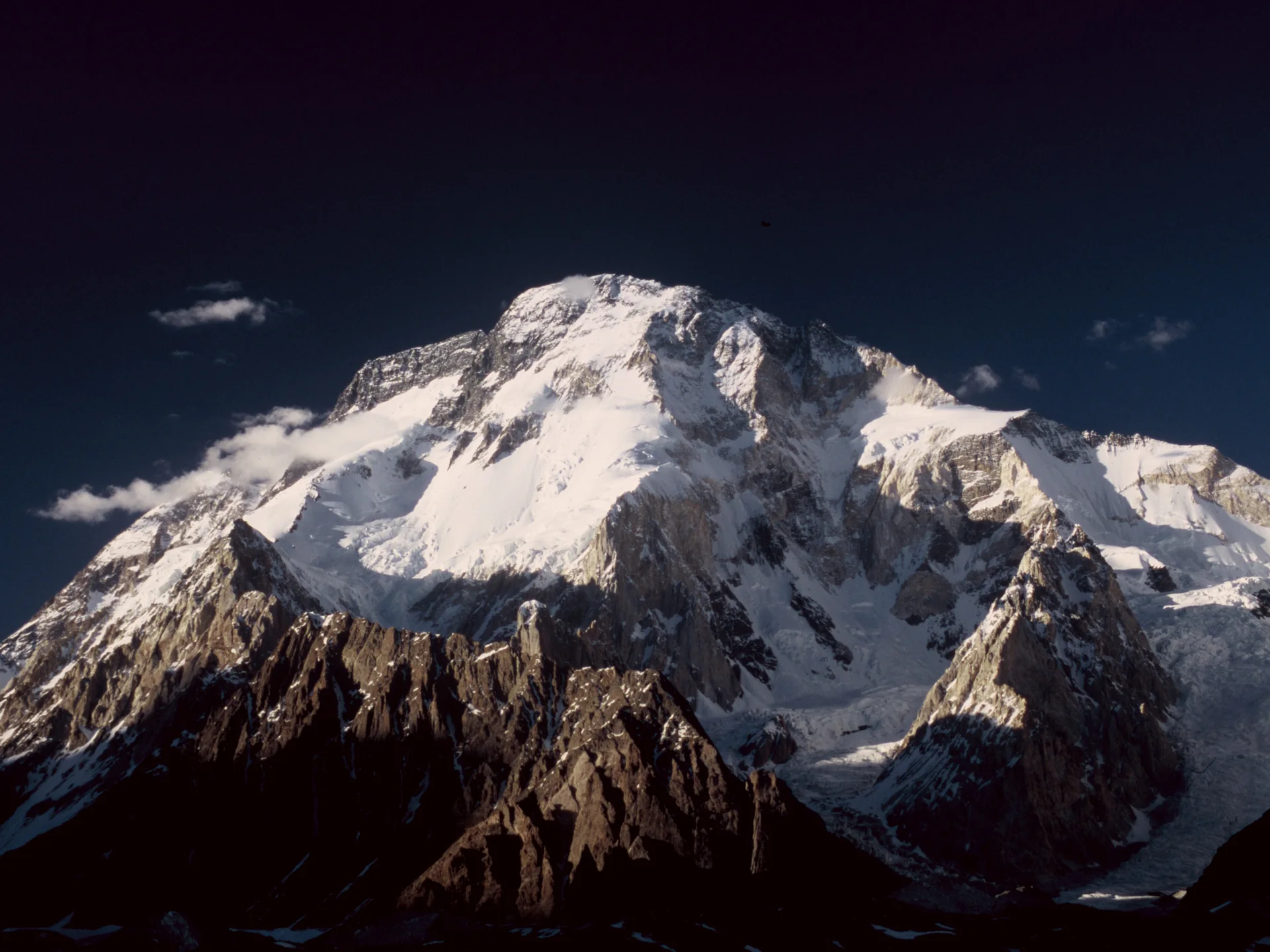
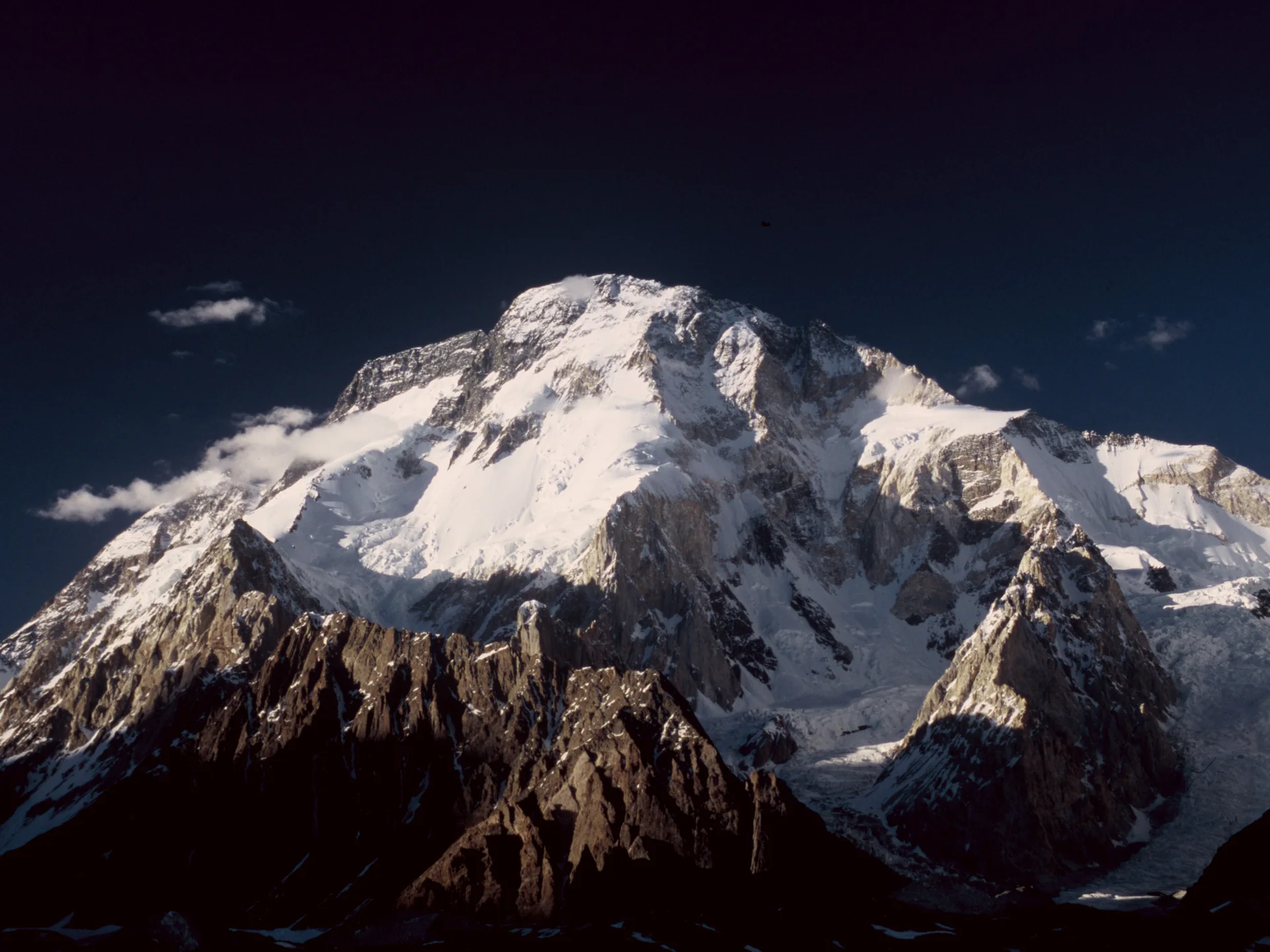
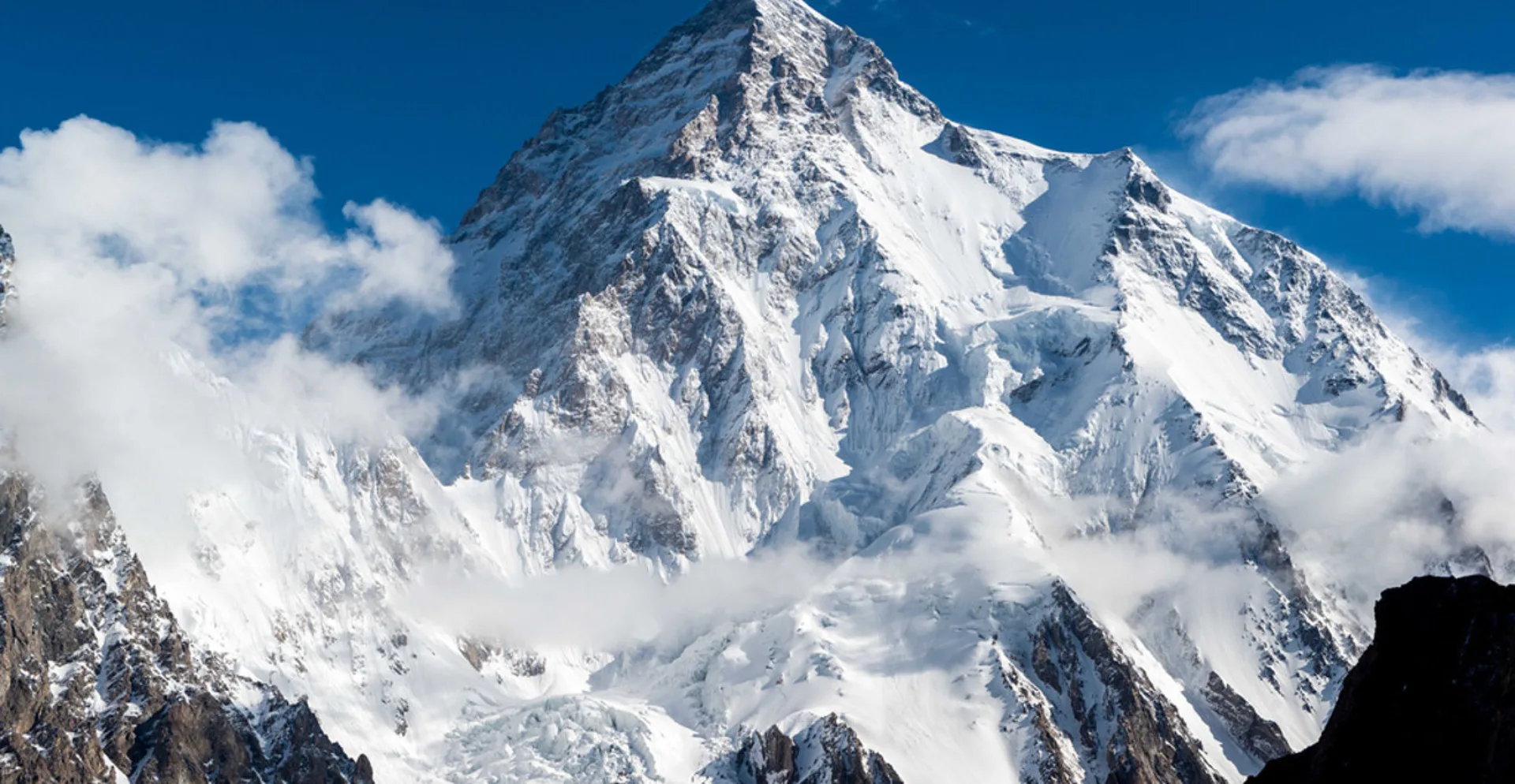
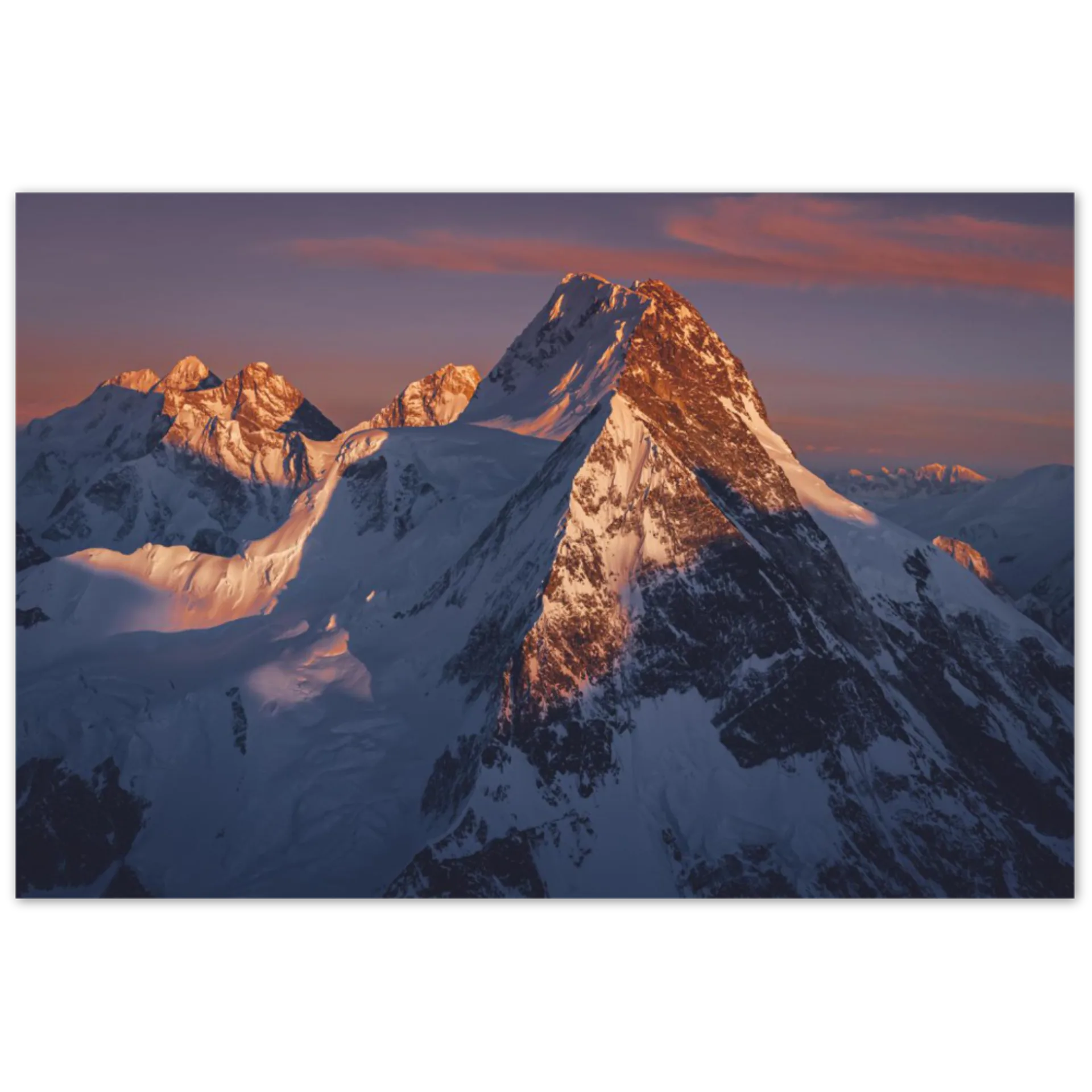
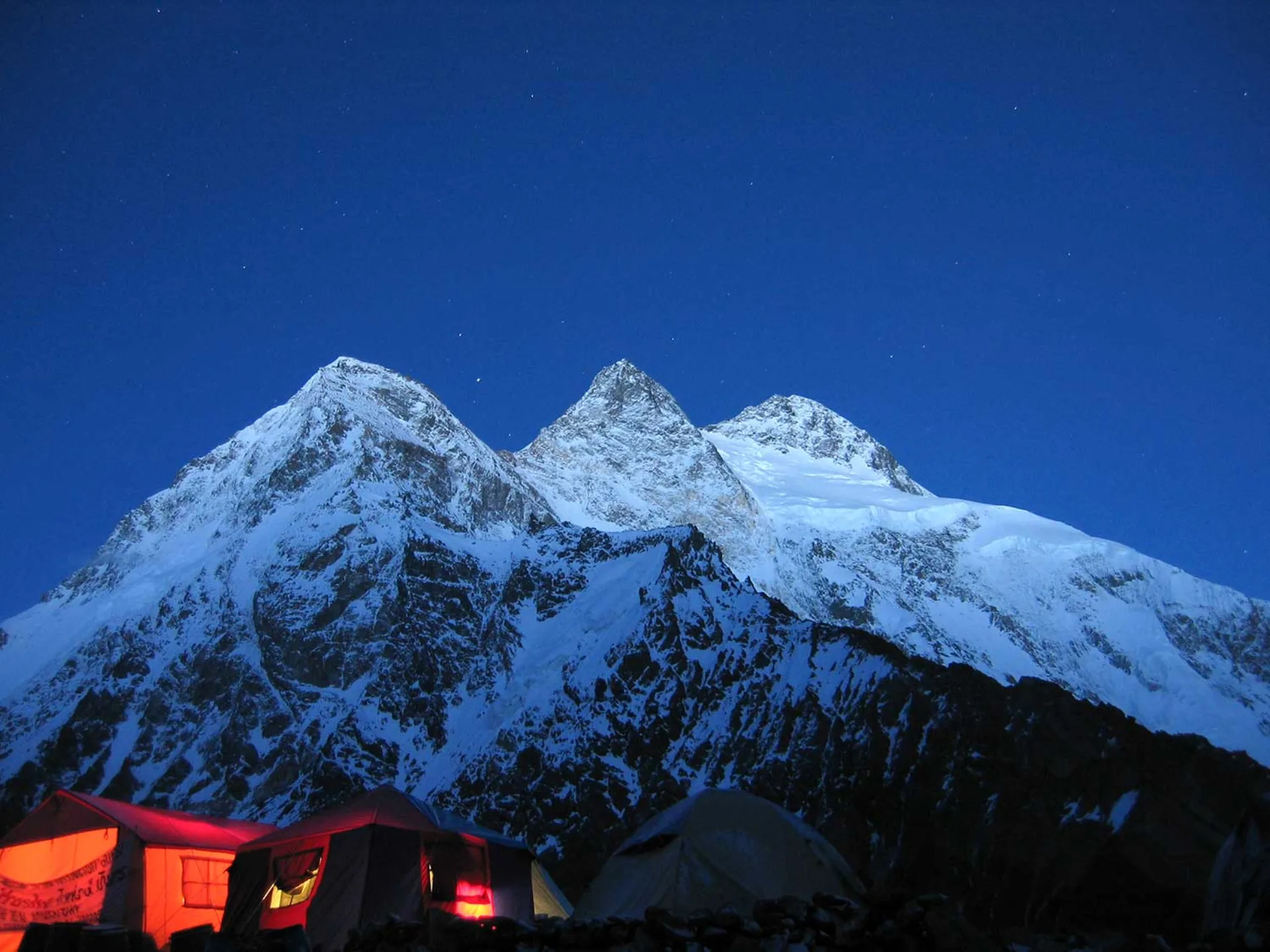
Broad Peak is the twelfth-highest mountain on Earth at 8,051 metres, named for the long, broad summit ridge that stretches more than 1.5 kilometres across the skyline. It stands in the Karakoram on the Pakistan-China border, just 8 kilometres from K2, and shares the same Baltoro Glacier approach and the same base-camp area on the Godwin-Austen Glacier. It is often called the most approachable of Pakistan's eight-thousanders, but it is a serious high mountain all the same, and its notorious false summit has turned back and endangered many climbers within sight of the top.
Where is Broad Peak?
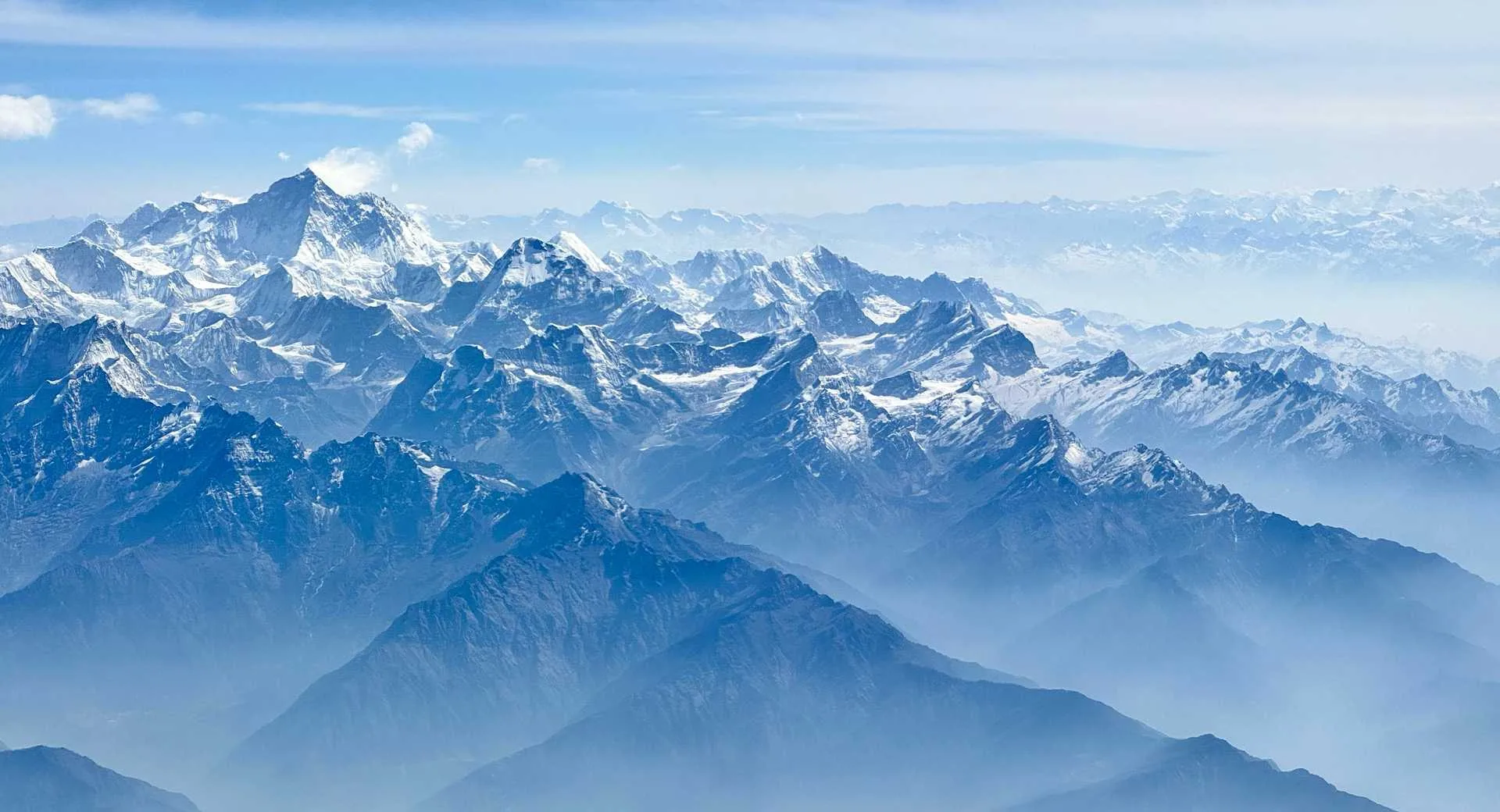
Broad Peak sits at the head of the Baltoro Glacier in the central Karakoram, part of the Gasherbrum massif and a close neighbour of K2. Base camp lies around 4,900 to 5,000 metres on the Godwin-Austen Glacier, only a short walk from K2 Base Camp, which is exactly why so many climbers combine the two in a single season. Gasherbrum I and II are reachable from the same broad approach, making this corner of the range one of the densest concentrations of eight-thousanders anywhere on Earth.
The route: the West Spur
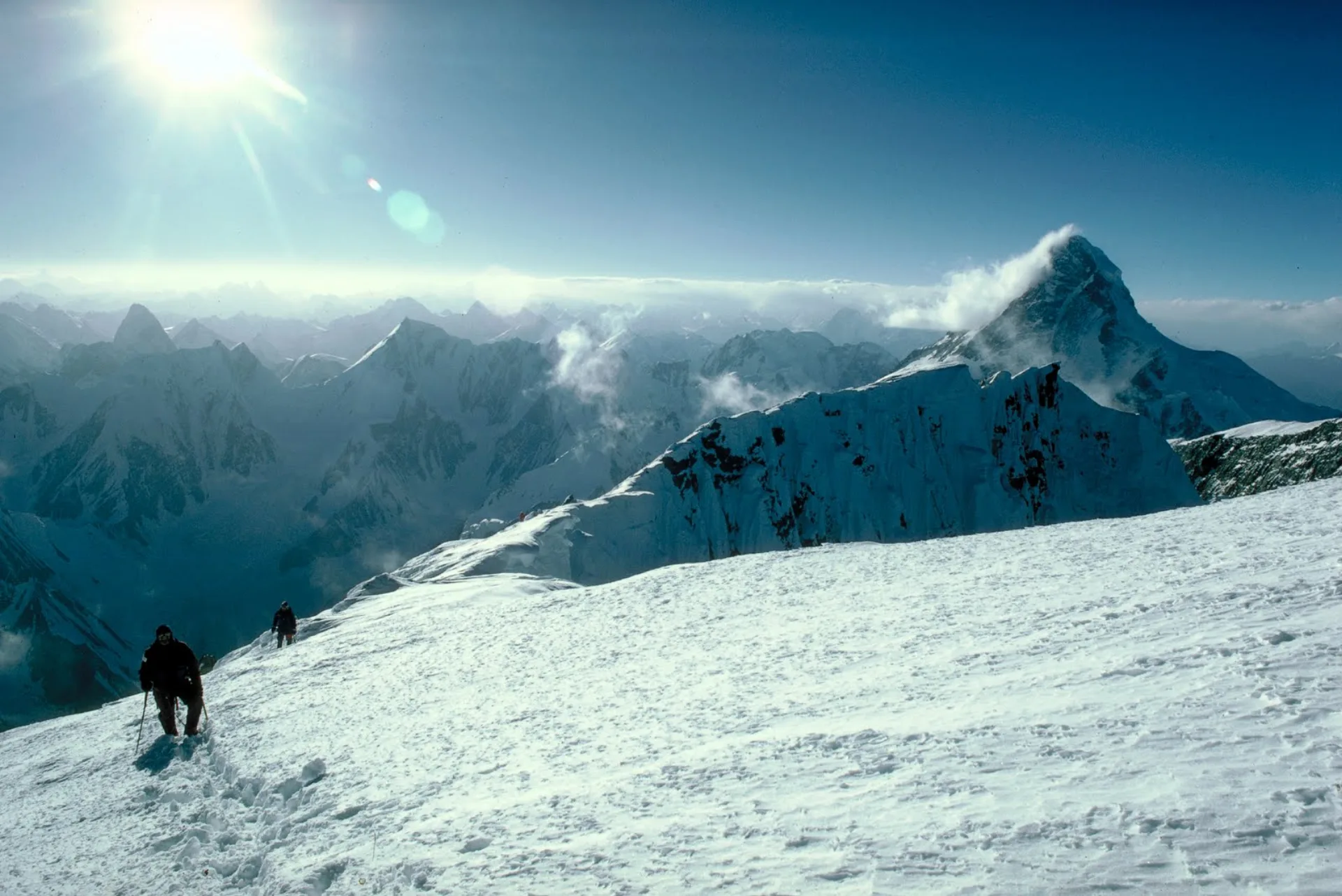
The standard line is the West Spur, the same route taken on the 1957 first ascent. From base camp, climbers establish three camps up the spur, typically around 5,800, 6,400 and 7,100 metres, to reach a col at roughly 7,800 metres, then follow the long summit ridge to the top. The climbing is far less technical than K2: mostly snow slopes and moderate ground, with fixed ropes on the steeper sections. What makes Broad Peak hard is not difficulty but length and altitude, and above all the final ridge.
The false summit
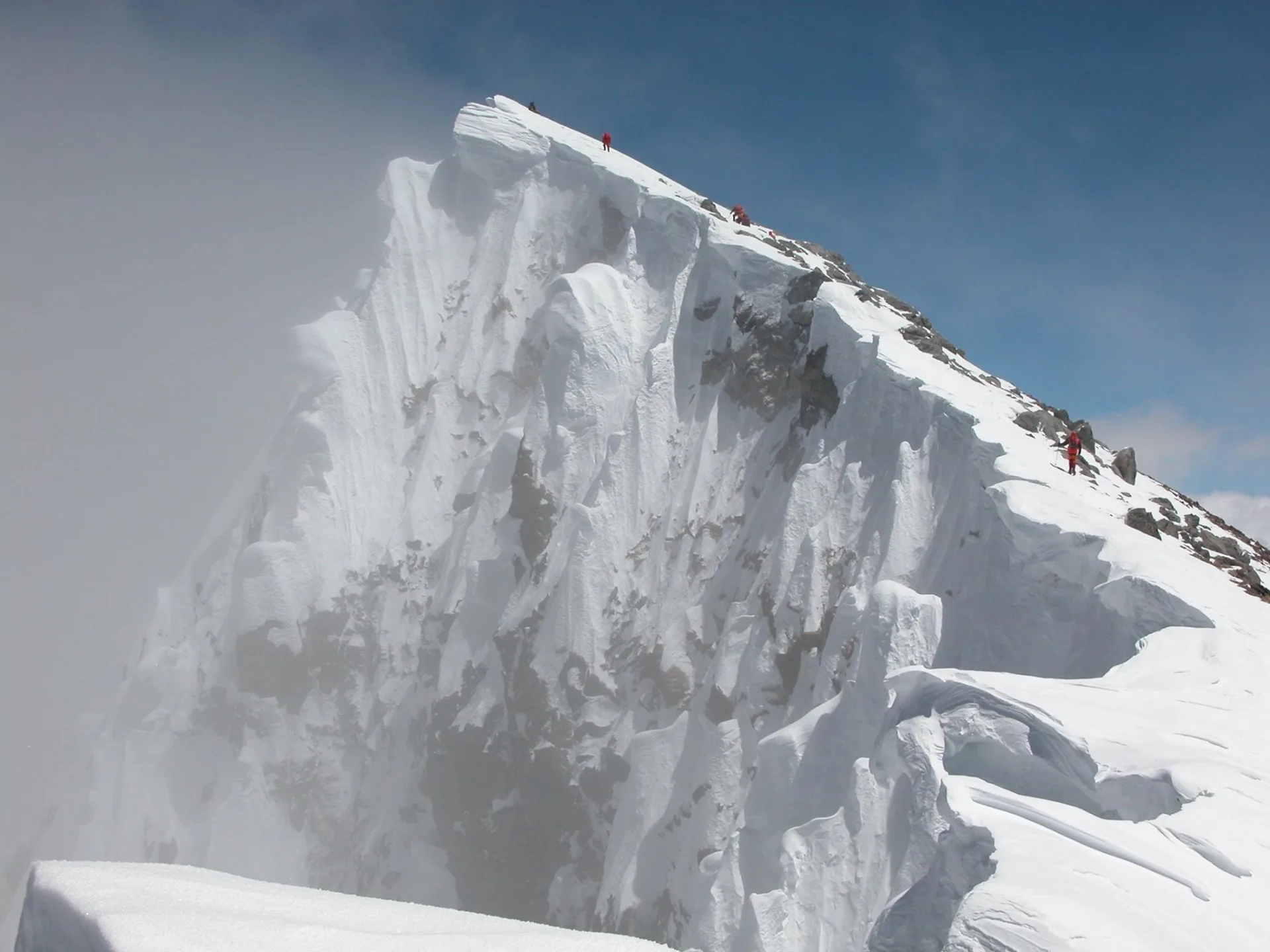
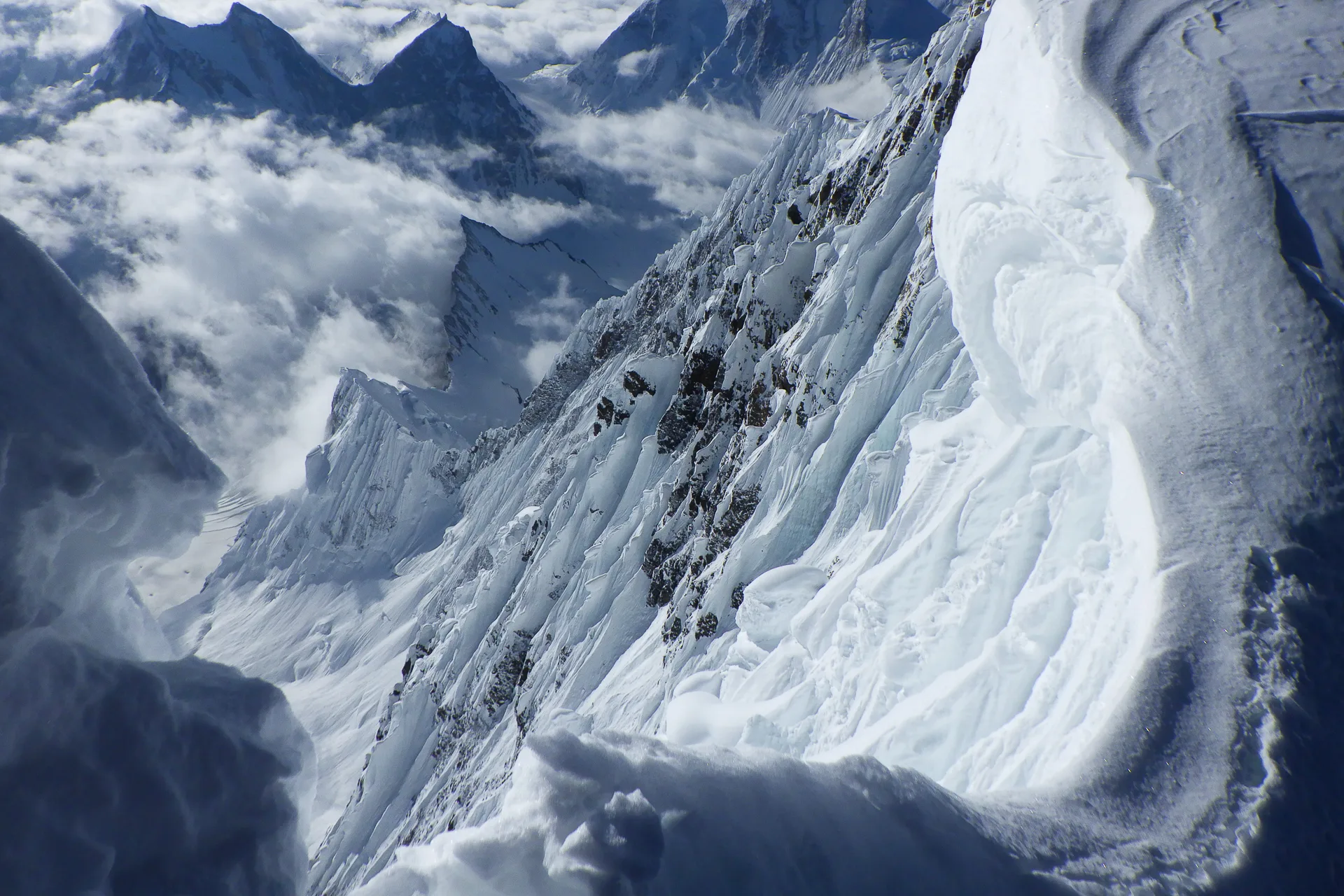
Broad Peak's most infamous feature is its false summit. Climbers first reach a rocky fore-summit at around 8,030 metres, and in poor visibility or with energy and daylight running low it is tempting to stop there. The true summit, only a little higher, lies a further exposed traverse along a corniced ridge that can add two to three hours each way. Many climbers have turned back at the fore-summit, and descents from the ridge after dark have proved fatal. Any honest attempt has to plan for that final stretch, with a conservative turnaround time, rather than treating the fore-summit as the goal.
| Detail | What it means |
|---|---|
| Height | 8,051 m, the twelfth-highest mountain on Earth |
| Fore-summit | A rocky point at around 8,030 m. Many climbers stop here in poor visibility or when daylight is running out |
| True summit | Only a little higher, but a further exposed traverse along a corniced ridge |
| Extra time for that traverse | Two to three hours each way |
| Season | June to August, with July and August the most reliable windows |
| Base camp | On the Godwin-Austen Glacier, the same approach and base-camp area as K2 |
| Permits | Pakistan mountaineering permit, Gilgit-Baltistan peak royalty and a liaison officer |
How hard is it, and who is it for?
By eight-thousander standards Broad Peak is moderate, with relatively low objective danger compared to K2 or Nanga Parbat, and no equivalent of K2's Bottleneck seracs hanging over the route. That makes it a popular first or second 8,000-metre peak for climbers building toward the bigger Karakoram objectives. But "moderate" here is relative: the altitude, the very long summit day, and the false-summit trap keep it firmly in serious-expedition territory, and it should never be underestimated.
The first ascent, 1957
Broad Peak was first climbed in June 1957 by an Austrian team, Marcus Schmuck, Fritz Wintersteller, Kurt Diemberger and Hermann Buhl, in pure alpine style, without supplemental oxygen, high-altitude porters, or fixed base-camp support. It was a landmark in lightweight Himalayan climbing and a deliberate contrast to the huge siege expeditions of the era. Only weeks later, Hermann Buhl died on nearby Chogolisa when a cornice collapsed, a sober reminder of how fine the margins are in this range.
The Baltoro Glacier approach
Getting to Broad Peak means one of the great treks on Earth: roughly seven days up the Baltoro Glacier from the village of Askole, past the soaring granite of the Trango Towers and the fluted ice of Masherbrum, to Concordia, where four eight-thousanders stand in view at once. From Concordia it is a short stage to base camp. The walk-in doubles as valuable acclimatisation, and because the base camp is shared ground with K2 and the Gasherbrums, Broad Peak is very often climbed as one objective within a longer multi-peak expedition.
Best time to climb
June to August is the season, with July and August offering the most reliable summer weather windows in the Karakoram. As on the neighbouring peaks, the jet stream has to lift north of the range before the upper mountain becomes climbable, and teams may wait days or weeks at base camp for a clear, low-wind window to open.
Acclimatisation, rotations and oxygen
A full Broad Peak expedition runs around 45 to 55 days, including the approach, several acclimatisation rotations between camps, and the summit window. Climbers climb high and sleep progressively higher to adapt before committing to the top. Many use some supplemental oxygen on summit day, given how long it is, while a good number climb Broad Peak without bottled oxygen, in keeping with its alpine-style heritage. Fixed ropes are set on the steeper sections early in the season.
Permits, cost and duration
Broad Peak requires a Pakistan mountaineering permit, a Gilgit-Baltistan peak royalty, and a liaison officer. Both the permit fees and the overall expedition cost are lower than K2's, which is part of the peak's appeal, with the total depending on the operator and the level of support you choose. Many climbers offset the cost by combining Broad Peak with K2 or a Gasherbrum on the same trip. Pricing on this page is indicative; we quote each expedition individually.
What it takes
Broad Peak suits fit climbers with solid experience on 6,000 and 7,000-metre peaks, comfortable on crampons and fixed ropes and ready for a long, demanding summit day at altitude. It is among the most logical stepping stones toward K2 and the harder Karakoram peaks, and a real eight-thousander in its own right, provided you respect the final ridge.
Go With Guide Pakistan runs fully supported Broad Peak expeditions with experienced high-altitude guides, the full Baltoro approach from Skardu, permit and liaison handling, fixed camps, oxygen, and base-camp support, including combined Broad Peak and K2 or Gasherbrum programmes for climbers making the most of a single Karakoram season.
| Point on the route | Altitude | What to expect |
|---|---|---|
| Base camp | 4,900 to 5,000 m | Godwin-Austen Glacier, a short walk from K2 Base Camp |
| Camp 1 | About 5,800 m | First camp on the West Spur |
| Camp 2 | About 6,400 m | Snow slopes, fixed ropes on steeper sections |
| Camp 3 | About 7,100 m | Top camp for the summit push |
| Col | About 7,800 m | Start of the long summit ridge |
| Fore-summit | About 8,030 m | Rocky false summit where many turn back |
| True summit | 8,051 m | Corniced ridge, 2 to 3 hrs each way from the fore-summit |
Climbing History
1954
First Reconnaissance
First Reconnaissance
German-Austrian expedition explored the mountain and identified the West Spur as the most logical route.
1957
First Summit
First Summit
Fritz Winterstetter, Marcus Schmuck, Kurt Diemberger, and Hermann Buhl summited on June 9, remarkably with no high-altitude porters.
1957
Hermann Buhl's Last Climb
Hermann Buhl's Last Climb
Just days after Broad Peak, Hermann Buhl disappeared on nearby Chogolisa. His Broad Peak ascent was his final successful summit.
1984
Krzysztof Wielicki Solo
Krzysztof Wielicki Solo
Polish climber Krzysztof Wielicki made a remarkable solo ascent, demonstrating the route's feasibility for strong individuals.
2013
First Winter Ascent
First Winter Ascent
Maciej Berbeka and Tomasz Kowalski (Poland) summited on March 5, tragically both died during the descent.
Recommended Reading
Summits and Secrets
by Kurt Diemberger (1971)
Summits and Secrets
by Kurt Diemberger (1971)
Broad Peak
by Richard Sale (2004)
Broad Peak
by Richard Sale (2004)
Thin Air: Encounters in the Himalayas
by Greg Child (1988)
Thin Air: Encounters in the Himalayas
by Greg Child (1988)
What's Included
Not Included
Frequently Asked Questions About the Broad Peak Expedition
How high is Broad Peak and where is it?
How high is Broad Peak and where is it?
Broad Peak is 8,051 metres high, the twelfth-highest mountain on Earth, and it stands in the central Karakoram of Gilgit-Baltistan on the Pakistan-China border, just 8 kilometres from K2. It sits at the head of the Baltoro Glacier as part of the Gasherbrum massif, and its name comes from the long, broad summit ridge that stretches more than 1.5 kilometres across the skyline. Base camp lies at around 4,900 to 5,000 metres on the Godwin-Austen Glacier, only a short walk from K2 Base Camp. To get there you travel from Skardu to the village of Askole, then trek roughly seven days up the Baltoro Glacier past the Trango Towers and Masherbrum to Concordia, where four eight-thousanders are in view at once. From Concordia it is a short stage to base camp. Gasherbrum I and II are reached from the same approach, so many climbers combine Broad Peak with K2 or a Gasherbrum in one season.
How difficult and dangerous is Broad Peak?
How difficult and dangerous is Broad Peak?
Broad Peak is moderate by eight-thousander standards, with no extreme technical crux, but it is long, high and the summit day is exhausting. Objective danger is relatively low compared with K2 or Nanga Parbat, and nothing like K2's Bottleneck seracs hangs over the route. The climbing on the West Spur is mostly snow slopes and moderate ground, with fixed ropes on the steeper sections. The real hazards are altitude, weather and the false summit. Climbers first reach a rocky fore-summit at around 8,030 metres, and the true 8,051-metre summit lies along an exposed, corniced ridge that can add two to three hours each way. Many people have turned back there, and descents from that ridge after dark have proved fatal. We set a conservative turnaround time for exactly this reason. You should arrive with solid experience on 6,000 and 7,000-metre peaks and be comfortable on crampons and fixed ropes.
Is Broad Peak a good first 8000er?
Is Broad Peak a good first 8000er?
Yes, for the right climber Broad Peak is one of the more sensible first eight-thousanders, as long as you arrive with solid experience on 6,000 and 7,000-metre peaks. The West Spur is mostly snow slopes and moderate ground with fixed ropes on the steeper sections, and objective danger is relatively low compared with K2 or Nanga Parbat, with nothing like K2's Bottleneck seracs hanging over the route. What makes it hard is length and altitude. The summit day is very long, and the false summit at around 8,030 metres catches people out, because the true 8,051-metre top lies a further two to three hours each way along a corniced ridge. You need to be comfortable on crampons and fixed ropes and fit enough for that final stretch. Many climbers use Broad Peak as a first or second 8,000-metre peak on the way to K2, and we set a conservative turnaround time on every summit push.
What is the Broad Peak false summit?
What is the Broad Peak false summit?
The false summit is a rocky fore-summit at around 8,030 metres that many climbers mistake for the top, or choose to stop at when they are tired. The true summit is 8,051 metres, only a little higher, but it lies along an exposed, corniced ridge that can add two to three hours each way. In poor visibility or failing daylight many people have turned back there. Descents from that ridge after dark have proved fatal. You reach it after leaving the top camp at about 7,100 metres and gaining a col at roughly 7,800 metres, then following the long summit ridge. Any honest attempt has to plan for the final traverse from the start rather than treating the fore-summit as the goal. We set a conservative turnaround time for exactly this reason, and the waiting days built into the 45 to 55 day schedule mean nobody has to rush the push.
What route is used to climb Broad Peak?
What route is used to climb Broad Peak?
Almost every team climbs the West Spur, the same line the Austrian team used on the first ascent in 1957. From base camp at around 4,900 to 5,000 metres on the Godwin-Austen Glacier, we establish three camps up the spur, typically at about 5,800, 6,400 and 7,100 metres. Above the top camp the route reaches a col at roughly 7,800 metres, then follows the long summit ridge, which stretches more than 1.5 kilometres, to the top. The ground is mostly snow slopes and moderate terrain, with fixed ropes on the steeper sections, so the challenge is length and altitude rather than hard technical climbing. Before the summit push, climbers make several rotations between the camps, climbing high and sleeping progressively higher. Many use some supplemental oxygen on summit day because it is so long, while a good number climb without bottled oxygen in keeping with the peak's alpine-style history.
How much does a Broad Peak expedition cost and how long is it?
How much does a Broad Peak expedition cost and how long is it?
Our indicative price for a Broad Peak expedition starts at $36,000 per person, and a full expedition takes 45 to 55 days. That time covers the drive and trek in from Skardu, roughly seven days up the Baltoro Glacier from Askole, several acclimatisation rotations between the camps, and a buffer for waiting out the weather at base camp. The permit and royalty are lower than K2's, which is one reason Broad Peak is among the more affordable eight-thousanders. Our programme includes experienced high-altitude guides, the full Baltoro approach, permit and liaison officer handling, fixed camps, oxygen and base-camp support. International flights, travel insurance, personal climbing gear and personal expenses are not included. The final figure depends on group size and the level of support you want, so we quote each expedition individually. Custom expeditions are available for groups of 2 or more, and combining Broad Peak with K2 or a Gasherbrum can make the trip better value.
When is the best season for Broad Peak?
When is the best season for Broad Peak?
The season for Broad Peak runs from June to August, and July and August give the most reliable summer weather windows in the Karakoram. That is the only realistic period for a normal expedition. The upper mountain does not become climbable until the jet stream lifts north of the range, and even in a good year teams can sit at base camp for days or weeks waiting for a clear, low-wind window. We build that waiting time into the 45 to 55 days on purpose, because a rushed summit push on this mountain is how people get into trouble on the final ridge. The first ascent in 1957 went to the top in June, but most modern teams time their summit push for July or August after completing their acclimatisation rotations. Fixed ropes are set on the steeper sections early in the season, and the walk-in along the Baltoro Glacier in June also serves as the first stage of acclimatisation.
How far is Broad Peak from K2?
How far is Broad Peak from K2?
Broad Peak stands about 8 kilometres from K2, and the two share the same Baltoro Glacier approach and the same base-camp area on the Godwin-Austen Glacier. Getting there means one of the great treks on Earth. From Skardu you travel to the village of Askole, then walk roughly seven days up the Baltoro Glacier past the Trango Towers and Masherbrum to Concordia, where four eight-thousanders are in view at once. From Concordia it is a short stage to base camp at around 4,900 to 5,000 metres, only a short walk from K2 Base Camp. Gasherbrum I and II are reached from the same approach, which is why so many climbers combine Broad Peak with K2 or a Gasherbrum in a single season. For many people Broad Peak is the logical stepping stone toward K2, and the long walk-in doubles as valuable acclimatisation before any climbing starts on the mountain itself.
Who first climbed Broad Peak?
Who first climbed Broad Peak?
An Austrian team in June 1957, Schmuck, Wintersteller, Diemberger and Buhl, in alpine style without supplemental oxygen.
Ready for Your Next Adventure?
Join our community of explorers and discover the journey of a lifetime. Our expert team is ready to help you plan your perfect expedition.