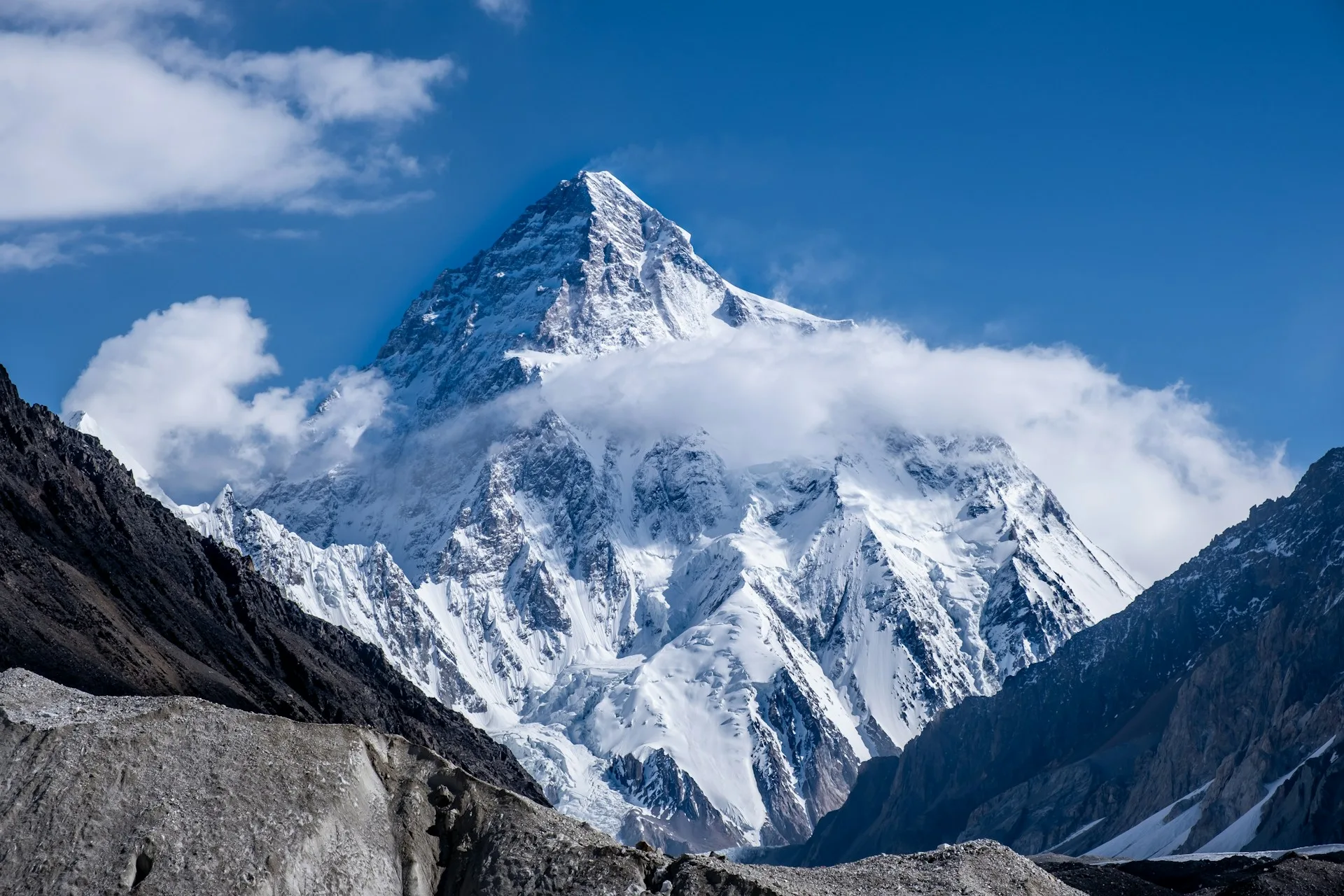
K2: The Savage Mountain
The world's most challenging summit
Last updated: · Reviewed by Javeed Iqbal, Founder
Elevation
8,611m
Difficulty
Extreme
Duration
60 to 70 Days
Best Season
Jun to Aug
K2 Expedition: a complete guide to climbing K2
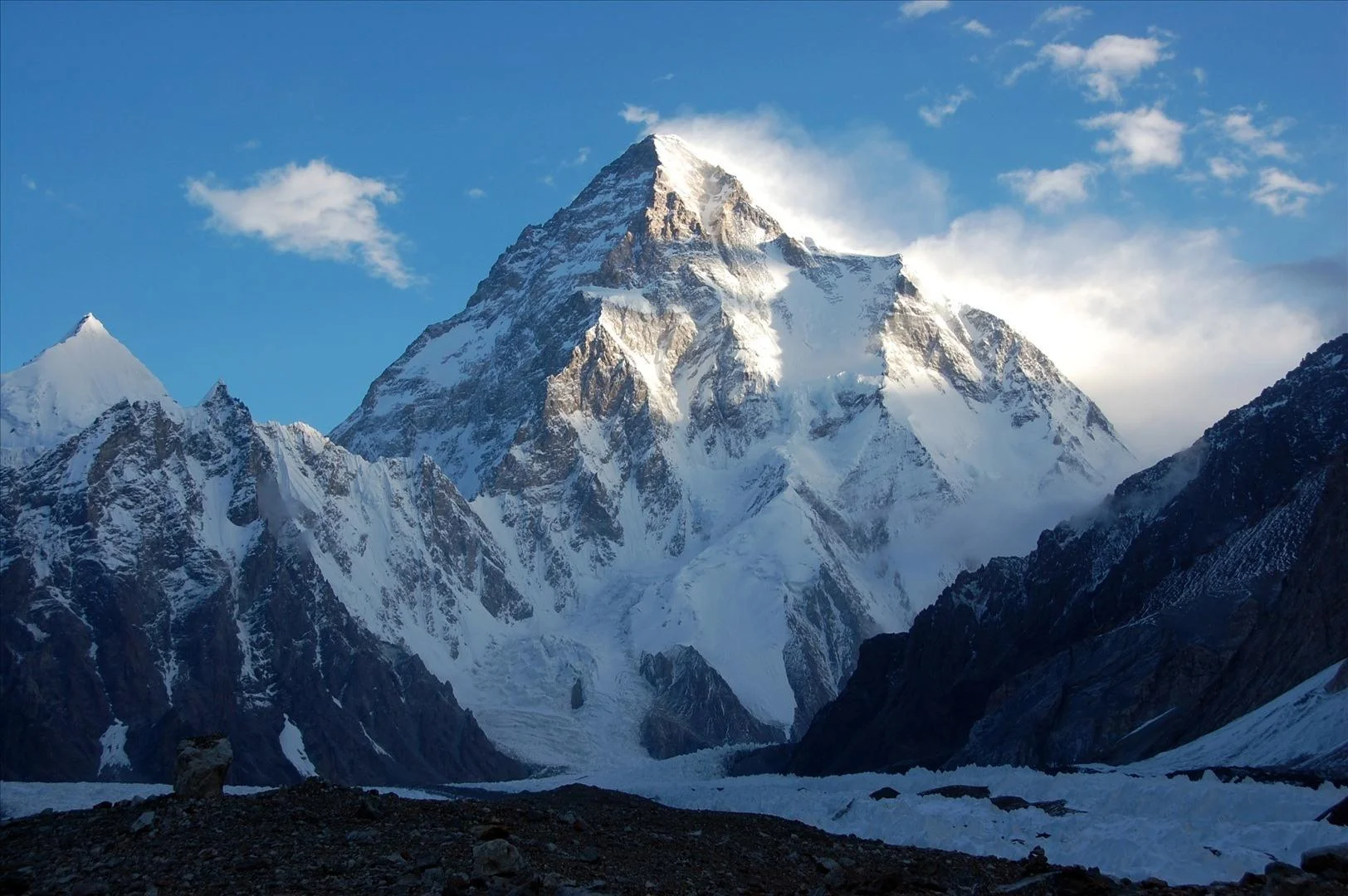
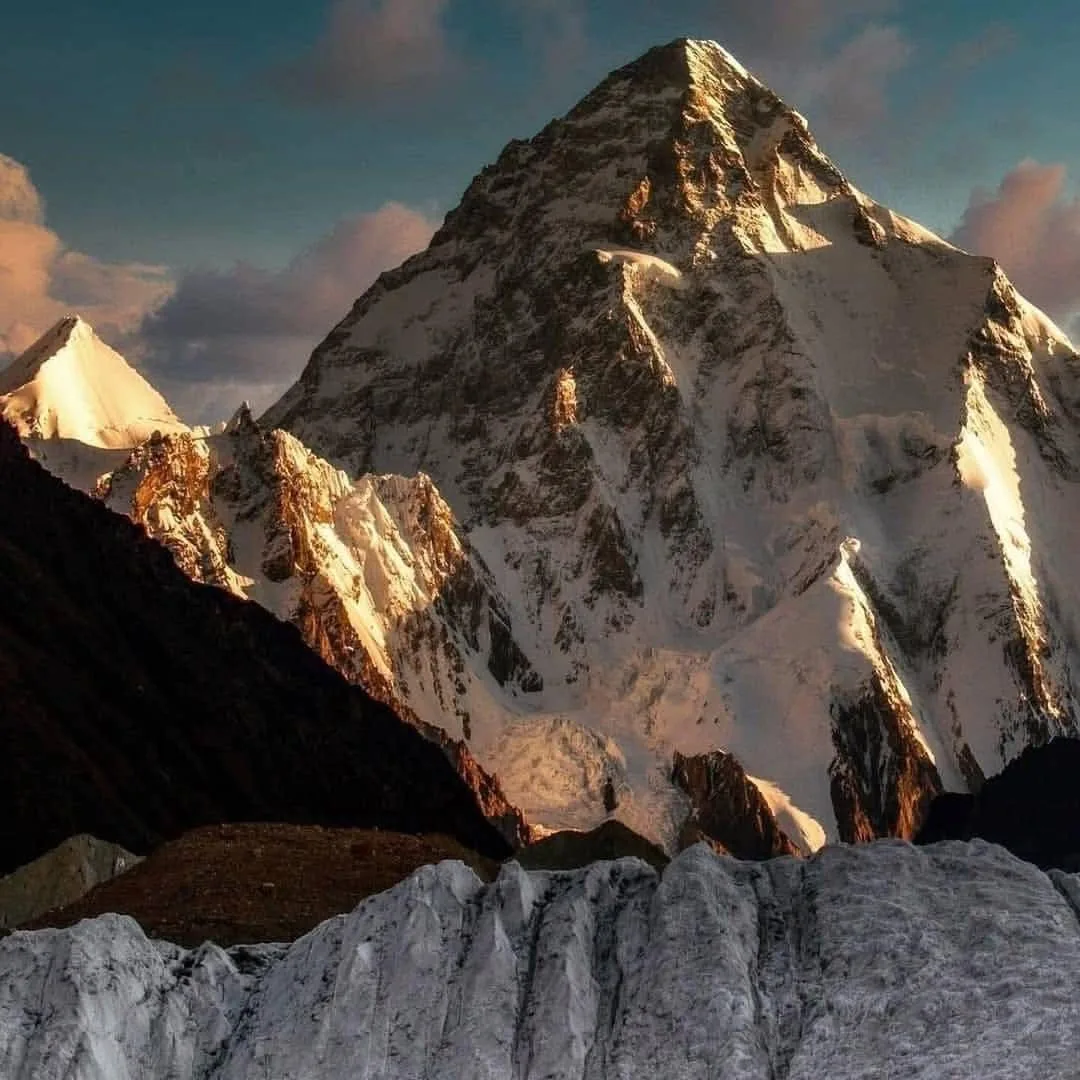
K2 is the second-highest mountain on Earth at 8,611 metres, and by almost every measure the hardest of the fourteen 8,000-metre peaks to climb. It sits in the Karakoram on the border between Pakistan and China, at the head of the Baltoro Glacier. Climbers call it the Savage Mountain. For roughly every four people who have reached the summit, one has died on the slopes. That ratio has improved in the modern era but still leaves K2 far deadlier than Everest. A K2 expedition is a 60-to-70-day commitment, and the summit often comes down to a few hours of stable weather as much as to fitness or skill.
Where is K2?
K2 lies in Gilgit-Baltistan in northern Pakistan, in the Central Karakoram, straddling the frontier with China's Xinjiang. The Pakistani side, reached via the Baltoro Glacier from Skardu, is where the great majority of expeditions take place. The peak rises at the junction of the Baltoro and Godwin-Austen glaciers, ringed by giants: Broad Peak and Gasherbrum I and II are all within sight. There is no road, no village, and no helicopter rescue at altitude. Base Camp sits at about 5,000 metres on the Godwin-Austen Glacier, a week's walk from the last jeep track at Askole.
How hard is K2, and how dangerous?
K2's summit success rate sits around 25 to 30 percent, against 50 to 65 percent on Everest. Its fatality rate has historically run near 23 to 25 percent, though better forecasting, fixed ropes, and stronger high-altitude support have brought the modern figure down to roughly 12 to 13 percent. Recent counts put about 96 deaths against roughly 800 successful ascents. The reasons are structural. K2 is steeper, more technical, and more exposed than Everest, with no easy line from any side. The weather turns faster, the climbing is harder at every camp, and self-reliance is the rule. No one is coming to carry you down from 8,000 metres.
K2 vs Everest: why K2 is harder
Everest is higher, but K2 is the harder and more dangerous climb. Everest has fixed lines, ladders over the Khumbu Icefall, large commercial support, and helicopter rescue to the lower camps; in a good season more than half of those who try it reach the top. K2 has none of that safety net above Base Camp. The climbing is steeper and more sustained, the summit day longer and more exposed, and the margin for error far smaller. It is why serious alpinists measure themselves against K2 rather than Everest.
The Abruzzi Spur route
About three-quarters of all K2 expeditions climb the Abruzzi Spur, the southeast ridge first attempted by Luigi Amedeo, Duke of the Abruzzi, in 1909 and finally climbed by the Italians Achille Compagnoni and Lino Lacedelli in 1954. It is the standard route because it offers the most reliable camp positions and the best route-fixing, not because it is gentle.
From Base Camp the route climbs to Camp 1 at about 6,100m on the lower spur, then through rock buttresses and chimneys to Camp 2 at 6,700m. Camp 3 at around 7,300m sits below the Black Pyramid, a steep mixed rock-and-ice band that is the technical crux of the lower mountain. Camp 4 is pitched on the Shoulder at roughly 7,800m. The summit push tackles the Bottleneck, a narrow ice couloir at about 8,200m running directly beneath a wall of hanging seracs. It is the most dangerous stretch on the mountain, and most teams move through it in the dark, aiming to summit by midday and clear it again before the ice warms.
| Stage | Altitude | What it involves |
|---|---|---|
| Base Camp | 5,150 m | On the Godwin-Austen Glacier, the staging point for the whole climb |
| Camp 1 | about 6,100 m | The lower spur |
| Camp 2 | 6,700 m | Reached through rock buttresses and chimneys |
| Camp 3 | around 7,300 m | Below the Black Pyramid, the technical crux of the lower mountain |
| Camp 4 | roughly 7,800 m | Pitched on the Shoulder |
| The Bottleneck | about 8,200 m | Narrow ice couloir under hanging seracs. The most dangerous stretch, usually crossed in the dark |
| Summit | 8,611 m | Teams aim to top out by midday and re-cross the Bottleneck before the ice warms |
The Baltoro Glacier approach
Before any climbing begins there is the walk in, and it is one of the great treks on Earth. From Askole the trail follows the Braldu River and then the Baltoro Glacier for about seven days. You pass beneath the Trango Towers, some of the largest granite walls in the world, and the fluted ice of Masherbrum, before reaching Concordia, where the Baltoro meets the Godwin-Austen. Four 8,000-metre peaks stand in view at once from here. From Concordia it is a final day up to K2 Base Camp. The approach doubles as acclimatisation and is, for many climbers, half the reason to come.
Best time to climb K2
The season is narrow: July and August. In high summer the Karakoram jet stream lifts north and opens the only realistic windows of stable weather. K2 is effectively unclimbable in spring. May, the prime month on Everest, brings deep snow and ferocious wind here. Winter ascents exist but belong to a tiny elite; the first was completed only in January 2021, by a Nepali team led by Nirmal Purja and Mingma Gyalje Sherpa. A full expedition runs 60 to 70 days because climbers need weeks of rotations between camps to acclimatise and then must wait, sometimes a fortnight, for a single safe summit window.
Acclimatisation, rotations and oxygen
The slow part of a K2 expedition is acclimatisation. After reaching Base Camp, climbers spend several weeks making rotations, climbing to Camp 1, then Camp 2, sleeping high and dropping back down so the body can adapt to thinner air. Each rotation pushes a little higher before a final rest at Base Camp ahead of the summit bid. Most commercial climbers use supplemental oxygen above Camp 3 or Camp 4, along with a personal high-altitude guide; a small minority attempt K2 without bottled oxygen, which sharply raises both the difficulty and the risk. Fixed ropes are placed on the steep sections by a dedicated rope-fixing team early in the season, and the timing of that work often sets the rhythm for everyone on the mountain.
The dangers: weather, seracs and the death zone
K2's reputation rests on objective hazards that no amount of fitness removes. The seracs above the Bottleneck can collapse without warning. Storms build fast and can pin climbers at high camps for days, with little margin before food, fuel, and strength run out. Above 8,000 metres, in the death zone, the body deteriorates by the hour and clear thinking gets harder. Most accidents happen on the descent, not the summit, when climbers are exhausted and the weather is closing in. A good expedition plans around these realities with conservative turnaround times, careful forecasting, and the discipline to abandon a summit push when the window is not truly open. The mountain will still be there next year; the goal is to be there too.
Permits, royalty and cost
K2 requires a Pakistan mountaineering permit and a peak royalty paid to Gilgit-Baltistan, along with a liaison officer assigned to the expedition. Permit and royalty costs generally fall between $6,000 and $12,000 per climber and have been in flux: Gilgit-Baltistan moved to sharply raise K2 fees in 2025, the change was challenged in court by Pakistani tour operators, and a compromise structure now applies. A full commercial expedition typically runs from around $18,000 for a base-camp service up to $50,000-$100,000 or more for a fully supported package with oxygen and high-altitude staff, depending on the operator. Pricing on this page is indicative; we quote each expedition individually.
What it takes to climb K2
K2 is not a first 8,000er. Operators expect a serious record before they will take you, usually a previous 8,000-metre summit, or at least strong experience on 7,000-metre peaks, with confident use of crampons, fixed ropes, and ascenders on steep ground. Beyond the physical, K2 rewards patience and judgement: the willingness to turn around, to wait out weather, and to keep moving through the Bottleneck when stopping would feel easier. Months of endurance and strength training, a structured acclimatisation plan, and the right team are what separate a summit from a long walk back down from Camp 4.
Go With Guide Pakistan runs fully supported K2 expeditions with experienced high-altitude guides, Baltoro approach logistics from Skardu, permit and liaison handling, fixed camps, oxygen, and full base-camp support. For those who want to stand at the foot of the Savage Mountain without climbing it, we also arrange the K2 Base Camp trek.
Climbing History
1902
First Reconnaissance
First Reconnaissance
Oscar Eckenstein and Aleister Crowley led the first attempt, reaching approximately 6,600m on the Northeast Ridge.
1954
First Summit
First Summit
Achille Compagnoni and Lino Lacedelli of Italy reached the summit on July 31 via the Abruzzi Spur, completing the first ascent.
1977
Second Ascent
Second Ascent
A large Japanese expedition made the second ascent via the Abruzzi Spur, 23 years after the first, a mark of K2's extreme difficulty.
1986
Year of Tragedy and Triumph
Year of Tragedy and Triumph
13 climbers summited across multiple expeditions, but 13 also died. Wanda Rutkiewicz became the first woman to summit K2.
2004
50th Anniversary
50th Anniversary
Spanish climber Carlos Soria summited at age 65, while multiple international teams reached the top in favorable conditions.
2021
First Winter Ascent
First Winter Ascent
A Nepali team of 10 climbers led by Nirmal Purja and Mingma Gyalje Sherpa reached the summit on January 16, completing the last 8000m winter ascent.
Recommended Reading
K2, The Savage Mountain
by Charles Houston & Robert Bates (1954)
K2, The Savage Mountain
by Charles Houston & Robert Bates (1954)
The Last Step: The American Ascent of K2
by Rick Ridgeway (1980)
The Last Step: The American Ascent of K2
by Rick Ridgeway (1980)
K2, Triumph and Tragedy
by Jim Curran (1987)
K2, Triumph and Tragedy
by Jim Curran (1987)
The Endless Knot: K2, Mountain of Dreams and Destiny
by Kurt Diemberger (1991)
The Endless Knot: K2, Mountain of Dreams and Destiny
by Kurt Diemberger (1991)
No Way Down: Life and Death on K2
by Graham Bowley (2010)
No Way Down: Life and Death on K2
by Graham Bowley (2010)
K2: Life and Death on the World's Most Dangerous Mountain
by Ed Viesturs & David Roberts (2010)
K2: Life and Death on the World's Most Dangerous Mountain
by Ed Viesturs & David Roberts (2010)
Buried in the Sky
by Peter Zuckerman & Amanda Padoan (2012)
Buried in the Sky
by Peter Zuckerman & Amanda Padoan (2012)
The Ghosts of K2: The Epic Saga of the First Ascent
by Mick Conefrey (2015)
The Ghosts of K2: The Epic Saga of the First Ascent
by Mick Conefrey (2015)
Thin Air: Encounters in the Himalayas
by Greg Child (1988)
Thin Air: Encounters in the Himalayas
by Greg Child (1988)
What's Included
Not Included
Frequently Asked Questions About the K2 Expedition
Where is K2 and how high is it?
Where is K2 and how high is it?
K2 is 8,611 metres high, the second-highest mountain on Earth after Everest and the highest point in Pakistan. It stands in the Central Karakoram of Gilgit-Baltistan, straddling the border with China's Xinjiang, at the junction of the Baltoro and Godwin-Austen glaciers. The great majority of expeditions climb from the Pakistani side, reached from Skardu. There is no road and no village near the mountain. The last jeep track ends at Askole, and from there the approach follows the Braldu River and the Baltoro Glacier for about seven days, past the Trango Towers and Masherbrum, to Concordia, where four 8,000-metre peaks stand in view at once. From Concordia it is a final day up to Base Camp on the Godwin-Austen Glacier at about 5,000 metres. Broad Peak and Gasherbrum I and II are all within sight of K2, and there is no helicopter rescue at altitude.
Can you trek to K2 Base Camp without climbing the mountain?
Can you trek to K2 Base Camp without climbing the mountain?
Yes. The K2 Base Camp trek takes you to the foot of the mountain with no climbing at all, and we arrange it separately from our expeditions. From the jeep track at Askole the trail follows the Braldu River and then the Baltoro Glacier for about seven days. You walk beneath the Trango Towers, some of the largest granite walls in the world, and the fluted ice of Masherbrum before reaching Concordia, where the Baltoro meets the Godwin-Austen and four 8,000-metre peaks stand in view at once. From Concordia it is a final day up to K2 Base Camp at around 5,000 metres on the Godwin-Austen Glacier. The whole trek takes roughly two weeks. It is one of the great treks on Earth, and many people do it as a goal in itself rather than as the start of an expedition. You still need to be fit and ready for glacier walking at altitude, but no mountaineering skill.
How hard is it to climb K2?
How hard is it to climb K2?
K2 is the hardest of the fourteen 8,000-metre peaks to climb. Its summit success rate sits around 25 to 30 percent, against 50 to 65 percent on Everest. The difficulty is structural: the mountain is steeper, more technical and more exposed, with no easy line from any side. On the standard Abruzzi Spur you climb rock buttresses and chimneys to Camp 2 at 6,700m, then the Black Pyramid, a steep mixed rock-and-ice band, and finally the Bottleneck at about 8,200m, a narrow ice couloir under hanging seracs. K2 is not a first 8,000er. Operators expect a previous 8,000-metre summit or at least strong experience on 7,000-metre peaks, with confident use of crampons, fixed ropes and ascenders on steep ground. The weather turns fast and self-reliance is the rule. Patience and the judgement to turn around matter as much as fitness, and there is no helicopter rescue above Base Camp.
What is K2's success rate and death rate?
What is K2's success rate and death rate?
Roughly 25 to 30 percent of climbers who attempt K2 reach the summit, against 50 to 65 percent on Everest. Historically its fatality rate ran near 23 to 25 percent, which is where the saying comes from that for roughly every four people who summited, one died. Better forecasting, fixed ropes and stronger high-altitude support have brought the modern figure down to roughly 12 to 13 percent. Recent counts put about 96 deaths against roughly 800 successful ascents. The worst single season was 1986, when 13 climbers summited and 13 died. The danger comes from objective hazards that fitness cannot remove: seracs above the Bottleneck that can collapse without warning, storms that pin climbers at high camps for days, and the death zone above 8,000 metres. Most accidents happen on the descent, not the summit, when climbers are exhausted and the weather is closing in, which is why we plan conservative turnaround times.
How much does a K2 expedition cost?
How much does a K2 expedition cost?
Our estimated cost for a fully supported K2 expedition starts at $55,000 per person, and we quote each expedition individually. Across the market, a commercial expedition typically runs from around $18,000 for a base-camp service up to $50,000-$100,000 or more for a fully supported package with oxygen and high-altitude staff. Part of that is the Pakistan mountaineering permit and the peak royalty paid to Gilgit-Baltistan, which generally fall between $6,000 and $12,000 per climber. Those fees have been in flux: Gilgit-Baltistan moved to sharply raise them in 2025, tour operators challenged the change in court, and a compromise structure now applies. Our price includes the permit and royalty, a liaison officer and base camp staff, all camps, tents and high-altitude equipment, supplemental oxygen and medical supplies, the Baltoro approach logistics and an experienced high-altitude team. International flights, travel insurance, personal expenses and personal climbing gear are not included. Custom expeditions are available for groups of 2 or more.
How long does a K2 expedition take?
How long does a K2 expedition take?
Plan on 60 to 70 days from arrival to departure. The walk in alone is about a week: from the jeep track at Askole the trail follows the Braldu River and the Baltoro Glacier for about seven days to Concordia, then a final day up to Base Camp, and that approach doubles as your first acclimatisation. Once at Base Camp, climbers spend several weeks making rotations, climbing to Camp 1, then Camp 2, sleeping high and dropping back down so the body adapts, with each rotation pushing a little higher before a final rest ahead of the summit bid. The rope-fixing team places lines on the steep sections early in the season, and that work often sets the rhythm for everyone. Then you wait, sometimes a fortnight, for a single safe summit window. The summit often comes down to a few hours of stable weather, so the length of the trip is what gives you a real chance.
When is the best time to climb K2?
When is the best time to climb K2?
The season runs June to August, and July and August give the only reliable windows. In high summer the Karakoram jet stream lifts north and opens short periods of stable weather, and the summit often comes down to a few hours of it. K2 is effectively unclimbable in spring. May, the prime month on Everest, brings deep snow and ferocious wind here. Winter ascents exist but belong to a tiny elite. The first was completed only in January 2021, when a Nepali team of 10 climbers led by Nirmal Purja and Mingma Gyalje Sherpa reached the summit on January 16. Because the window is so narrow, a full expedition runs 60 to 70 days: climbers need weeks of rotations between camps to acclimatise and then must wait, sometimes a fortnight, for a single safe summit window. Timing your arrival so you are acclimatised when that window opens is the whole game.
Is K2 harder than Everest?
Is K2 harder than Everest?
Yes. Everest is higher, but K2 is the harder and more dangerous climb. Its summit success rate is around 25 to 30 percent, against 50 to 65 percent on Everest, and its modern fatality rate is roughly 12 to 13 percent. Everest has fixed lines, ladders over the Khumbu Icefall, large commercial support and helicopter rescue to the lower camps. K2 has none of that safety net above Base Camp. The climbing is steeper and more sustained, the summit day longer and more exposed, and the margin for error far smaller. The Bottleneck at about 8,200m, a narrow ice couloir under hanging seracs, has no equivalent on the standard Everest route. The weather is harsher too: May, the prime month on Everest, brings deep snow and ferocious wind on K2. That is why operators expect a previous 8,000-metre summit before they take you, and why serious alpinists measure themselves against K2 rather than Everest.
Related Reading
Ready for Your Next Adventure?
Join our community of explorers and discover the journey of a lifetime. Our expert team is ready to help you plan your perfect expedition.