Muztagh Tower Expedition
The twin-topped granite and ice tower above the Baltoro glacier
Last updated: · Reviewed by Javeed Iqbal, Founder
Elevation
7,276m
Difficulty
Extreme
Duration
45 Days
Best Season
Jun to Aug
Muztagh Tower (7,276m): the last citadel of the Baltoro
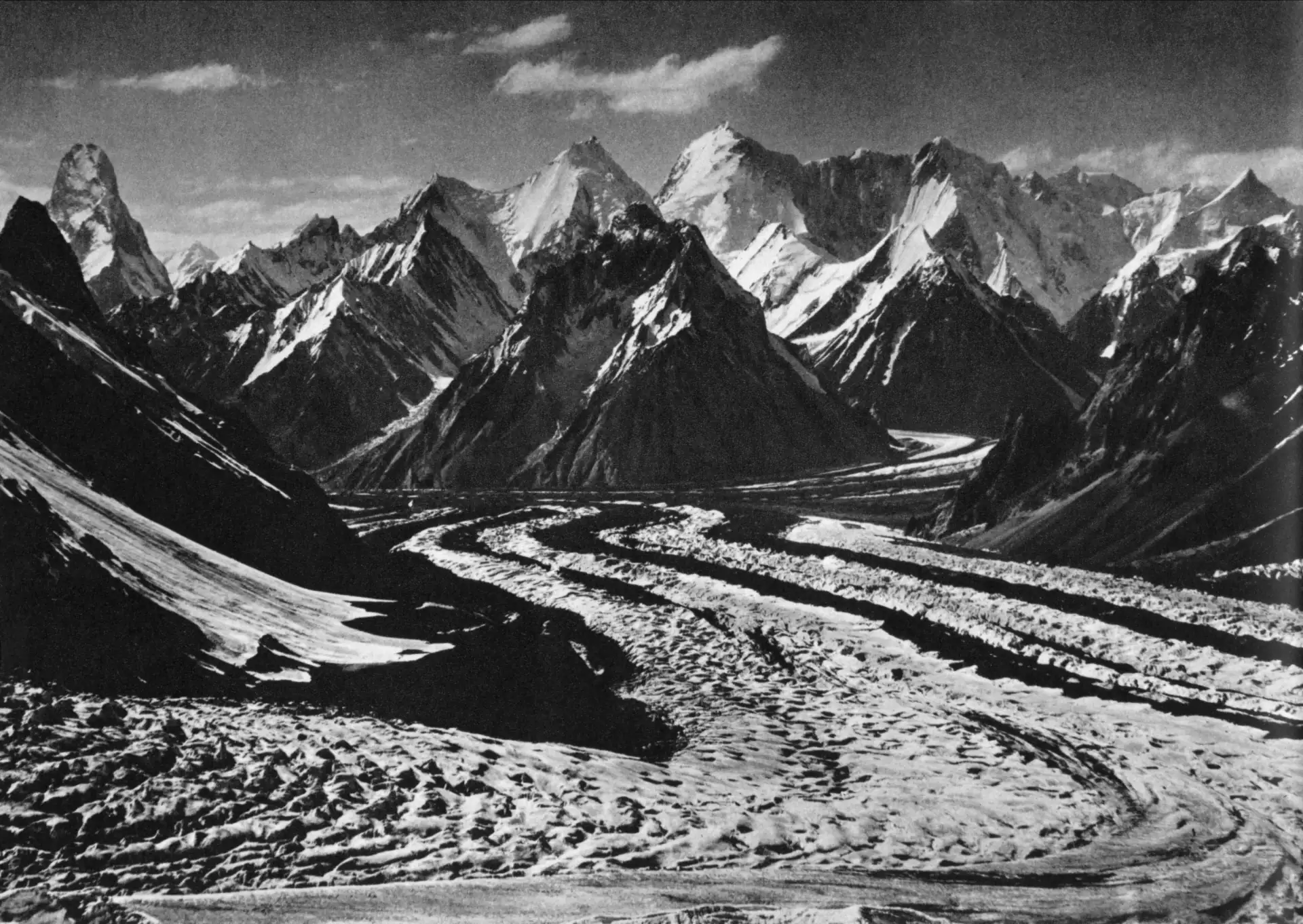
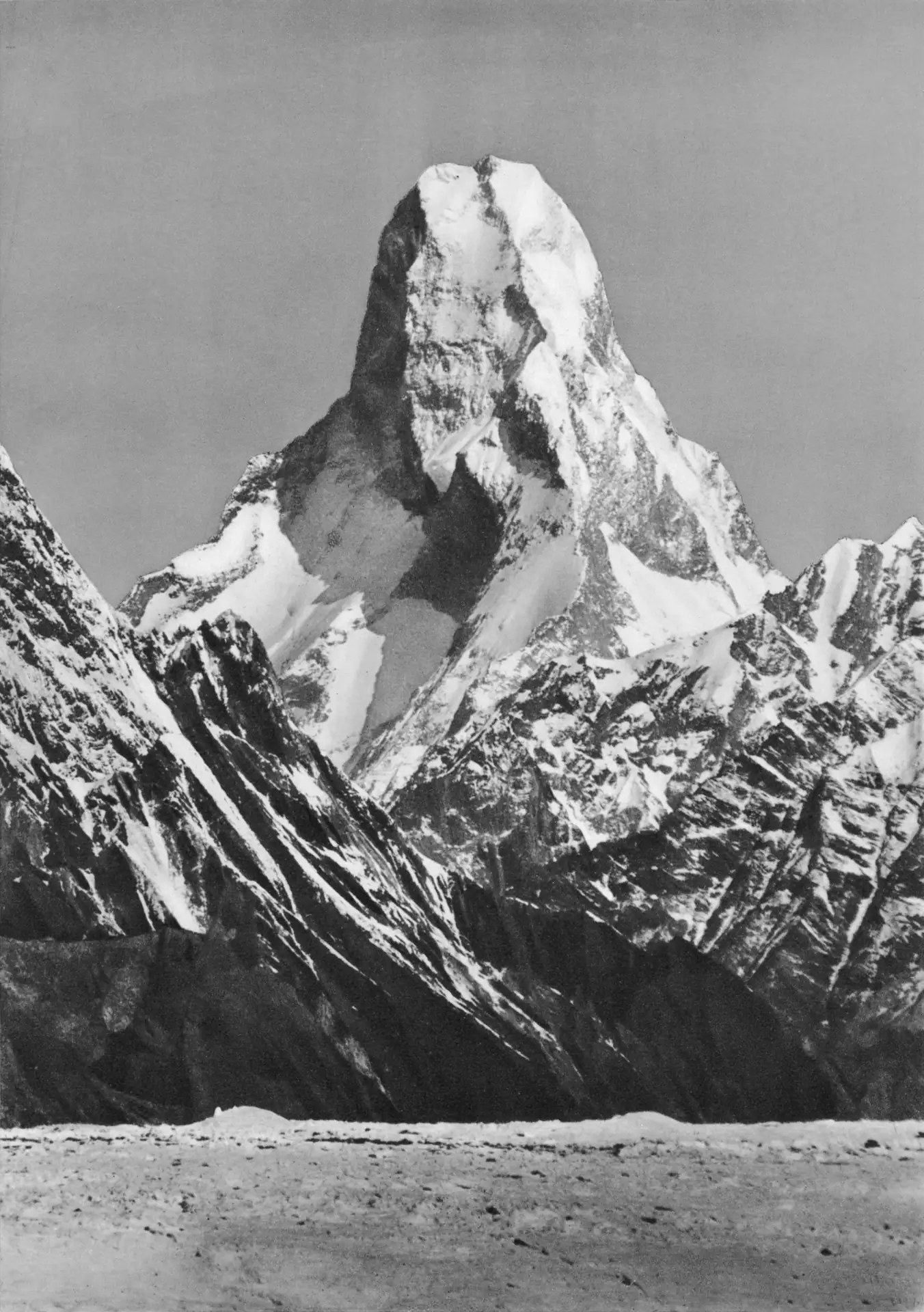
Muztagh Tower is the mountain in the most famous photograph ever taken on the Baltoro. In 1909 Vittorio Sella pointed a long lens at it from the upper glacier, the two summits lined up, and the result was a single granite and ice fang that looked impossible to climb. It was climbed, twice, in the summer of 1956, and since then only three more expeditions have reached the top. Muztagh Tower is 7,276 metres high, stands just north of the Baltoro glacier on the Pakistan-China border, and has no easy route. This page explains what the mountain is, how each route goes, what a permit costs and how we support the few teams who attempt it.
Where is Muztagh Tower?
Muztagh Tower rises in the Baltoro Muztagh of the Karakoram, on the border between Gilgit-Baltistan in Pakistan and Xinjiang in China, at about 35°49′N 76°21′E. It separates the Baltoro basin on the Pakistan side from the Sarpo Laggo basin on the Chinese side. All the climbed routes start in Pakistan, from the Muztagh glacier or the Younghusband glacier, two side valleys that join the Baltoro from the north between Paiju and Urdukas. The older spelling Mustagh Tower appears in the 1909 and 1956 accounts. It should not be confused with Muztagh Ata, the 7,546 m snow dome in the Chinese Pamir, which is a very different and far easier climb.
The photograph that made it impossible
Sella took his picture during the Duke of the Abruzzi's 1909 K2 expedition, from the slopes below Baltoro Kangri, about 35 km away. From that angle the twin tops of Muztagh Tower stack into one slender spire. The image went round the climbing world, and in 1941 James Ramsey Ullman captioned it "The Last Citadel" in his book High Conquest. Guido Magnone, who led the French team in 1956, wrote that after Sella's photograph the tower must have seemed the very symbol of inaccessibility. Both 1956 teams found the real angles less extreme than the picture promised, but nothing about it is easy.
How high is Muztagh Tower?
We use 7,276 m, the figure in the standard list of Karakoram summits and on Wikipedia. Peakbagger and the 1956 British survey give 7,273 m (23,860 ft), and the American Alpine Journal and most climbing news use 7,284 m. The mountain has two tops a few metres apart. The east summit is the main one, about three metres higher than the west summit; Hartog's 1956 report gives the east top as 23,860 ft and the west as 23,850 ft. Its prominence of about 1,710 m makes it one of the Karakoram's ultra-prominent peaks.
How hard is Muztagh Tower?
Every route is a serious technical climb. There is no snow plod, no commercial fixed-rope line and no "normal route" in the Spantik sense. Expect steep ice walls, rock chimneys and towers, cornices, loose granite and limestone, and long spells of bad weather; the 1956 British team reported that half their days were bad. Only five expeditions are known to have reached the summit, and the French route of 1956 has never been repeated. This is an objective for experienced alpinists who have already climbed technical 6,000 and 7,000 m routes and can lead steep ice and mixed ground. It is not a first 7000er.
The routes
Northwest ridge. The British first-ascent route. In 1956 John Hartog's team set base camp at about 4,280 m on the Muztagh glacier, reached the west col from the Chagaran glacier up an ice wall of some 1,900 ft, then fixed more than 1,000 ft of rope above Camp 3 before traversing onto the north face to the west summit. It was repeated in 1984 and 1990.
Southeast ridge. The French route of 1956, climbed from a base camp at about 4,500 m on the Younghusband glacier, with two great rock towers on the ridge and a bivouac near 7,000 m. It has never been repeated; attempts in 2006 and 2016 turned back far below the top.
Northeast face. In 2012 Dmitry Golovchenko, Alexander Lange and Sergey Nilov of Russia climbed the central spur of the northeast face, "Think Twice", in 17 days, graded ED 6a A2 M6 with near-vertical rock between 6,600 and 6,900 m. It won a Piolet d'Or in 2013. In 2008 the Slovenian Pavle Kozjek was killed when a cornice collapsed after he and Dejan Miškovič had climbed the same face to the ridge.
The approach and base camp
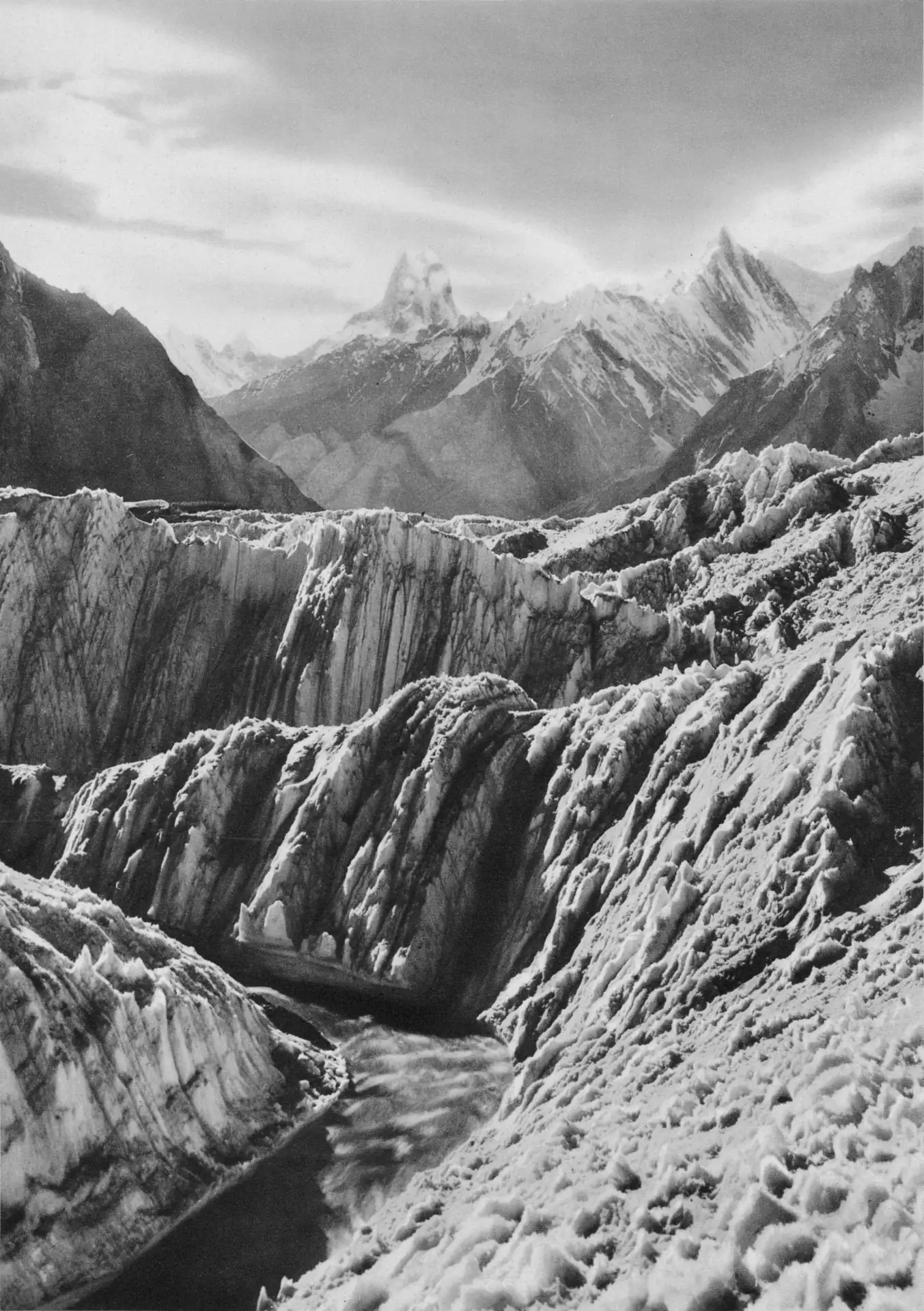
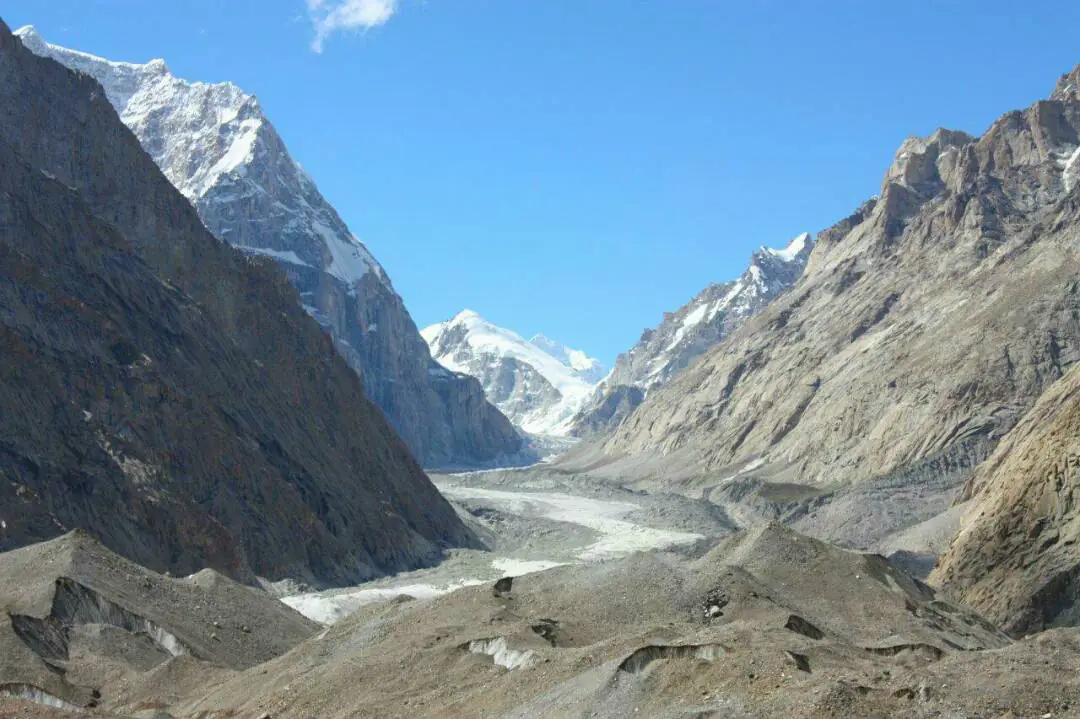
The approach is the K2 trek. Fly from Islamabad to Skardu, drive by jeep to Askole, then walk up the Braldu and onto the Baltoro through Jhola, Paiju and Urdukas, turning north up the Muztagh or Younghusband glacier depending on the route. Base camp is five to six days from Askole, at roughly 4,300 to 4,600 m; there is no single fixed site. The side glaciers see almost no traffic: a 2016 team saw nobody pass their camp in four weeks, even though the main K2 Base Camp trek is only a couple of hours away.
Best time to climb Muztagh Tower
Every known ascent and attempt has taken place between June and August, the Karakoram summer climbing season. The 1956 teams arrived at base camp in late May and June and summited in July; the Russians topped out on 25 August 2012. Plan for at least four to six weeks on the mountain, because weather windows on the Baltoro are short and the routes are long.
A 45-day Muztagh Tower expedition plan
| Days | Plan | Sleeping altitude |
|---|---|---|
| 1 to 3 | Islamabad briefing and permit formalities; fly to Skardu; final checks and loads | about 2,230 m |
| 4 | Jeep from Skardu through Shigar to Askole | about 3,000 m |
| 5 to 10 | Trek up the Braldu and Baltoro via Jhola, Paiju and Urdukas, then north to base camp | 3,000 m to about 4,300 to 4,600 m |
| 11 to 38 | Establish camps, acclimatisation, fixing and the summit attempt, with spare weather days | 4,300 m to above 7,000 m |
| 39 to 43 | Clear base camp and trek out to Askole | down to about 3,000 m |
| 44 to 45 | Drive to Skardu, fly to Islamabad, departure | about 2,230 m, then Islamabad |
Permits and cost
Muztagh Tower falls in the 7,001 to 7,500 m royalty band. Under the current per-person system the royalty is US$500 per climber in summer, lower in autumn and winter; the Gilgit-Baltistan tourism website still shows the older rate of US$2,500 per team of up to seven, so we confirm the current notification for every booking. The Baltoro beyond Askole is a restricted zone, so a liaison officer is assigned to the expedition, and every member pays the Central Karakoram National Park fee of about US$200. You need a mountaineering visa, issued against our sponsorship letter, which takes about four to six weeks.
Because the climbing on Muztagh Tower is technical and is done by self-sufficient alpine teams, we sell it as base-camp service: from $4,550 per person, which matches the average of what Pakistani operators charge for the same service. That covers the royalty and permits, the liaison officer, jeeps to Askole and back, porters to base camp, base camp cook, staff, tents and meals, and the national park fee. High-altitude porters, a climbing guide, fixed rope and oxygen are not part of the base package and are quoted separately for teams that want them.
What it takes, and who it suits
Muztagh Tower suits strong alpine teams with technical 7,000 m experience who want a rarely climbed, historic line far from the crowds on K2 and Broad Peak. You should be able to lead steep ice and mixed rock at altitude and look after yourselves high on the mountain. If you want a 7000er with a well-trodden normal route first, look at Spantik; if you want the view of the tower without climbing it, the K2 Base Camp trek passes right below it.
Climbing History
1909
Sella's photograph
Sella's photograph
Vittorio Sella photographed the tower from the upper Baltoro during the Duke of the Abruzzi's K2 expedition. Seen end-on, the twin summits looked like a single unclimbable spire.
1956
British first ascent by the northwest ridge
British first ascent by the northwest ridge
John Hartog, Joe Brown, Ian McNaught-Davis and Tom Patey climbed from the Muztagh glacier. Brown and McNaught-Davis reached the west top on 6 July, and Hartog and Patey the higher east summit on 7 July.
1956
French ascent by the southeast ridge
French ascent by the southeast ridge
Days later Guido Magnone, André Contamine, Paul Keller and Robert Paragot reached the east summit from the Younghusband glacier, on 11 or 12 July depending on the source. Their route has never been repeated.
1984
Third ascent
Third ascent
A seven-strong British team repeated the northwest ridge; Mal Duff and Tony Brindle, then Jon Tinker and Sandy Allan, reached the top in late July. Andrew Greig wrote about the trip in Summit Fever.
1990
Fourth ascent
Fourth ascent
Göran Kropp and Rafael Jensen climbed the original route with a different lower line.
2008
Death on the northeast face
Death on the northeast face
Pavle Kozjek and Dejan Miškovič climbed about 1,800 m of the northeast face to the ridge at around 6,800 m without summiting. Kozjek was killed when a cornice collapsed on the descent.
2012
Think Twice, a Piolet d'Or route
Think Twice, a Piolet d'Or route
Dmitry Golovchenko, Alexander Lange and Sergey Nilov climbed the northeast face spur in 17 days, reaching the east summit on 25 August. It is the fifth and most recent known ascent.
Recommended Reading
Summit Fever
by Andrew Greig (1985)
Summit Fever
by Andrew Greig (1985)
Muztagh Tower Expedition: Frequently Asked Questions
How high is Muztagh Tower?
How high is Muztagh Tower?
Muztagh Tower is 7,276 m high according to the standard list of Karakoram summits and Wikipedia. You will also see 7,273 m, the figure on Peakbagger, which matches the 23,860 ft measured by the British team in 1956, and 7,284 m, the height used by the American Alpine Journal and most climbing news. The differences come from different surveys, not from a change in the mountain. Muztagh Tower has two summits a few metres apart: the east top is the main summit and is about three metres higher than the west top, and the 1956 British report gave them as 23,860 ft and 23,850 ft. Its prominence is about 1,710 m, which makes it one of the ultra-prominent peaks of the Karakoram. Whichever figure you use, it is a 7,000 m peak that is climbed far less often than its neighbours on the Baltoro.
Where is Muztagh Tower?
Where is Muztagh Tower?
Muztagh Tower is in the Baltoro Muztagh range of the Karakoram, on the border between Gilgit-Baltistan in Pakistan and Xinjiang in China. It stands just north of the Baltoro glacier, between the Baltoro basin and the Sarpo Laggo basin on the Chinese side. All the routes climbed so far start in Pakistan, from the Muztagh glacier or the Younghusband glacier, two side glaciers that join the Baltoro from the north between Paiju and Urdukas on the K2 trek. Base camp is five to six days' walk from Askole, the last village, which is reached by jeep from Skardu through Shigar. Do not confuse it with Muztagh Ata, the 7,546 m snow dome in the Chinese Pamir near Kashgar, which shares part of the name but is a completely different mountain and a much easier climb.
Who first climbed Muztagh Tower?
Who first climbed Muztagh Tower?
Muztagh Tower was first climbed in 1956 by two expeditions within a few days of each other. A British team led by John Hartog, with Joe Brown, Ian McNaught-Davis and Tom Patey, climbed the northwest ridge from the Muztagh glacier. Brown and McNaught-Davis reached the slightly lower west top on 6 July, and Hartog and Patey crossed to the higher east summit on 7 July; Hartog's toes were frostbitten on the descent. A French team of Guido Magnone, André Contamine, Paul Keller and Robert Paragot climbed the southeast ridge from the Younghusband glacier and reached the east summit on 11 or 12 July, depending on the source. The French route has never been repeated. Both ascents came almost fifty years after Vittorio Sella's photograph had made the tower look unclimbable.
How many people have climbed Muztagh Tower?
How many people have climbed Muztagh Tower?
Only five expeditions are known to have reached the summit of Muztagh Tower. They are the British and French teams of 1956, a British team in 1984 whose members Mal Duff, Tony Brindle, Jon Tinker and Sandy Allan summited on consecutive days, Göran Kropp and Rafael Jensen in 1990, and the Russian team of Dmitry Golovchenko, Alexander Lange and Sergey Nilov, who climbed a new route on the northeast face in 2012. That makes about seventeen climbers on the top in seventy years. We have found no ascent since 2012, although teams have tried the southeast ridge in 2006 and 2016. One climber, the Slovenian Pavle Kozjek, is known to have died on the mountain, in 2008. Compared with Spantik, which commercial teams climb every summer, Muztagh Tower remains one of the least climbed big peaks of the Karakoram.
How difficult is Muztagh Tower?
How difficult is Muztagh Tower?
Muztagh Tower is one of the most difficult 7,000 m peaks in Pakistan, and every route on it is technical. The northwest ridge involves a steep ice wall of around 1,900 ft to the west col, a rock chimney, long sections of fixed rope and a hard rock step between the two summits. The southeast ridge crosses two great rock towers and has never been repeated since 1956. The 2012 Russian route on the northeast face is graded ED 6a A2 M6 and has near-vertical rock above 6,600 m. On top of the climbing there are cornices, loose granite and limestone, icefalls and long periods of bad weather. Only experienced alpinists who can lead steep ice and mixed ground at altitude, and who have already climbed technical 6,000 or 7,000 m routes, should consider it.
What permit do you need for Muztagh Tower?
What permit do you need for Muztagh Tower?
Muztagh Tower is in the 7,001 to 7,500 m royalty band in Pakistan. Under the per-person system reported since 2025, the summer royalty is US$500 per climber, with lower rates in autumn and winter. The official Gilgit-Baltistan tourism website still lists the older rate of US$2,500 per team of up to seven, so the exact fee should be confirmed with your operator for each season. The Baltoro beyond Askole is a restricted zone, which means a liaison officer is assigned to the expedition, and each member pays the Central Karakoram National Park fee, currently about US$200. Climbers need a mountaineering visa, applied for online against a sponsorship letter from a licensed Pakistani operator, which takes about four to six weeks. We handle the permit application, the liaison officer and the park fee for every team.
When is the best time to climb Muztagh Tower?
When is the best time to climb Muztagh Tower?
Every known ascent and attempt on Muztagh Tower has been made between June and August, the summer climbing season in the Karakoram. The 1956 teams set up base camp in late May and June and reached the summit in July. The 2008 Slovenian attempt and the 2012 Russian ascent took place in August, and the 2016 attempt in July and August. Outside these months the Baltoro is colder, the approach is harder for porters and there is no record of a successful climb. Even in summer the weather is unreliable: the 1956 British team reported bad weather on about half their days. We recommend planning for four to six weeks on the mountain, which with the five to six day trek each way and the days in Skardu and Islamabad makes an expedition of about 45 days.
How much does a Muztagh Tower expedition cost?
How much does a Muztagh Tower expedition cost?
Our Muztagh Tower base-camp service costs from $4,550 per person, which matches the average of what Pakistani operators charge for the same service. It includes the royalty and permits, the liaison officer, jeep transport from Skardu to Askole and back, porters to and from base camp, the base camp cook and staff, tents and all meals at base camp, and the Central Karakoram National Park fee. It does not include international flights, the Islamabad to Skardu flights unless agreed, travel insurance, personal climbing equipment or personal expenses. High-altitude porters, a climbing guide, fixed rope and oxygen are not part of the base package, because most teams on Muztagh Tower climb alpine style and look after themselves above base camp. If you want high-altitude support, we quote it separately for your team and route.
What's Included
Not Included
Ready for Your Next Adventure?
Join our community of explorers and discover the journey of a lifetime. Our expert team is ready to help you plan your perfect expedition.