Laila Peak Expedition
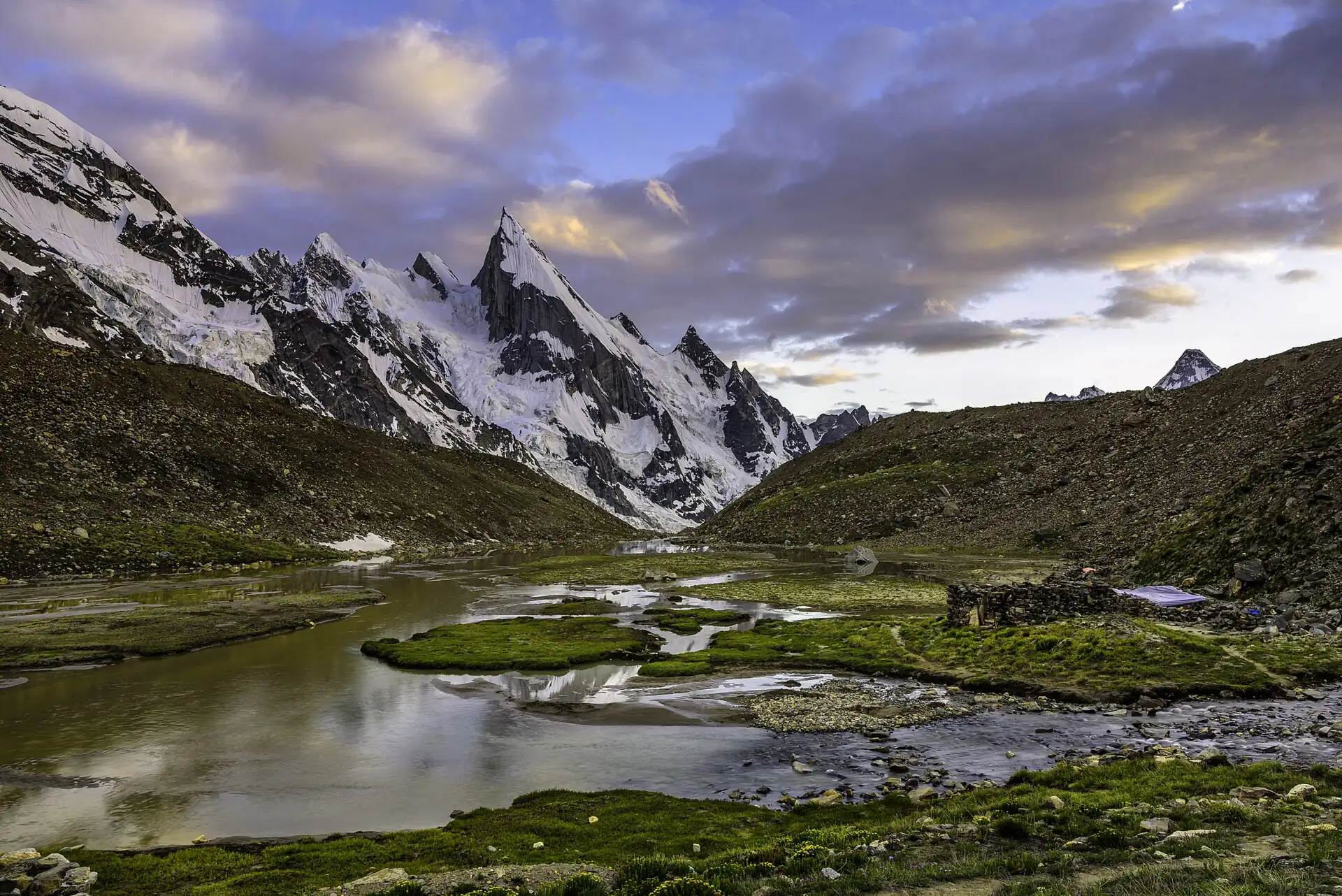
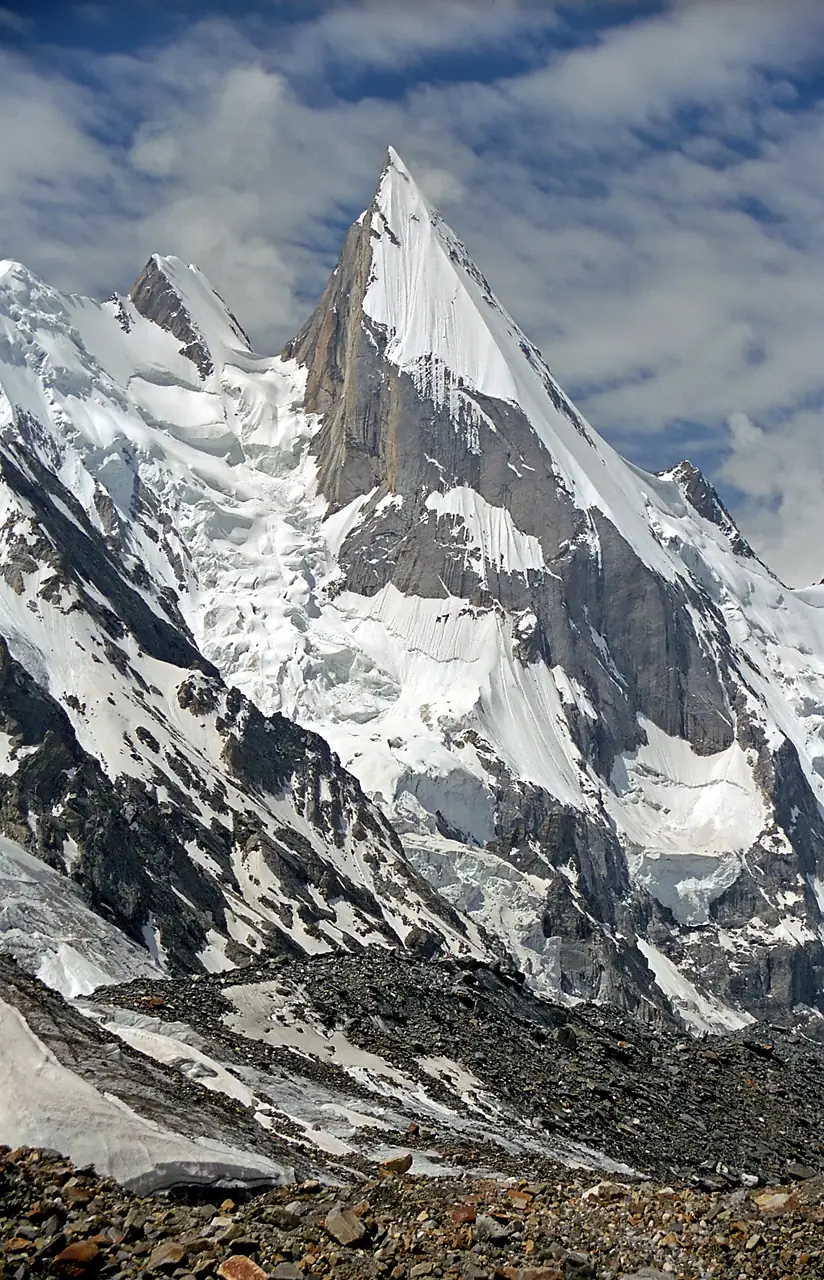
A steep snow and ice spire above the Gondogoro glacier, Hushe valley
Last updated: · Reviewed by Javeed Iqbal, Founder
Elevation
6,096m
Difficulty
Difficult
Duration
22 Days
Best Season
Late May to Jul, Sep
Laila Peak (6,096m): the snow spear of the Hushe valley
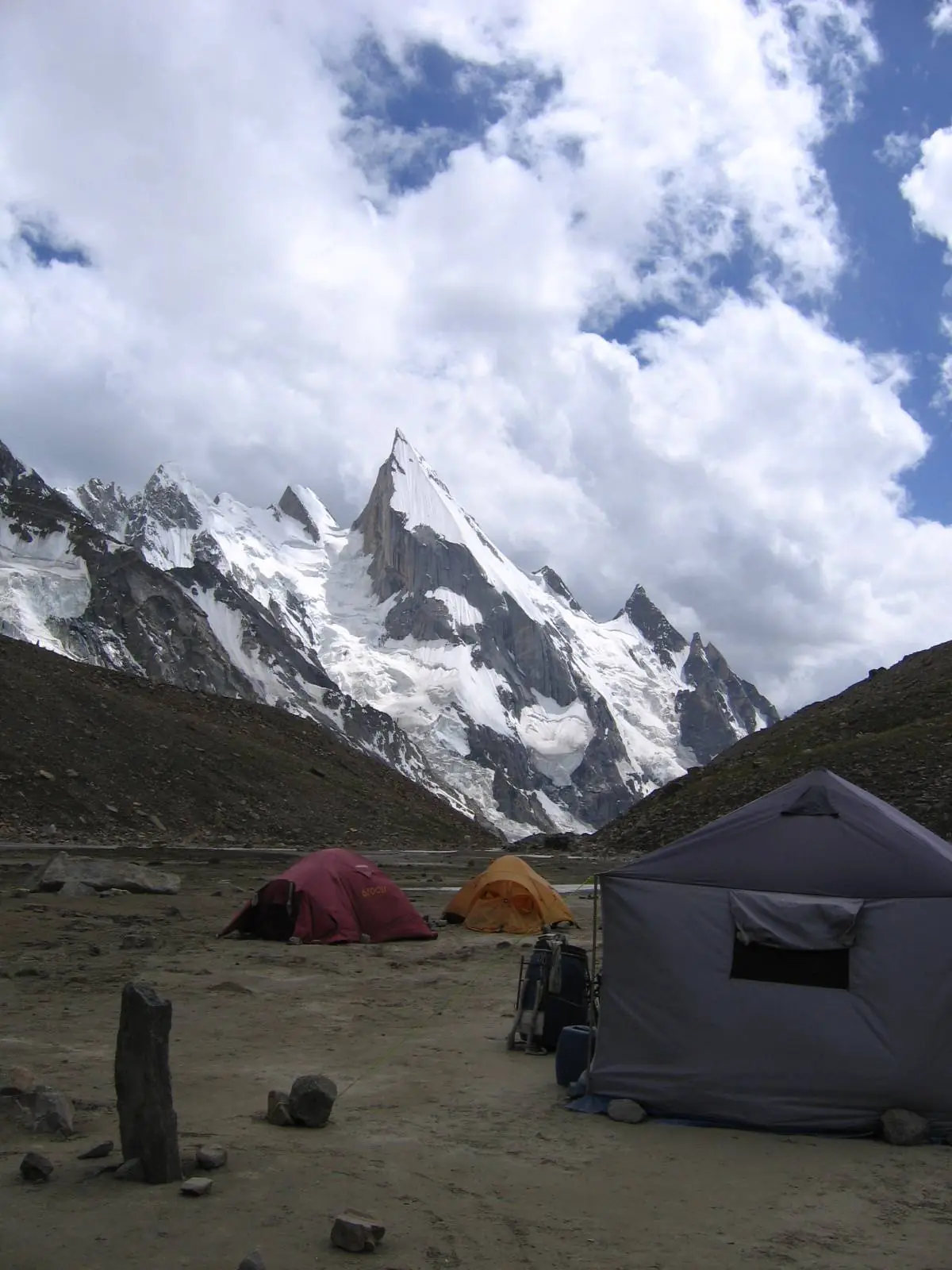
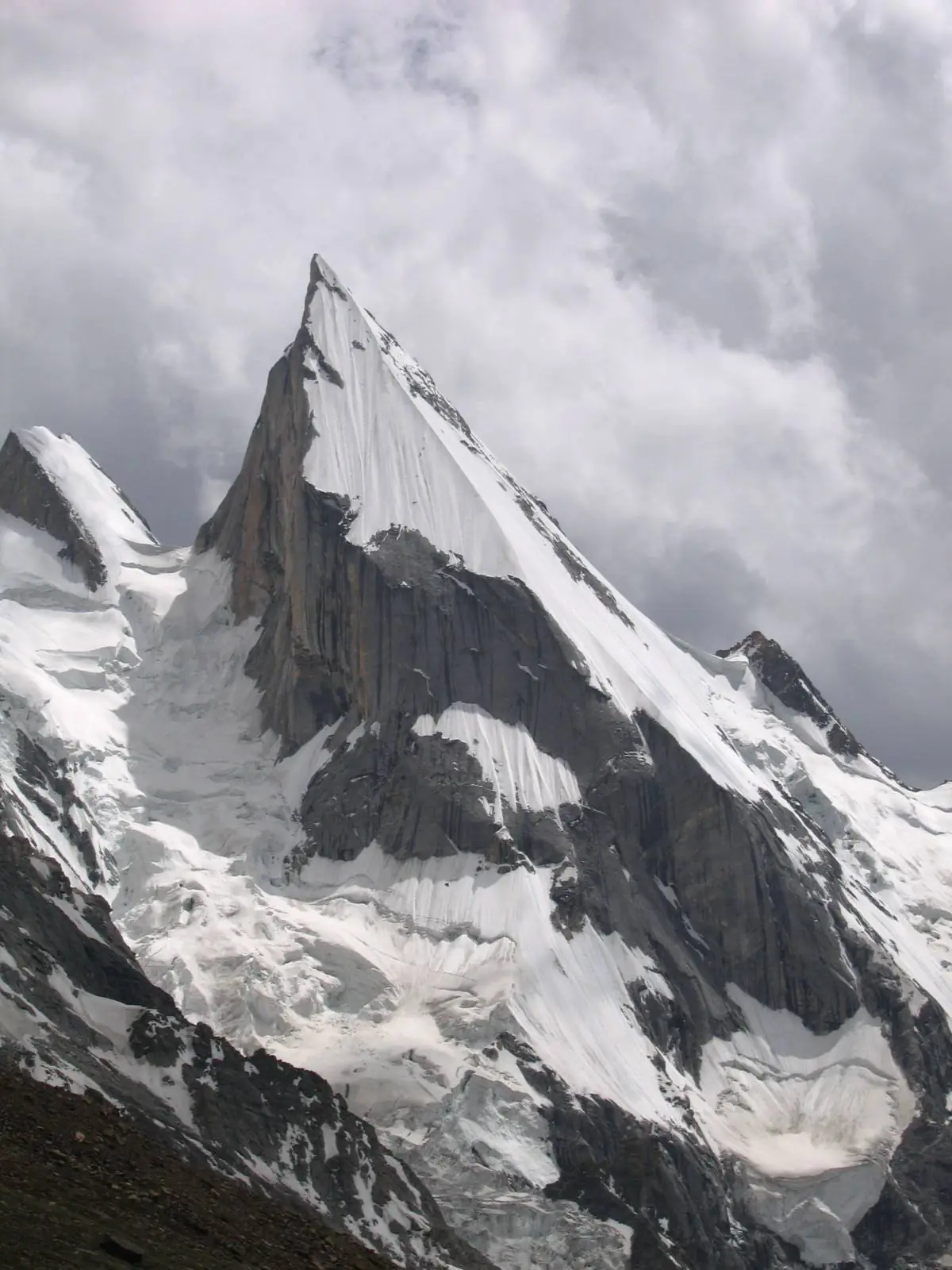
Laila Peak is the sharp white spire that every trekker on the Gondogoro La route photographs on the way down to Hushe. It stands 6,096 metres above the Gondogoro glacier in the Hushe valley of Baltistan, and from the base camp meadow it looks almost impossibly steep: one long, smooth face of snow and ice running up to a needle point. That face is the normal route. There is no peak royalty, the base camp is two days' walk from the road, and the climb itself is a serious, sustained ice route rather than a trekking peak. This page sets out what the mountain is, how the climb works, what the real dangers are and how we run a Laila Peak expedition.
Where is Laila Peak?
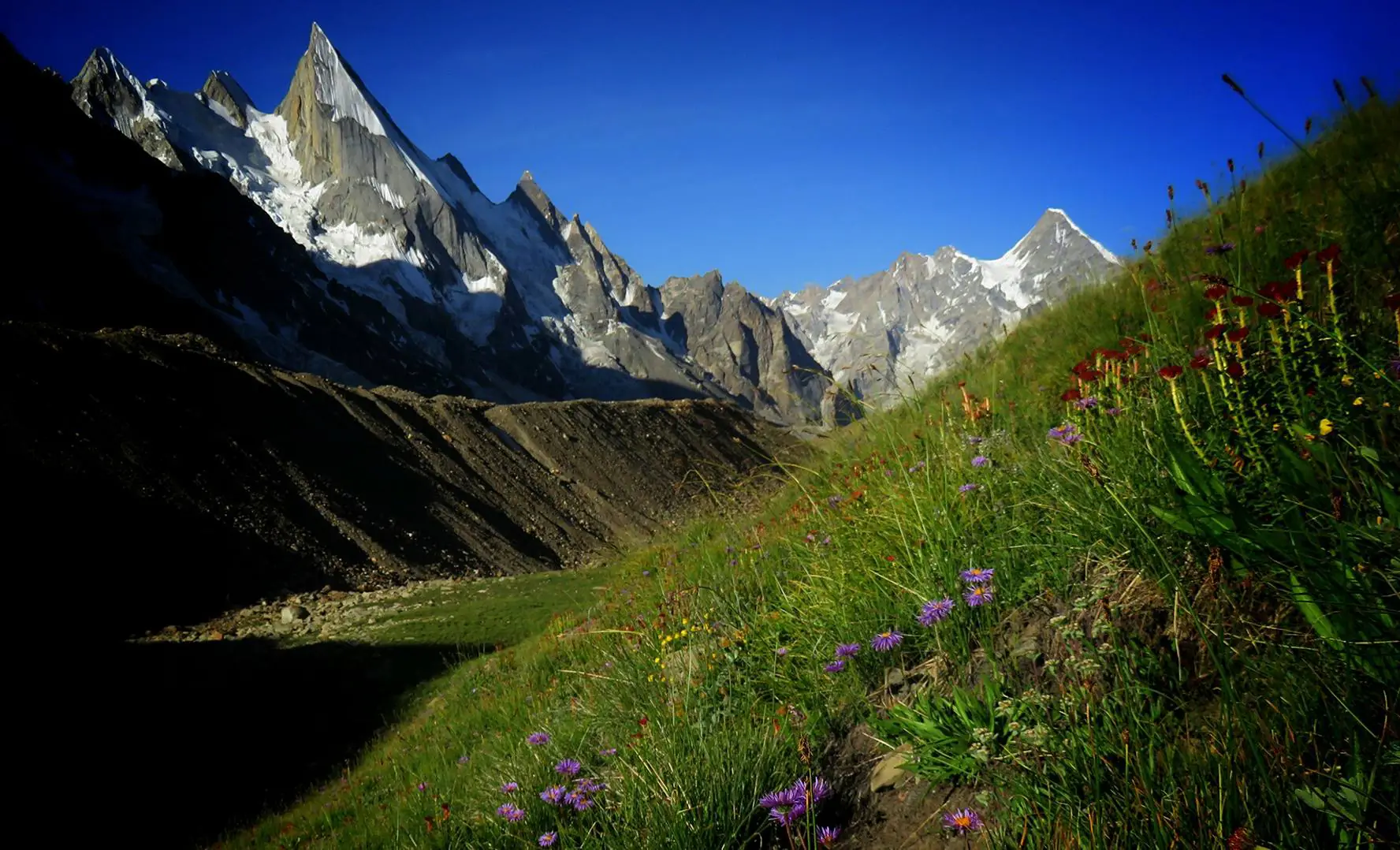
Laila Peak is in the Masherbrum Mountains of the Karakoram, in Ghanche district of Gilgit-Baltistan, Pakistan. It rises on the west side of the Gondogoro glacier, a few hours above Dalsampa, the meadow camp most groups use on the Hushe side of the Gondogoro La. The nearest village is Hushe, at about 3,050 m, the last settlement in the valley and the roadhead for Masherbrum, K6, K7 and the Gondogoro route.
Be careful with the name. Pakistan has at least three mountains called Laila. The one on this page is the 6,096 m Hushe valley peak. A different Laila Peak of about 6,985 m stands above the Chogolungma glacier in the Haramosh range, and a third "Laila" in the Rupal valley below Nanga Parbat is really Toshain II. Reports of a 1997 "first ascent" of Laila Peak usually refer to that Rupal mountain, which is one reason the history of this peak is so often garbled online.
How high is Laila Peak?
The accepted height is 6,096 m, or 20,000 ft, the figure used by the American Alpine Journal and taken from the Japanese survey map of the Hushe area. In 2025 many news reports gave 6,069 m. That number came from a press release after Laura Dahlmeier's accident and is a transposition of the same digits; no survey supports it. You may also see 6,200 m or more on old operator pages, and those figures have no source either. Plan for 6,096 m.
How hard is Laila Peak?
Harder than its height suggests. The normal route climbs the northwest face, between 1,500 and 1,800 m of continuous snow and ice at 45 to 55 degrees, steepening near the top. In a lean year the snow melts back to hard blue ice, and one Italian team in 2016 met a section of black ice close to 70 degrees. There is no published official grade; in typical summer conditions it climbs like an alpine D, a long day of front-pointing with an abseil descent. It is far more technical than Khosar Gang, the usual first 6000er in Baltistan, and by angle steeper than the normal route on Spantik, although much lower.
Reinhold Messner, asked about it in 2025, called Laila "a very steep mountain, complicated to climb and full of pitfalls." That is a fair summary. You need to be comfortable on steep ice with two tools, able to abseil on ice threads, and fit enough for an 8 to 10 hour summit push above 5,600 m.
The normal route: the northwest face
Base camp is at about 4,200 m near Dalsampa, on the edge of the Gondogoro glacier, with a small lake and a stone herders' hut. From there the route crosses crevassed ground below the First Gondogoro Cwm to Camp 1 at roughly 5,100 to 5,200 m. A high camp at about 5,600 m on the col of the west ridge puts you at the foot of the upper face. Summit day usually starts in the small hours and takes 8 to 10 hours to the top, then 3 to 5 hours back down, mostly by abseil on Abalakov threads or on rope our team fixes on the steepest ground.
Other lines exist. The first winter ascent in 2013 followed a line on the right side of the west face, and in 2025 two Polish climbers made the first ascent of the much harder southeast face. For almost everyone, though, Laila means the northwest face.
Getting to Laila Peak base camp
Most teams fly from Islamabad to Skardu, which takes about an hour when the weather allows; if flights are cancelled the road takes one and a half to two days (our Islamabad to Skardu guide covers both). From Skardu a jeep runs east along the Shyok through Khaplu and up the Hushe valley to Hushe village, about 120 km and 5 to 7 hours. The walk in takes two days: Hushe to Saicho at roughly 3,300 m, where the Charakusa and Gondogoro valleys meet, then up the Gondogoro to base camp near Dalsampa, about 20 to 25 km in all.
Best time to climb Laila Peak
Most expeditions go between June and August, when the Gondogoro route is busy with trekkers. Climbers who know the face prefer late May to early July, and September. Every complete ski descent so far has been made in May, on firm snow. From mid-July the warmth softens the snow on the face by late morning and loosens rock on the bands near the top, and many parties have turned back in soft, sugary snow over ice. The first winter ascent, in February 2013, was made at about minus 35°C, so winter is possible but extreme. We build two or three spare days into every Laila trip so the summit push can wait for a cold, clear night.
The dangers: rockfall, soft snow and seracs
Laila's hazards are objective ones. Crevasses guard the lower glacier, serac fall threatens parts of the first half of the face, slabs can avalanche in fresh snow, and the rock bands high on the mountain shed stones as the day warms. Two deaths have been publicly reported. In June 2016 the Italian ski mountaineer Leonardo Comelli fell while skiing the face at about 5,350 m. In July 2025 Laura Dahlmeier was killed by rockfall at about 5,700 m. No official register exists for 6,000 m peaks in Pakistan, so any "death rate" quoted for Laila Peak is a guess.
What happened to Laura Dahlmeier on Laila Peak?
Laura Dahlmeier, the German double Olympic biathlon champion, was climbing Laila Peak with her partner Marina Krauss in July 2025. On 28 July, around midday, the two had turned back below the summit because the snow was getting softer, and were abseiling down on ice threads. On the third abseil, with Krauss already below, rockfall began and a large stone struck Dahlmeier at about 5,700 m. Krauss could not reach her and raised the alarm. A Pakistani army helicopter saw no sign of life the next morning, and an international team led by Thomas Huber, with Tad McCrea, Jackson Marvell and Alan Rousseau, confirmed her death. She had left written instructions that no one should risk their life to recover her, and her body remains on the mountain, as her family asked. Her accident is the reason Laila Peak is now searched for so often in Germany, and it is a reminder of why we time summit pushes for cold conditions and keep the descent fast.
Ski descents of Laila Peak
The northwest face is a famous ski line. Fredrik Ericsson and Jörgen Aamot skied it in 2005 from a little below the summit. The first complete ski descent from the top was made on 11 May 2018 by Carole Chambaret, Tiphaine Duperier and Boris Langenstein of France, about 1,800 m of skiing at up to 55 degrees, and an Italian, Swiss and Austrian team followed two weeks later. Andrzej Bargiel and Jędrzej Baranowski of Poland climbed the face in May 2021 and skied from 150 m below the top.
A 22-day Laila Peak expedition plan
| Days | Plan | Sleeping altitude |
|---|---|---|
| 1 to 2 | Arrive in Islamabad, briefing and permit formalities; fly to Skardu | about 2,230 m |
| 3 | Jeep from Skardu via Khaplu to Hushe | about 3,050 m |
| 4 to 5 | Walk to Saicho, then up the Gondogoro to base camp near Dalsampa | about 3,300 m, then 4,200 m |
| 6 to 17 | Rest and skills day, acclimatisation rotations to Camp 1 and the high camp, summit push, spare weather days | 4,200 to 5,600 m |
| 18 to 19 | Clear base camp, walk out to Hushe | about 3,050 m |
| 20 to 21 | Drive to Skardu, fly to Islamabad | about 2,230 m, then Islamabad |
| 22 | Departure, or a spare day if the Skardu flight is delayed | - |
Permits and cost
Pakistan charges no peak royalty below 6,500 m, so there is no climbing fee for Laila Peak itself. The approach is a different matter. The Gondogoro glacier lies in a restricted zone, the same one as the Gondogoro La trek, so foreign climbers need a trekking permit arranged through a licensed operator, a licensed guide, insurance for the whole team and the Central Karakoram National Park fee, and a liaison officer can be assigned. Because the Gondogoro route is on NADRA's list of restricted treks, apply for a mountaineering and trekking visa with our sponsorship letter rather than a tourist visa. Our Laila Peak expedition starts at $2,750 per person, Islamabad to Islamabad, with permits, guides, porters, base camp and all meals on the mountain included.
What it takes, and who it suits
Laila Peak suits climbers who have already done steep snow and ice routes in the Alps or similar, who can move confidently on 50 degree ice for hours, and who have been to at least 5,000 to 6,000 m before. If your experience is glacier walking and a fixed-rope trekking peak, climb Khosar Gang or Gondogoro Peak first. Climb Laila well and you will have stood on one of the most beautiful summits in the Karakoram, with Masherbrum, Chogolisa and the Charakusa spires laid out around you.
Climbing History
1987
First known ascent, unrecorded at the time
First known ascent, unrecorded at the time
British climbers Andy Cave, Tom Curtis, Sean Smith and Simon Yates reached the summit during the trip on which they also made the first ascent of Namika. They had no permit for Laila and no report was published then.
1996
The first officially recorded ascent
The first officially recorded ascent
An Italian team reached the summit on 2 July, believing it was a first ascent, and descended the west ridge by abseil. Some sources give the year as 1997.
2005
The first skis on the northwest face
The first skis on the northwest face
Fredrik Ericsson and Jörgen Aamot climbed to just below the summit and skied the northwest face, starting the mountain's reputation as a ski line.
2013
First winter ascent
First winter ascent
Alex Txikon and José Fernández of Spain reached the top on 18 February in temperatures around minus 35°C, from camps at 5,200 and 5,600 m.
2018
First complete ski descent
First complete ski descent
Carole Chambaret, Tiphaine Duperier and Boris Langenstein skied the whole face from the summit on 11 May, about 1,800 m at up to 55 degrees.
2025
Laura Dahlmeier and the southeast face
Laura Dahlmeier and the southeast face
On 28 July the German Olympic champion Laura Dahlmeier was killed by rockfall at about 5,700 m while descending. Later that summer two Polish climbers made the first ascent of the steep southeast face.
Laila Peak Expedition: Frequently Asked Questions
How high is Laila Peak?
How high is Laila Peak?
Laila Peak is 6,096 m, or 20,000 ft, high. That is the figure in the American Alpine Journal and on the Japanese survey map of the Hushe valley, and it is the height most climbing reports use. During the coverage of Laura Dahlmeier's accident in 2025 many news reports printed 6,069 m, which is a transposition of the same digits taken from a press release, not a new measurement. You will also find 6,200 m and higher on some old pages, without any source. No modern GPS height for the summit has been published. Do not confuse this peak with the other Laila Peak of about 6,985 m above the Chogolungma glacier in the Haramosh range, or with the Rupal valley peak that a 1997 team called Laila, which is really Toshain II. The Hushe valley Laila, above the Gondogoro glacier, is the famous snow spire.
Where is Laila Peak located?
Where is Laila Peak located?
Laila Peak is in the Hushe valley of Ghanche district, Gilgit-Baltistan, in northern Pakistan. It belongs to the Masherbrum Mountains of the Karakoram and rises on the west side of the Gondogoro glacier, above the meadow camp of Dalsampa on the Hushe side of the Gondogoro La. The nearest village is Hushe, at about 3,050 m, which is reached by jeep from Skardu through Khaplu, about 120 km and 5 to 7 hours. From Hushe it is a two-day walk to base camp, with a night at Saicho, where the Charakusa and Gondogoro valleys meet. Trekkers crossing the Gondogoro La from the Baltoro see Laila directly ahead as they descend towards Hushe, which is why the peak appears in so many K2 trek photographs. Masherbrum, Chogolisa and the granite spires of K6 and K7 in the Charakusa valley are its neighbours.
How difficult is Laila Peak?
How difficult is Laila Peak?
Laila Peak is a difficult, technical climb, much harder than its 6,096 m height suggests. The normal route goes up the northwest face, 1,500 to 1,800 m of continuous snow and ice at 45 to 55 degrees that steepens near the summit. In dry years the snow turns to hard blue ice, and one team found a short section close to 70 degrees. No official grade is published, but in normal summer conditions it climbs like an alpine D: a long day of front-pointing and an abseil descent. Summit day from the high camp at about 5,600 m usually takes 8 to 10 hours up and 3 to 5 hours down. You should be confident on steep ice with two ice tools, able to abseil on ice threads, and already have been above 5,000 m. Laila is not a trekking peak. If you have not climbed steep ice before, start with Khosar Gang or Gondogoro Peak.
Who first climbed Laila Peak?
Who first climbed Laila Peak?
The first known ascent was made in 1987 by four British climbers, Andy Cave, Tom Curtis, Sean Smith and Simon Yates, on the same trip on which they made the first ascent of Namika. They had no permit for Laila and published no report at the time, so the climb was only recorded later. An Italian team made the first officially recorded ascent on 2 July 1996 and descended the west ridge by abseil; some sources give 1997 for this climb, and the American Alpine Journal gives 1996. German and Swiss teams repeated the northwest face in the early 1990s. Alex Txikon and José Fernández of Spain made the first winter ascent on 18 February 2013. Wikipedia still says the first ascent is not recorded and repeats an old claim that only seven people have ever climbed it, which is out of date.
How many people have died on Laila Peak?
How many people have died on Laila Peak?
Two deaths on Laila Peak have been publicly reported. In June 2016 the Italian ski mountaineer Leonardo Comelli was killed while skiing the northwest face at about 5,350 m, after his team had turned back in poor snow about 100 to 150 m below the summit; he is buried near Hushe. On 28 July 2025 the German former biathlete Laura Dahlmeier was killed by rockfall at about 5,700 m while abseiling down the mountain with her partner Marina Krauss, and her body remains on the peak at her own written wish. Pakistan keeps no official register of accidents on 6,000 m peaks, so a reliable death rate cannot be calculated, and any percentage you see quoted is a guess. What the record does show is that the dangers are objective: rockfall, soft snow over ice, crevasses and serac fall.
Did Reinhold Messner climb Laila Peak?
Did Reinhold Messner climb Laila Peak?
There is no record that Reinhold Messner ever climbed Laila Peak, and no climbing journal or expedition list names him on it. The connection people search for comes from July 2025. After Laura Dahlmeier's accident Messner described Laila to Italian and German media as a very steep mountain, complicated to climb and full of pitfalls, and spoke about how a single falling stone can kill a climber. His son Simon Messner is the Messner who has climbed it: German reports say he climbed Laila Peak around 2023 and that Dahlmeier phoned him for information about the route before her expedition. Simon Messner also made the first ascent of Black Tooth, a satellite of Muztagh Tower on the Baltoro, in 2019. So if you read that Messner was on Laila Peak, it was the son, not the father.
Do you need a permit to climb Laila Peak?
Do you need a permit to climb Laila Peak?
There is no peak royalty for Laila Peak, because Pakistan only charges royalty on mountains above 6,500 m, and the peak itself does not need a separate climbing permit. The approach does need paperwork. Laila's base camp is on the Gondogoro glacier, which lies in a restricted zone, the same area as the Gondogoro La trek. Foreign climbers therefore need a trekking permit issued through a licensed Pakistani operator, a licensed guide, insurance for guides and porters, and the Central Karakoram National Park fee, and a liaison officer can be assigned. Because the Gondogoro route is on NADRA's list of restricted treks, you should apply for a mountaineering and trekking visa with an operator's sponsorship letter, not a tourist visa; allow about four weeks. We arrange all of this, and every permit and park fee is included in our expedition price.
When is the best time to climb Laila Peak?
When is the best time to climb Laila Peak?
The best conditions on Laila Peak's northwest face are usually from late May to early July and again in September, when nights are cold and the snow stays firm. Most commercial trips run from June to August because that is the trekking season in the Hushe valley, and July is perfectly possible, but the warmth of late July softens the face by late morning and loosens rock on the upper bands. Laura Dahlmeier's fatal accident happened in rockfall on 28 July 2025, and many parties have turned back in soft snow over ice in midsummer. Every complete ski descent so far was made in May. Winter climbs are possible but extreme; the first winter ascent in February 2013 was made at around minus 35°C. Whatever month you choose, plan for a start in the small hours and two or three spare weather days.
How much does a Laila Peak expedition cost?
How much does a Laila Peak expedition cost?
Our Laila Peak expedition costs from $2,750 per person, Islamabad to Islamabad, over 22 days. It includes the trekking permit and Central Karakoram National Park fee, any liaison officer, the jeep from Skardu to Hushe, porters for the walk in and out, a licensed high-altitude guide, base camp staff, tents and all meals on the mountain, and group climbing equipment such as ropes, ice screws and fixed lines. It does not include international flights, travel insurance, personal climbing gear or personal expenses. There is no peak royalty to add, because Laila is below 6,500 m. Prices for private dates depend on group size and on how much high-altitude support you want on the face, so contact us for an exact quote.
What's Included
Not Included
Ready for Your Next Adventure?
Join our community of explorers and discover the journey of a lifetime. Our expert team is ready to help you plan your perfect expedition.