Spantik Base Camp Trek: 13-Day Guided Tour | Go With Guide
Home
All Tours Cultural Tours Family Holidays Luxury Tours Camping Road Trips
K2 Treks Trending Treks High Passes Trekking Holidays All Treks
8000m Peaks 7000m Peaks 6000m Peaks High Passes
Cycle Touring Eco Tourism Motorcycle Touring Mountain Passes Festivals of Pakistan Ibex Hunting Snow Leopard International Travelers
About Us Vehicles Contact FAQs Blog
Plan Your Trip
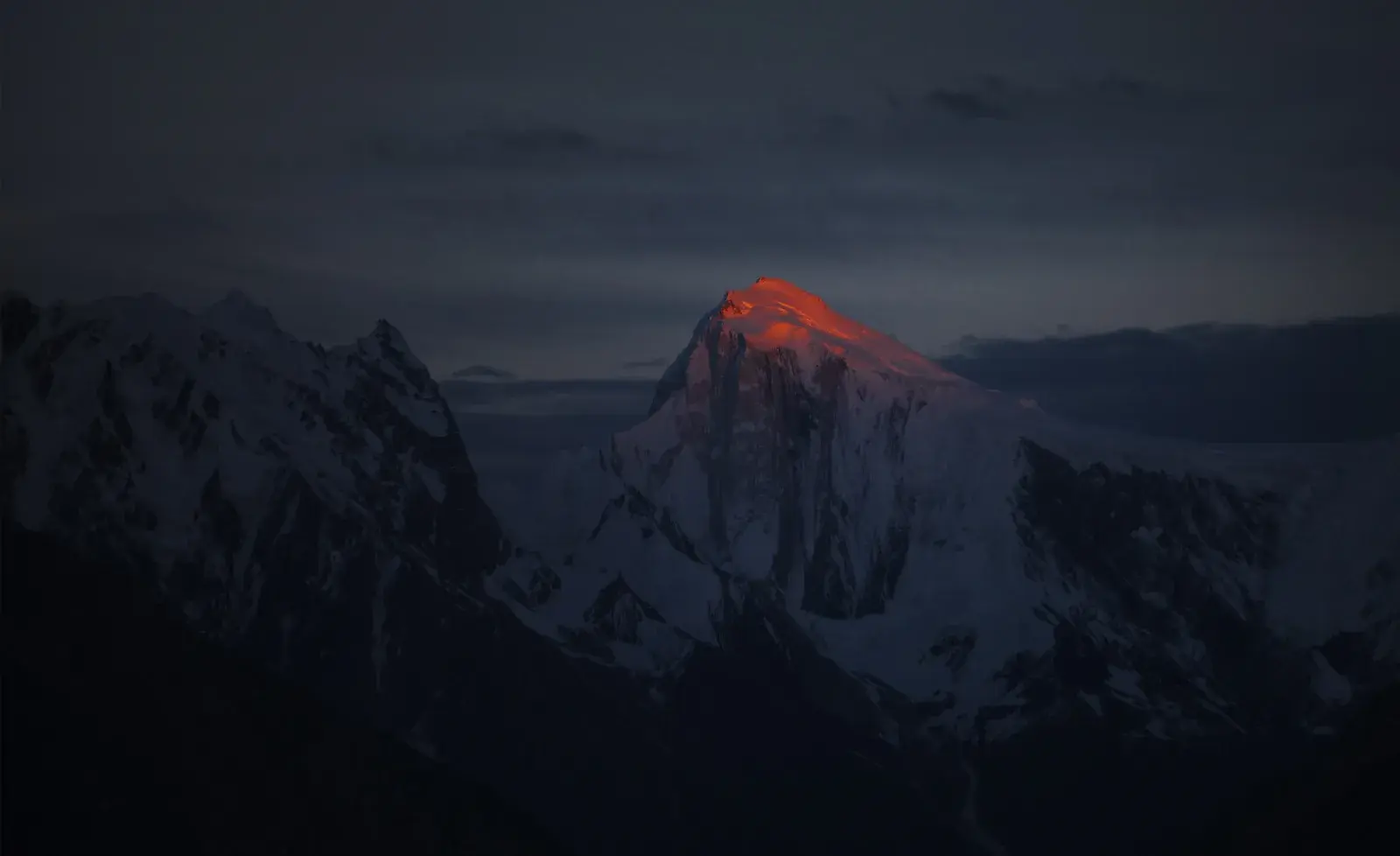
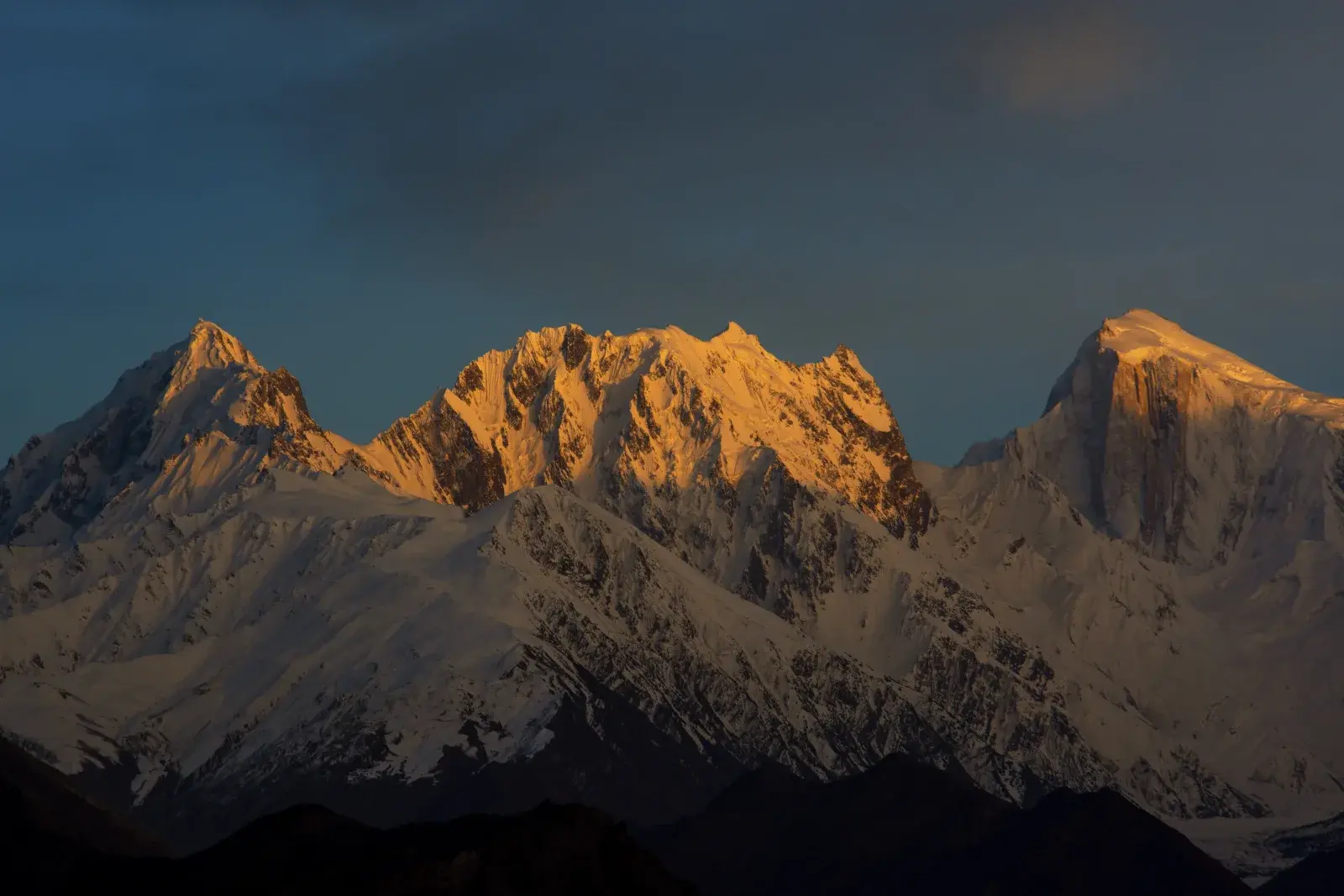
Spantik, Golden Peak (7,027 m), glowing at sunset above the Nagar valley, Karakoram, Gilgit-Baltistan, Pakistan
Back to Tours
Trekking Skardu

Spantik Base Camp Trek: Golden Peak & Chogolungma Glacier

Three days up the Chogolungma Glacier from Arandu, Shigar District, to the foot of Golden Peak (7,027 m)
Spantik, Golden Peak (7,027 m), glowing at sunset above the Nagar valley, Karakoram, Gilgit-Baltistan, Pakistan
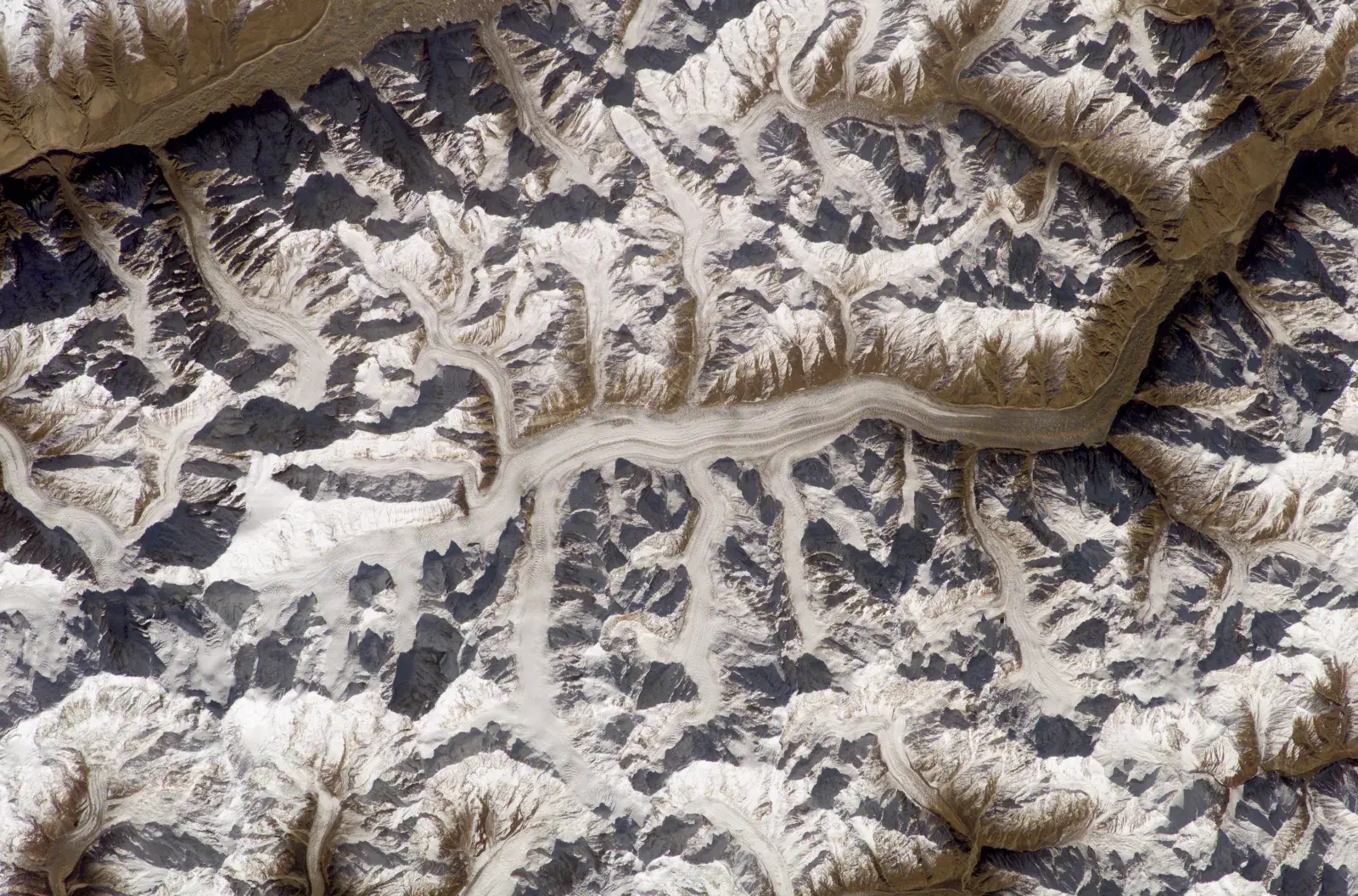
The Chogolungma Glacier from the International Space Station, the route of the Spantik Base Camp trek from Arandu
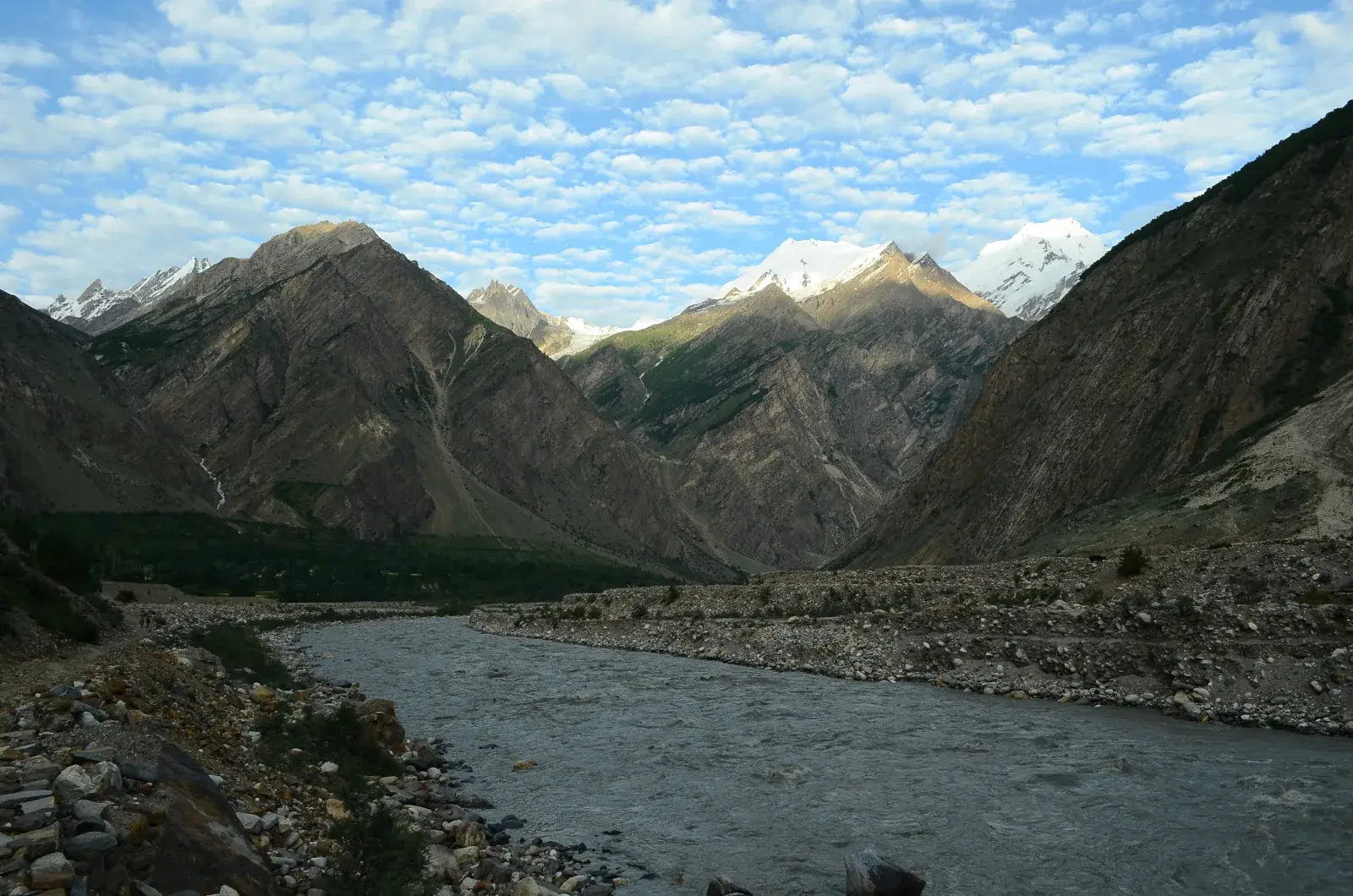
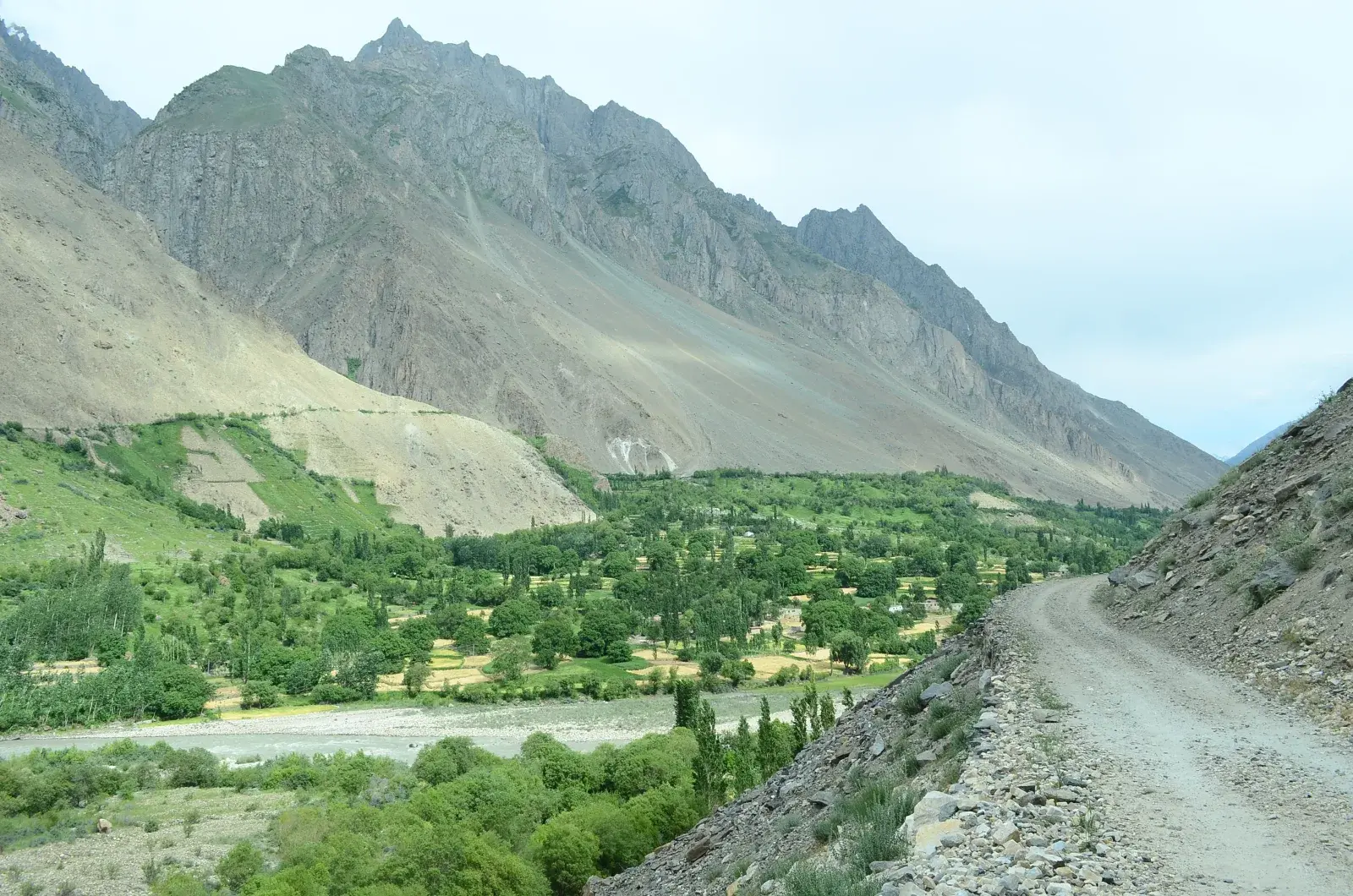
Jeep road above green villages and the Basha river on the drive from Skardu to Arandu, Shigar District
The Basha river and snow peaks above Bisil on the approach to Arandu and the Chogolungma Glacier
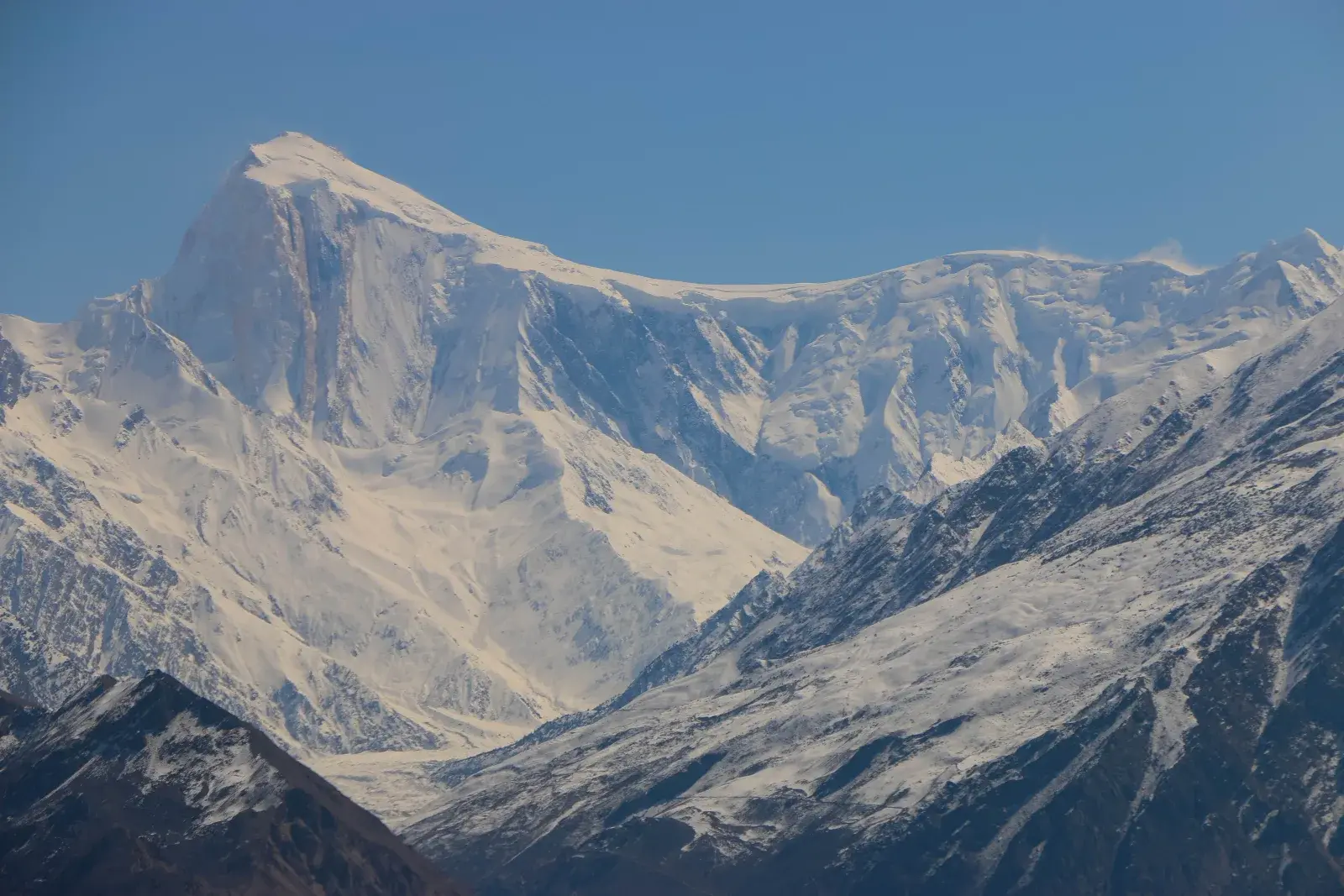
Spantik's northwest face and summit ridge in clear daylight, seen from the Nagar valley
Last alpenglow on the summit of Spantik, the Golden Peak of the Karakoram
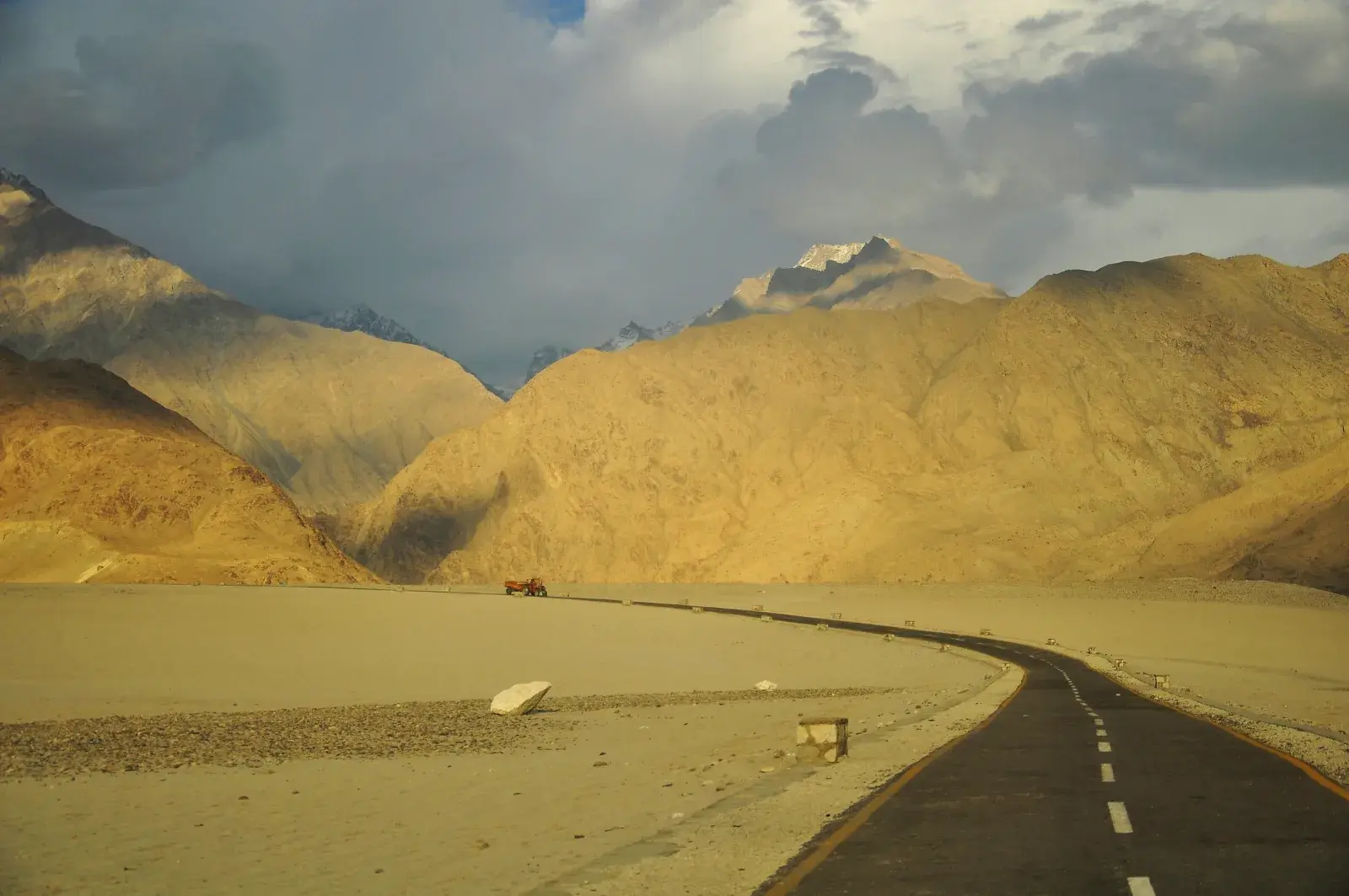
The Skardu to Shigar road through the cold desert in evening light, the first leg of the drive to Arandu

Last updated: · Reviewed by Javeed Iqbal, Founder

Duration

13 Days

Difficulty

Strenuous

Group Size

2-12 People

Best Season

Jul-Aug

About This Tour

Spantik, the 7,027 m Golden Peak of the central Karakoram, is the mountain climbers use to prepare for their first 8,000er. This trek takes you to its base camp without the climb: three days up the Chogolungma Glacier from Arandu, the last village above Skardu, to a grassy shelf at about 4,350 m below the southeast ridge.

It is one of the emptiest big glacier walks in Pakistan. There are no lodges or teahouses beyond Arandu and, outside the short climbing season, often no other trekkers on the ice. In return you get one of the longest glaciers in the range, the side glaciers pouring off the Haramosh and Malubiting massif, and Golden Peak turning gold above camp at sunrise.

Our trip is 13 days from Islamabad. We fly to Skardu, sort the permits on a spare day, drive the Basha valley to Arandu, and walk in over three stages with a rest day at base camp before two days back out. A local guide, a cook and porters from Arandu carry the camp, so you walk with a day pack.

No ropes or climbing skills are needed, but this is a strenuous trek with crevassed ice on the last day and real altitude, so we run it with small groups and guides who know this year's line across the glacier. Read our full Spantik Base Camp trek guide

The Route: Skardu, Arandu and the Chogolungma

From Skardu a jeep runs north through Shigar and turns up the Basha valley through Tisar, Chutran, Dogoro and Bisil to Arandu, five to seven hours on a road that becomes a rough track near the top. Arandu sits at roughly 2,800 to 2,900 m, right against the snout of the Chogolungma Glacier.

The walk follows the ablation valley on the north side of the glacier. Day one reaches Chogo Brangsa at about 3,350 m. Day two is the long one, six to eight hours across two side glaciers to Bolocho at about 3,800 m, a small camp with clean water.

Day three goes onto the glacier itself: bare ice with open crevasses, then a steep rocky climb to the grassy shelf of Spantik Base Camp at about 4,350 m. The way out takes two days, and roughly 40 km each way is spent on moraine and ice.

Day-by-Day Itinerary

1

Arrive in Islamabad

Airport pickup and transfer to the hotel. In the evening your guide runs the trip briefing and a kit check, so anything missing can be bought in Islamabad.
2

Fly Islamabad to Skardu (2,230 m)

An hour's flight along the Indus gorge with Nanga Parbat off the wing when the weather is clear. If the flight is cancelled we drive the Karakoram Highway via Chilas instead, which takes the best part of two days and uses the buffer days.
3

Skardu: permits and acclimatisation

Our team completes the trekking permit and park fee paperwork while you rest and acclimatise. An easy afternoon in Skardu or a visit to Shigar Fort keeps the legs moving without spending energy.
4

Jeep to Arandu (about 2,850 m)

Five to seven hours by jeep through Shigar and up the Basha valley to Arandu, the last village. Porters are hired and loads weighed in the afternoon, and we camp in the village beside the glacier snout.
5

Arandu to Chogo Brangsa (about 3,350 m)

Five to six hours past the snout and along the grassy ablation valley on the north bank of the Chogolungma. The gentlest day of the walk, with flowers underfoot and the ice alongside.
6

Chogo Brangsa to Bolocho (about 3,800 m)

The longest day, six to eight hours, crossing two side glaciers on loose moraine. Bolocho is a small camp with room for about ten tents and a clean stream.
7

Bolocho to Spantik Base Camp (about 4,350 m)

Five to seven hours, mostly on bare and crevassed glacier ice, roped where your guide judges it necessary, then a steep rocky climb to the grassy shelf of base camp below Spantik's southeast ridge.
8

Rest and explore at base camp

A full day at base camp to acclimatise and take in the view. Optional short walks above camp look along the southeast ridge and down the glacier junction. This day also absorbs bad weather on the way in.
9

Base camp to Chogo Brangsa

A long, mostly downhill day of seven to nine hours back down the glacier. If the group prefers, we split it and camp at Bolocho instead.
10

Chogo Brangsa to Arandu, jeep to Skardu

Four to six hours down to Arandu, a farewell to the porters, then the jeep back down the Basha valley to a hotel in Skardu and a hot shower.
11

Fly Skardu to Islamabad

The morning flight back to Islamabad. If it is cancelled, we use a buffer day or drive down the Karakoram Highway.
12

Buffer day

Held in reserve for flight cancellations or weather on the glacier. If it isn't needed, it becomes a free day in Islamabad, or a night at Shigar Fort on the way out.
13

Depart Islamabad

Transfer to Islamabad airport for your flight home.

How Hard Is the Spantik Base Camp Trek?

It is strenuous but non-technical. You need no ropes, crampons or climbing experience to reach base camp in a normal summer. The days run five to eight hours on loose moraine and boulder fields, and the third day crosses bare, crevassed glacier ice where a guide who knows this year's line is essential.

Base camp at about 4,350 m is real altitude, and from Arandu you gain about 1,500 m in three days. That is why we keep a full rest day at the top. If you have trekked above 4,000 m before you have the right base; if not, train for two months with long days carrying a pack.

When Is the Best Time for the Spantik Base Camp Trek?

July and August. The snow has gone from the moraine, the side streams are crossable in the morning, and climbing teams are at base camp. Mid-July to mid-August is the most reliable window, though a bad week in mid-August is possible.

Recent Junes have brought heavy snow and wind, so we don't run trekking departures before the first week of July. Late August to mid-September is quieter and crisper with colder nights. From October to May the upper Basha valley is effectively closed.

What Permits Do You Need for Spantik Base Camp?

The base camp trek is not on the list of routes that need Pakistan's trekking visa, so most nationalities trek on a standard tourist visa. In Skardu we arrange the Gilgit-Baltistan trekking permit and the Central Karakoram National Park environment fee, which are included in the price. Climbing Spantik itself needs a mountaineering visa and royalty.

There is no mobile signal beyond the Basha valley, so the guide carries a satellite phone. Helicopter rescue in Gilgit-Baltistan needs a guarantee arranged in advance, so your insurance must cover evacuation up to 6,000 m. Porters from Arandu carry the camp, with loads capped at 25 kg under park rules.

Where Is Spantik and How High Is Base Camp?

Spantik (7,027 m) stands in the Spantik-Sosbun range of the central Karakoram, in Shigar District of Gilgit-Baltistan. Base camp is at about 4,350 m on a shelf above the Chogolungma Glacier. Published figures range from 4,160 to 4,374 m, and most careful sources sit between 4,300 and 4,370 m. Arandu, the trailhead, is at roughly 2,800 to 2,900 m.

What You See on the Way

The Chogolungma runs for roughly 45 to 50 km from the Haramosh and Malubiting massif down to Arandu, and the trek follows most of its upper half, with side glaciers pouring in from both walls. At base camp Spantik's southeast ridge, the 1955 first-ascent line, rises straight above you. Its northwest face holds the Golden Pillar, the marble band that gives Golden Peak its name, climbed by Mick Fowler and Victor Saunders in 1987.

Why Book With Us

We are based in Gilgit-Baltistan and run the Chogolungma with guides and porters who walk it every summer, which matters on a glacier where the safe line moves from one year to the next. We build in a rest day at base camp and a buffer day for the Skardu flight instead of squeezing the trip, we keep groups small, and we tell you plainly that this is a hard walk before you book it.

What's Included

Islamabad to Skardu flights and return
Hotels in Islamabad and Skardu
Jeep transport Skardu to Arandu and return
Trekking permit and national park fees
Guide, cook and porters from Arandu
Tents, camping equipment and all meals on the trek

Not Included

International flights
Travel insurance with helicopter rescue cover
Personal expenses and tips

Frequently Asked Questions

Where is Spantik Base Camp?

Spantik Base Camp is in Shigar District of Gilgit-Baltistan, Pakistan, on a grassy shelf above the Chogolungma Glacier at about 4,350 m. It sits at the foot of the southeast ridge of Spantik (7,027 m), also called Golden Peak, in the Spantik-Sosbun range of the central Karakoram. The trailhead is Arandu, the last village in the Basha valley, about five to seven hours by jeep from Skardu through Shigar. From Arandu it is three days on foot up the north side of the glacier, via the camps of Chogo Brangsa at about 3,350 m and Bolocho at about 3,800 m. There is also a base camp on the north side of the mountain, reached from Hopar in Nagar, but that one serves climbers on the Golden Pillar and nobody runs it as a trek. Our trip follows the southern route from Arandu, the line of the 1955 first ascent.

How many days is the Spantik Base Camp trek?

Our Spantik Base Camp trek is 13 days from Islamabad. The walking takes six of them: three days in from Arandu to base camp, a full rest day at base camp, and two days back out. The rest of the trip covers the flight to Skardu, a day there for permits and acclimatisation, the long jeep drive to Arandu, the drive and flight back, and a buffer day for the Skardu flight, which is cancelled whenever the cloud is low. Other operators sell anything from 12 to 16 days. Shorter versions cut the rest day or the buffer, and we don't recommend either, because you gain about 1,500 m in three days on the way in. If you have extra time, a second rest day at base camp or a night at Shigar Fort on the way out is a better use of it than a faster schedule. Climbing Spantik itself takes 30 to 40 days.

How hard is the Spantik Base Camp trek?

The Spantik Base Camp trek is strenuous but not technical. You need no ropes, crampons or climbing experience to reach base camp in a normal summer, but the walking is demanding. Expect five to eight hours a day on loose moraine and boulder fields, and on the third day bare, crevassed glacier ice, where our guide picks the line and ropes the group if the ice calls for it. Base camp at about 4,350 m is real altitude, and the first night there often brings headaches and poor sleep, which is why we stay a second night. Nights drop below freezing even in July, and the second day to Bolocho runs six to eight hours. If you have trekked above 4,000 m before, on the Annapurna Circuit, Kilimanjaro or a high route in the Alps, you have the right base. If not, train for two months with long days carrying a pack and regular uphill walking.

How high is Spantik Base Camp?

Spantik Base Camp is at about 4,350 m. Published figures disagree more than for most base camps. One Pakistani operator lists 4,160 m, a climbing marketplace says about 4,200 m, and a 1979 American Alpine Journal report gives 14,350 ft, about 4,374 m. One trekking listing even says 5,000 m, which is simply wrong. Most careful sources, including two UK expedition operators, a Pakistani trekking operator and a 2019 expedition report, put it between 4,300 and 4,370 m, so we use about 4,350 m. The difference matters for planning. Arandu, where the walk starts, is at roughly 2,800 to 2,900 m, so the trek gains about 1,500 m over three days. That is a brisk rate of ascent, and it is why our itinerary includes a full rest day at base camp instead of turning straight around. The highest point of the trek is base camp itself.

When is the best time for the Spantik Base Camp trek?

July and August are the best months for the Spantik Base Camp trek. By July the snow has cleared from the moraine, the side streams are crossable in the morning, and climbing teams are at base camp, so there are other people about. Mid-July to mid-August gives the most reliable weather, though a bad spell of a week is possible in mid-August. June has been unreliable in recent seasons, with heavy snow and wind, and one UK expedition found fresh snow at base camp on 6 July, so we don't schedule trekking departures before the first week of July. Late August to mid-September is quieter, with crisper air and colder nights. From October to May the upper Basha valley and the glacier are effectively closed to trekkers. In every month we keep a buffer day for the Islamabad to Skardu flight, which is cancelled whenever the cloud is low.

Do I need a permit or a special visa?

You need permits but usually not a special visa. The Spantik Base Camp trek is not on the list of routes that require Pakistan's trekking visa, so most nationalities trek on a standard tourist visa, applied for online. On the ground, the Gilgit-Baltistan government charges a trekking permit fee, which has been around US$150 per person, and the Central Karakoram National Park charges an environment fee of US$100 to US$190 depending on how the zone is classed. Both are issued in Skardu and can take a day of paperwork, which our itinerary allows for. Fees have changed several times in recent years, so we confirm the current amounts when you book, and they are included in our price. Climbing Spantik is a different matter: the peak needs a mountaineering visa and a royalty. Independent trekking on the glacier is not realistic, as you need a licensed operator for the permit.

How much does the Spantik Base Camp trek cost?

Our 13-day Spantik Base Camp trek costs from US$1,850 per person. That includes the Islamabad to Skardu flights and return, hotels in Islamabad and Skardu, jeeps from Skardu to Arandu and back, the trekking permit and national park fees, a guide, a cook, porters from Arandu, tents, camping equipment and all meals on the trek. International flights, travel insurance with helicopter rescue cover, personal expenses and tips are not included. For comparison, another Pakistani operator lists a 16-day version at about US$2,100, and full Spantik climbing expeditions start around US$3,800 with local operators and reach nearly £9,000 with UK companies. Groups run from two to twelve people, and prices vary with group size and dates, so ask us for an exact quote. Cancellation is free up to 30 days before departure. Budget separately for insurance that covers helicopter evacuation up to 6,000 m.

How do you get to Arandu?

Arandu is reached by jeep from Skardu, a drive of five to seven hours. The road runs north to Shigar, then turns up the Basha valley through villages such as Tisar, Chutran, Dogoro and Bisil, and becomes a rough jeep track in its upper part, so it needs a 4x4 and a driver who knows it. After rain, side streams can wash gravel across the track and slow things down. To reach Skardu, most people fly from Islamabad, about an hour along the Indus gorge when the weather allows. When the flight is cancelled the alternative is the Karakoram Highway via Chilas, which takes the best part of two days. Arandu sits at roughly 2,800 to 2,900 m, right against the snout of the Chogolungma Glacier, and is where porters are hired. Our trip includes the jeeps both ways and a night camped in the village before the walk begins.

Is there a glacier on the Spantik Base Camp trek?

Yes, the whole trek follows the Chogolungma Glacier, which runs for roughly 45 to 50 km from the Haramosh and Malubiting massif down to Arandu. For the first two days you walk mostly in the ablation valley on its north side, between the moraine and the mountainside, with two side glaciers to cross on day two. The third day is on the glacier itself, across bare ice with open crevasses, followed by a steep rocky climb to the shelf of base camp. The safe line across the ice changes every summer as crevasses open and close, which is why a guide who knows the current year's route is essential and why we don't run this trek without one. No crampons are normally needed in July and August, and our guide carries a rope for the crevassed section in case conditions call for it. The glacier is also why the walk is so quiet.

Can I see Spantik's Golden Pillar from base camp?

Not really. The Golden Pillar is on Spantik's northwest face, which looks towards Nagar and the Hunza valley, while the base camp trek approaches from the south, from Arandu. From base camp you look straight up the southeast ridge, the normal climbing route and the line of the 1955 German first ascent. In the early morning the upper snow slopes still catch the gold light that gives the mountain its name. The Pillar itself is a band of pale marble almost 300 m high below the summit, climbed by Mick Fowler and Victor Saunders in 1987 in one of the best-known alpine ascents in the Karakoram. You see the golden face from the Hunza and Nagar side, and on a clear evening it is visible from viewpoints around Karimabad. If seeing it matters to you, we can add a couple of nights in Hunza to the trip.

What should I pack for the Spantik Base Camp trek?

Pack for cold nights and glacier days. The essentials are a four-season sleeping bag rated to at least minus 10 °C, a warm down jacket, and stiff, broken-in trekking boots with good grip for moraine and wet rock. Add light gaiters, trekking poles, category 4 glacier sunglasses and a sun hat, because the glare off the ice on day three is fierce. Bring a headtorch, a water bottle with purification tablets or a filter, a basic first-aid kit with blister care, and any altitude medication your doctor has prescribed. Layers work better than one heavy coat, since days can be hot in the sun and freezing in the shade. Porters carry your main bag, up to the weight limit we give you, so you only need a day pack of 25 to 35 litres. Carry rupees from Skardu, as there are no ATMs or card machines beyond Shigar.

Is the Spantik Base Camp trek safe?

Yes, with the right preparation. Gilgit-Baltistan has no travel advisory against it from the US State Department or the UK FCDO, and the Basha valley is a quiet farming area where trekking and climbing teams have been welcomed for decades. The real risks on this trek are the mountain ones: crevasses on the third day, altitude at base camp, cold, and weather that can turn quickly on the glacier. We manage them with guides who know this year's line across the ice, a full rest day at base camp, a satellite phone because there is no mobile signal beyond the Basha valley, and buffer days so nobody is pushed by the schedule. Helicopter rescue is flown by Askari Aviation and needs a guarantee arranged in advance, so your travel insurance must cover evacuation up to 6,000 m.

From

$1,850

per person

* Prices may vary. Contact us for accurate, customized pricing.

Duration13 Days
DifficultyStrenuous
Group Size2-12 People
Best SeasonJul-Aug
Max Altitude~4,350m
Book This Tour Ask a Question

Free cancellation up to 30 days before departure

Ready for Your Next Adventure?

Join our community of explorers and discover the journey of a lifetime. Our expert team is ready to help you plan your perfect expedition.