Attabad Lake: The Complete Guide to Hunza's Turquoise Lake
Everything you need to know about Pakistan's famous turquoise lake, from the 2010 landslide that created it to boating, the best time to visit, and where to stay in Upper Hunza.
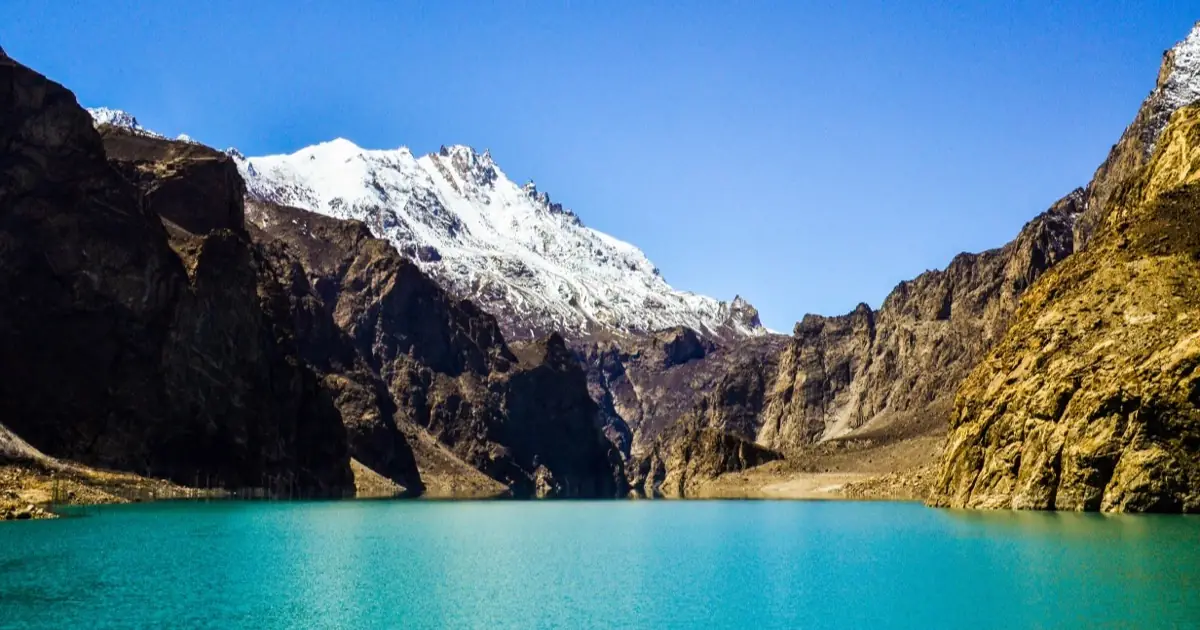
What is Attabad Lake? Attabad Lake is a striking turquoise lake in Gojal (Upper Hunza), Gilgit-Baltistan, formed on 4 January 2010 when a massive landslide dammed the Hunza River. Today it is one of the most photographed spots in northern Pakistan, sitting right beside the Karakoram Highway about 45 minutes' drive from Karimabad. The best time to visit is May to October, and boating on the lake is the thing to do.
If you are driving up the Karakoram Highway through Hunza, Attabad Lake is the stop that stops conversation. One minute you are winding through brown rock and bare mountainside, the next the valley opens onto a sheet of electric turquoise water hemmed in by cliffs. It is beautiful, and the story behind it is not. This lake is barely fifteen years old, and it was born from a disaster that buried villages and cut off tens of thousands of people. We run trips through Hunza all season, so here is the honest, practical guide to visiting Attabad Lake, what happened here, when to come, what it costs, and how to fit it into a wider trip.
| Quick facts | Detail |
|---|---|
| Location | Gojal (Upper Hunza), Hunza District, Gilgit-Baltistan |
| Formed | 4 January 2010, by a landslide that dammed the Hunza River |
| Length | About 21 km (13 miles) |
| Maximum depth | Around 109 m (358 ft) |
| Elevation | Roughly 2,400 m (7,900 ft) |
| Best time to visit | May to October, with the deepest colour in summer |
| Getting there | On the Karakoram Highway via the Attabad tunnels, about 45 min from Karimabad |
| Main activities | Boating, jet-skiing, photography, lakeside cafes |
Where is Attabad Lake?
Attabad Lake lies in Gojal, the upper part of the Hunza valley, in Gilgit-Baltistan. It sits at roughly 2,400 m above sea level, between the villages of Gulmit and the old Attabad landslide site. From Karimabad, the main town in central Hunza, it is about 20 km and 45 minutes north on the Karakoram Highway. Coming from Gilgit, the regional hub, allow around two and a half to three hours. The lake is long and narrow, stretching about 21 km up the valley, so you see it in sections as the highway threads along its eastern shore and through a series of tunnels.
How Attabad Lake was formed: the 2010 landslide
On 4 January 2010, a huge landslide crashed down onto the village of Attabad and slammed a natural dam across the Hunza River. Twenty people were killed, and the blocked river began to back up behind the debris. Over the following months the water rose and rose, drowning homes, orchards and roads upstream.
By the first week of June 2010 the new lake had grown to about 21 km long and over 100 metres deep. It swallowed the village of Ayeenabad completely, most of Shishkat, and roughly 40 percent of Gulmit, along with parts of Hussaini and Ghulkin. Around 6,000 people were displaced and another 25,000 in Gojal were left stranded, because the rising water also submerged nearly 19 km of the Karakoram Highway, the only road link to the outside world.
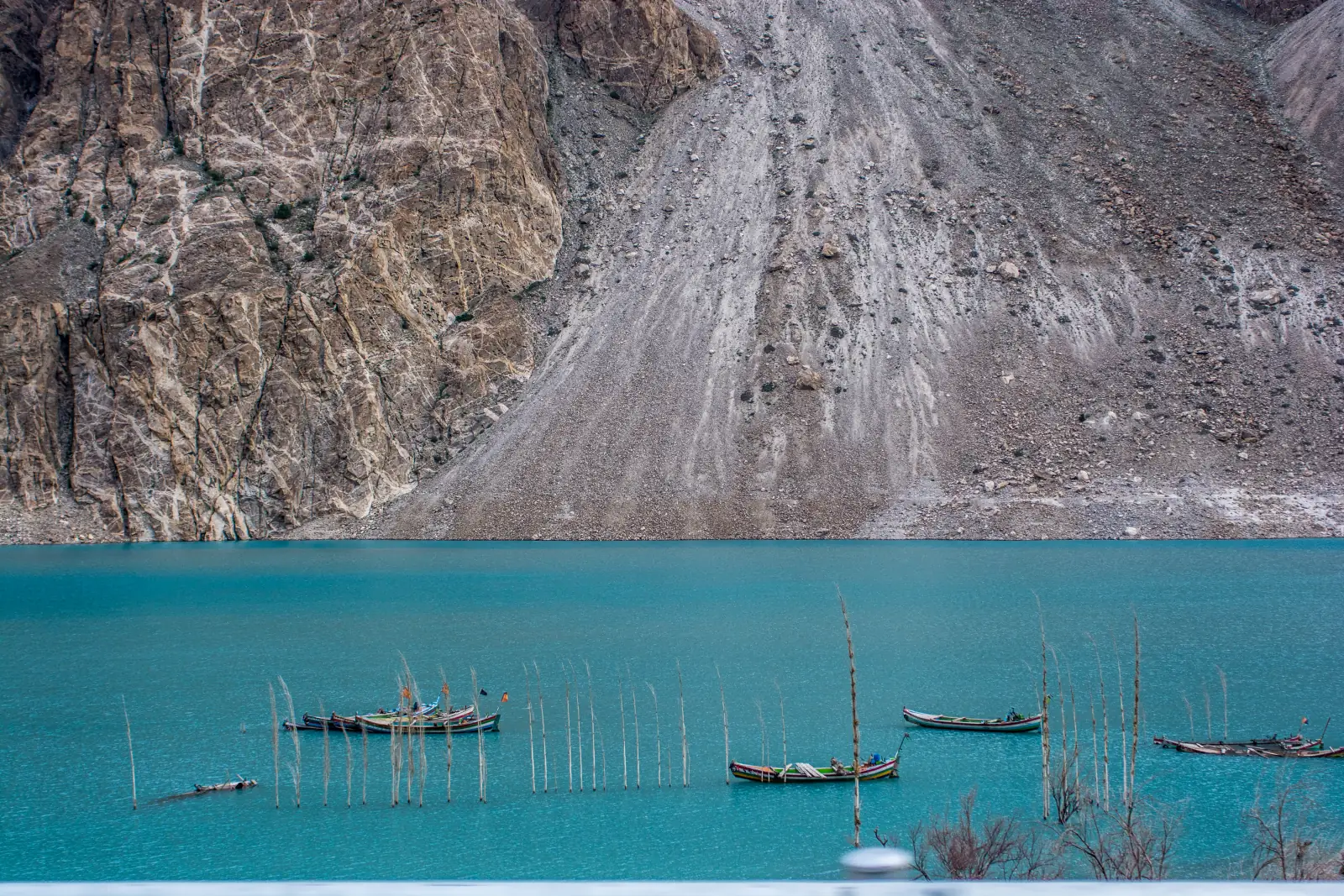
For the next five years, upper Hunza was cut in two. With the highway underwater, the only way across was by boat. Locals and traders loaded people, motorbikes, fruit and even sacks of cement onto wooden barges and puttered for an hour across the lake that had ruined them. It was slow, cold and often dangerous, but for years it was simply how life in Gojal worked.
The Attabad tunnels: how the road came back
The fix was a serious piece of engineering. With Chinese help, Pakistan blasted a realigned 24 km section of the Karakoram Highway with five tunnels, together about 7 km long, high above the water line. Known as the Pakistan-China Friendship Tunnels, they opened on 14 September 2015 and reconnected Gojal to the rest of the country by road for the first time in more than five years.
Those tunnels are why the lake is so easy to visit today. You drive straight up the KKH from Hunza, pop out of the tunnels beside the water, and there it is. What was a tragedy for the valley has, with time, become its most famous attraction, and a real source of income for the villages that lost the most.
Best time to visit Attabad Lake
The short answer is May to October. That is when the roads are clear, the weather is comfortable and the lake is at its most vivid. Here is how the seasons break down:
- Spring (April to May): the valley greens up and the nearby orchards blossom. Pleasant, quieter, and a lovely time to pair the lake with a wider Hunza trip.
- Summer (June to August): peak season and peak colour. The water turns its brightest turquoise and boating is in full swing, though this is also the busiest and warmest window.
- Autumn (late September to October): our favourite. Crisp, clear skies, golden poplars along the shore and thinner crowds. The light on the water is superb.
- Winter (December to February): cold and quiet, and in a hard winter the surface can freeze over. It is dramatic, but many lakeside services shut down and the higher roads can be tricky.
For a fuller month-by-month breakdown of the whole region, see our guide to the best time to visit Pakistan.
Things to do at Attabad Lake
Most people come for an hour or two, take a boat out and soak up the view. If you have longer, it is easy to fill half a day.
- Boating: the classic Attabad experience. Colourful wooden boats and small motorboats run short trips out onto the water from the jetties near the highway.
- Jet-skiing and speedboats: available in peak season for a faster, louder thrill across the lake.
- Kayaking and pedal boats: quieter options at some of the lakeside resorts.
- Photography: the contrast of turquoise water against bare grey and ochre cliffs is unlike anywhere else in Pakistan. Early morning light is calmest for reflections.
- Lakeside cafes: several spots serve tea, local apricot cake and simple meals right on the shore.
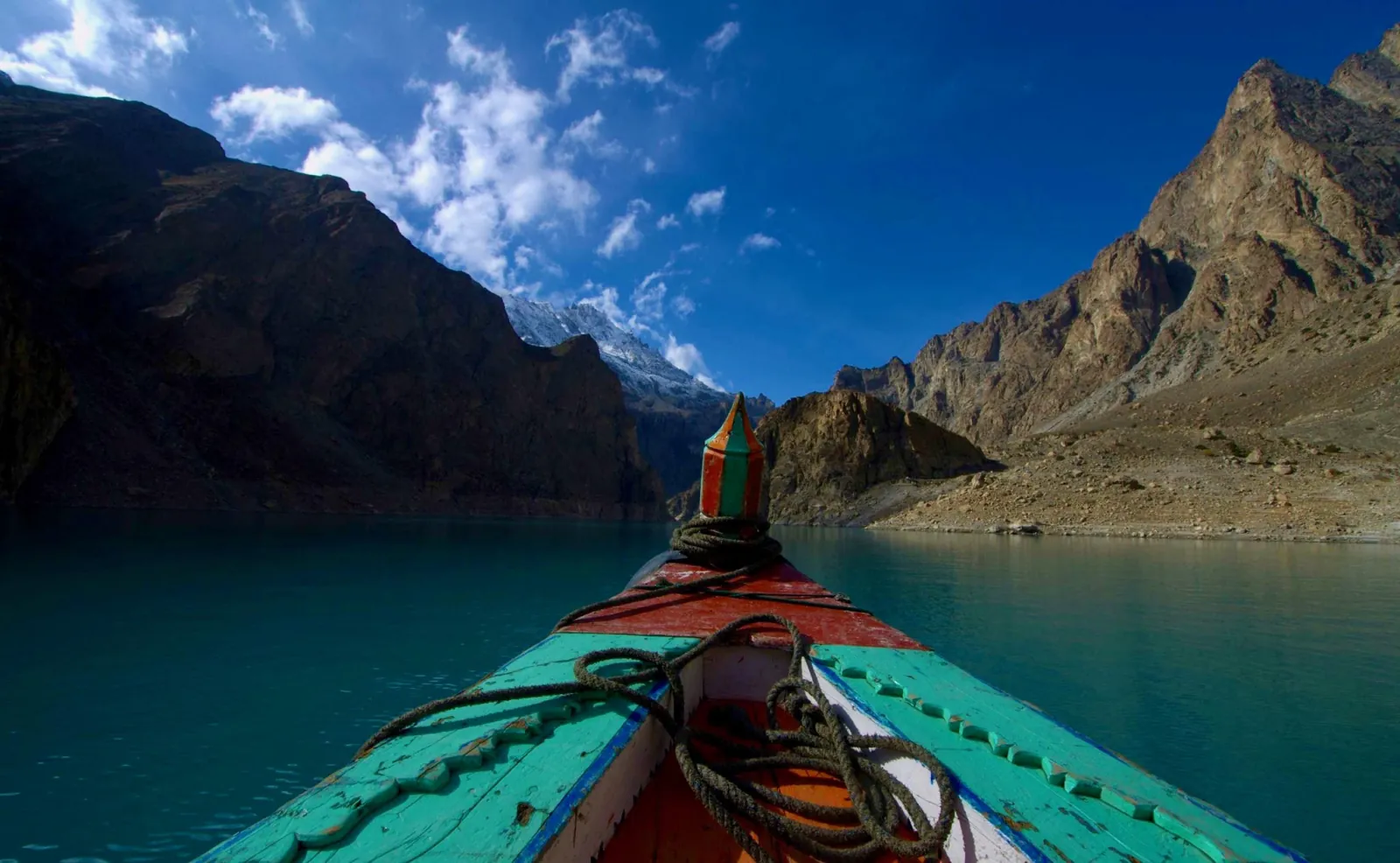
What does boating cost? Prices are negotiable and change with the season, but as a rough guide expect around PKR 500 to 1,000 per person for a shared boat ride, more for a private boat, and roughly PKR 3,000 to 5,000 for a short jet-ski turn. Agree the price and the length of the ride before you get in, and always wear the life jacket.
How deep is Attabad Lake, and will it disappear?
At its deepest, Attabad Lake reaches about 109 metres (358 feet), and it runs roughly 21 km up the valley. That depth is part of why the water holds such an intense blue-green colour. As for whether it will vanish, no. A controlled spillway now manages the outflow and keeps the level stable, so the lake is a permanent feature. The water still hides the old road and villages beneath it, and in low light you can sometimes make out the tops of drowned trees near the shore.
Where to stay near Attabad Lake
You do not have to stay right on the lake, and most travellers do not, but the options are growing.
- On the lake: a handful of resorts sit on the shore, the best known being Luxus Hunza, a high-end property with rooms and floating huts looking straight onto the water. Book well ahead in summer.
- Gulmit: the nearest village, with guesthouses and small hotels a few minutes from the lake, handy if you want a quiet base in Gojal.
- Karimabad: most people base themselves here in central Hunza, with the widest choice of hotels and views of Rakaposhi, then day-trip up to the lake. See our guide to the best places to visit in Hunza for what else is nearby.
How to get to Attabad Lake
Attabad sits right on the Karakoram Highway, so getting there is simple once you are in the region.
- From Karimabad (Hunza): about 20 km, 45 minutes north on the KKH, straight through the Attabad tunnels to the lake.
- From Gilgit: around two and a half to three hours, a scenic drive up the Hunza valley past Rakaposhi viewpoint and Karimabad.
- Onward to Passu and Khunjerab: the lake is on the way to the Passu Cones and the Khunjerab Pass, so it slots naturally into a longer upper-Hunza day.
There is no airport at the lake. Most visitors fly to Gilgit (weather permitting) or drive the KKH, then travel by road. A local driver or guide who knows the tunnels and the lake schedule makes the day far smoother.
Fitting Attabad Lake into a Hunza trip
Attabad works best as one stop on a Hunza itinerary rather than a destination on its own. A classic day runs Karimabad to Attabad Lake for a boat ride, on to the Passu Cones and the Hussaini suspension bridge, and back for sunset over Rakaposhi. Give the wider valley three to four days and you can add Baltit and Altit forts, Eagle's Nest at Duikar and the orchards of Nagar. If you want it handled end to end, our Hunza Valley tours build the lake into a full northern Pakistan trip with local guides, transport and permits sorted. For background on the region and the lake itself, the Wikipedia entry on Attabad Lake and the Gilgit-Baltistan tourism department are useful further reading.
Frequently asked questions
How was Attabad Lake formed?
Attabad Lake formed on 4 January 2010, when a massive landslide fell onto Attabad village and dammed the Hunza River. The blocked river backed up over the following months and, by June 2010, had created a lake about 21 km long and more than 100 metres deep, submerging villages and part of the Karakoram Highway.
How deep is Attabad Lake?
Attabad Lake is around 109 metres (358 feet) deep at its deepest point and roughly 21 km long. That depth, combined with the mineral content of the glacial water, gives it its intense turquoise colour.
Where is Attabad Lake located?
It is in Gojal, the upper part of the Hunza valley, in Hunza District, Gilgit-Baltistan, northern Pakistan. It sits directly on the Karakoram Highway, about 45 minutes' drive north of Karimabad and two and a half to three hours from Gilgit.
What is the best time to visit Attabad Lake?
May to October is best, with June to August giving the brightest turquoise water and full boating services, and autumn (late September to October) offering clear skies and thinner crowds. In a hard winter the lake can freeze over and many services close.
How much does boating on Attabad Lake cost?
Prices vary and are negotiable, but expect roughly PKR 500 to 1,000 per person for a shared boat ride, more for a private boat, and around PKR 3,000 to 5,000 for a short jet-ski ride. Always agree the price and duration first, and wear a life jacket.
Will Attabad Lake disappear?
No. A controlled spillway now manages the water level, so the lake is stable and permanent. It is not expected to drain or disappear.
Is Attabad Lake safe to visit?
Yes. Upper Hunza is one of the safest and most welcoming parts of Pakistan for travellers, and the lake is a popular, well-run attraction. On the water, use the life jackets provided and pick a boat that is not overloaded.
How do you get to Attabad Lake?
By road on the Karakoram Highway. From Karimabad it is about 45 minutes north through the Attabad tunnels; from Gilgit it is two and a half to three hours. There is no airport at the lake, so most people fly to Gilgit or drive the KKH and continue by road.
Ready for Your Next Adventure?
Join our community of explorers and discover the journey of a lifetime. Our expert team is ready to help you plan your perfect expedition.