Cherry Blossom in Hunza 2027: When & Where to See the Bloom
Everything you need to time a spring cherry blossom trip to Hunza and Gilgit-Baltistan right, from peak season dates and the best spots to what a tour costs and when to book.
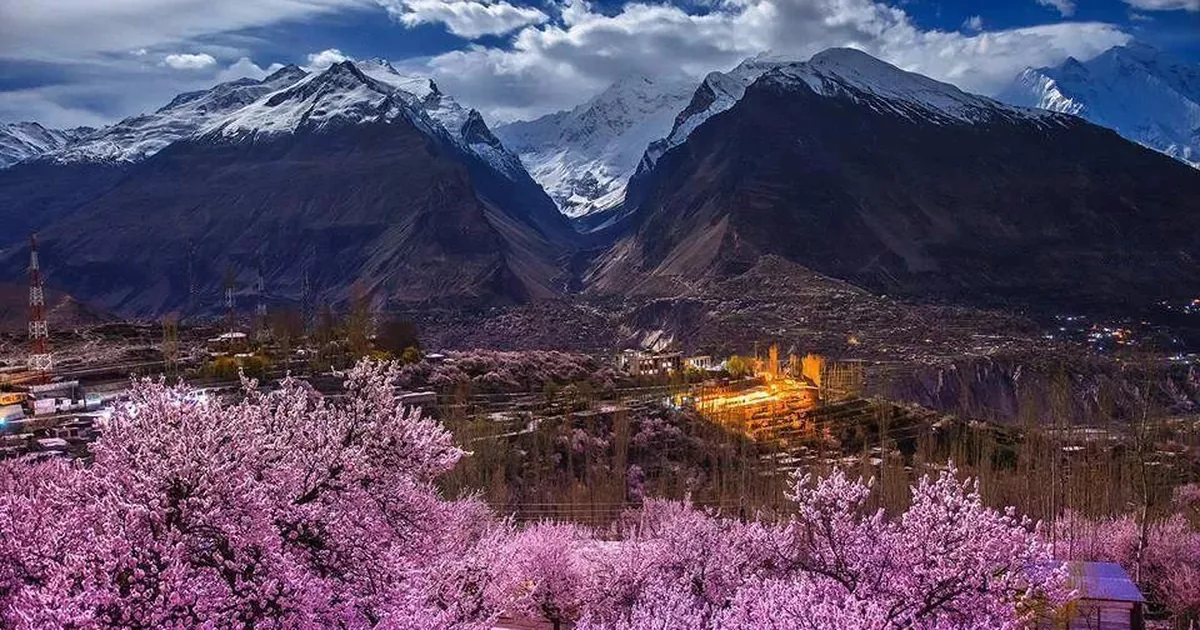
Quick answer: The Hunza cherry blossom season runs from mid-March to mid-April, with peak bloom in the last two weeks of March and the first week of April in central Hunza around Karimabad. Lower valleys like Gilgit flower first, and upper Hunza (Gulmit and Passu) plus the Skardu valleys bloom later, in early to mid-April, with Hushe and the highest side valleys flowering into mid to late April. Most of what you see is actually apricot blossom, alongside cherry, almond, apple and pear. Give yourself 5 to 7 days and book 4 to 6 weeks ahead, because spring is one of the busiest windows in Gilgit-Baltistan.
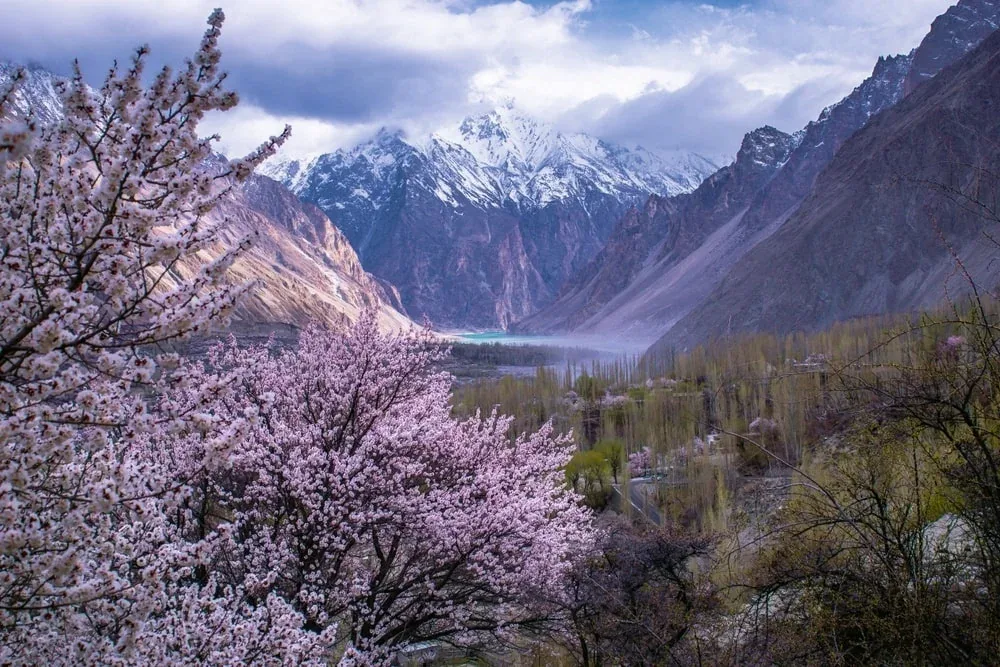
For about three weeks every spring, the terraced orchards of Hunza turn pink and white and the whole valley smells of blossom. It is the short, magical shoulder season before the summer crowds arrive, when fruit trees flower against a backdrop of snow-covered peaks like Rakaposhi and Ultar. If you want to catch it in 2027, timing is everything, and the bloom moves fast. This guide gives you the real dates valley by valley, tells you where to stand for the best views,
When is cherry blossom season in Hunza?
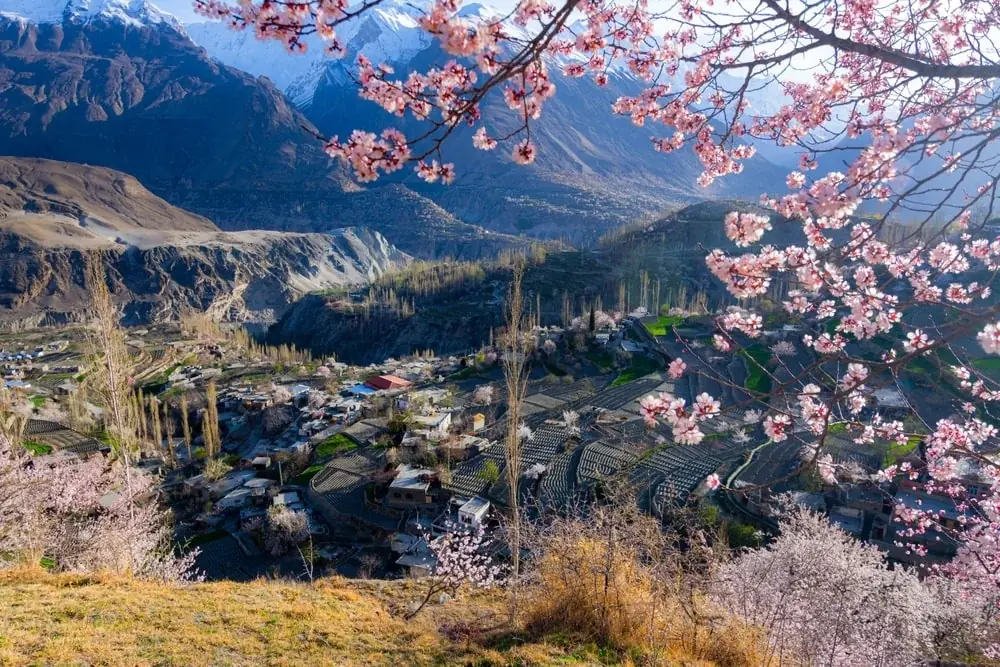
The blossom window across Gilgit-Baltistan opens in mid-March and closes by late April. It is not one single date. The bloom climbs the valley with altitude, so lower and warmer places flower a week or two before the higher villages. That is good news for planning: pick your dates and you can usually chase the bloom uphill if you arrive a little early or late.
A single orchard stays in full flower for only about a week to ten days before the petals drop and the leaves come in. Across the region as a whole, though, you have a solid month where something is always blooming somewhere. Here is how the timing usually breaks down.
| Area | Rough altitude | Typical peak bloom |
|---|---|---|
| Gilgit city & lower valleys | ~1,500 m | Mid-March |
| Central Hunza (Karimabad, Altit, Ganish) | ~2,400 m | Late March to first week of April |
| Nagar Valley | ~2,400 m | Late March to early April |
| Upper Hunza (Gulmit, Passu, Hussaini) | ~2,500 to 2,800 m | Early to mid-April |
| Skardu valleys (Shigar, Khaplu, Chunda) | ~2,200 to 2,600 m | Early to mid-April |
| Hushe & high side-valleys | ~3,000 m | Mid to late April |
One honest caveat for 2027: the exact peak shifts a little every year depending on how warm the late winter is. A mild February can pull the bloom forward by a week; a cold one pushes it back. If you can keep your dates flexible, aim for the last week of March through the first week of April as the safest bet for central Hunza, and watch local bloom reports through March. Our team on the ground posts updates as the flowering starts, so message us if you want a live read closer to the time.
Is it cherry or apricot blossom?
Almost everyone searches for "cherry blossom," but the tree that carpets Hunza in spring is the apricot. Hunza is the apricot heartland of Pakistan, and its orchards are full of them. What you actually walk through is a mix of six or seven fruit blossoms flowering together: apricot first and in the greatest numbers, then cherry, almond, apple, pear and walnut. Apricot and almond blossom tends toward white and pale pink, cherry runs a deeper pink, and
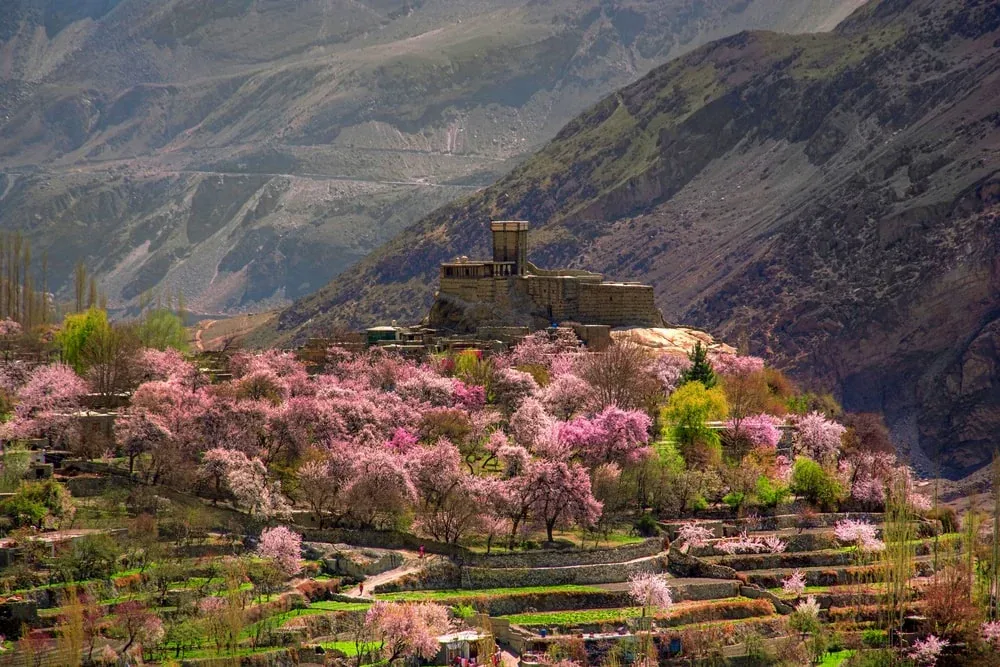
So if a tour is sold as an "apricot and cherry blossom" trip, that is the accurate name, and it is the same experience. Do not let the label confuse you.
Best places to see cherry blossom in Hunza Valley
Central Hunza around Karimabad is the classic base and the easiest place to be surrounded by flowering orchards. From here you can
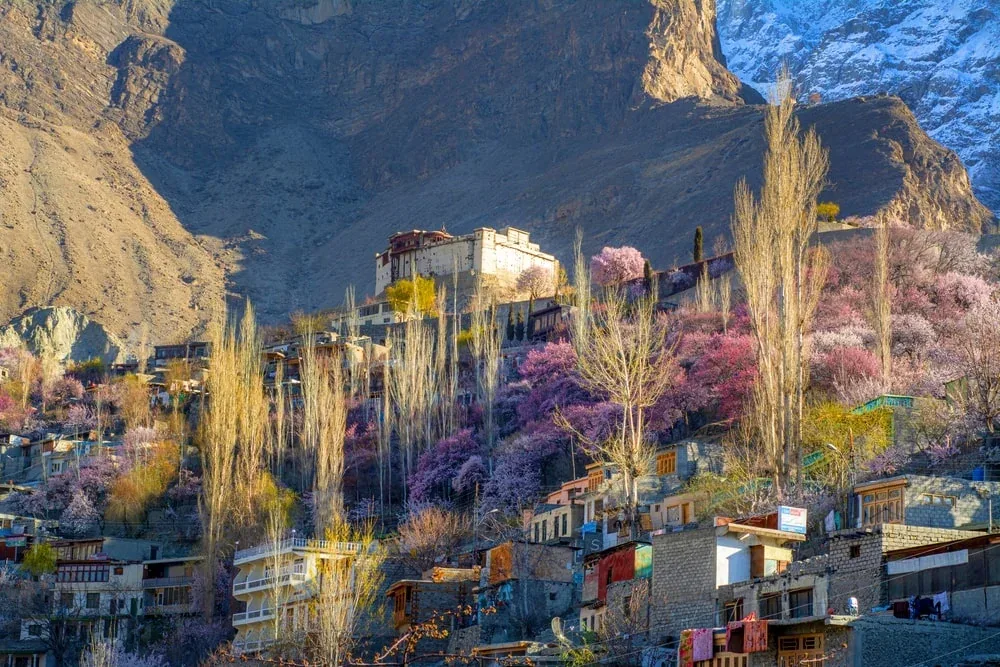
- Duikar and Eagle's Nest: the viewpoint above Karimabad gives you the whole valley below, orchards in bloom with Rakaposhi and Ladyfinger behind. Best at sunrise.
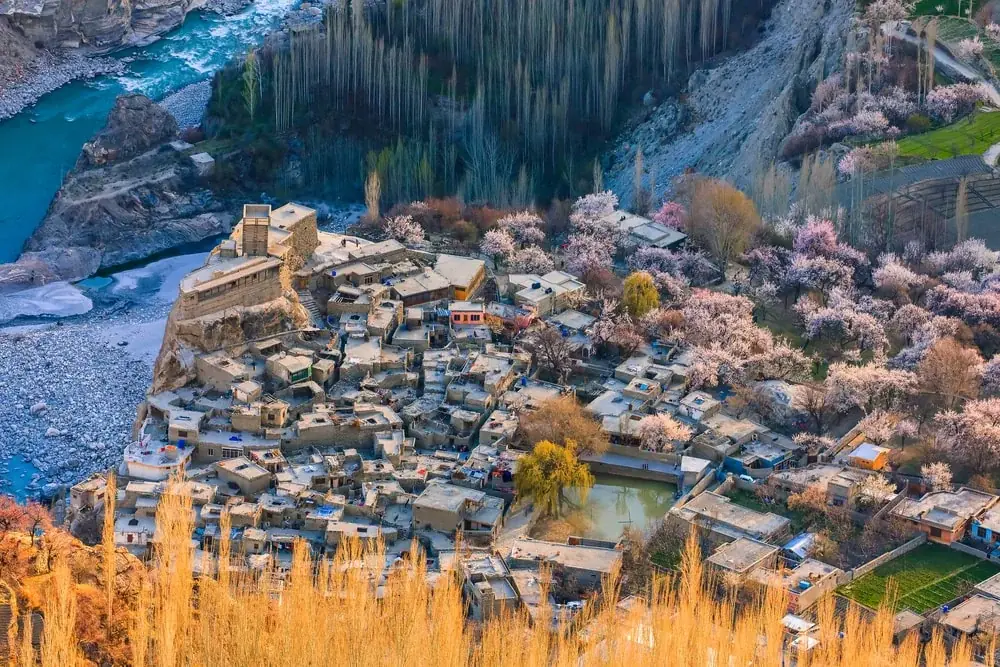
- Baltit and Altit Forts: both sit among old orchards, and the historic stone against pink blossom is the shot everyone comes for. Ganish, the old settlement by Altit, is quieter and just as pretty.
- Nagar Valley: across the river from Hunza, facing the sun, with big Rakaposhi views over the flowering fields. Often less busy than the Karimabad side.
- Upper Hunza, Gulmit and Passu: a week or so later than Karimabad, with blossom set against the sawtooth Passu Cones and the turquoise water of Attabad Lake on the drive up.
- Gilgit and Naltar: Gilgit flowers earliest of all, and the side trip up to Naltar Valley adds pine forest and, if the season is early, snow beside the blossom.
Prefer Skardu? It blooms about a week later
The Skardu valleys run roughly a week behind central Hunza, so if you are travelling in April they are often the better bet. Shigar, Khaplu (the valley of gardens) and Chunda peak in the first two weeks of April, and doing both regions in one trip stretches the bloom across two full weeks. See our dedicated Skardu cherry blossom guide for the full valley-by-valley breakdown.
How to plan a Hunza blossom tour
Spring travel in Gilgit-Baltistan needs a little more planning than summer, mostly because of weather and flights.
Getting there
You have two ways in. Flying Islamabad to Gilgit or Skardu takes about an hour and saves two days, but spring flights are weather-dependent and cancellations happen, so build a buffer day. Driving the Karakoram Highway from Islamabad takes roughly 20 to 24 hours over two days, and the road itself is part of the blossom trail, with flowering villages the whole way up. From Gilgit, Karimabad is about two and a half hours by road.
How many days you need
Five days is the practical minimum, and seven is better. A week lets you see central Hunza, drive up to Passu and Attabad, cross to Nagar, and still absorb a weather delay without missing the bloom. Add three or four more days if you want to include Skardu. If you would rather have the route and timing handled for you, our Hunza Valley tour can be shaped into a spring blossom itinerary with the dates built around peak bloom.
Weather and what to pack
March and April are cold in the mornings and mild by afternoon. Expect near freezing at dawn, rising to around 12 to 18°C in the sun, with fresh snow still on the high peaks. Pack layers, a warm jacket for early starts, waterproofs in case of a spring shower, and proper shoes for muddy orchards. It is not summer, and first-timers who pack only for warm weather regret it.
What does a Hunza cherry blossom tour cost?
Prices vary a lot with how you travel, how long you stay, and your hotel standard. As a rough guide, a 7-day road trip from Islamabad for a couple starts around PKR 250,000 to 300,000 all in, while flying in cuts the days but adds airfare. Solo and small-group rates work out lower per head. Because we build spring trips to order rather than sell a fixed package, the honest answer is that cost depends on your dates and group size, and we will quote it plainly. What matters more than the headline number is booking early.
Book 4 to 6 weeks ahead. Spring is one of the busiest windows in Gilgit-Baltistan, and the good guesthouses in Karimabad and Khaplu sell out weeks before peak bloom. Leave it late and you either pay more or stay somewhere without the orchard view you came for.
A few tips from the ground
- Shoot at sunrise and the hour before sunset. Midday light is flat and the crowds are thickest.
- Build in a flexible day. Flights get cancelled and bloom timing moves; a spare day saves the trip.
- Come for the blossom, but the wider Hunza Valley is worth slow time. Forts, old villages and cherry-lined lanes are the point as much as any single viewpoint.
- Respect the orchards. They are working farms and people's livelihoods, so ask before walking into private land and do not pull blossom off the trees.
For more on when the region is at its best through the rest of the year, our guide to the best time to visit Pakistan breaks the seasons down month by month.
Frequently asked questions
When is the best time to see cherry blossom in Hunza?
The last week of March through the first week of April is the safest window for central Hunza around Karimabad. Lower Gilgit blooms from mid-March, and upper Hunza and the Skardu valleys peak into mid-April, so a two-week trip can follow the bloom uphill. Across Gilgit-Baltistan the season runs from mid-March to mid-April, and the bloom climbs with altitude: Gilgit at around 1,500 m flowers first, Karimabad and Nagar at around 2,400 m follow, and Gulmit and Passu come about a week later. A single orchard stays in full flower for only a week to ten days before the petals drop. The exact peak shifts a little each year. A mild February can pull it forward by a week and a cold one pushes it back, so keep your dates flexible if you can. Our team on the ground posts updates as flowering starts, and you can message us for a live read nearer the time.
Is it cherry or apricot blossom in Hunza?
Mostly apricot. Hunza is Pakistan's apricot heartland, and apricot trees make up most of the bloom, flowering alongside cherry, almond, apple and pear. The popular name is cherry blossom, but the experience is an apricot-and-cherry mix. Apricot flowers first and in the greatest numbers, and walnut joins in as well. The colours give it away if you look closely. Apricot and almond blossom tends toward white and pale pink, while cherry runs a deeper pink. From across a valley it all reads as one wash of colour against the snow on Rakaposhi and Ultar, so the label makes little difference to what you see. If you find a trip sold as an apricot and cherry blossom tour, that is the more accurate name for the same experience. Almost everyone searches for cherry blossom, which is why we use that name too. The orchards are working farms, so ask before walking onto private land.
Where are the best places to see the blossom?
In central Hunza, the best spots are Duikar viewpoint, Baltit and Altit Forts, and Ganish. Nagar Valley across the river has big Rakaposhi views. Upper Hunza around Gulmit and Passu blooms later, and in Skardu the Khaplu, Shigar and Chunda valleys are the standouts. Karimabad is the classic base and the easiest place to be surrounded by flowering orchards. Duikar and Eagle's Nest look down on the whole valley with Rakaposhi and Ladyfinger behind, and they are best at sunrise. The forts sit among old orchards, and Ganish, the old settlement by Altit, is quieter. Nagar faces the sun and is often less busy than the Karimabad side. Gulmit and Passu flower about a week after Karimabad, with the Passu Cones behind and Attabad Lake on the drive up. Gilgit flowers earliest of all, and a side trip to Naltar can add pine forest and, in an early season, snow beside the blossom.
How many days do you need for a Hunza blossom tour?
Five days is the minimum and seven is comfortable, which covers central and upper Hunza with room for a weather delay. Add three to four days to include Skardu and stretch the bloom across two weeks. A week lets you see central Hunza around Karimabad, drive up to Passu and Attabad Lake, cross to Nagar, and still absorb a cancelled flight or a day of rain without missing the peak. How you travel changes the count. Flying from Islamabad to Gilgit takes about an hour and saves two days, while driving the Karakoram Highway takes roughly 20 to 24 hours over two days, though the road is part of the blossom trail with flowering villages the whole way up. Whatever length you choose, build in one flexible day. Our Hunza Valley tour can be shaped into a spring itinerary with the dates built around peak bloom, and we suggest booking 4 to 6 weeks ahead.
How do you get to Hunza in spring?
Fly from Islamabad to Gilgit or Skardu in about an hour, keeping a buffer day for weather cancellations, or drive the Karakoram Highway over two days. Karimabad is about two and a half hours by road from Gilgit. Flying saves two days, but spring flights are weather-dependent and cancellations do happen, so a spare day protects the trip. The drive from Islamabad takes roughly 20 to 24 hours of road time, and in spring it is part of the experience, with flowering villages the whole way up. Flying into Skardu works well if you plan to see both regions, because the Skardu valleys bloom about a week later than central Hunza. March and April are cold in the mornings and mild by afternoon, near freezing at dawn and around 12 to 18°C in the sun. Pack layers, a warm jacket, waterproofs and proper shoes for muddy orchards.
How much does a Hunza cherry blossom tour cost?
A 7-day road trip from Islamabad for a couple starts around PKR 250,000 to 300,000 all in, depending on hotel standard, with flying in shortening the days but adding airfare. Small-group and solo rates are lower per person, and most spring trips are built to order. The price swings with how you travel, how long you stay and the standard of hotel you want, so we quote each trip to your dates and group size rather than sell a fixed package. Timing affects cost as much as anything. Spring is one of the busiest windows in Gilgit-Baltistan, and the good guesthouses in Karimabad and Khaplu sell out weeks before peak bloom. Book 4 to 6 weeks ahead. Leave it late and you either pay more or end up somewhere without the orchard view you came for. Send us your dates and we will give you a plain quote.
Can you see cherry blossom in Skardu too?
Yes. Skardu blooms slightly later than central Hunza, so the Khaplu, Shigar and Chunda valleys are often at their peak in early to mid-April, which makes a combined Hunza and Skardu trip the best way to catch the longest stretch of blossom. The Skardu valleys sit at roughly 2,200 to 2,600 m and run about a week behind Karimabad. If you are travelling in April, they are often the better bet on their own. Shigar has its fort among the orchards, and Khaplu is known as the valley of gardens. Higher still, Hushe and the side valleys at around 3,000 m flower into mid to late April. Doing both regions in one trip stretches the bloom across two full weeks: start in Hunza in late March, then move to Baltistan as central Hunza fades. Add three or four days to a Hunza itinerary to fit it in. Our Skardu cherry blossom guide covers that side valley by valley.
Ready for Your Next Adventure?
Join our community of explorers and discover the journey of a lifetime. Our expert team is ready to help you plan your perfect expedition.