Kutwal Lake & Haramosh Valley: A Trekking Guide
A turquoise lake at 3,300 m under a rarely climbed 7,409 m peak, two hours from Gilgit and almost empty.
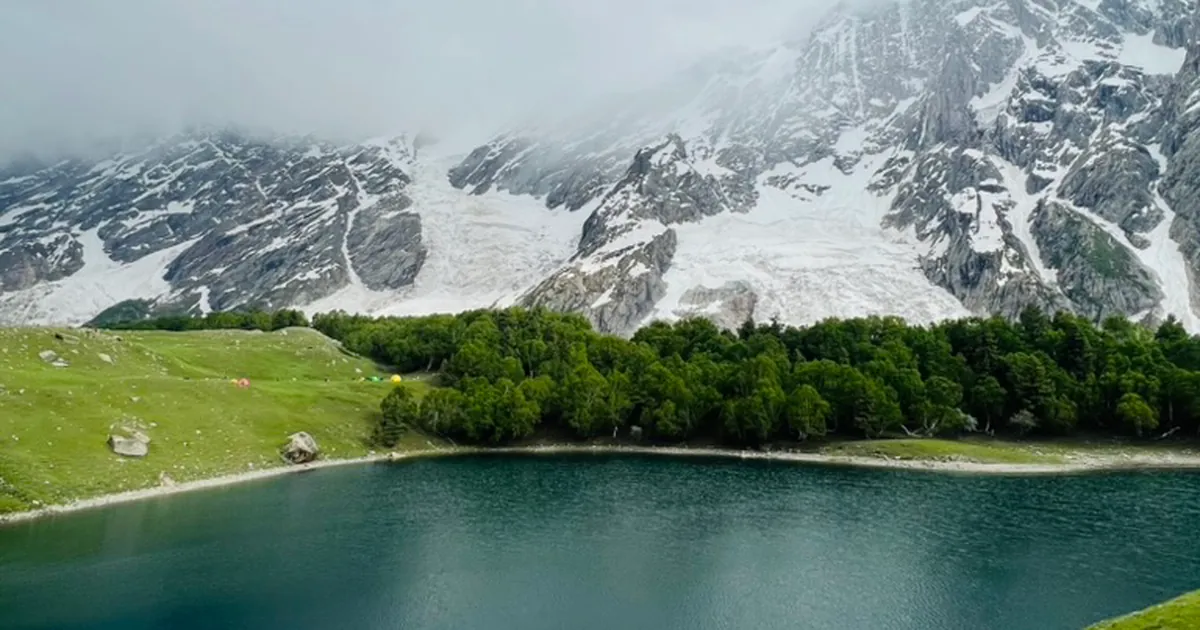
Kutwal Lake sits at roughly 3,300 m in the Haramosh Valley, Gilgit district, directly under the north side of Haramosh Peak (7,409 m). You reach it by turning off the Gilgit-Skardu road at Sassi, about 53 km from Gilgit, then taking a jeep track and walking the rest. Late June to September is the season.
Where is Haramosh Valley?
Haramosh Valley runs south off the Indus, about 65 km east of Gilgit. The turn is at Sassi, a small village on the Gilgit-Skardu road, and from there a rough jeep track climbs into the valley through pine forest and side streams. Kutwal, the summer settlement beside the lake, is roughly 19 km up that track and the walking trail beyond it.
This is Gilgit district, not Skardu, which trips people up. If you are driving the Gilgit to Skardu road, the Sassi turn-off comes well before Skardu, and it is easy to miss.
Sassi is also the turn-off for Khaltaro, the quieter Haramosh side valley with Khun Meadows and the Rakhan Gali pass. Our Khaltaro Valley guide covers its jeep road, altitudes and walks.
The mountain above the lake
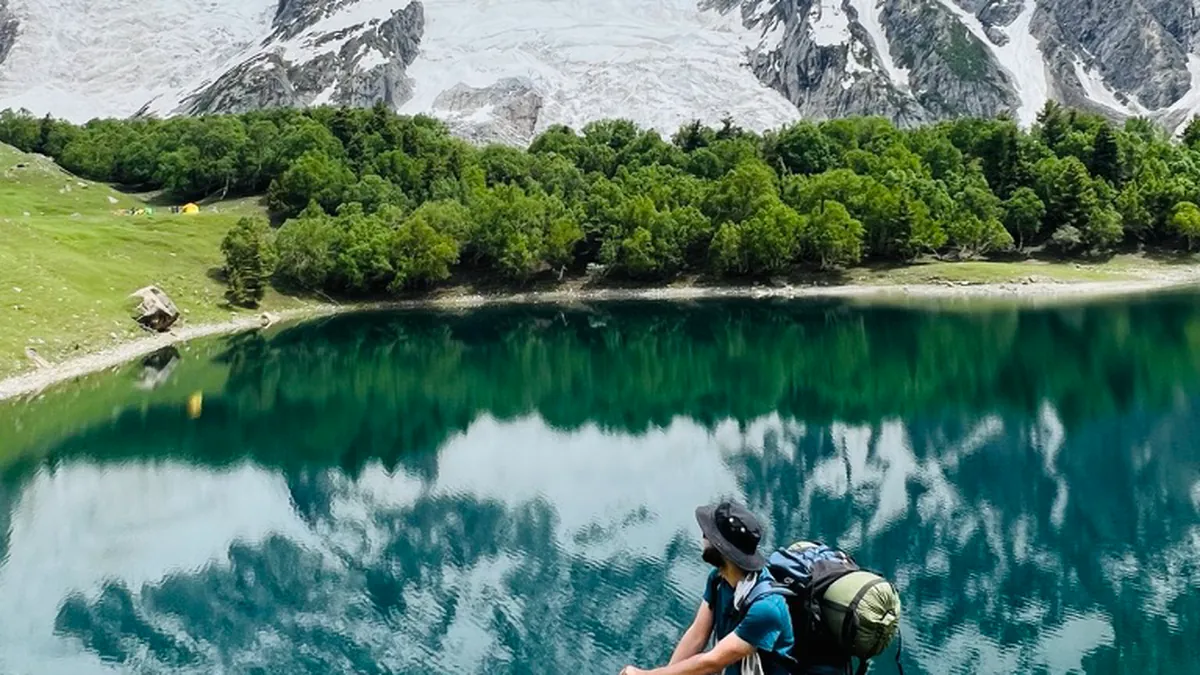
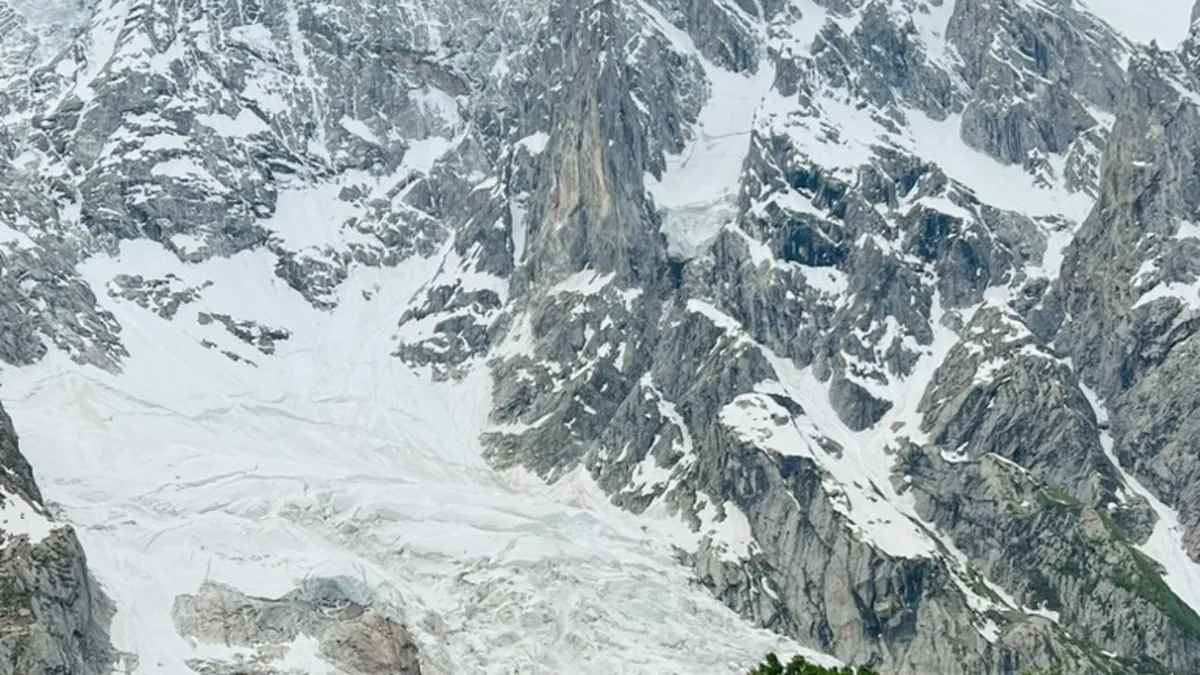
Haramosh Peak is 7,409 m (24,308 ft), the high point of the Rakaposhi-Haramosh subrange of the Karakoram, with 2,277 m of prominence. From the meadow at Kutwal you are looking at its northern flank: a wall of hanging ice and broken rock that fills most of the sky.
Two other peaks close the head of the valley. Dobani stands to the west, and Laila Peak rises directly above the lake. Worth knowing: this is not the famous Laila Peak. That one is in the Hushe Valley near Masherbrum, the sharply angled blade that appears on every Pakistan trekking poster. Haramosh has its own Laila, and plenty of trip reports confuse the two.
The story most guides leave out
Haramosh has been climbed only a handful of times, and it is better known for a failure than for any of its ascents.
In 1957, an Oxford University party reached the Haramosh La and was caught in an avalanche while descending. What followed was a rescue attempt that went wrong in stages over several days. Bernard Jillot and Rae Culbert died. Tony Streather and John Emery survived, and Emery lost every finger and every toe to frostbite. Ralph Barker wrote the episode up as The Last Blue Mountain, still one of the most-read mountaineering books in English.
The first ascent came the following year. On 4 August 1958, Austrians Heinrich Roiss, Stefan Pauer and Franz Mandl summited by roughly the same line the Oxford team had attempted, over the Haramosh La and along the east ridge. Since then the mountain has seen very little traffic: a Japanese team by the west ridge in 1978, another ascent in 1979, and a Polish expedition on the southwest face in 1988.
None of that is a reason to stay away. It is a reason to understand what you are standing under. The trek to Kutwal is a walk to a meadow, and the mountain above it is a serious, rarely climbed 7,000er.
Getting there and how long it takes
From Gilgit, the drive to Sassi takes a couple of hours on the Gilgit-Skardu road. From Sassi you swap to a jeep for the track up the valley, and the jeep stage depends entirely on how far the road is open that season. Landslides and washouts are normal here and the track is regularly cut.
Be aware that published trek times disagree. Some operators describe roughly a six-hour walk to the lake once the jeep drops you; others sell it as a two-day approach with a night on the way. The difference is mostly about where the jeep stops, which changes year to year. Plan for two days of walking and treat a one-day arrival as a bonus.
Best time to visit Kutwal Lake
Late June to mid-September is the window. July and August are the most dependable: the snow is off the trail, the herders are up with their animals, and the meadow is green. Early June often still has snow on the upper approach, and the side streams run high with meltwater.
By late September the families start moving stock down and the nights turn hard. Winter is not a trekking season in this valley. For how Haramosh fits the wider regional calendar, our Gilgit-Baltistan travel guide lays out the seasons across the whole region.
How hard is it?
Moderate, with one honest caveat: the climb out of the valley floor is steep and sustained, and almost every trip report mentions it. There is no technical ground, no rope work and no dangerous altitude, but there is a lot of uphill on loose trail, often in heat at the lower elevations.
You sleep at about 3,300 m, which is low enough that altitude is not usually a problem for a healthy walker. Anyone comfortable on a two-day Hunza trek, or who has walked to Rakaposhi Base Camp, will manage Kutwal.
What to plan for
| Item | Detail |
|---|---|
| Trailhead | Sassi, on the Gilgit-Skardu road, about 53 km from Gilgit |
| Lake altitude | About 3,300 m (sources quote 3,260 to 3,310 m) |
| Peak above | Haramosh, 7,409 m |
| Walking | Allow two days in, one to two out, depending on the jeep |
| Season | Late June to mid-September |
| Permits | None for the valley; carry your passport for checkposts |
| Accommodation | Camping on the meadow, plus basic stone shelters in the valley |
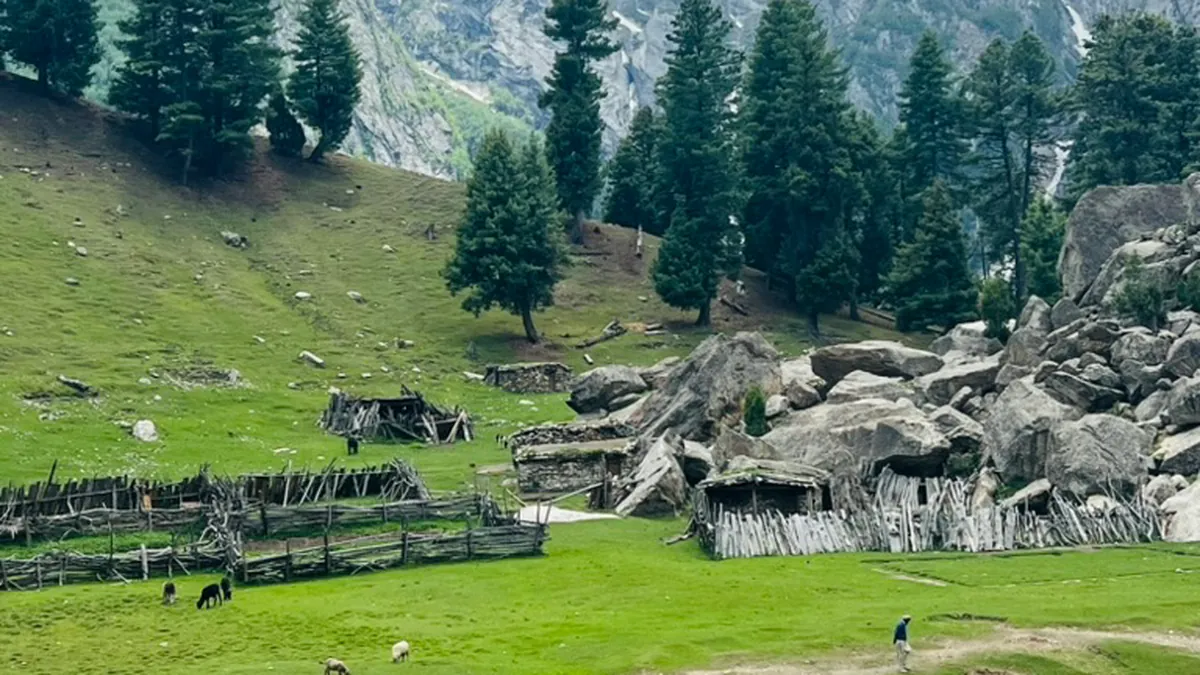
Bring everything. Kutwal is a summer settlement, not a village with shops, and the nearest reliable supplies are back in Gilgit. Water from the side streams is fine once treated. Nights on the meadow drop below freezing even in August.
Frequently asked questions
Where is Kutwal Lake?
Kutwal Lake is in the Haramosh Valley, Gilgit district, Gilgit-Baltistan, at roughly 3,300 m; sources quote between 3,260 and 3,310 m. It lies about 65 km east of Gilgit, reached by turning off the Gilgit-Skardu road at Sassi, a small village about 53 km from Gilgit. The valley runs south off the Indus, and Kutwal, the summer settlement beside the lake, is roughly 19 km up the jeep track and walking trail from Sassi. This is Gilgit district, not Skardu, which trips people up: driving towards Skardu, the Sassi turn-off comes well before the town and is easy to miss. The lake sits directly under the north side of Haramosh Peak (7,409 m), with Dobani to the west and Haramosh's own Laila Peak rising above the water. Sassi is also the turn-off for Khaltaro, the quieter side valley with Khun Meadows.
How do you get to Haramosh Valley?
Drive from Gilgit along the Gilgit-Skardu road to Sassi, about 53 km and a couple of hours, then take a jeep up the valley track as far as it is open, and walk the rest to Kutwal. Allow a full day from Gilgit to the trailhead camp. The track climbs through pine forest and side streams, and how far the jeep gets depends entirely on that season: landslides and washouts are normal, and the track is regularly cut. That is why published trek times disagree. Some operators describe roughly a six-hour walk to the lake once the jeep drops you, while others sell it as a two-day approach with a night on the way. We plan for two days of walking in and one to two out, and treat a one-day arrival as a bonus. We run Haramosh as a private trip with local guides from the valley, often combined with the drive towards Skardu.
Do you need a permit for the Kutwal Lake trek?
No permit is required for the valley itself or the trek to Kutwal Lake. Carry your passport for the checkposts along the Gilgit-Skardu road, since in some areas foreigners are logged at police checkpoints. Foreign visitors need a Pakistan tourist visa to enter the country, but nothing beyond that for Haramosh. The light paperwork is part of the appeal: the trek is a walk to a meadow at about 3,300 m, with no technical ground and no rope work, and you will see very few other people. What you do need to organise is logistics. Kutwal is a summer settlement with timber stock pens and low shelters, not a village with shops, so bring everything, including tents unless you plan to use the basic stone shelters in the valley. The nearest reliable supplies are back in Gilgit. We run the trek as a private trip with local guides from the valley.
How high is Haramosh Peak?
Haramosh Peak is 7,409 m (24,308 ft), the high point of the Rakaposhi-Haramosh subrange of the Karakoram, with 2,277 m of prominence. It was first climbed on 4 August 1958 by the Austrians Heinrich Roiss, Stefan Pauer and Franz Mandl, over the Haramosh La and along the east ridge. That was roughly the line an Oxford University party had attempted in 1957, when an avalanche and a rescue that went wrong over several days cost Bernard Jillot and Rae Culbert their lives; Ralph Barker told the story in The Last Blue Mountain. The mountain has seen very little traffic since: a Japanese team on the west ridge in 1978, another ascent in 1979 and a Polish expedition on the southwest face in 1988. From Kutwal, at about 3,300 m, you look straight up at its northern flank, a wall of hanging ice and broken rock.
Is Laila Peak in Haramosh the same as the famous one?
No. The famous Laila Peak is in the Hushe Valley near Masherbrum, the sharply angled blade that appears on so many Pakistan trekking posters. Haramosh Valley has a separate peak of the same name, rising directly above Kutwal Lake, and the two are often mixed up online and in trip reports. They are in different places altogether. The Haramosh Laila is in Gilgit district, reached from Sassi on the Gilgit-Skardu road, and at Kutwal it closes the head of the valley together with Dobani to the west, under the much bigger north face of Haramosh Peak (7,409 m). If a listing shows the Hushe blade but describes a trek from Sassi, it has merged the two. When you book a Laila trek, check which valley the itinerary actually goes to, because the drive and the walk in are completely different.
What is the best time to visit Kutwal Lake?
Late June to mid-September, with July and August the most reliable. By then the snow is off the trail, the herders are up at Kutwal with their animals and the meadow is green. Before June, and often into early June, there is snow on the upper trail and the side streams run high with meltwater. By late September the families start moving their stock down and the nights turn hard. Winter is not a trekking season in this valley. Even in August, nights on the meadow drop below freezing, so bring a proper sleeping bag. Summer also brings heat on the steep climb out of the valley floor, so start early on the walking days. Check how far the jeep track is open before you go, because landslides and washouts change it every season, and that decides whether you need one day or two to walk in.
Is it worth it?
Kutwal gives you something the busier valleys no longer do: a green meadow with a turquoise lake on it, working pasture with animals on it, and a 7,409 m wall of ice directly overhead, with almost nobody else there. It is a short trip by Karakoram standards and it sits an easy drive from Gilgit.
We run Haramosh as a private trip with local guides from the valley, usually combined with the drive toward Skardu or a few days in the Rakaposhi-Haramosh area. Send us your dates and we will build it around your flights.
Ready for Your Next Adventure?
Join our community of explorers and discover the journey of a lifetime. Our expert team is ready to help you plan your perfect expedition.