Gondogoro La Trek: Difficulty, Cost and Itinerary (2026)
The complete guide to Pakistan's most spectacular pass crossing: how hard the 5,585m Gondogoro La really is, what it costs in 2026, a day-by-day itinerary, permits, safety and the best time to go.
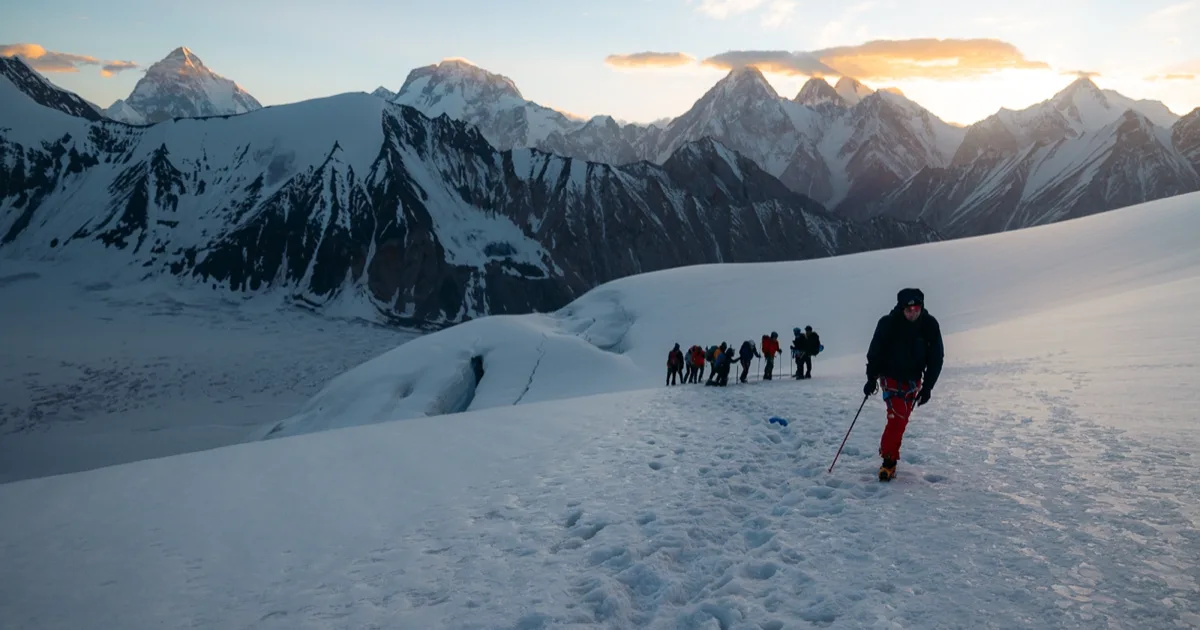
Most people who trek to K2 Base Camp walk back out the way they came. A smaller, fitter group turns south at Concordia and crosses the Gondogoro La instead, swapping the return down the Baltoro for a midnight climb over a 5,585m pass and a jaw-dropping wall of 8,000m peaks at sunrise. It is one of the great mountain crossings anywhere, and it is also genuinely serious. This guide covers exactly how hard it is, what it costs in 2026, a day-by-day itinerary, the permits, and the safety realities, based on the trips we run each summer.
What is the Gondogoro La Trek?
The Gondogoro La is a high glaciated pass in the Karakoram, about 25km south of K2, that links the Vigne Glacier on the Concordia side to the Gondogoro Glacier above the Hushe valley. The Gondogoro La Trek is the route that crosses it, and in practice it is almost always done as a one-way traverse: you walk in from Askole, up the Baltoro Glacier to Concordia and K2 Base Camp exactly as on the standard trek, then climb to Ali Camp, cross the pass before dawn, and descend into the green Hushe valley on the far side. The Concordia-to-Hushe route over the pass was first established in 1986.
The appeal is simple. Instead of retracing your steps down the Baltoro, you top out on a pass with four of the world's fourteen 8,000m mountains in a single view, then finish in a completely different, greener valley. The cost of that reward is a proper alpine crossing, which is where the difficulty comes in.
How hard is the Gondogoro La Trek?
Difficulty rating: strenuous and semi-technical. This is the part that trips people up. The approach to Concordia is a hard glacier trek but involves no ropework. The pass itself is different. It sits at 5,585m (the actual crossing point is a touch higher, around 5,600 to 5,618m by GPS), and both sides are steep snow and ice.
You leave Ali Camp around midnight and climb through the dark so you reach the top at first light, while the snow is still frozen hard and before the sun loosens rockfall on the descent. The slopes run up to 50 degrees, so you climb and descend on fixed ropes with crampons, an ice axe, a harness and a helmet, using a jumar on the steepest sections. Wikipedia grades the crossing Class 4. The whole pass day is commonly 10 to 12 hours of hard going. It is not full mountaineering and you do not need an expedition CV, but you do need to be comfortable moving on ropes and crampons, and you need real high-altitude trekking behind you.
The Hushe descent is the dangerous side
Counterintuitively, getting up is not the hard part. The southwest (Hushe) side is longer, steeper and more exposed than the ascent: a continuous 50-degree slope that needs up to 300m of fixed rope and a series of rappels, followed by loose gravel where rockfall and mudslides pick up as the day warms. That is exactly why the crossing is timed for the small hours. There are also two short avalanche-prone sections and, in some years, open crevasses. Guides move groups quickly and early for good reason.
Is the Gondogoro La Trek safe?
It has a serious reputation, and it earns it, but the terrain is usually not the real problem. The pass is crossed by a system of fixed ropes installed and maintained each season by a rope-fixing team from Hushe village, who set the lines at the start of the season, keep them up through the summer, and strip them out at the end. With those ropes in place, an experienced guide, and sensible acclimatisation, plenty of trekkers cross safely every year.
The bigger risk is human. The accidents that get talked about tend to trace back to budget outfits pushing oversized groups of 40 or more across the pass behind a single, sometimes underqualified guide, without the right gear or the time to do it properly. There is no official published death toll for the pass, only anecdotal incidents over the years, and in 2007 the whole season was closed when a glacial surge made the ascent too steep to fix. The takeaways are straightforward: go with a licensed operator running small groups, insist on proper equipment and rope-work, and treat the weather and your own acclimatisation with respect.
Gondogoro La Trek itinerary: day by day
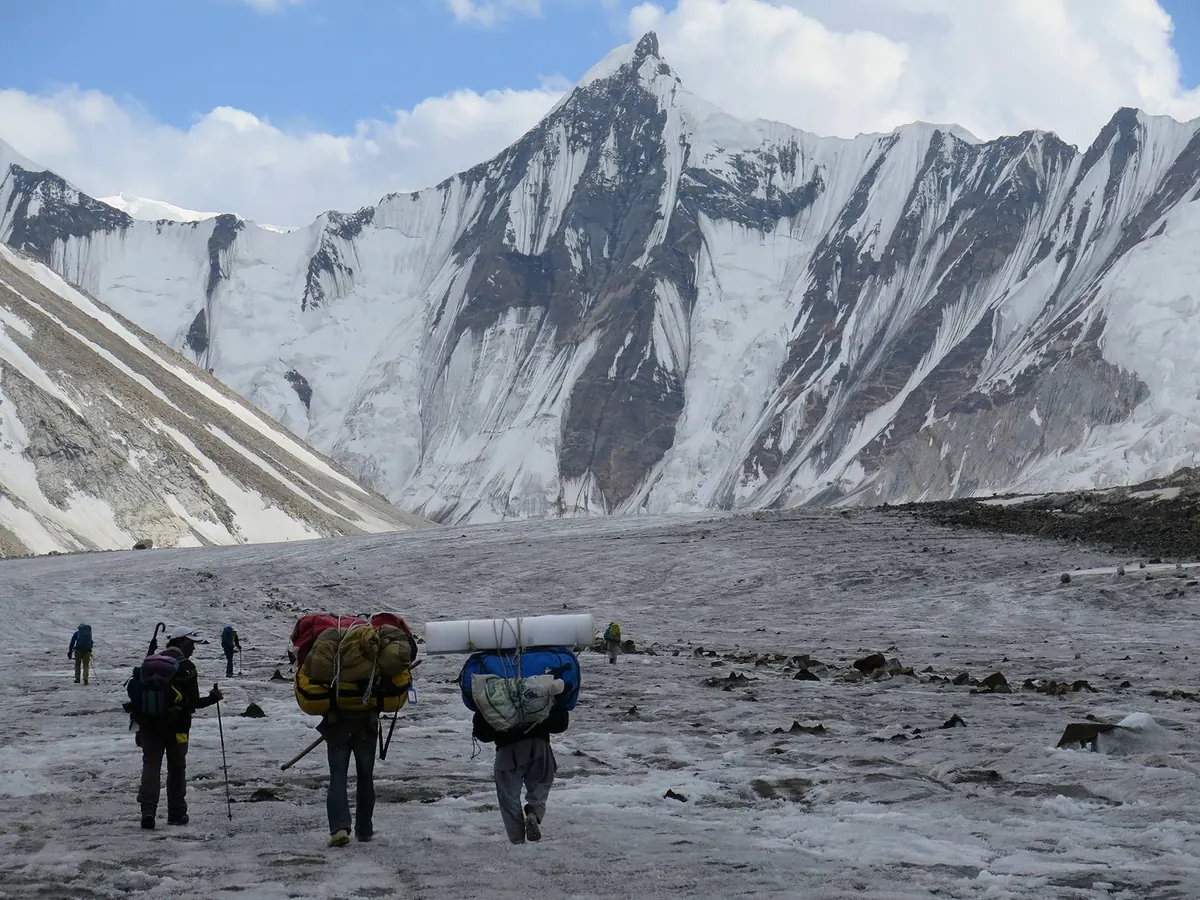
The first stretch is identical to the K2 Base Camp trek; the pass is the alternative exit. Plan on 12 to 14 days of trekking inside a 20 to 23-day trip, with 21 to 22 days being typical once travel and buffer days are added. Distances vary a lot between sources, so treat the total (roughly 140 to 170km) as approximate. Here is the standard schedule.
| Day | Route | Overnight (elevation) |
|---|---|---|
| 1 to 2 | Islamabad, then fly or drive to Skardu | Skardu (~2,230m) |
| 3 | Jeep to the road-head at Askole | Askole (~3,048m) |
| 4 to 5 | Trek via Jhola to Paiju below the Trango Towers | Paiju (~3,383m) |
| 6 | Acclimatisation day at Paiju | Paiju (~3,383m) |
| 7 to 9 | Onto the Baltoro Glacier: Khoburtse, Urdukas, Goro II | Goro II (~4,250m) |
| 10 | Goro II to Concordia, the amphitheatre of peaks | Concordia (~4,600m) |
| 11 | Day walk to K2 Base Camp and back | Concordia (~4,600m) |
| 12 | Concordia to Ali Camp below the pass | Ali Camp (~5,000m) |
| 13 | Midnight start, cross the Gondogoro La (~5,585m), descend to Khuspang | Khuspang (~4,600m) |
| 14 to 15 | Descend the Hushe valley via Dalsampa to Hushe village | Hushe (~3,048m) |
| 16 to 17 | Jeep Hushe to Skardu, then fly or drive to Islamabad | Skardu / Islamabad |
Gondogoro La Trek cost in 2026
As with any Karakoram trek, the price depends heavily on who you book with. Local Pakistani operators sit well below the big Western expedition companies for the same route and the same campsites.
| Package | Typical 2026 price (per person) | Notes |
|---|---|---|
| Local operator, Concordia + Gondogoro La | US$2,690 | Group departure with Pakistani crew; best value |
| Premium / Western operator | ~$4,495 to $4,695 | Western leader, internal flights, extra safety kit |
| K2 Base Camp only (no pass) | ~$1,550 to $2,090 | For comparison; the pass adds roughly $1,300 to $1,850 |
A local package usually covers your permits and fees, the Skardu flight or road transfer, city hotels, full camping service with cook and porters, your guide, and the Gondogoro rope-fixing fee. Excluded almost everywhere: international flights, your Pakistan visa, travel and rescue insurance, tips, and personal gear. One honest word of warning: the very cheapest quotes often come with the oversized groups that make the pass more dangerous, so do not shop on price alone.
We run the crossing ourselves as a guided group departure from $2,690 per person, on a 16 to 17-day core itinerary from Islamabad and back that most people book as a 20 to 23-day trip with contingency, with a dedicated pass crew and spare weather days built in. The Gondogoro La trek page has what is included and how the crossing day works, or you can book the standard K2 Base Camp trek and add the pass.
Best time to cross the Gondogoro La
The crossing window is short. The pass is generally passable from mid-June to the end of August, with July and August the most reliable, and it closes as autumn snow arrives in September. The window exists because the Hushe team only fixes the ropes for the season, and because the snow needs to be firm enough to cross safely but not yet rotten with melt. By late summer, warmer days raise the crevasse, rockfall and avalanche risk, which is another reason for the pre-dawn timing. Crossing is never guaranteed in any given year: a heavy snow season or a glacial surge can shut it, so any good operator will keep the standard K2 Base Camp return as a fallback. For a wider view of when to travel, see our guide to the K2 Base Camp Trek, which shares the same season.
Permits and fees
The whole area is a restricted zone inside the Central Karakoram National Park, so you need a licensed operator, an NOC, and a mandatory registered guide. For foreign trekkers in 2025 the fees were a CKNP environmental fee of about US$190 per person and a trekking permit of about US$150 per person in summer (US$75 in autumn and winter), plus a Gondogoro rope-fixing fee of roughly US$70 to $80 that goes to the Hushe committee and is usually bundled into your package. These are not the same as the K2 climbing permit: actually summiting K2 carries a royalty of US$3,500 and up, which trekkers never pay. Permit fees change often, so confirm the current numbers with your operator before you book.
Visa type: trekking. This route is on NADRA's official list of treks, so you need Pakistan's Mountaineering & Trekking visa (Trekking sub-category), not an ordinary tourist visa. You apply online at visa.nadra.gov.pk with your passport, a photo, the trekking application form and a sponsor letter from a tour operator authorised by the Department of Tourist Services, which we issue for our trekkers. Processing normally takes about four weeks, so apply early, and a royalty fee for the trek is paid in Pakistan once the visa is granted.
Getting there and getting out
Because it is a traverse, you arrive and leave through different valleys. The gateway in is Skardu: from Islamabad you either fly in about an hour, weather permitting, or drive 18 to 22 hours up the Karakoram Highway when the flight does not run. From Skardu it is a rough 6 to 8-hour jeep ride to Askole, the road-head where the trek starts. Coming out, the Hushe valley has its own road: it is about a 6-hour jeep from Hushe back to Skardu via Khaplu, so you close the loop without ever retracing the Baltoro.
The view from the top
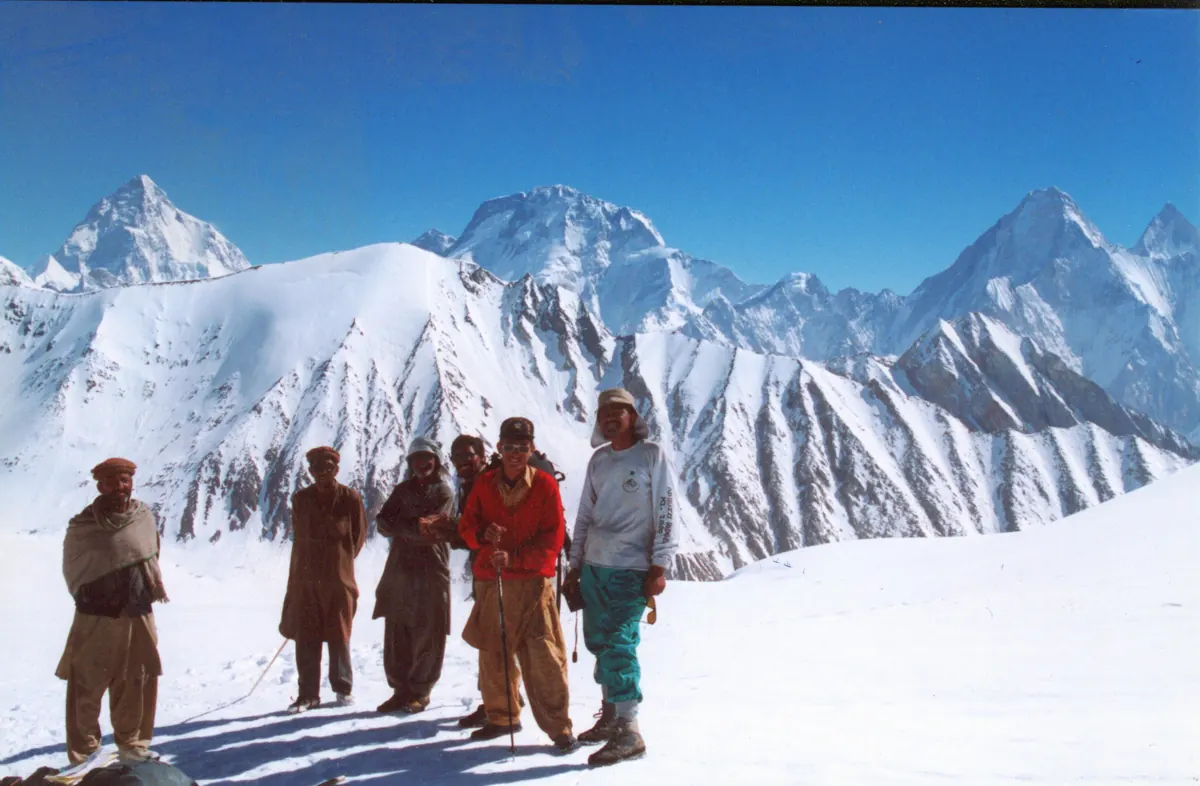
The reason people put themselves through the crossing is the panorama. From the pass and the upper route you can see four 8,000m giants at once: K2 (8,611m), Gasherbrum I (8,080m), Broad Peak (8,051m) and Gasherbrum II (8,035m). Turn toward Hushe and the skyline fills with 7,000m and 6,000m icons: the great pyramid of Masherbrum (7,821m), the sweep of Chogolisa (about 7,665m), and the impossibly elegant fin of Laila Peak (about 6,096m) above the descent. Few viewpoints on earth pack this many famous mountains into one sunrise.
Gondogoro La or the standard K2 Base Camp Trek?
If you are choosing between the two, be honest with yourself about the crossing. The standard K2 Base Camp Trek is a hard, high glacier walk with no technical climbing, and it delivers the same Concordia and K2 Base Camp highlights. The Gondogoro La adds a genuine roped, crevassed 5,585m pass with a midnight start and a serious descent, in exchange for the traverse and that summit-of-the-pass view. Fit trekkers comfortable on crampons and ropes should take the pass. Anyone new to high-altitude trekking, or unsure about the exposure, is better off on the out-and-back and will not miss the mountain itself.
Gondogoro La Trek FAQs
How high is the Gondogoro La?
The pass is 5,585m (18,323ft), and the actual crossing point is slightly higher, around 5,600 to 5,618m by GPS. It is the high point of the trek. To put that in context, Concordia sits at about 4,600m and Ali Camp, the last camp below the pass, at about 5,000m, so the crossing day starts high and goes higher. You leave Ali Camp around midnight and aim to reach the top at first light while the snow is still frozen hard. The height is why acclimatisation matters so much, and why the itinerary builds in a rest day at Paiju and the days on the Baltoro to Concordia and K2 Base Camp before you attempt it. From the top you can see four 8,000m peaks at once: K2, Gasherbrum I, Broad Peak and Gasherbrum II. The descent then drops to Khuspang at about 4,600m.
How difficult is the Gondogoro La Trek?
It is strenuous and semi-technical, a clear step above the standard K2 Base Camp trek. The pass crossing uses fixed ropes, crampons, a harness and a helmet on slopes up to 50 degrees, with a midnight start and a 10 to 12-hour day. You need good fitness and prior high-altitude trekking experience, but not expedition climbing skills. The walk in to Concordia is a hard glacier trek with no ropework; the pass is where it changes. You also carry an ice axe and use a jumar on the steepest sections, and Wikipedia grades the crossing Class 4. The harder half is the descent to the Hushe side, a continuous 50-degree slope needing up to 300m of fixed rope and a series of rappels, then loose gravel. If you are new to high-altitude trekking or unsure about exposure, the standard K2 Base Camp out-and-back gives you the same mountain without the roped crossing.
Is the Gondogoro La dangerous?
It carries real risk from steep ground, rockfall on the Hushe descent, crevasses and altitude. Most problems trace back to oversized budget groups rather than the terrain itself. With a licensed operator running small groups, the fixed-rope system and an experienced guide, it is regularly crossed safely. The ropes are installed and maintained each season by a team from Hushe village, who set them at the start of summer and strip them out at the end. The crossing starts around midnight so groups are off the steep ground before the sun loosens rock. There are also two short avalanche-prone sections. No official death toll is published for the pass, only anecdotal incidents, and in 2007 the whole season was closed when a glacial surge made the ascent too steep to fix. Insist on proper equipment and rope-work, and be wary of the cheapest quotes, which often mean groups of 40 or more behind one guide.
How long is the Gondogoro La Trek?
About 12 to 14 days of trekking, and 20 to 23 days for the whole trip including travel from Islamabad and buffer days. Twenty-one to twenty-two days is typical. The first part follows the K2 Base Camp trek exactly: a jeep from Skardu to Askole, then Jhola, Paiju with a rest day, and the Baltoro Glacier via Khoburtse, Urdukas and Goro II to Concordia. After a day walk to K2 Base Camp you climb to Ali Camp, cross the pass before dawn and descend to Khuspang, then walk down through Dalsampa to Hushe village. A jeep takes you from Hushe back to Skardu via Khaplu in about six hours. Total distance is somewhere around 140 to 170km, though sources disagree. Buffer days matter because the Skardu flight depends on the weather, and the fallback drive up the Karakoram Highway takes 18 to 22 hours.
When can you cross the Gondogoro La?
Roughly mid-June to the end of August, with July and August the most reliable. The pass closes with autumn snow in September, and a crossing is never guaranteed in a heavy snow year. The window is short for two reasons. The Hushe rope-fixing team only sets the lines for the summer season, and the snow has to be firm enough to cross safely but not yet softened by melt. As late summer warms up, crevasse, rockfall and avalanche risk rise, which is part of why the crossing starts at midnight. A glacial surge can also shut the route, as happened in 2007 when the whole season was closed. For that reason a good operator keeps the standard return down the Baltoro as a fallback, and we build spare weather days into our departures. The K2 Base Camp trek shares the same season.
How much does the Gondogoro La Trek cost?
A guided 2026 trip runs about US$2,690 with a local operator for the full Concordia and Gondogoro La route, or roughly $4,500 with a premium Western company. That is about $1,300 to $1,850 more than K2 Base Camp only. Our own guided group departure starts from $2,690 per person. Premium Western packages are quoted at about $4,495 to $4,695 and usually add a Western leader, internal flights and extra safety kit. A local package usually covers permits and fees, the Skardu flight or road transfer, city hotels, full camping service with cook and porters, your guide and the Gondogoro rope-fixing fee. Excluded almost everywhere are international flights, your Pakistan visa, travel and rescue insurance, tips and personal gear. In 2025 the CKNP fee was about US$190 and the trekking permit about US$150 in summer. Do not shop on price alone, as the cheapest quotes often mean oversized groups.
The Gondogoro La is not a trek to take lightly, and that is exactly why it stays with you. If you want to cross it properly, with permits, the rope-fixing fee, a small group and an experienced guide arranged, our team runs guided departures every summer, and you can start planning on our Gondogoro La trek page. If you would rather keep it non-technical, our K2 Base Camp Trek guide covers the standard route to the same mountain.
Ready for Your Next Adventure?
Join our community of explorers and discover the journey of a lifetime. Our expert team is ready to help you plan your perfect expedition.