K2 Base Camp Trek: Cost, Difficulty and Itinerary (2026/27)
Everything you need to plan the trek to the foot of the world's second-highest mountain: real 2026/27 costs, how hard it actually is, a day-by-day itinerary, permits and the best time to go. For the crossing in full detail, see our dedicated Gondogoro La Trek guide.
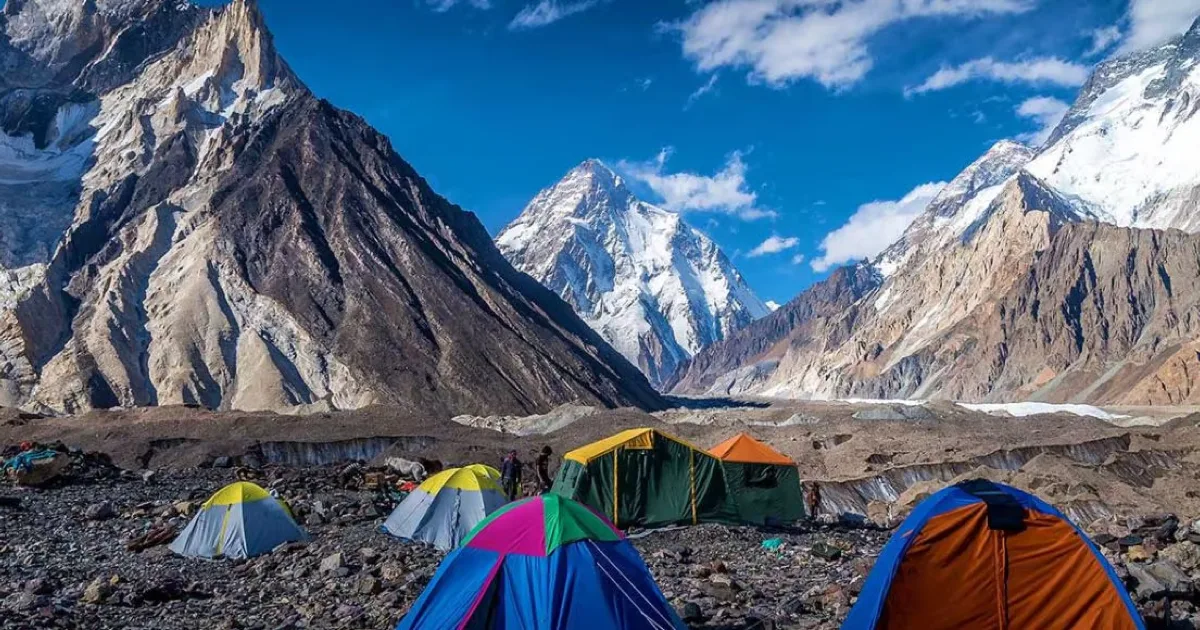
Standing at Concordia with four of the planet's fourteen 8,000-metre peaks ringed around you is one of the great sights in mountaineering, and you do not have to be a climber to earn it. The K2 Base Camp Trek walks fit, ordinary trekkers straight into the heart of the Karakoram, up to the granite pyramid that climbers know as the Savage Mountain. This guide covers what it costs in 2026, how hard it really is, a full day-by-day itinerary, the permits you need and when to go, based on the departures we run every summer.
What is the K2 Base Camp Trek?
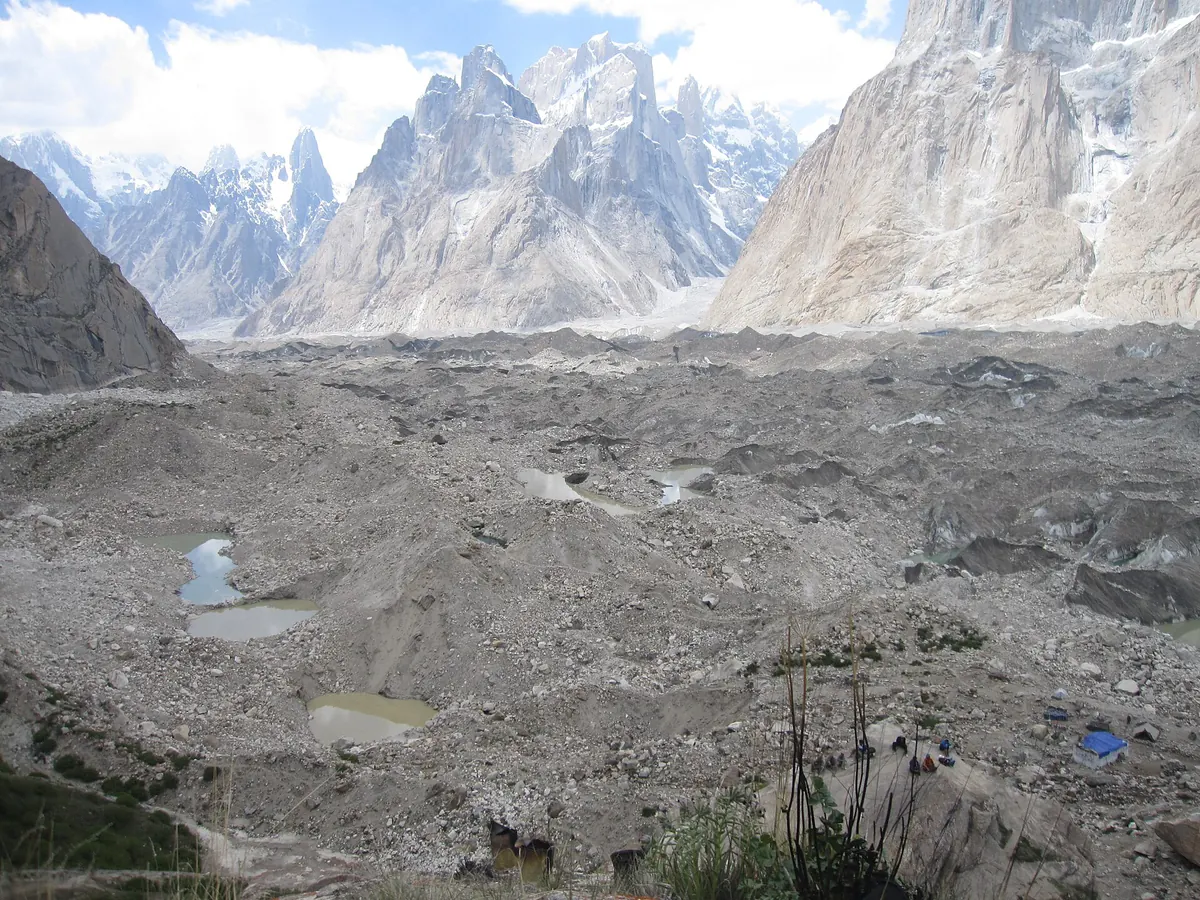
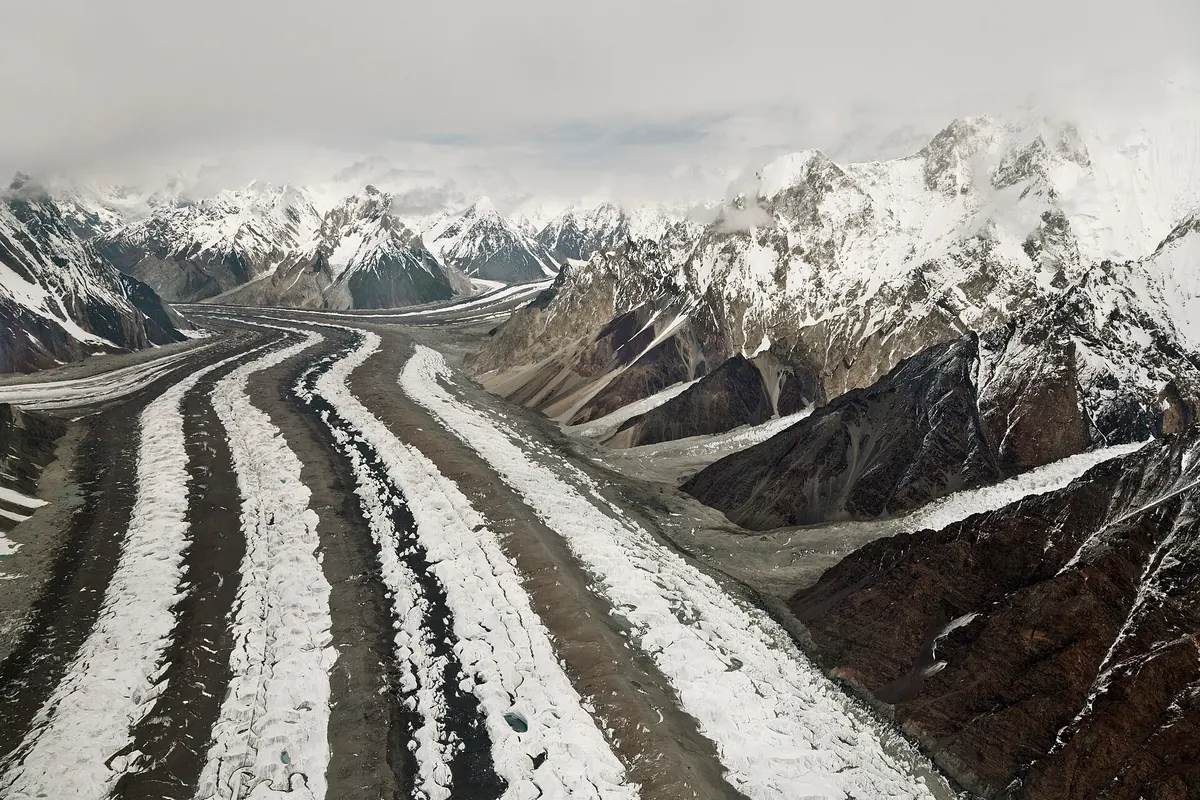
The K2 Base Camp Trek is a long-distance glacier trek in Gilgit-Baltistan, northern Pakistan, that follows the Baltoro Glacier up to the base camp of K2 (8,611m). From the road-head at Askole you walk east across the ice for several days, past a cathedral of rock spires, to Concordia, the junction where the Baltoro and Godwin-Austen glaciers meet. A final leg up the Godwin-Austen brings you to K2 Base Camp at around 5,100 to 5,150 metres (roughly 16,700 to 16,900 ft). Most trekkers then retrace their steps to Askole. The fitter and better-acclimatised cross the Gondogoro La on the way out instead.
It is a camping trip from beginning to end. There are no lodges and no villages once you leave Askole, only tents pitched on moraine and glacier. That isolation is the reward, and it is also why the trek runs almost entirely through licensed operators carrying a full crew of guides, cooks and porters.
K2 Base Camp Trek cost in 2026/27
Cost is the first thing most people ask about, and the honest answer is that it swings widely depending on who you book with. Pakistani operators sit at the bottom of the range. Large Western expedition companies charge two to three times as much for the same trail and the same campsites. Here is what a guided group trip realistically costs in 2026.
| Package | Typical 2026 price (per person) | Notes |
|---|---|---|
| Local operator, Base Camp only | US$1,550 to $2,100 | Group departure with Pakistani crew; best value |
| Mid-market, Base Camp only | ~$2,300 to $2,500 | Smaller groups, more inclusions |
| Premium / Western operator | ~$3,500 to $4,500 | Same trail, Western leader, full support |
| Gondogoro La loop (add-on) | +$200 to $600 over base-camp price | Covers rope-fixing and rescue-team fees at the pass |
A typical package covers your permits and NOC, the internal Skardu flight or road transfer, city hotels either end, the full camping service (tents, mess tent, cook and porters), your guide, and porter insurance. What is almost always excluded: international flights, your Pakistan visa, personal travel and rescue insurance, tips for the crew, and personal trekking gear. Our own K2 Base Camp trek for the 2027 season runs 18 days from US$2,190 per person, permits and porters included; see the current departures and dates on our guided K2 trek page.
How difficult is the K2 Base Camp Trek?
Difficulty rating: strenuous. This is not a technical climb, but it is a serious high-altitude trek that punishes anyone who turns up unfit. Expect 5 to 8 hours of walking most days, stretching to 9 or even 11 hours on the long push to base camp, almost all of it on uneven glacier ice, moraine and loose rock rather than a groomed path. You will sleep for the better part of two weeks above 3,000 metres and top out near 5,150 metres at K2 Base Camp, so acclimatisation and altitude sickness are real concerns, not footnotes.
You do not need mountaineering skills or ropework to reach base camp on the out-and-back route. What you do need is strong hillwalking fitness, some previous multi-day trekking behind you, and the patience to walk slowly and let your body adjust. If you can comfortably manage back-to-back days of six or seven hours with a daypack, you are in the right ballpark.
The Gondogoro La: a harder way home
The Gondogoro La is the optional return route, and it changes the trek's character completely. The pass sits at 5,585 metres (18,323 ft) and the crossing is genuinely technical: steep snow and ice slopes where you need crampons, a harness and fixed ropes, which the Hushe rescue teams set up in season. It is only reliably crossable in July and August, when the snow is compact. The payoff is a one-way traverse that ends in the green Hushe valley with head-on views of the peaks, rather than the same walk back out. Treat it as a step up in seriousness, not a casual add-on.
K2 Base Camp Trek itinerary: day by day
The classic out-and-back is about 12 to 15 days of trekking. The core plan below runs 16 to 17 days from Islamabad, and most trips are booked as a 20 to 22-day trip to leave room for extra acclimatisation and weather or flight delays. Distances vary with the current jeep road-head, so treat them as approximate. Here is the standard schedule most operators, including us, follow up the Baltoro.
| Day | Route | Overnight |
|---|---|---|
| 1 to 2 | Islamabad, then fly or drive to Skardu | Skardu (~2,230m) |
| 3 | Jeep to Askole over the Braldu gorge | Askole (~3,000m) |
| 4 | Trek to Jhola along the Braldu river | Jhola |
| 5 | Jhola to Paiju, first views of the Trango Towers | Paiju (~3,450m) |
| 6 | Rest and acclimatisation day at Paiju | Paiju |
| 7 | Step onto the Baltoro Glacier; trek to Khoburtse | Khoburtse |
| 8 | Khoburtse to Urdukas, a grassy shelf above the ice | Urdukas (~4,050m) |
| 9 | Urdukas to Goro II, deep on the glacier | Goro II (~4,300m) |
| 10 | Goro II to Concordia, the great amphitheatre of peaks | Concordia (~4,600m) |
| 11 | Day walk to K2 Base Camp and Broad Peak Base Camp | Concordia (~4,600m) |
| 12 to 15 | Return down the Baltoro to Paiju and Askole | Camps en route |
| 16 to 17 | Jeep to Skardu, then fly or drive to Islamabad | Skardu / Islamabad |
Choosing the Gondogoro La loop swaps the return down the Baltoro for a climb to Ali Camp, a pre-dawn crossing of the pass, and a descent into Hushe, ending the trek at a different valley altogether.
For our exact 2027 departure dates, what is included and the full day-by-day plan we run, see the K2 Base Camp Trek tour page.
Best time to trek to K2 Base Camp
The season runs from mid-June to mid-September, and July and August are the sweet spot. Before mid-June the high passes and upper glacier still hold too much snow. July and August bring the most stable weather, the clearest views of K2, and the firmest glacier conditions underfoot. If you plan to cross the Gondogoro La, those two months are effectively your only window, because the pass needs compact snow and fixed ropes and closes again with the first serious snowfall in late September. For the wider picture on seasons and regions, see our guide to the best time to visit Pakistan.
Permits and NOC: what you need
The Baltoro region is a restricted zone inside the Central Karakoram National Park, close to the frontiers with China and India, so a trekking permit and a No Objection Certificate (NOC) are required. For foreign trekkers the trekking permit runs about US$150 per person in summer (US$75 in autumn and winter), plus a Central Karakoram National Park environmental fee of roughly US$190 per person. Only licensed operators can obtain the NOC, and a registered guide is mandatory in the restricted zone, which is the main reason independent, unguided trekking here is not really an option. Allow a week or two for the paperwork.
Visa type: trekking. This route is on NADRA's official list of treks, so you need Pakistan's Mountaineering & Trekking visa (Trekking sub-category), not an ordinary tourist visa. You apply online at visa.nadra.gov.pk with your passport, a photo, the trekking application form and a sponsor letter from a tour operator authorised by the Department of Tourist Services, which we issue for our trekkers. Processing normally takes about four weeks, so apply early, and a royalty fee for the trek is paid in Pakistan once the visa is granted.
One point trips people up: this trekking permit is completely separate from the K2 climbing permit. Actually summiting K2 carries a royalty of US$3,500 and up, but you pay none of that to walk to base camp. Permit fees change often, so confirm the current numbers with your operator or the Alpine Club of Pakistan before you book.
Getting there: Islamabad to Askole
The gateway is Skardu. From Islamabad you can fly in about an hour, which is scenic but weather-dependent and prone to delays and cancellations, or drive 18 to 22 hours up the Karakoram Highway if the flight does not run. Sensible operators build a road contingency into the plan either way. From Skardu it is a rough 6 to 8-hour jeep ride through the Braldu gorge to Askole, the last village and traditional trailhead at around 3,000 metres. A recent road extension now lets some groups drive a little further toward Jhola, shaving roughly a day off the walk, though the exact road-head shifts year to year, so check before you go.
What you will see: the Throne Room of the Mountain Gods
Concordia is the reason people come. Photographer Galen Rowell coined the phrase "Throne Room of the Mountain Gods" for it during a 1975 K2 expedition, and it fits. Standing on the glacier junction you are surrounded by four separate 8,000-metre giants: K2 (8,611m), Gasherbrum I / Hidden Peak (8,080m), Broad Peak (8,051m) and Gasherbrum II (8,035m), with the elegant spike of Mitre Peak thrown in for good measure. Nowhere else on Earth do so many of the highest mountains cluster so tightly, and watching first light hit K2's summit from here is the memory most trekkers carry home.
Packing list essentials
You camp the whole way, so your kit has to handle glacier cold at night and strong sun by day. The essentials:
- A four-season sleeping bag rated to at least minus 10C, plus an insulated mat
- Sturdy, broken-in waterproof trekking boots and a spare pair of camp shoes
- Layers: base layers, a fleece, an insulated jacket and a waterproof shell
- Sun protection: high-SPF cream, lip balm, a brimmed hat and category-4 glacier sunglasses (the glare off the ice is fierce)
- Trekking poles, a headtorch, and a personal first-aid kit with blister care
- A daypack of around 30 litres; porters carry the main duffel
- For the Gondogoro La only: a climbing harness, crampons and gloves suited to fixed-rope work (your operator supplies the ropes)
K2 Base Camp Trek FAQs
How long is the K2 Base Camp Trek?
The trek itself is about 12 to 15 days of walking. Including travel from Islamabad, acclimatisation and contingency days, a full trip is usually 20 to 22 days. You start by flying or driving from Islamabad to Skardu, then take a rough 6 to 8-hour jeep ride through the Braldu gorge to Askole, the last village at around 3,000 metres. From there you walk up the Baltoro Glacier via Jhola, Paiju, Urdukas and Goro II to Concordia at about 4,600 metres, with a rest day at Paiju to acclimatise. A day walk from Concordia takes you to K2 Base Camp at around 5,100 to 5,150 metres, and then you retrace your steps to Askole. The weather-contingency days matter because Skardu flights are often delayed or cancelled, and the drive takes 18 to 22 hours. Choosing the Gondogoro La exit changes the return, ending in the Hushe valley instead.
How hard is the K2 Base Camp Trek?
It is rated strenuous. There is no technical climbing to reach base camp, but you face long days of 5 to 8 hours on glacier and moraine and sleep at high altitude for two weeks. The push to base camp can stretch to 9 or even 11 hours. Almost all of it is on uneven ice, moraine and loose rock rather than a groomed path, and you top out near 5,150 metres, so acclimatisation and altitude sickness are real concerns. Good hillwalking fitness and prior multi-day trekking experience are important. A useful test is whether you can comfortably manage back-to-back days of six or seven hours with a daypack. It is a camping trip throughout, with no lodges once you leave Askole. The optional Gondogoro La return at 5,585 metres is harder again, with steep snow and ice where you need crampons, a harness and fixed ropes, so treat it as a step up in seriousness.
Is the K2 Base Camp Trek safe?
With a licensed operator, an experienced guide and sensible acclimatisation, the base-camp route is a well-established trek that thousands complete each season. The main risks are altitude sickness and the remoteness, which is why a proper crew and evacuation plan matter. You sleep above 3,000 metres for most of two weeks and reach about 5,150 metres at base camp, so a slow ascent helps. Our itinerary includes a rest and acclimatisation day at Paiju before you step onto the Baltoro Glacier. There are no lodges or villages after Askole, only camps on moraine and ice, and a registered guide is mandatory in the restricted zone. The Gondogoro La crossing carries added avalanche and rockfall exposure. At 5,585 metres it needs crampons, a harness and fixed ropes set by the Hushe rescue teams, and it is only reliably crossable in July and August. Bring your own travel and rescue insurance, which packages almost always exclude.
How much does the K2 Base Camp Trek cost?
A guided 2026 trip ranges from about US$1,550 to $2,100 with a local operator up to $3,500 to $4,500 with premium Western companies. Mid-market base-camp trips with smaller groups and more inclusions sit at around $2,300 to $2,500. The Gondogoro La version adds roughly $200 to $600, which covers the rope-fixing and rescue-team fees at the pass. Western companies use the same trail and the same campsites, so the gap is mainly the Western leader and the overheads. A typical package covers your permits and NOC, the internal Skardu flight or road transfer, city hotels at either end, the full camping service with tents, mess tent, cook and porters, your guide and porter insurance. What is almost always excluded is international flights, your Pakistan visa, personal travel and rescue insurance, tips for the crew and personal trekking gear. Our current group departures and dates are listed on our guided K2 trek page.
Do you need a permit for the K2 Base Camp Trek?
Yes. The Baltoro is a restricted zone, so you need a trekking permit (about US$150 per person in summer (US$75 in autumn and winter)), a national park fee (around US$190) and an NOC arranged through a licensed operator, along with a mandatory registered guide. The zone sits inside the Central Karakoram National Park, close to the frontiers with China and India, which is why the rules are strict. The park fee is an environmental charge paid per person. Only licensed operators can obtain the NOC, so independent, unguided trekking here is not really an option. Allow a week or two for the paperwork. This trekking permit is completely separate from the K2 climbing permit. Summiting K2 carries a royalty of US$3,500 and up, but you pay none of that to walk to base camp. Permit fees change often, so confirm the current numbers with your operator or the Alpine Club of Pakistan before booking. Permits and the NOC are included in our packages.
Can beginners do the K2 Base Camp Trek?
It is not a beginner trek. Complete newcomers to multi-day trekking should build up on easier high-altitude routes first. The trek is rated strenuous, with 5 to 8 hours of walking most days on glacier, moraine and loose rock, and you sleep above 3,000 metres for the better part of two weeks. Base camp sits near 5,150 metres, so you need to know how your body copes with long days at altitude. You do not need mountaineering skills or ropework for the out-and-back route. What matters is strong hillwalking fitness, some previous multi-day trekking and the patience to walk slowly. If you are reasonably fit and have done multi-day treks before, you can absolutely do it with the right preparation. A good benchmark is handling back-to-back days of six or seven hours with a daypack. We would steer first-timers away from the Gondogoro La exit, which needs crampons, a harness and fixed ropes.
The K2 Base Camp Trek asks a lot and gives back more. If you want a hand turning this into a real trip, with permits, logistics and a local crew sorted, our team runs guided departures every summer, and you can start planning on our K2 trekking page. If you are weighing up your options, our Nanga Parbat guide covers Pakistan's other iconic base-camp trek.
Ready for Your Next Adventure?
Join our community of explorers and discover the journey of a lifetime. Our expert team is ready to help you plan your perfect expedition.