Blind Lake Skardu: Zharba Tso Travel Guide
Locals call it Zharba Tso. It lies 25 km from Skardu on tarmac at about 2,500 m, not the 4,100 m most guides publish.
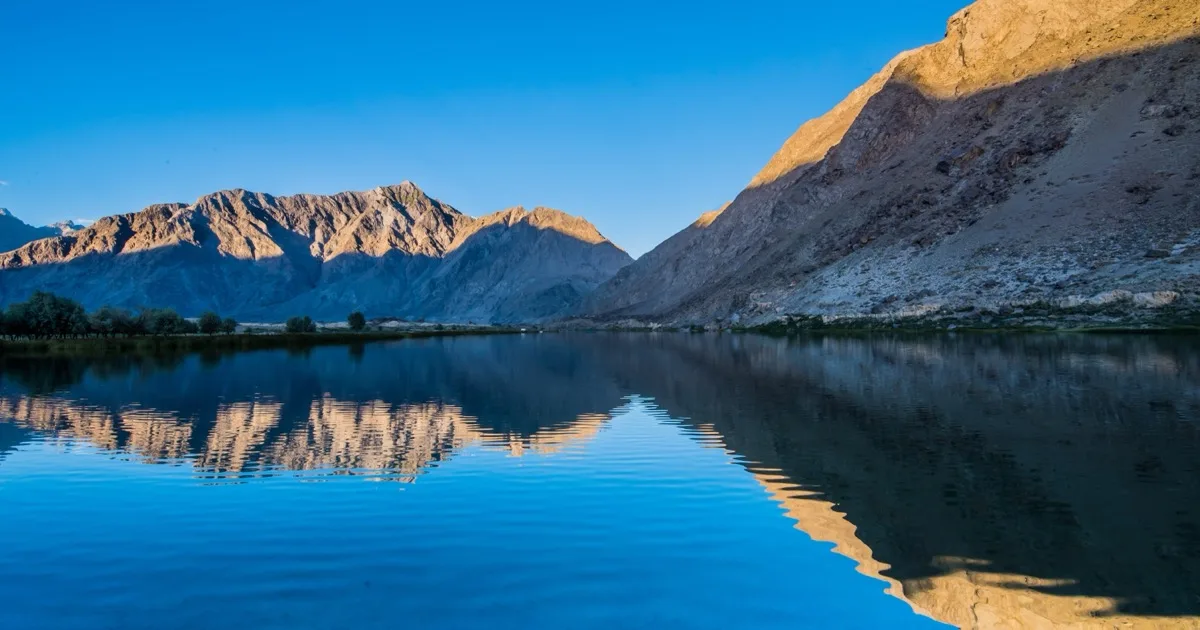
Blind Lake, known locally as Zharba Tso, lies beside the paved Skardu to Shigar road about 25 to 30 km from Skardu, roughly 40 minutes by car. It sits at around 2,500 m on the valley floor, not 4,100 m, and reaching the water takes a 10 to 20 minute walk, not a trek. There is no permit, no ticket office and no need for a 4x4 in dry weather.
Blind Lake is the easiest beautiful thing to reach in Skardu. That is the whole appeal, and it is also the part most guides get wrong. Search the name and you will be told the lake sits at 4,100 m, that the drive takes three hours, and that you will need a 4 to 5 hour trek to stand on the shore. None of that is true. You can leave your hotel in Skardu after breakfast, drive on tarmac, walk for a quarter of an hour and be at the water before the light goes hard.
We run this stretch of road constantly on the way to Shigar and the K2 approach, so this guide sticks to what the road and the lake are actually like.
Why it is called the Blind Lake
The Balti name is Zharba Tso. Tso means lake, a word Balti shares with Tibetan, and you will hear it all over Baltistan. The English name is the more interesting one.
The lake sits in a pocket of ground between two rivers. The Indus runs along one side, the Shigar comes down the other, and the two meet a short way downstream. Yet the lake has no stream flowing into it and none flowing out. Water arrives through the gravel, seeping up from the river bed beneath, and leaves the same way. A body of water with no visible entrance and no visible exit is a blind one, and that is the explanation you will get from anyone in Shigar.
A second version circulates online, that the lake is called blind because it stays hidden behind a ridge until you are standing on top of it. It reads well, but it does not survive the drive. The lake is plainly visible from the main road, which is how most people spot it in the first place.
The altitude problem
Several of the most widely shared Blind Lake guides publish an elevation of 4,100 m, or 13,450 ft. That figure is wrong by roughly 1,600 m, and it is worth correcting because it changes what you pack, what you hire and how long you think the day will take.
| Detail | Commonly published | What the sources actually show |
|---|---|---|
| Elevation | 4,100 m / 13,450 ft | About 2,500 m / 8,200 ft |
| Drive from Skardu | Up to 3 hours | 30 to 45 minutes, paved road |
| Walk to the shore | 4 to 5 hour trek | 10 to 20 minutes from the parking spur |
| Lake size | 2.5 km by 1 km | 1.4 km by 260 m |
| Vehicle | 4x4 essential | Any car in dry weather; clearance helps on the spur |
The 2,500 m figure comes from Wikipedia's list of Pakistani lakes, which puts Zharba at the same elevation as Upper and Lower Kachura. That is exactly what you would expect, because all three sit on the same valley floor. Skardu town itself is 2,230 m.
The 4,100 m number looks like it was borrowed from Sheosar Lake, which is 4,142 m and sits up on the Deosai plateau. Once one guide published it, the rest copied it.
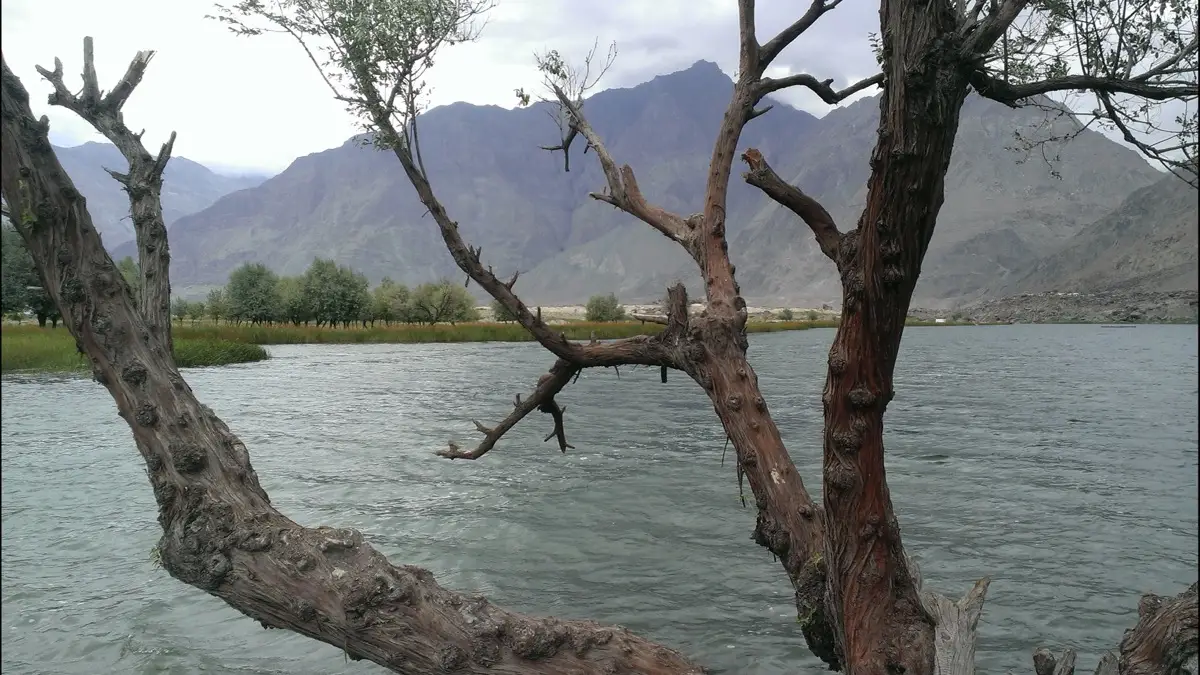
You can also settle the question by looking at the photographs. The shoreline is lined with willows and poplars, there is grazing pasture at the water's edge, and the surrounding ridges are bare brown rock with no permanent snow. Nothing at 4,100 m in the Karakoram looks like that. Trees stop growing well below it.
Where Blind Lake is
Blind Lake lies in Shigar District, Gilgit-Baltistan, at 35°21′44″N 75°41′54″E, on the left of the road as you drive from Skardu towards Shigar. It is about 1.4 km long and 260 m across at its widest, which makes it modest by Gilgit-Baltistan standards but large enough that the far end stays quiet even on a busy weekend.
It is the only lake in the Shigar valley, and the villages nearby use it as a water reservoir. The road it sits on is the same one used to reach Askole, the roadhead for the K2 and Concordia treks, so a good number of expedition groups pass within a few hundred metres of it without realising.
How to get to Blind Lake from Skardu
Leave Skardu on the Skardu to Shigar road heading north east. The surface is tarmac the whole way and the drive is genuinely pleasant, running along the Indus with the Karakoram opening up ahead.
| Leg | Distance | Time | Surface |
|---|---|---|---|
| Skardu city to the turn-off | 25 to 30 km | 30 to 45 min | Paved |
| Turn-off to parking area | Under 1 km | 3 to 5 min | Gravel and dirt spur |
| Parking to the shoreline | 500 m to 1 km | 10 to 20 min | Sand, rock and grass |
After roughly half an hour the lake appears on your left, close to where the Shigar river comes in. A short dirt track drops off the main road towards the water. Any saloon car manages it when the ground is dry. After rain or in early spring the spur softens and a vehicle with some ground clearance saves you a longer walk.
You will see a range of distances quoted online, some as high as 45 km and 90 minutes. Those are measuring to Shigar town, which is another 15 km or so past the lake. For the lake itself, plan on 40 minutes each way.
There is no public transport that drops you at the shore. A car with a driver from Skardu for a half-day round trip typically runs somewhere in the region of PKR 6,000 to 10,000 depending on the season and the vehicle, and rates move, so confirm before you set off. We fold the stop into the first morning of our Skardu tours because it costs almost nothing in driving time and it is a gentle way to start acclimatising.
The best time to visit
The lake is reachable year round, which is unusual for Gilgit-Baltistan and comes down to that low elevation. What changes is what you find when you arrive.
| Season | Months | What to expect |
|---|---|---|
| Spring | April to May | Fresh green on the shoreline, snow still on the higher ridges, few visitors. Blossom season in Skardu overlaps. |
| Summer | June to August | Warmest water and the busiest weekends. Boating runs. Haze can flatten the reflections at midday. |
| Autumn | September to October | Our pick. The poplars turn, the air clears, and the reflections are at their sharpest. |
| Winter | November to March | Partial freeze and a stark, empty landscape. A local winter festival is held in the cold months. |
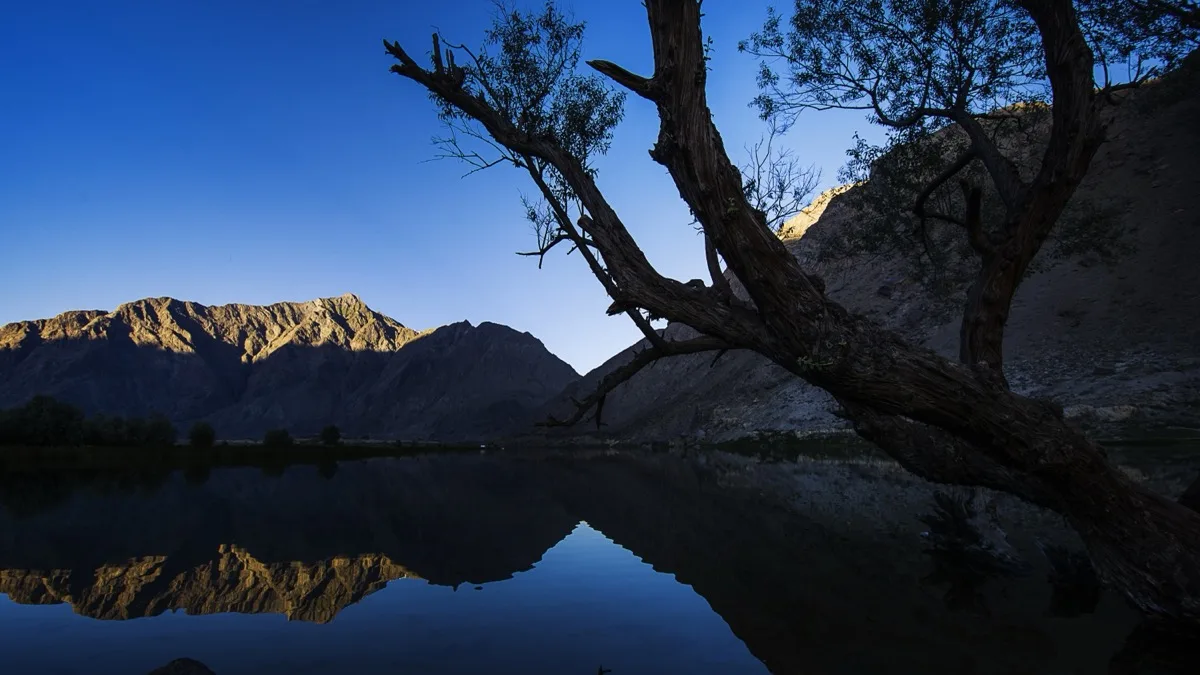
Whatever month you choose, the reflection is a morning and evening phenomenon. Wind picks up through the middle of the day and the surface breaks up. If the mirror image is the reason you are going, aim for the first two hours after sunrise or the last hour before sunset. For a fuller picture of how the seasons behave across the region, our guide to the best time to visit Skardu covers the whole valley.
What there is to do
Blind Lake is a two hour stop, not a destination you build a day around. Set your expectations there and it delivers.
Most people come to photograph it. The lake faces the ridge line, so when the water is calm you get the full mirror image that shows up in every picture of the place. Small local boats run in season, usually summer into early autumn, though it is an informal arrangement rather than a booking desk and availability depends on who is around that day. Trout are reported in the lake, but take local advice before fishing, since the water doubles as a village reservoir.
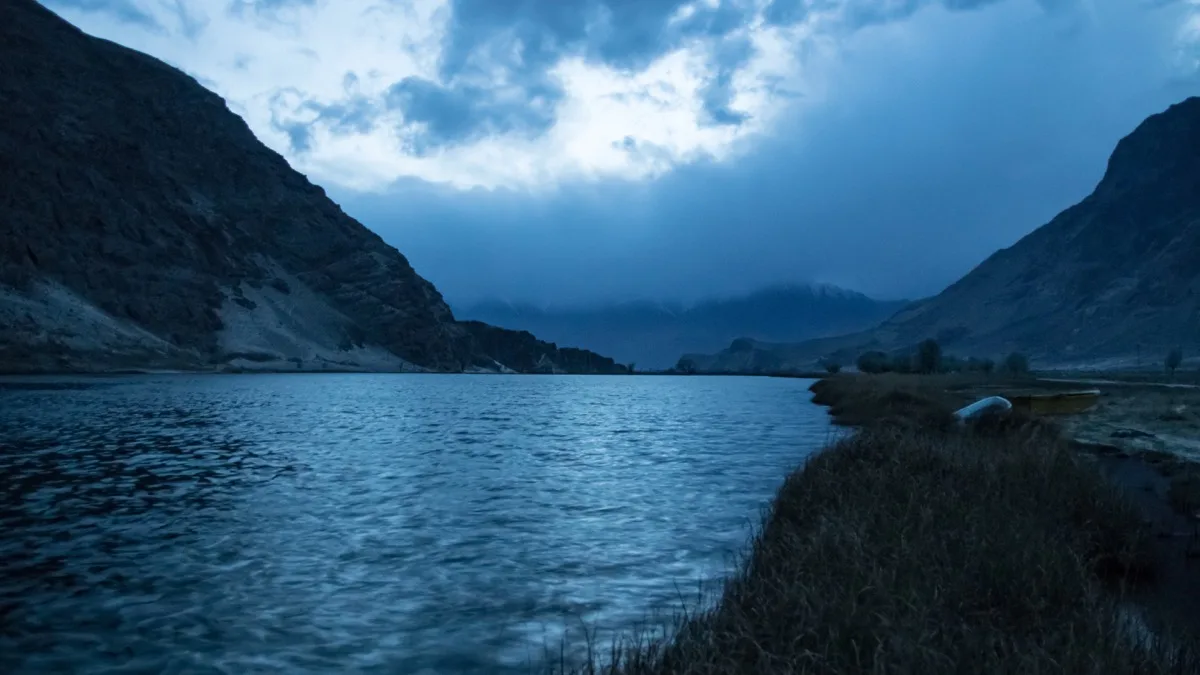
You can walk along much of the shoreline on flat ground, where sand and rock give way to grass near the water. People do camp on the bank above the lake. There are no pitches and nothing in the way of facilities, so you carry everything in and out again.
Fees, facilities and what to bring
There is no official entry ticket for Blind Lake and no permit requirement. Some visitors report a small informal parking or local charge in peak season, which is normal across Gilgit-Baltistan and usually amounts to very little. Foreign nationals do not need an NOC for Shigar district.
Facilities are thin and depend on the season. In summer you will usually find a few stalls selling snacks and drinks near the parking area, and basic toilets. Outside the main months, assume nothing is open. There is no hotel at the lake. The nearest proper accommodation is in Shigar town, 15 km on, where the restored 400 year old Shigar Fort operates as a heritage hotel, alongside simpler guesthouses.
Bring water, sun protection and something warm for early mornings. The valley floor is dry and the sun is strong at this latitude even when the air is cool.
What to combine it with
Because the stop is short and sits on the way to everything else in Shigar, it pairs naturally with a longer day.
- Sarfaranga Cold Desert, one of the highest cold deserts in the world, is a short distance further along the same road.
- Shigar Fort, a 400 year old Raja's residence restored by the Aga Khan Trust for Culture, now a hotel you can visit as a day guest.
- Amburik Mosque, a small wooden mosque in Shigar with Tibetan influenced architecture, thought to be around 700 years old.
- Askole road, if you are continuing towards the Baltoro. The lake is the last easy scenery before the road turns serious.
One clarification worth making, since the two get mixed up online. Blind Lake is not in Basho Valley. Basho is a separate destination reached from a different turn-off on the Jaglot to Skardu road, and it does need a jeep and a rough 10 km track. If a guide describes Blind Lake as a demanding 4x4 mission, it has probably confused the two.
Is it worth going?
For the effort involved, yes, comfortably. Forty minutes of tarmac and a short walk for a mirror lake between two rivers is an easy trade. Go in early morning or late afternoon, treat it as a stop rather than the day itself, and combine it with Sarfaranga or Shigar Fort.
What it is not is a wilderness experience or a high-altitude one. On a July weekend there will be other people there. Plan around that and you will enjoy it.
Common questions
Why is Blind Lake called blind?
Because it has no visible inlet or outlet. The lake sits between the Indus and Shigar rivers and is fed by water seeping through the gravel from below rather than by any stream, so no water can be seen entering or leaving it. The Indus runs along one side, the Shigar comes down the other, and the two meet a short way downstream. Water arrives up through the river gravels and drains away the same way, which is the explanation you will hear from anyone in Shigar. A second story online says the lake stays hidden behind a ridge until you are on top of it. That one does not hold up, since the lake is plainly visible from the main Skardu to Shigar road, which is how most people spot it. The Balti name is Zharba Tso, where tso means lake, a word Balti shares with Tibetan and one you will hear all over Baltistan.
What is the altitude of Blind Lake?
About 2,500 m, or 8,200 ft, the same elevation as the Kachura lakes near Skardu. The figure of 4,100 m published in several guides is incorrect and appears to have been confused with Sheosar Lake on the Deosai plateau, which is 4,142 m. Blind Lake sits on the Shigar valley floor, a little above Skardu town at 2,230 m. Wikipedia's list of Pakistani lakes gives Zharba the same height as Upper and Lower Kachura, which makes sense because all three share the valley floor. The photographs settle it too: willows and poplars line the shore, pasture runs to the water, and the ridges around it carry no permanent snow. Trees stop growing well below 4,100 m in the Karakoram. Getting the height right changes your planning. You do not need high-altitude kit, the drive is short, and the stop makes a gentle start to acclimatising on our Skardu tours.
How far is Blind Lake from Skardu?
About 25 to 30 km, which takes 30 to 45 minutes by car on a paved road. Longer figures of 45 km or 90 minutes are usually measuring to Shigar town, about 15 km beyond the lake. You leave Skardu heading north east on the Skardu to Shigar road, which runs along the Indus, and after roughly half an hour the lake appears on your left near where the Shigar river comes in. A dirt spur of under 1 km drops to the parking area, and from there it is a 10 to 20 minute walk of 500 m to 1 km to the shoreline. Plan on about 40 minutes each way. No public transport stops at the lake. A car and driver from Skardu for a half-day round trip typically costs somewhere around PKR 6,000 to 10,000, depending on season and vehicle, and rates move, so confirm before you set off.
Do you need a 4x4 to reach Blind Lake?
No. The Skardu to Shigar road is paved the whole way and the dirt spur down to the parking area is short. Any car manages it in dry conditions, though ground clearance helps after rain or in early spring. The spur is a gravel and dirt track of under 1 km that takes three to five minutes to drive. When it softens after rain, a vehicle with more clearance can get you closer and save a longer walk to the water. Guides describing Blind Lake as a demanding 4x4 trip have usually mixed it up with Basho Valley, which sits off a different turn-off and needs a jeep on a rough track of about 10 km. You will also read that the drive takes up to three hours and ends with a four to five hour trek. Neither is true. From the parking area the shore is a 10 to 20 minute walk over sand, rock and grass.
Is there an entry fee for Blind Lake?
There is no official ticket or permit. A small informal parking charge is sometimes collected in peak season. Foreign visitors do not need an NOC for Shigar district. Local charges like this are normal across Gilgit-Baltistan and usually amount to very little. Facilities are thin and seasonal. In summer you will usually find a few stalls selling snacks and drinks near the parking area, plus basic toilets, but outside the main months assume nothing is open. There is no hotel at the lake itself. The nearest proper accommodation is in Shigar town, 15 km further on, where the restored Shigar Fort runs as a heritage hotel alongside simpler guesthouses. Boating is an informal local arrangement, mostly from summer into early autumn, and depends on who is around that day. Bring water, sun protection and a warm layer, because the sun is strong even when the morning air is cool.
When is the best time to visit Blind Lake?
May to October for warm weather and boating, with late September and October the best window for clear air and sharp reflections. The lake is accessible year round and partially freezes in winter. Reflections are best in the first hours after sunrise and the last hour before sunset, before and after the daytime wind. In April and May the shoreline turns green, snow still sits on the higher ridges and few people visit. June to August brings the warmest water and the busiest weekends, though midday haze can flatten the mirror image. Autumn is our pick: the poplars turn and the air clears. From November to March the landscape is stark and empty, and a local winter festival is held in the cold months. The low elevation of around 2,500 m is why the lake stays reachable in winter, which is unusual for Gilgit-Baltistan.
Is Blind Lake the same as Basho Valley?
No. Blind Lake is in Shigar district on the paved Skardu to Shigar road. Basho Valley is reached from a different turn-off and requires a jeep on a rough track of about 10 km. Several online guides confuse the two, which is where descriptions of Blind Lake as a hard 4x4 trip come from. The Basho turn-off is on the Jaglot to Skardu road, while Blind Lake sits beside the road from Skardu towards Shigar, about 25 to 30 km out of town. The lake is the only one in the Shigar valley, roughly 1.4 km long and 260 m across, and nearby villages use it as a water reservoir. Reaching it takes a short drive on tarmac and a walk of 10 to 20 minutes from the parking area. If a write-up talks about rough jeep tracks and long hikes, check which place it actually describes before you plan your day around it.
Can you camp at Blind Lake?
Yes, on the grass above the shoreline, but there are no pitches, hook-ups or facilities of any kind. You carry everything in and take everything out. Most visitors treat it as a day stop and stay in Skardu or Shigar town. People do pitch tents on the bank, and the flat ground along much of the shore makes that easy enough. In summer a few stalls and basic toilets operate near the parking area, but outside the main months you should assume nothing is open. Bring water, food and warm layers, as early mornings are cool even when the days are hot. The lake doubles as a village water reservoir, so leave nothing behind. If you would rather sleep in a bed, Shigar town is 15 km on, with the restored 400 year old Shigar Fort operating as a heritage hotel and simpler guesthouses nearby. Skardu is about 40 minutes back down the road.
Ready for Your Next Adventure?
Join our community of explorers and discover the journey of a lifetime. Our expert team is ready to help you plan your perfect expedition.