20 Best Places to Visit in Skardu, from Shangri-La to Deosai
Lakes, forts, cold deserts and high valleys around Skardu, with real drive times, altitudes and the order to see them in.
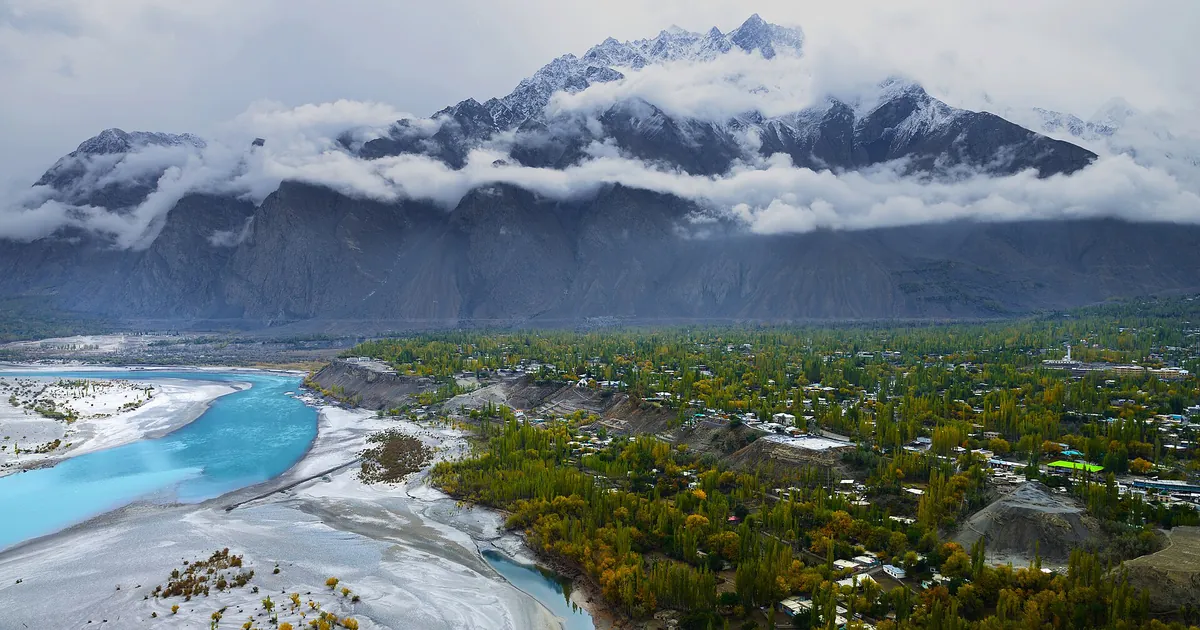
Skardu is the capital of Baltistan, a town of about 2,230 m on the Indus, ringed by the Karakoram and the western Himalaya. It is also the base for some of the best sightseeing in Pakistan: two lakes you can see from your hotel window, a 16th-century fort above town, dunes at 2,300 m, Buddhist carvings, heritage palaces and the second-highest plateau on earth.
Most lists of Skardu tourist places stop at a name and a photo. This one gives you the drive time, the altitude and the season for each place, then groups them into day trips so you can plan a real itinerary. We run trips here every season, so the distances and timings come from the road, not from a map.
Skardu places to visit at a glance
| Place | From Skardu | Altitude | Best for |
|---|---|---|---|
| Shangri-La and Lower Kachura | 20 to 30 min | About 2,500 m | Boating, the resort |
| Upper Kachura Lake | 25 to 35 min | About 2,500 m | Clear water, trout |
| Kharpocho Fort | In town | Above town | Sunset over the Indus |
| Manthal Buddha Rock | 10 min | Town level | 8th-century carvings |
| Satpara Lake | 20 min (9 km) | About 2,600 m | Turquoise water |
| Katpana Cold Desert | 15 min | About 2,226 m | A quick dunes visit |
| Sarfaranga Cold Desert | 30 min (20 km) | About 2,300 m | Open dunes, October rally |
| Blind Lake | 40 min | Valley floor | Evening reflections |
| Shigar Fort and Amburik Mosque | 30 to 60 min | Shigar valley | Heritage, a night in a fort |
| Deosai and Sheosar Lake | 2 to 3 hours | 4,114 to 4,142 m | Bears, wildflowers (Jul to early Sep) |
| Basho Valley | About 2 hours | Forested valley | Camping |
| Chunda Valley | 30 to 45 min | Village valley | April blossom |
| Manthokha Waterfall | About 2.5 hours (80 km) | Kharmang valley | A 55 m waterfall |
| Khaplu Palace and Chaqchan Mosque | 2.5 to 3 hours (103 km) | Ghanche | Heritage stay |
| Hushe, Thalle, Barah Broq | 2.5 hours and more | 3,000 to 4,300 m | Karakoram views, treks |
1. Shangri-La Resort and Lower Kachura Lake
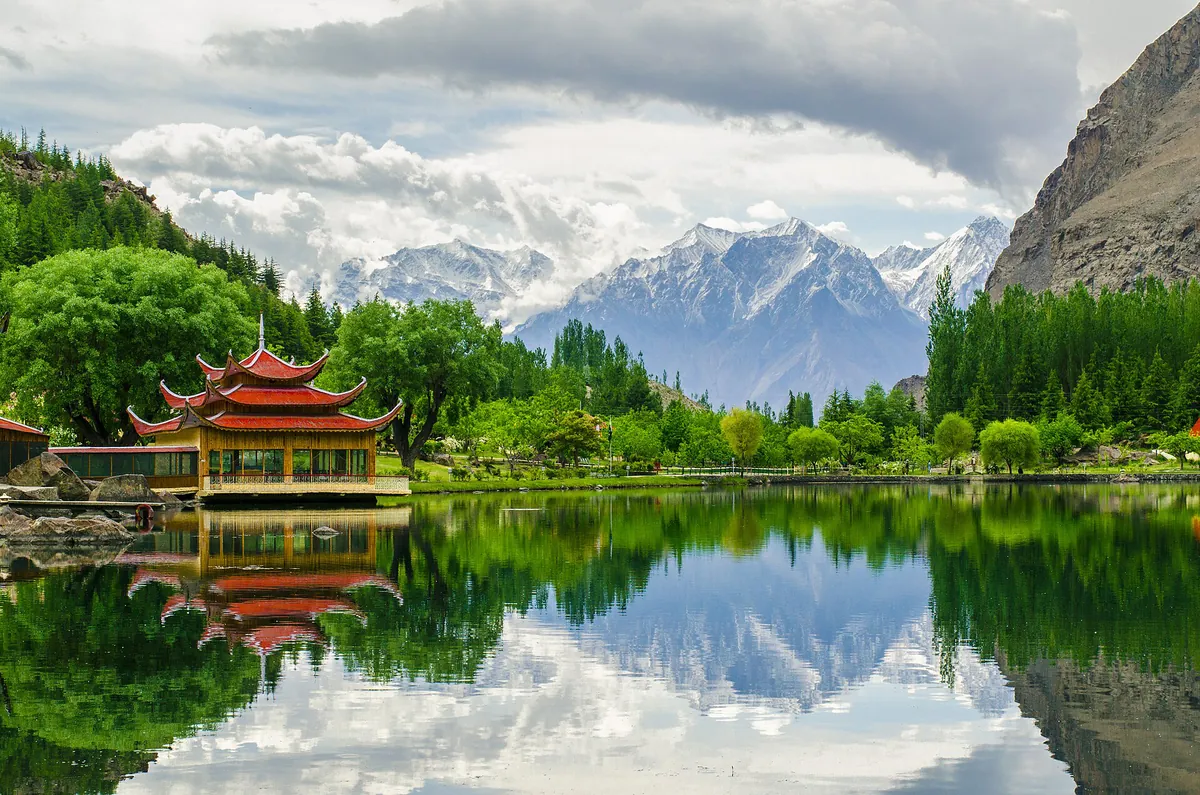
The picture everyone has seen of Skardu is this one: red pagoda roofs, a still green lake and a wall of mountains behind. The Shangri-La Resort opened on the shore of Lower Kachura Lake in 1983, about 20 to 30 minutes from Skardu at roughly 2,500 m. You can walk the gardens and take a boat out even if you are not staying, and one of its restaurants sits inside the fuselage of an aircraft that crashed nearby. Come early in the morning, before the day-trippers, when the lake is flat enough to hold the reflection.
2. Upper Kachura Lake
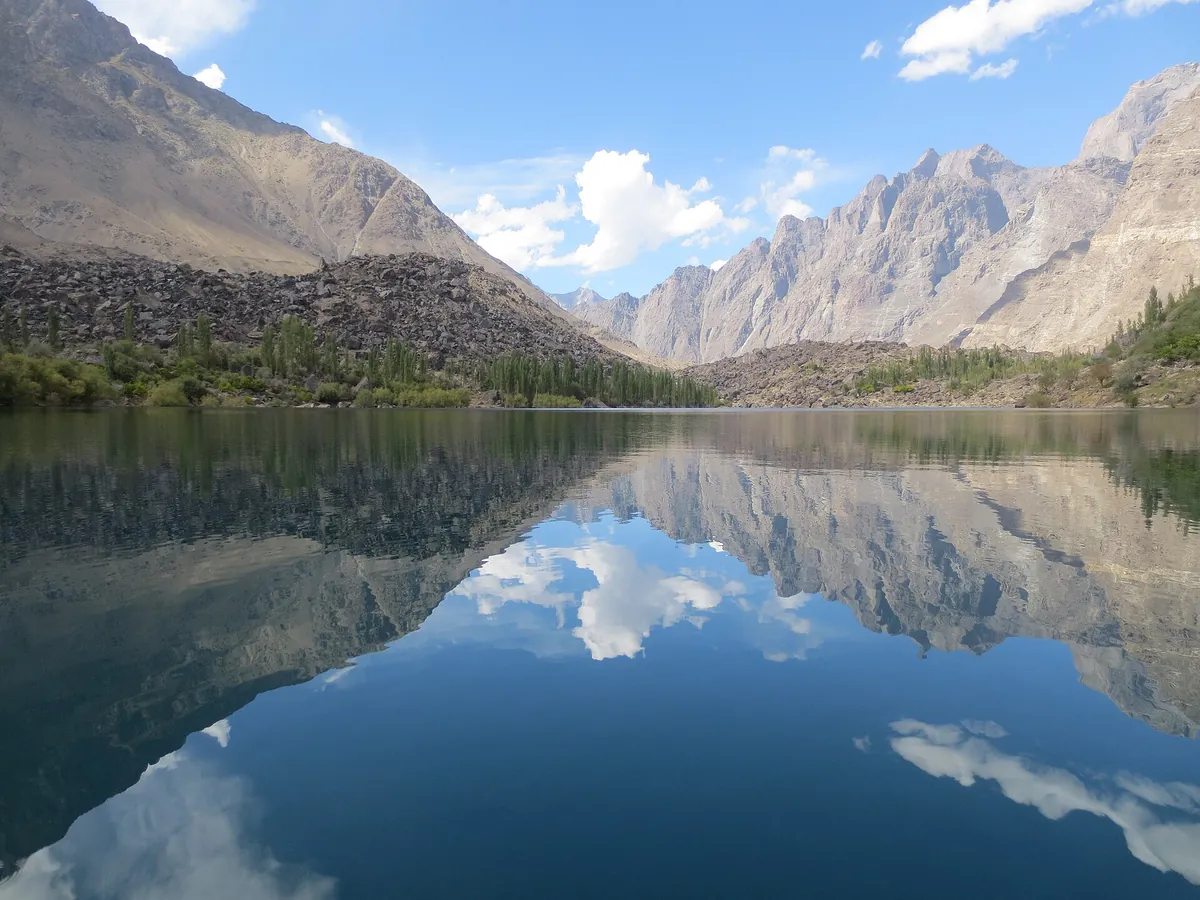
A few minutes above Shangri-La, Upper Kachura is the deeper, clearer and quieter twin, about 70 m deep at the same height of around 2,500 m. There is no resort on the shore, just a few cafés, a short path down to the water and boats for hire. People fish for trout here, and in October the poplars around the edge turn gold. If you only have time for one of the Kachura lakes, many travellers prefer this one.
3. Kharpocho Fort
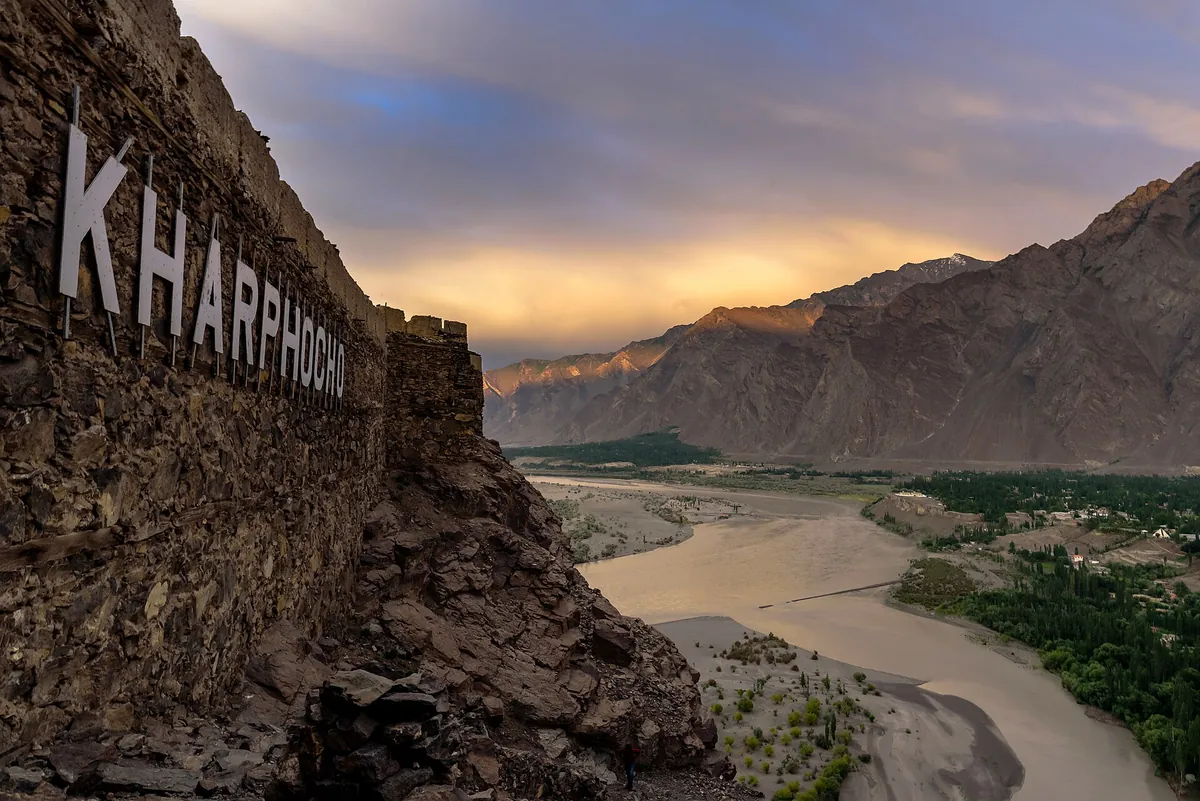
Kharpocho, the "king of forts" in Balti, sits on a rock spur directly above Skardu town. It dates from the late 16th century under the Maqpon ruler Ali Sher Khan Anchan and has never been restored, so what you walk into is a ruin with a view. That view is the reason to go: the Indus splitting into braided channels across the valley floor, the airport, the cold desert and the whole town below. Go in the late afternoon and stay for the sunset. It is free, and the path up is steep but short.
4. Manthal Buddha Rock
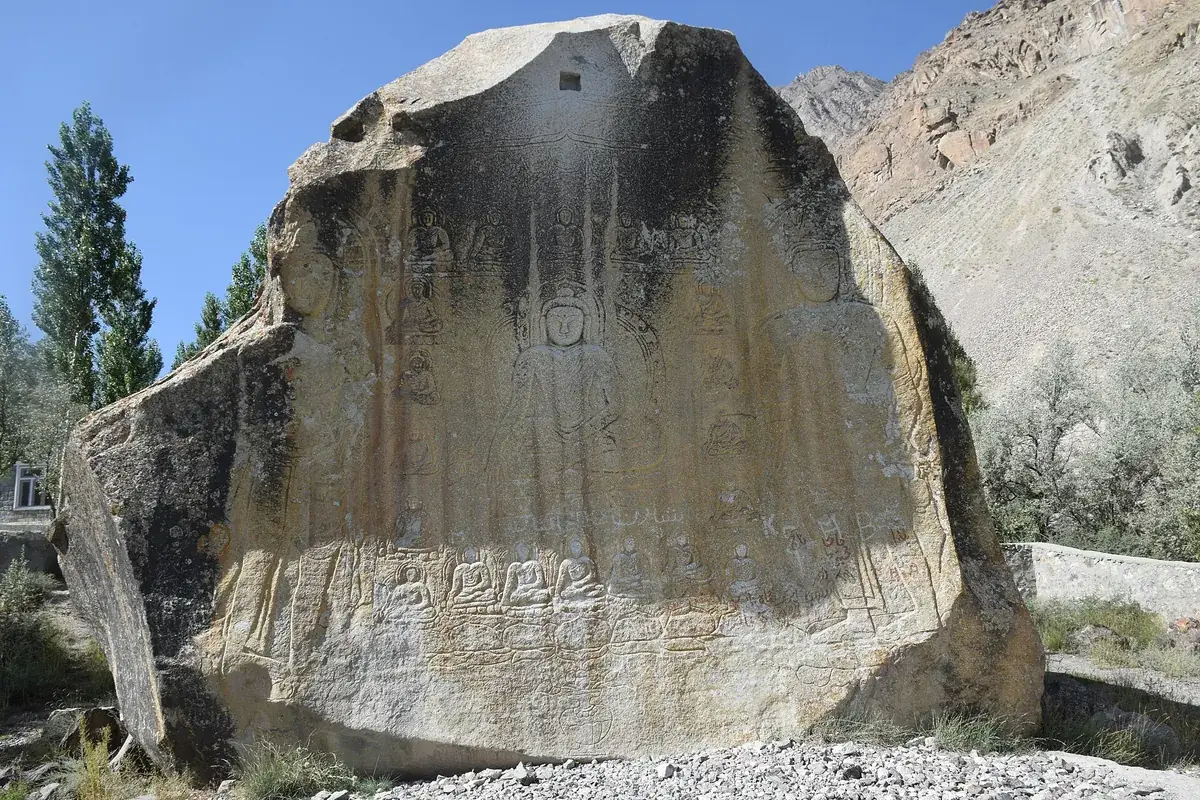
On the edge of Skardu, on the road up towards Satpara, a single granite boulder carries 8th-century Buddhist carvings: a seated Buddha surrounded by smaller figures, from the centuries when Baltistan was part of the Tibetan cultural world. It takes twenty minutes to see, and it is the best reminder in the valley that "Little Tibet" is not just a nickname. Pair it with Satpara Lake on the same short drive.
5. Satpara Lake
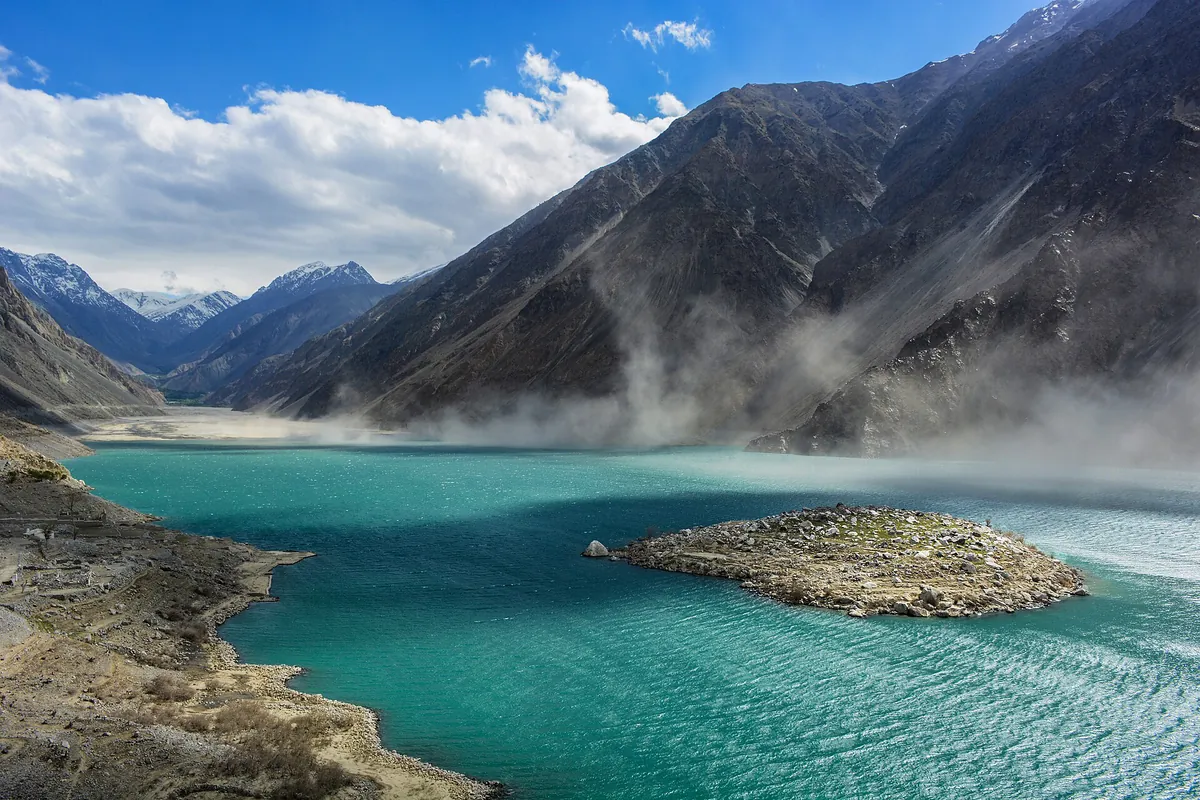
About 9 km south of Skardu, Satpara Lake sits in a bowl of bare mountains at roughly 2,600 m, and the Satpara Dam downstream has made it bigger than it used to be. The colour changes with the light, from milky green to deep turquoise. It is on the road to Deosai, so most people stop here on the way up to the plateau; on its own it is an easy half-day with the Manthal Buddha Rock.
6. Katpana Cold Desert
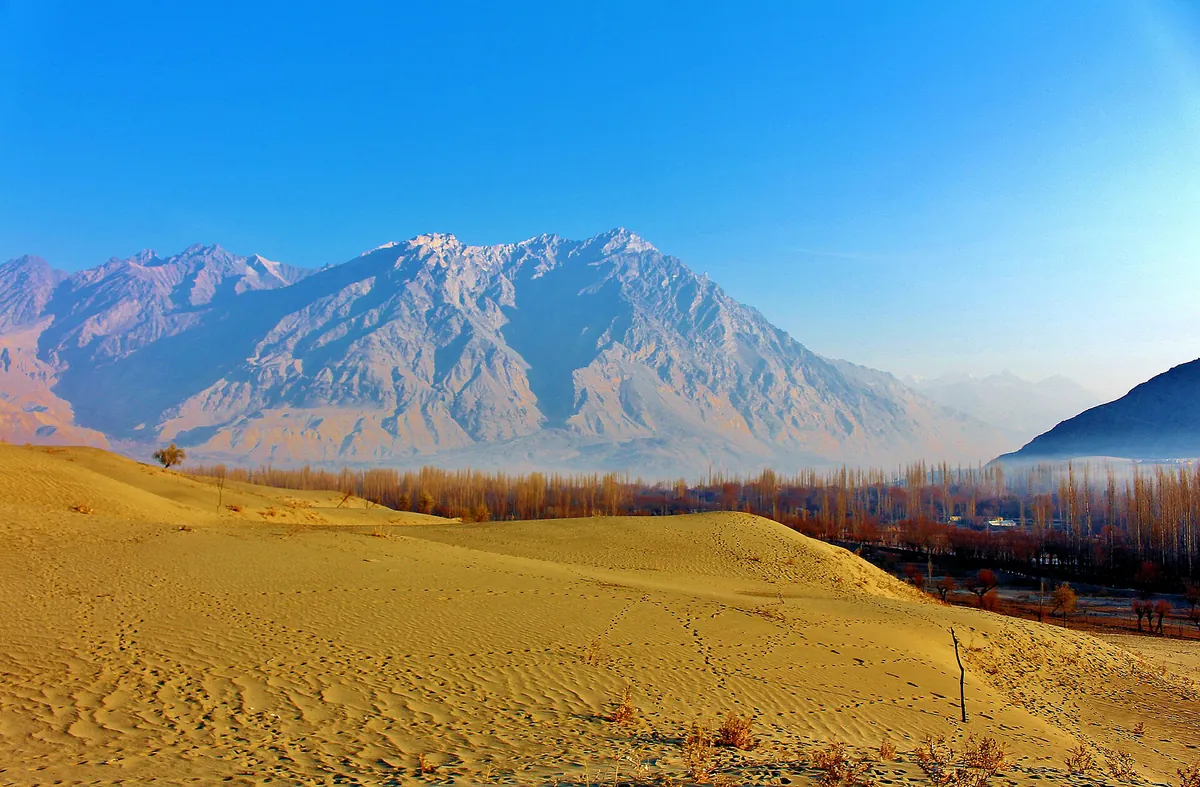
Sand dunes at about 2,226 m, a few minutes from Skardu airport. Katpana is the smaller of Skardu's two cold deserts, on the south bank of the Indus beside Katpana Lake, and it is the quick one to see if you only have an hour. Winter brings snow onto the dunes, which is a strange and lovely sight. There are jeep rides and a few glamping sites on the edge. Late afternoon light is the best time for photographs.
7. Sarfaranga Cold Desert
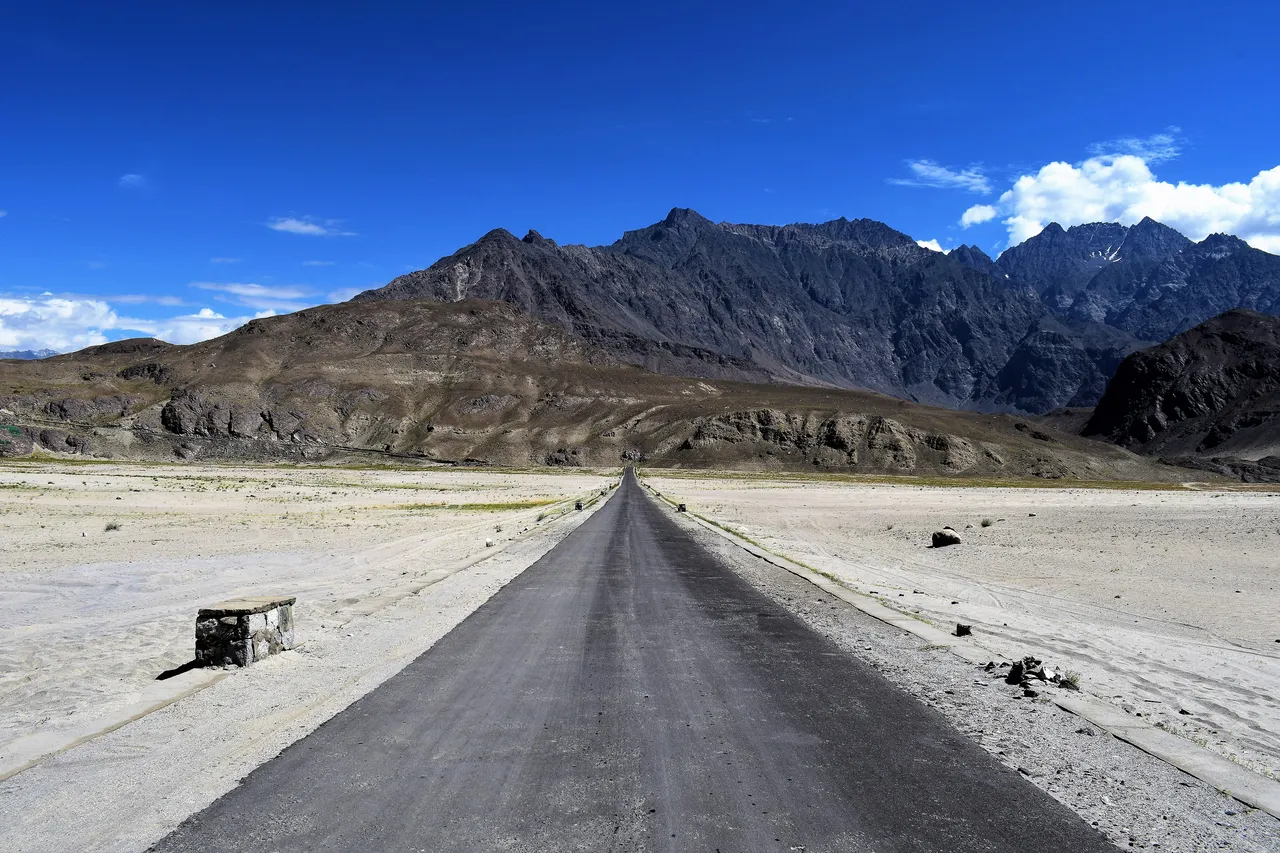
Across the Indus on the Shigar road, Sarfaranga is the bigger, emptier desert, at about 2,300 m and roughly 20 km from Skardu. The road runs straight across pale dunes with brown mountains on every side, and every October it hosts the Sarfaranga Cold Desert Jeep Rally. You will pass through it on the way to Shigar anyway. Our Sarfaranga travel guide explains how it differs from Katpana.
8. Blind Lake (Zharba Tso)
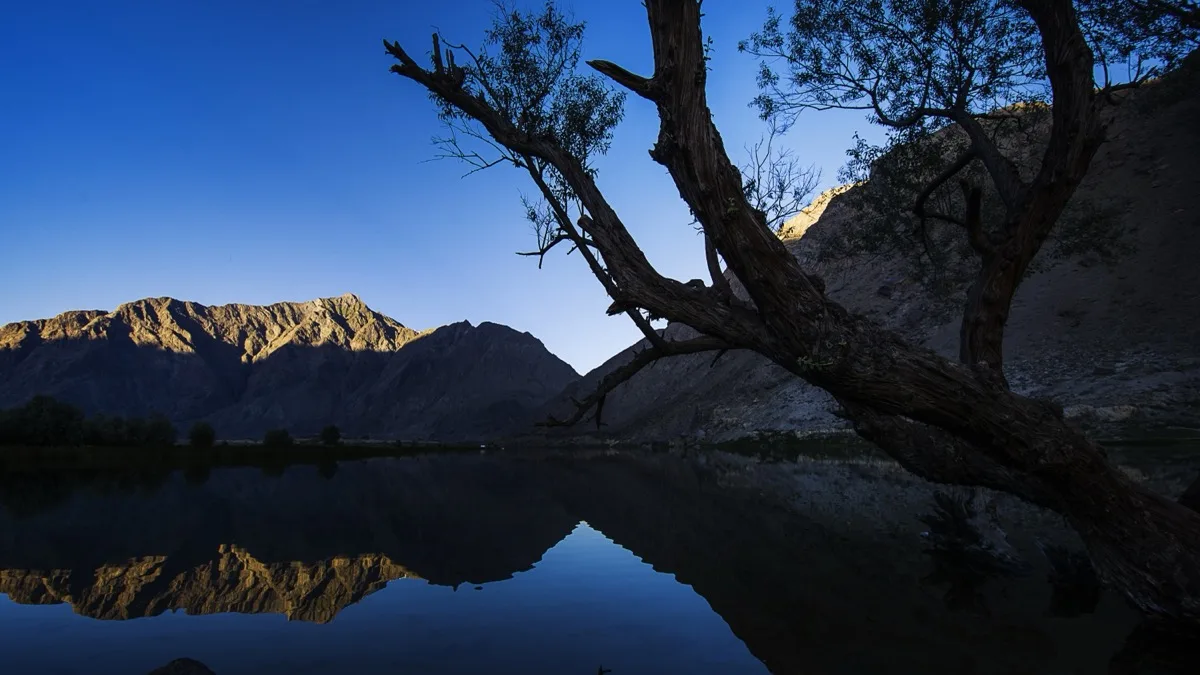
Blind Lake, Zharba Tso in Balti, lies beside the paved Skardu to Shigar road about 25 to 30 km out of town, roughly 40 minutes by car. It is small, quiet and ringed by willows, and in the last hour of the day the wind drops and the ridge above it turns into a perfect reflection. Ignore guides that put it at 4,100 m; that is Sheosar Lake's altitude, and Blind Lake sits on the valley floor. Our Blind Lake guide has the details.
9. Shigar Fort
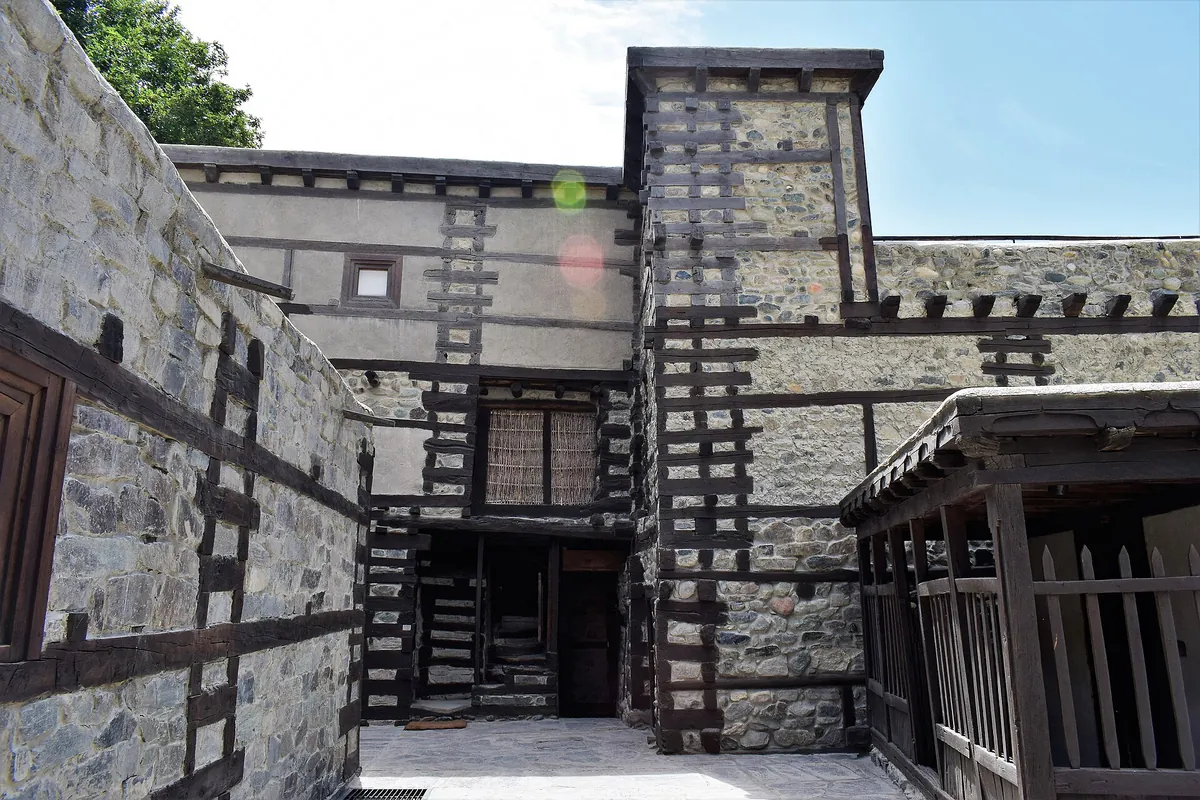
Shigar Fort, the Fong Khar or "palace on the rock", was built by the Amacha rajas in the 17th century and restored by the Aga Khan Trust for Culture, a project completed by 2008. Today it is a 20-room heritage hotel with the old core kept as a museum, set among apricot orchards in the Shigar valley, about 30 to 60 minutes from Skardu. Look at the walls: timber laced through the stone so the building flexes in an earthquake. A night here is one of the best stays in Baltistan. Read more in our guide to the forts of Gilgit-Baltistan.
10. Amburik Mosque, Shigar
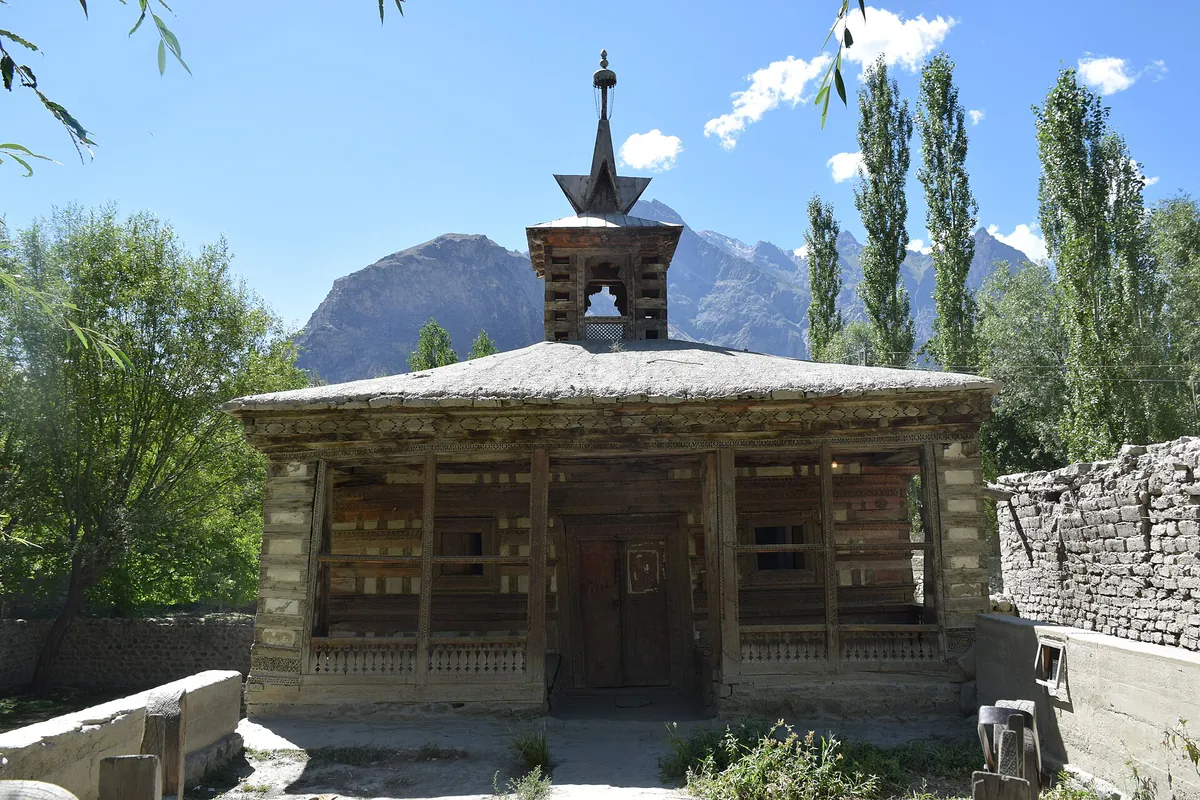
A few minutes' walk from Shigar Fort, the Amburik Mosque is a small timber and stone building with a tiered wooden spire, thought to be around 700 years old. Its carving and roofline show the Tibetan and Kashmiri influences that run through old Baltistan architecture. It is still a place of worship, so dress modestly and ask before you go in. Combine it with Shigar Fort, Blind Lake and Sarfaranga for one easy day.
11. Deosai National Park
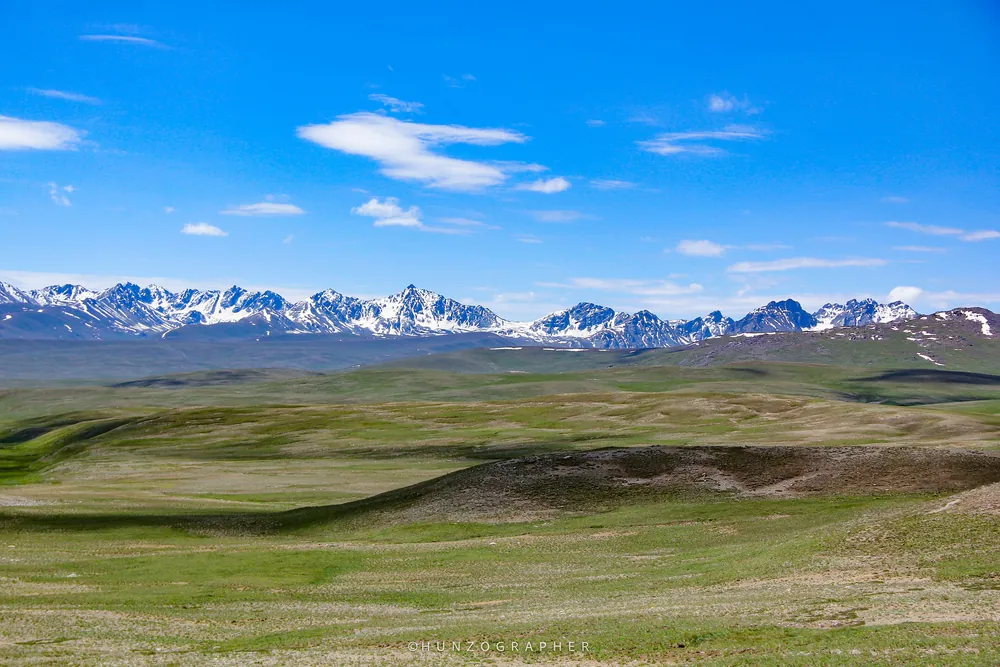
Deosai is a high alpine plateau at an average of 4,114 m, the second-highest in the world after Tibet, and a national park since 1993 to protect the Himalayan brown bear. It is open only in summer, roughly early July to early September, when the grass comes alive with wildflowers. From Skardu it is about 2 to 3 hours by 4x4 past Satpara to Bara Pani. Our Deosai National Park guide covers costs and routes, and our Deosai jeep tour handles the vehicle, permit and camp.
12. Sheosar Lake
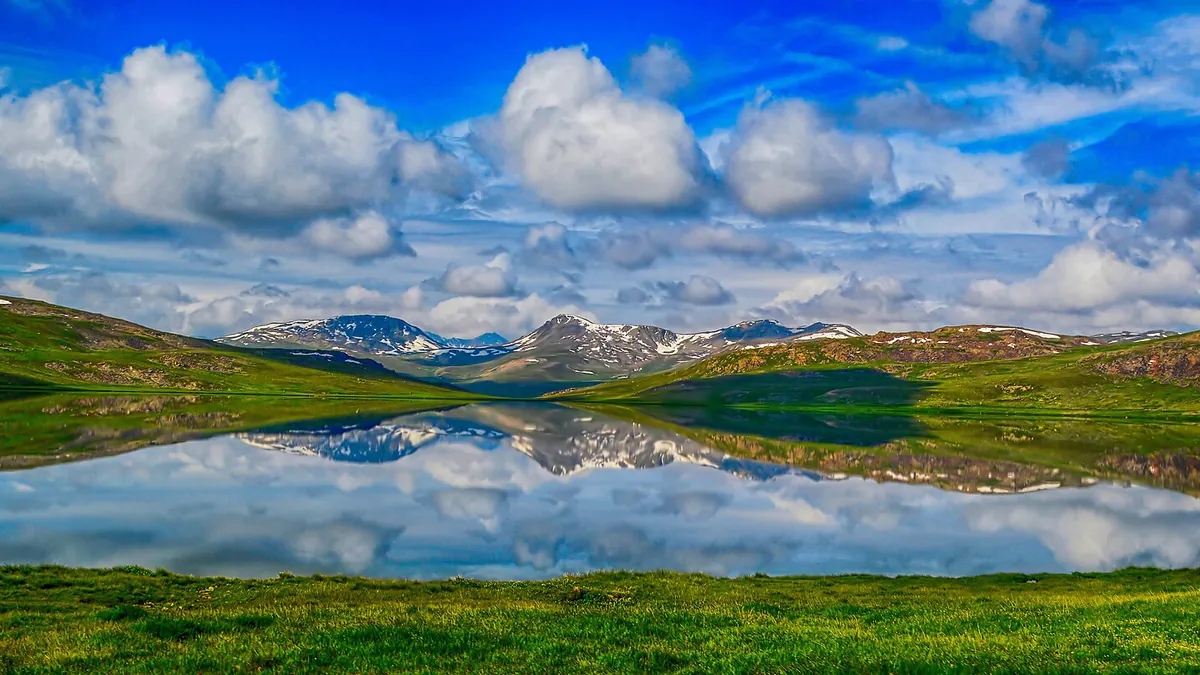
At 4,142 m on the Astore side of Deosai, Sheosar Lake is the jewel of the plateau: a deep blue lake ringed by wildflower meadows, with snow still on the hills in July. It is a long day from Skardu, so most people either camp on the plateau or cross Deosai and continue to Astore. Bring a warm layer even in August, because the weather turns fast up here.
13. Basho Valley
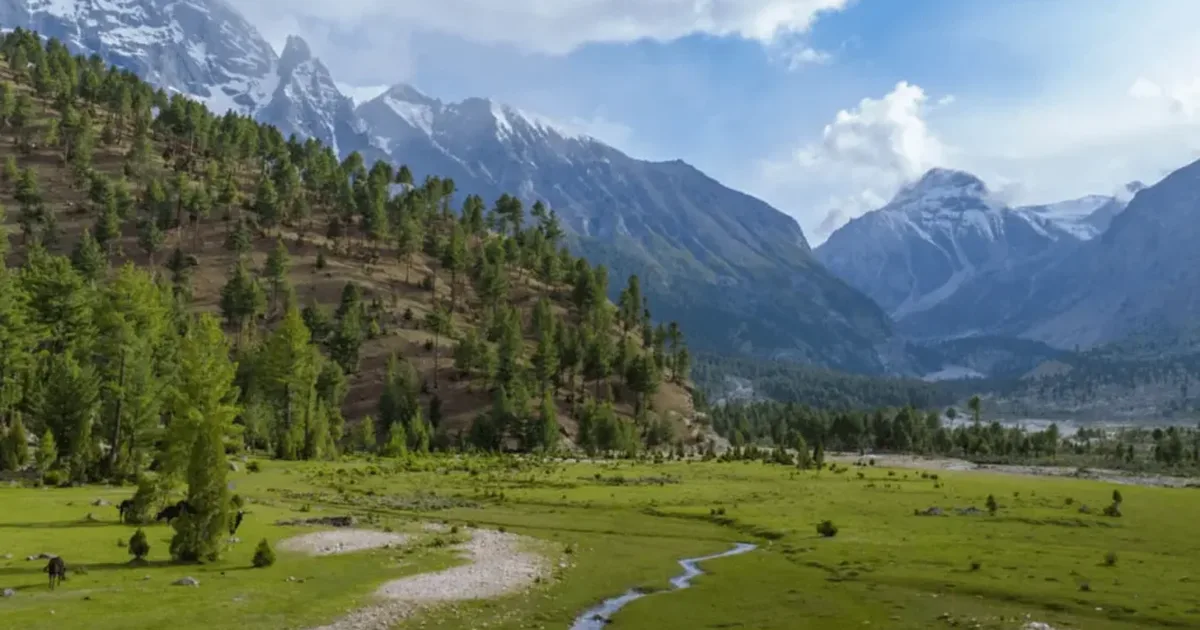
Basho is a forested valley about 40 km from Skardu in the Roundu area, reached by a turn-off from the Skardu to Jaglot road and then a rough jeep track of around 10 km. After the dry browns of the Indus, the pine forest and meadows feel like another country. It is a favourite for an overnight camp. Allow about 2 hours each way. Our Basho Valley guide has the full route.
14. Chunda Valley
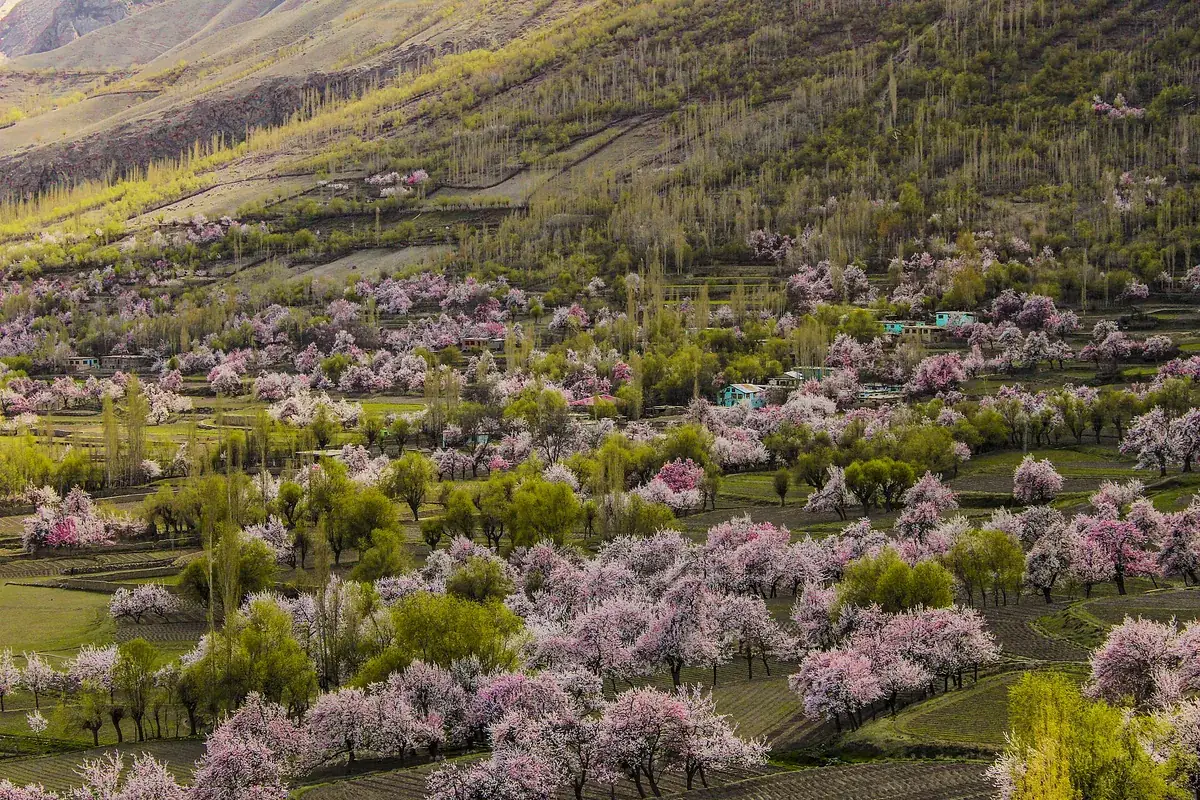
Most of the year Chunda is a pleasant green village valley 30 to 45 minutes from Skardu. In spring it is something else: in the first two weeks of April the terraces fill with pink and white apricot blossom and families come up from town to picnic under the trees. If you are planning a spring trip, read our Skardu blossom guide to time it.
15. Manthokha Waterfall
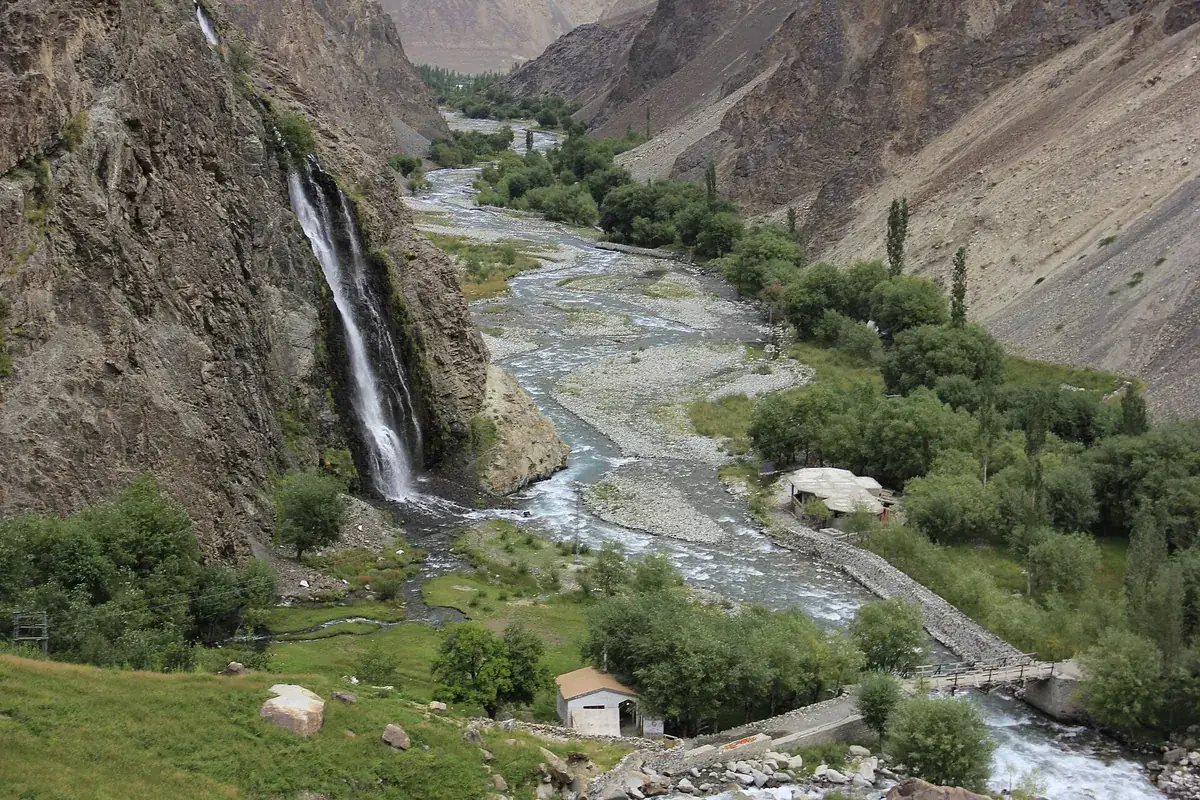
In the Kharmang valley, about 80 km from Skardu, the Manthokha Waterfall drops around 55 m (180 ft) down a rock face into a green valley. It is a long half-day or an easy full day, about 2.5 hours each way, with the road following the Indus east. On a hot summer afternoon the spray is the coolest place in Baltistan, and there are small cafés where you can eat trout by the falls.
16. Khaplu Palace
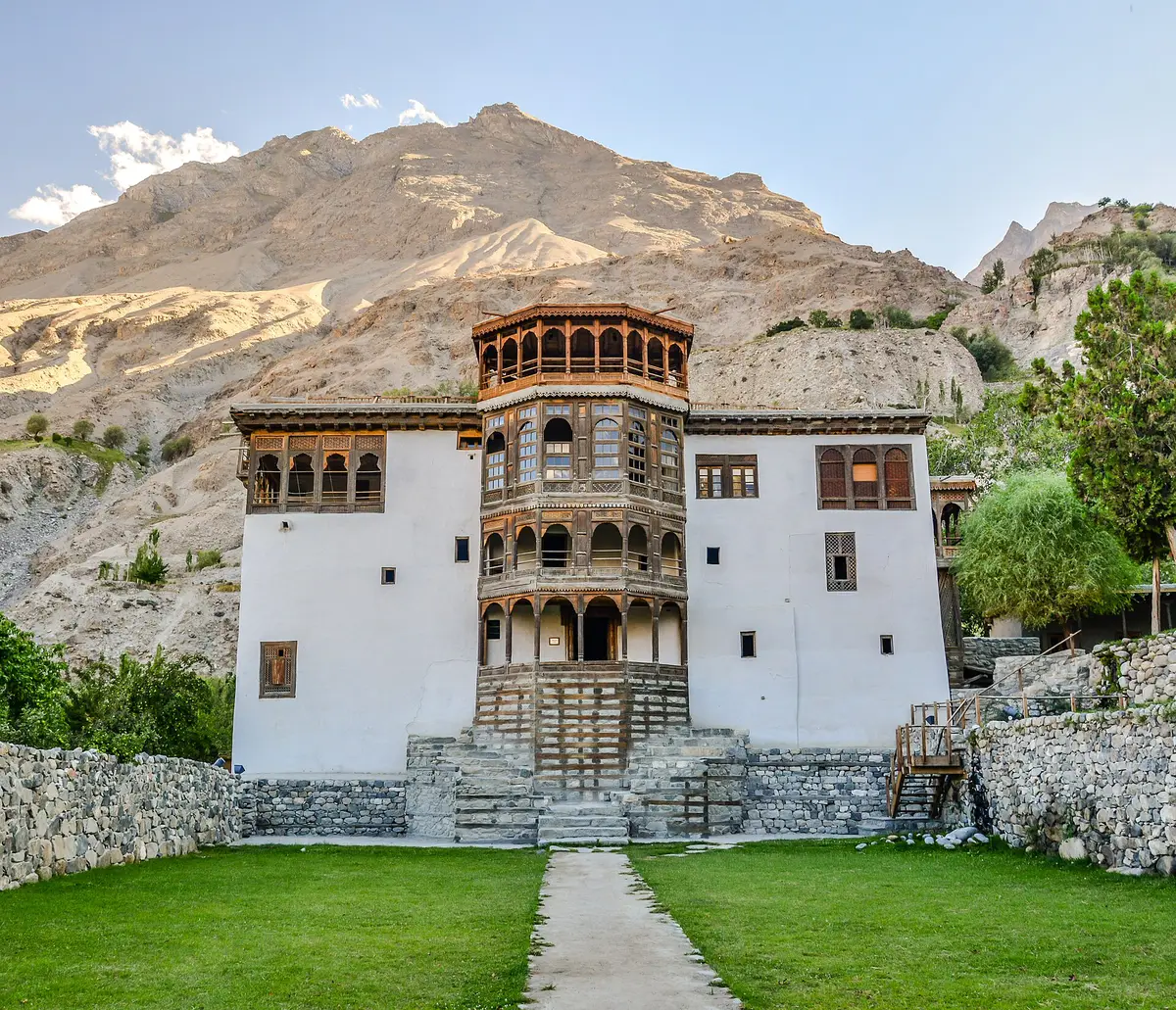
Khaplu Palace was built in 1840 by the Yabgo Raja Daulat Ali Khan, 103 km east of Skardu in the Ghanche district, and restored as a 21-room heritage hotel. The four tiers of carved timber on its front are some of the finest woodwork in Pakistan. The drive along the Shyok takes about 2.5 to 3 hours, which is why many travellers stay a night rather than rush back.
17. Chaqchan Mosque, Khaplu
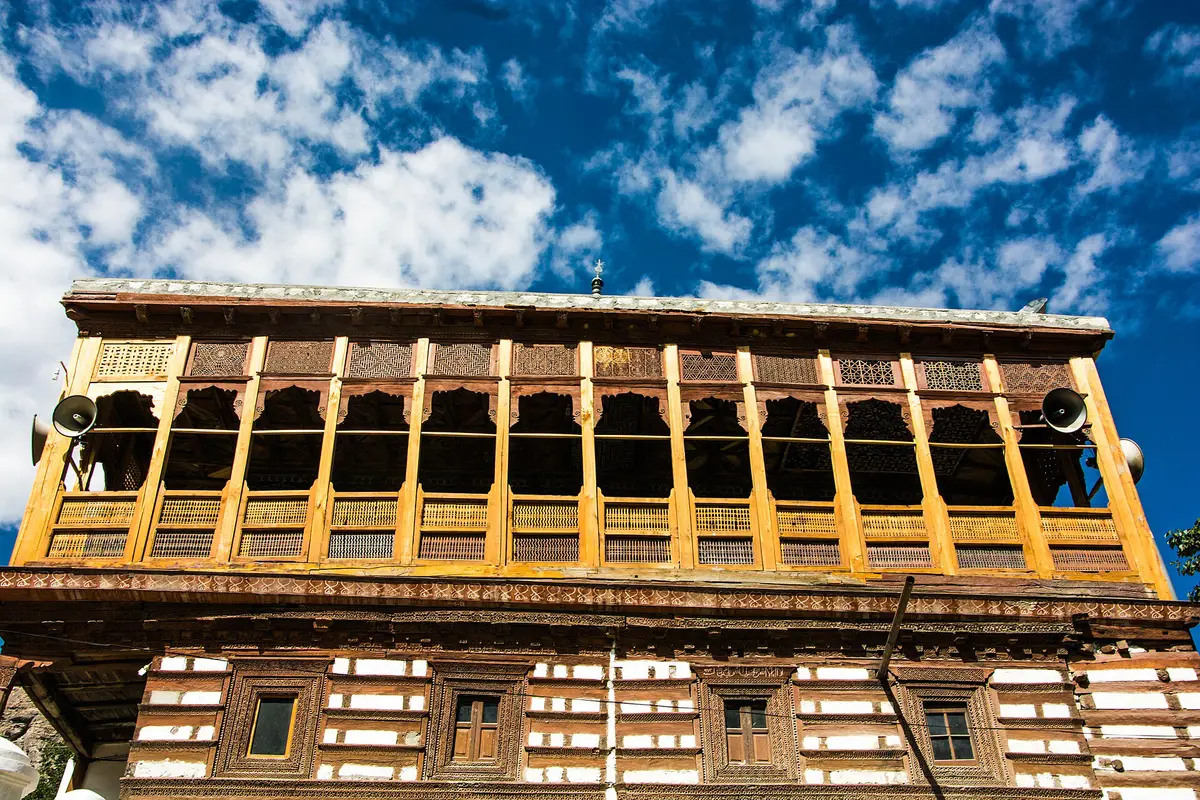
Also in Khaplu, the Chaqchan Mosque dates to 1370 and is attributed to the Persian scholar Mir Sayyid Ali Hamadani. It is one of the oldest mosques in Gilgit-Baltistan, and its upper gallery mixes Tibetan framing, Kashmiri carving and Persian pattern. See it on the same day as Khaplu Palace.
18. Hushe Valley
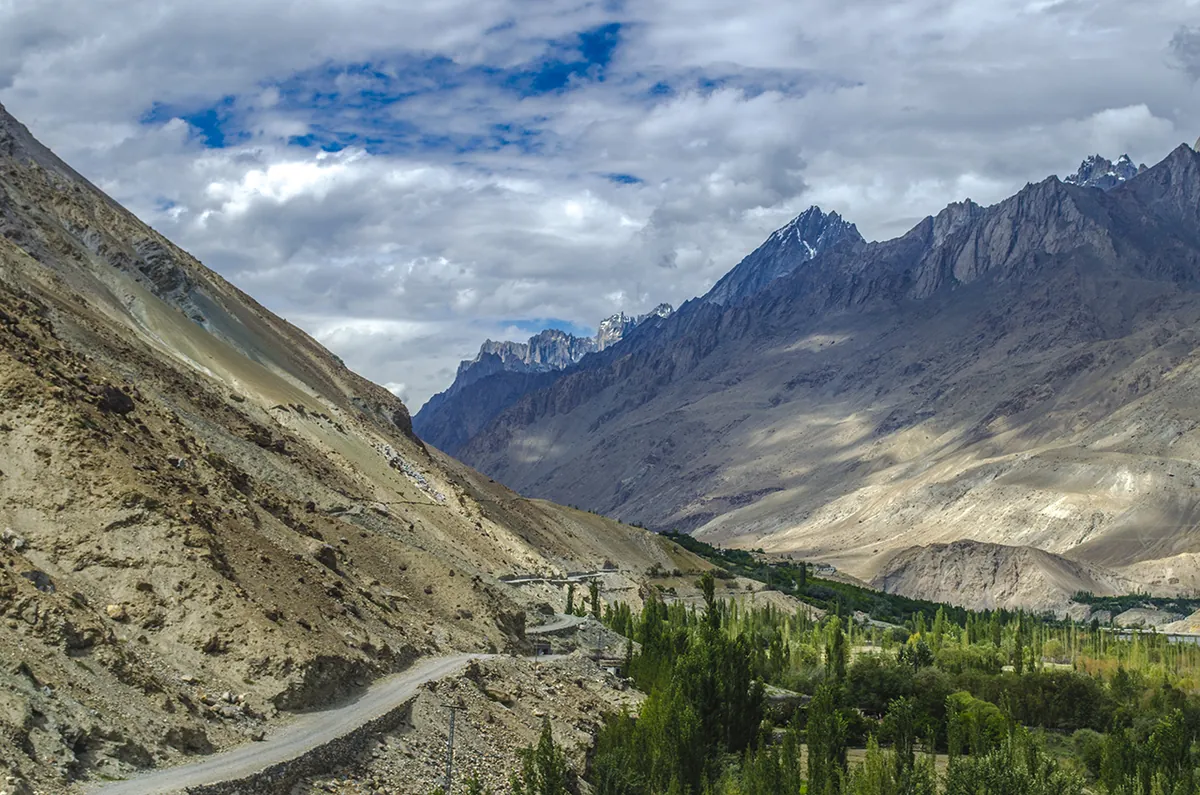
Beyond Khaplu the road narrows and climbs into Hushe, the last village under Masherbrum at around 3,000 m. Climbers and trekkers come here for the approach to the K6 and K7 base camps and the far side of the Gondogoro La, but the drive alone is worth it for anyone who wants to see the Karakoram up close without walking for a week. Hushe Valley is on NADRA's official list of treks, so if you plan to trek here, apply for the trekking visa rather than a tourist visa.
19. Barah Broq, the short K2 viewpoint
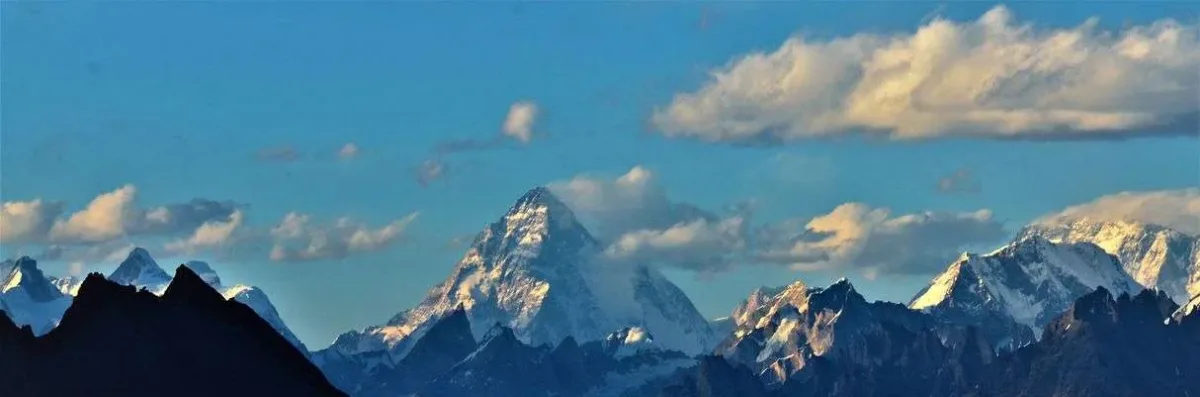
You do not need three weeks on the Baltoro to see K2. Barah Broq is a short 4-day walk up the Barah valley, a couple of hours by jeep from Skardu, to a plateau of lakes at about 4,300 m, with an optional dawn climb that opens onto K2 and the Karakoram giants. It is the most accessible K2 view in Pakistan. Our Barah Broq trek guide has the day-by-day plan.
20. Thalle Valley

The Thalle valley runs north-west off the Shyok, about 85 km east of Skardu and 15 km short of Khaplu: barley fields, poplars, stone walls and almost no other visitors. A jeep road climbs about two hours to Thalle Broq at around 3,200 m, the start of the 3-day Thalle La trek over a 4,572 m pass into the Shigar valley, one of the easiest Karakoram crossings there is.
How to see Skardu in 4 or 5 days
The places above fall naturally into day trips. This is the order we usually run them in:
- Day 1: Shangri-La and Upper Kachura in the morning, Kharpocho Fort for sunset.
- Day 2: the Shigar day: Sarfaranga, Blind Lake, Shigar Fort and the Amburik Mosque, ideally with a night at the fort.
- Day 3: Satpara Lake and the Manthal Buddha Rock, then Katpana in the late afternoon light.
- Day 4: Deosai and Sheosar Lake (July to early September), or Chunda and Basho outside the plateau season.
- Day 5: Khaplu Palace and the Chaqchan Mosque, or Manthokha Waterfall.
With more time, add Hushe, the Thalle valley or the Barah Broq K2 viewpoint. Our Skardu tours are built around these same day trips, from a 3-day fly-in to a slower week, and the Skardu scenic route adds the overland drive along the Indus.
When to go
The best time to visit Skardu is late April to October. April brings the apricot blossom to Chunda, Shigar and Khaplu. July and August are the only months Deosai is open, and they are also the busiest. September and October are clear and quiet, with gold poplars around the lakes. Winter is cold, down to around −8 °C at night in January, but the dunes under snow and the frozen lakes are worth it if you come prepared. Our best time to visit Skardu guide goes month by month.
Getting to Skardu
Flights from Islamabad take about an hour when the weather allows, and are often cancelled when cloud sits on the Karakoram. By road it is a long day along the Karakoram Highway and the Indus gorge. Foreign visitors need a Pakistan visa; for sightseeing the tourist e-visa is enough, but a trek in Hushe or on the Baltoro needs the trekking visa. Our Pakistan visa guide explains which one you need. For official destination information, see the Gilgit-Baltistan tourism department.
Frequently asked questions
What are the best places to visit in Skardu?
The best places to visit in Skardu are the Shangri-La Resort on Lower Kachura Lake, Upper Kachura Lake, Kharpocho Fort above the town, Satpara Lake, the Katpana and Sarfaranga cold deserts, Shigar Fort with the Amburik Mosque, Blind Lake and, in summer, the Deosai plateau with Sheosar Lake. Most of these are within an hour of Skardu town, so you can see the main sights in four or five days. Further out, Khaplu Palace and the Chaqchan Mosque are 103 km east, Manthokha Waterfall is about 80 km away in Kharmang, and Basho Valley is a forested camping spot about 40 km from town. Chunda Valley is the place to be in early April for the apricot blossom. If you want to see K2 without a three-week trek, the Barah Broq viewpoint is a short 4-day walk from a jeep road a couple of hours from Skardu.
How many days do you need in Skardu?
Four to five days is the right amount of time for a first visit to Skardu. That gives you one day for the Kachura lakes and Kharpocho Fort, one for the Shigar valley with Sarfaranga, Blind Lake and Shigar Fort, one for Satpara Lake, the Manthal Buddha Rock and Katpana, and one for Deosai in July and August or Chunda and Basho the rest of the year. A fifth day covers Khaplu Palace and the Chaqchan Mosque, or Manthokha Waterfall. Add a spare day if you are flying, because flights between Islamabad and Skardu are often cancelled when cloud sits over the mountains. With a week or more you can add Hushe, the Thalle valley or the Barah Broq K2 viewpoint, or spend a night in the heritage hotels at Shigar Fort and Khaplu Palace instead of driving back the same day.
What is the best time to visit Skardu?
The best time to visit Skardu is late April to October. In April the apricot and cherry blossom covers Chunda, Shigar and Khaplu, usually peaking in the first two weeks of the month. July and August are the warmest months and the only time the Deosai plateau is open, roughly early July to early September, so they are also the busiest. September and October are the quiet favourites: clear skies, cool nights and gold poplars around the Kachura lakes, with October days around 21 °C. Winter, from December to February, is cold, with January nights down to around −8 °C, and Deosai is closed under snow, but the frozen lakes and snow on the Katpana dunes are beautiful if you dress for it. Whatever the month, keep a spare day for flight delays.
Which places near Skardu can you see in one day?
In a single day from Skardu you can see Shangri-La and Lower Kachura Lake, Upper Kachura Lake and Kharpocho Fort, which are all within about 30 minutes of town. Another easy day covers the Shigar valley: the Sarfaranga cold desert about 20 km out, Blind Lake around 40 minutes away, then Shigar Fort and the Amburik Mosque, 30 to 60 minutes from Skardu. Satpara Lake, 9 km south, combines well with the Manthal Buddha Rock on the edge of town and the Katpana dunes near the airport. Deosai is also possible as a long day trip in summer, about 2 to 3 hours each way by 4x4, though you will see more if you camp. Khaplu, Manthokha and Basho are each about 2 to 3 hours away, so they work better as full days or overnight trips rather than add-ons.
Do foreigners need a permit to visit Skardu?
No special permit is needed to visit Skardu and the places around it as a tourist. Foreign visitors need a Pakistan visa, and for sightseeing in Skardu, Shigar, Khaplu, Deosai and the Kachura lakes the ordinary tourist e-visa is enough, applied for online at visa.nadra.gov.pk before you travel. Keep your passport and visa copy handy, because police checkposts on the roads record foreign travellers. Deosai National Park charges an entry fee at the gate. Treks are different: Hushe Valley and the Baltoro routes are on NADRA's official list of treks, so a trekking trip there needs the Mountaineering and Trekking visa, which requires a sponsor letter from an authorised tour operator and takes about four weeks to process. If your Skardu trip includes a trek, tell your operator early so the right visa is arranged.
Ready for Your Next Adventure?
Join our community of explorers and discover the journey of a lifetime. Our expert team is ready to help you plan your perfect expedition.