Forts of Gilgit Baltistan: Baltit to Khaplu
Five Balti and Burusho strongholds, four UNESCO-awarded restorations, and two you can sleep in.
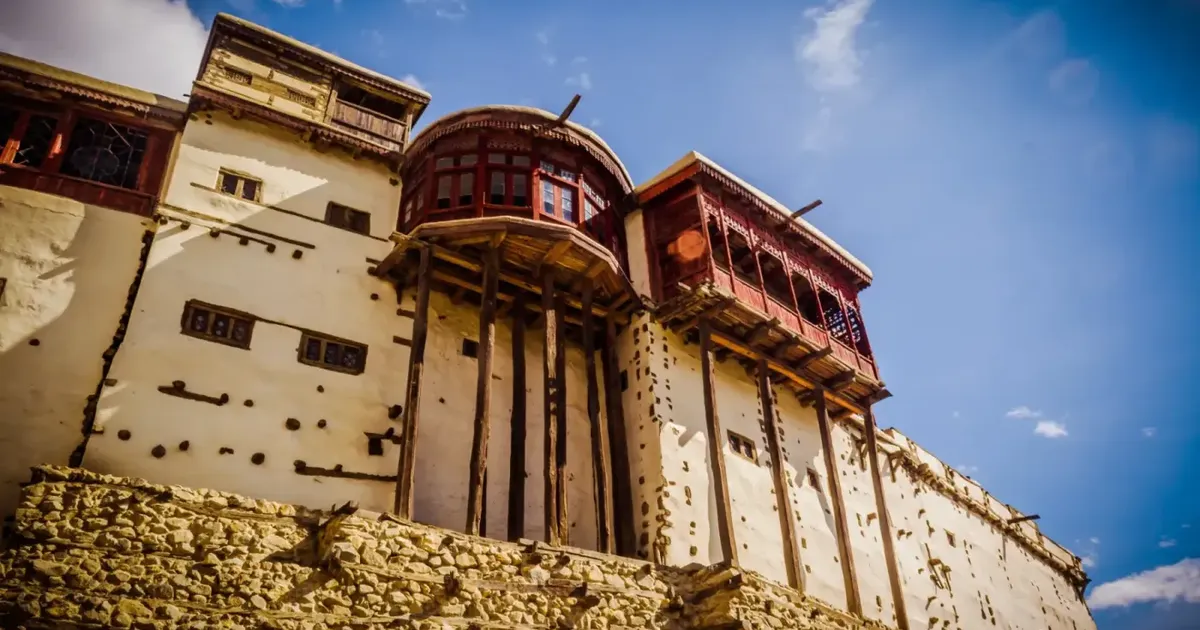
These are not the forts most people picture when they think of Pakistan. There is no Mughal red sandstone, no vast curtain wall. What Gilgit-Baltistan has instead is a handful of timber-and-stone royal houses built by Balti and Burusho rulers on the trade routes between Kashmir, Ladakh and Central Asia, with an architecture that owes more to Tibet than to Delhi.
Thirty years ago most of them were close to falling down. What makes them worth a detour now is the restoration work: careful, slow, done with the original materials and the original joinery, and in two cases funded by turning the building into a hotel. Here is what each one is, and how to actually see them.
Every fort in Gilgit-Baltistan at a glance
| Fort | Where | Built | Restored | What it is now |
|---|---|---|---|---|
| Baltit Fort | Karimabad, Hunza | ~700 years old | 1996 | Museum & cultural centre |
| Altit Fort | Altit, Hunza | ~1,100 years (tower) | 2010 | Museum, café, music centre |
| Shigar Fort | Shigar, near Skardu | 17th century | Completed by 2008 | 20-room heritage hotel |
| Khaplu Palace | Khaplu, Ghanche | c. 1840 | July 2011 | 21-room heritage hotel |
| Kharpocho Fort | Above Skardu | Late 16th century | Not restored | Ruin, free to walk up |
| Sher Qilla | Punial, Ghizer | ~380 years old | Not restored | Largely gone, neglected |
| Yasin (Dorkhand) Fort | Yasin, Ghizer | 15th century | Not restored | Decaying |
| Gahkuch Fort | Punial, Ghizer | Raja’s residence | Not restored | Tower still standing |
| Gupis Fort | Gupis, Ghizer | 17th c. or 1894 | Not restored | Dilapidated |
| Qalandarchi (Kalam Darchi) | Misgar, Upper Hunza | 1932 to 1933, British | Restored | Border watchpost, museum in progress |
| Chilas Fort | Chilas, Diamer | Pre-1851 | Levelled 1852 | Nothing remains |
Baltit Fort, Karimabad
Baltit is the one on the postcards, and for once the postcard undersells it. The fort sits on a rock shelf at the top of Karimabad with the Ultar glacier directly behind it and the whole Hunza valley laid out below. It was the seat of the Mirs of Hunza for something close to seven centuries.
The Tibetan look is not an accident. The story told locally is that the fort came as part of a dowry when a Baltistan princess married the Mir, and Balti craftsmen came with her. Whatever the truth of that, the carpentry is Tibetan in character, and the whitewashed walls with their heavy timber lacing belong to the same building tradition that runs east through Ladakh.
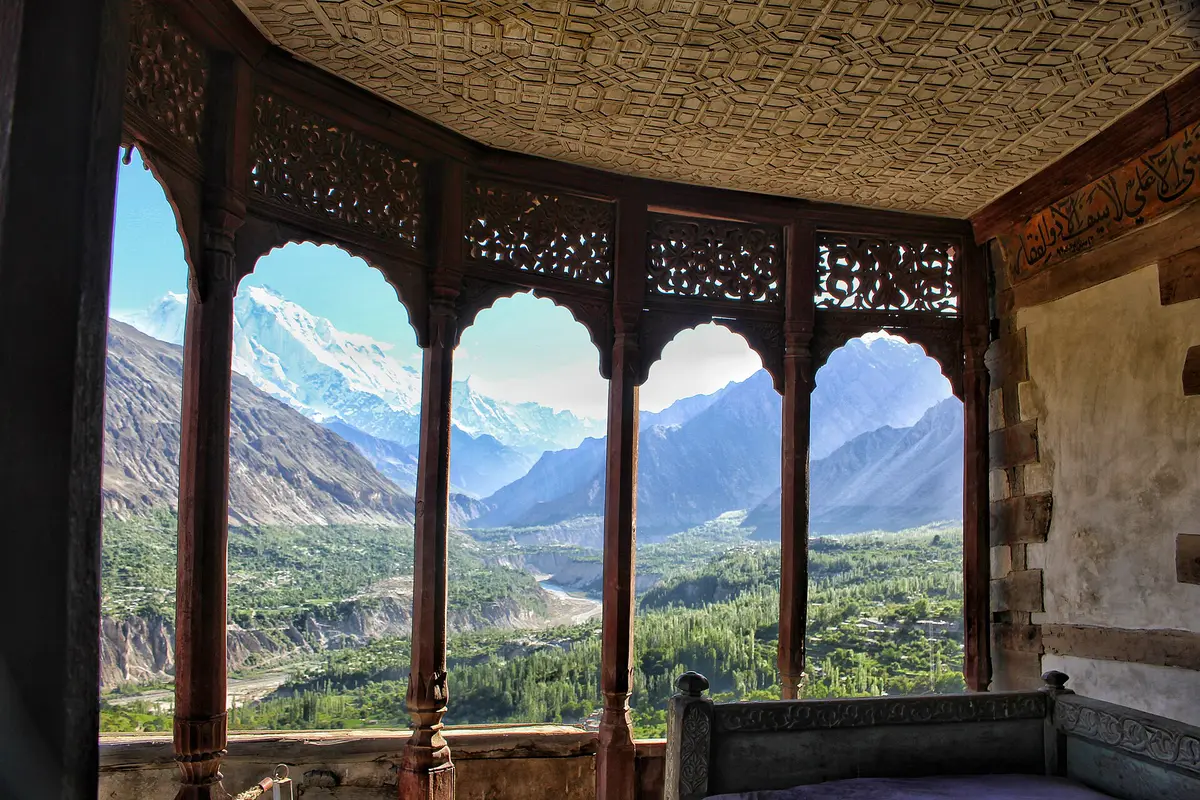
By the 1980s the family had moved out and the building was sliding. The Aga Khan Historic Cities Programme finished a full restoration in 1996, and it won the UNESCO Asia-Pacific Award for Excellence in 2004. Inside it is now a museum of Hunza history. The rooms are small, the ceilings low, and the guides are local and genuinely good. Give it an hour.
Getting up there is a short, steep walk from the Karimabad bazaar through the old lanes. It is cobbled and it climbs, so it is not the place for anyone who struggles with stairs, but it takes most people fifteen or twenty minutes with stops. Our Hunza cultural tour works both Hunza forts into a single day with time in the old town between them.
Altit Fort, the oldest of them all
Two kilometres down the valley and roughly four centuries older, Altit is the one to see if you only have time for one. The Shikari watchtower on top is reckoned to be around 1,100 years old, which makes it the oldest standing monument in Gilgit-Baltistan.
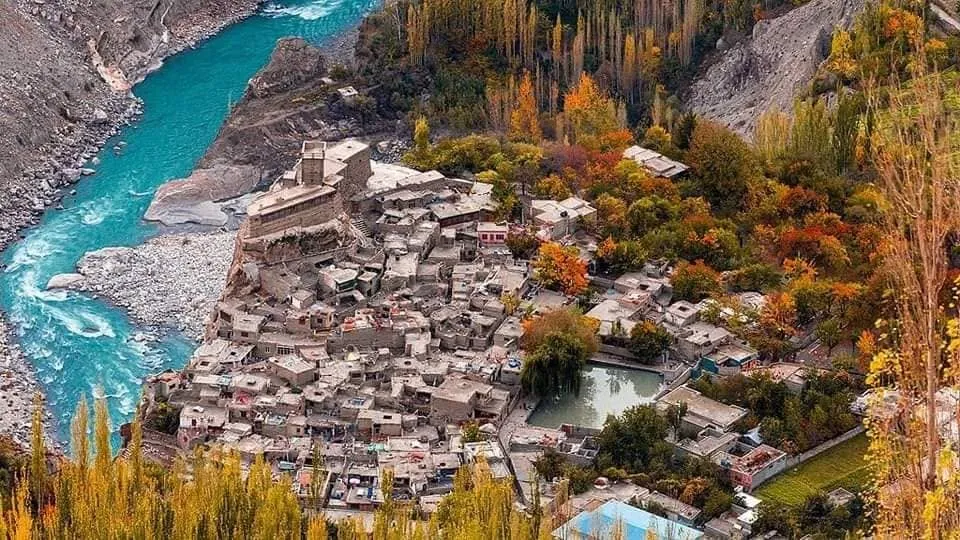
It sits on a spur of rock with a sheer drop to the river on one side, which tells you everything about why it was built where it was. The Mirs lived here before they moved up to Baltit. Restoration finished in 2010 and took the UNESCO Award of Distinction in 2011; the surrounding orchard was brought back at the same time and is now one of the nicest places in Hunza to sit with a coffee. There is a café, and the Leif Larsen Music Centre keeps Burusho music alive on site.
If you are building a Hunza itinerary around more than the forts, we have a longer list in our guide to the best places to visit in Hunza valley.
Shigar Fort, the one you can sleep in
Cross the Karakoram into Baltistan and the architecture shifts. Shigar Fort, built by the Amacha dynasty in the 17th century, sits among apricot orchards about half an hour from Skardu on a boulder the locals call Fong Khar, the palace on the rock.
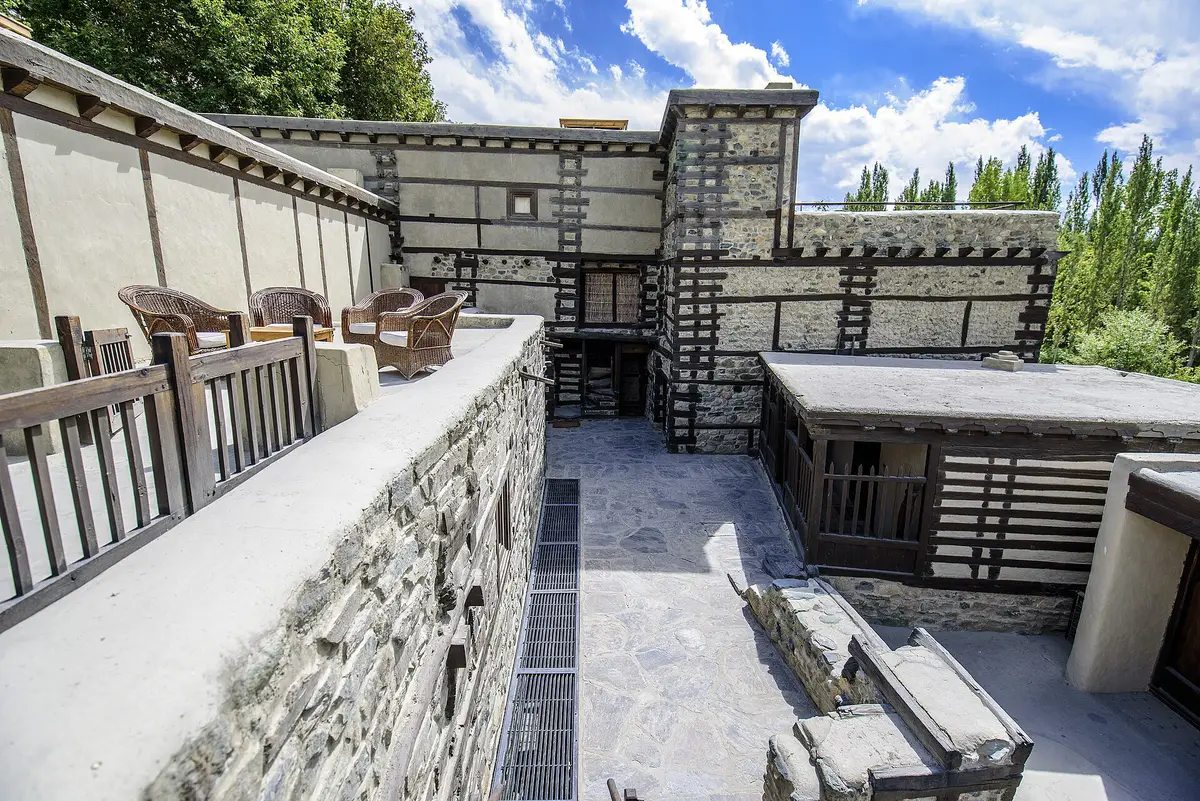
Look closely at the walls and you will see the technique that keeps these buildings standing in a seismic zone: timber beams laced horizontally through rubble stone, so the whole wall can move a little instead of shearing. The restoration rebuilt it that way rather than taking the shortcut, which is why it won the UNESCO Award of Excellence in 2006 and a Virgin Responsible Tourism award in 2008.
It now runs as a 20-room heritage hotel. You do not have to stay to look around, but staying is the point: the old rooms are preserved as museum pieces and the guest rooms are built into the newer wings.
Khaplu Palace, the last of the great Balti houses
Khaplu is the youngest of the five and, to a lot of people, the most beautiful. The local name is Yabgo Khar, the fort on the roof. It was finished around 1840 for the Yabgo rajas of Khaplu, and it is the last palace of its kind built in Baltistan.
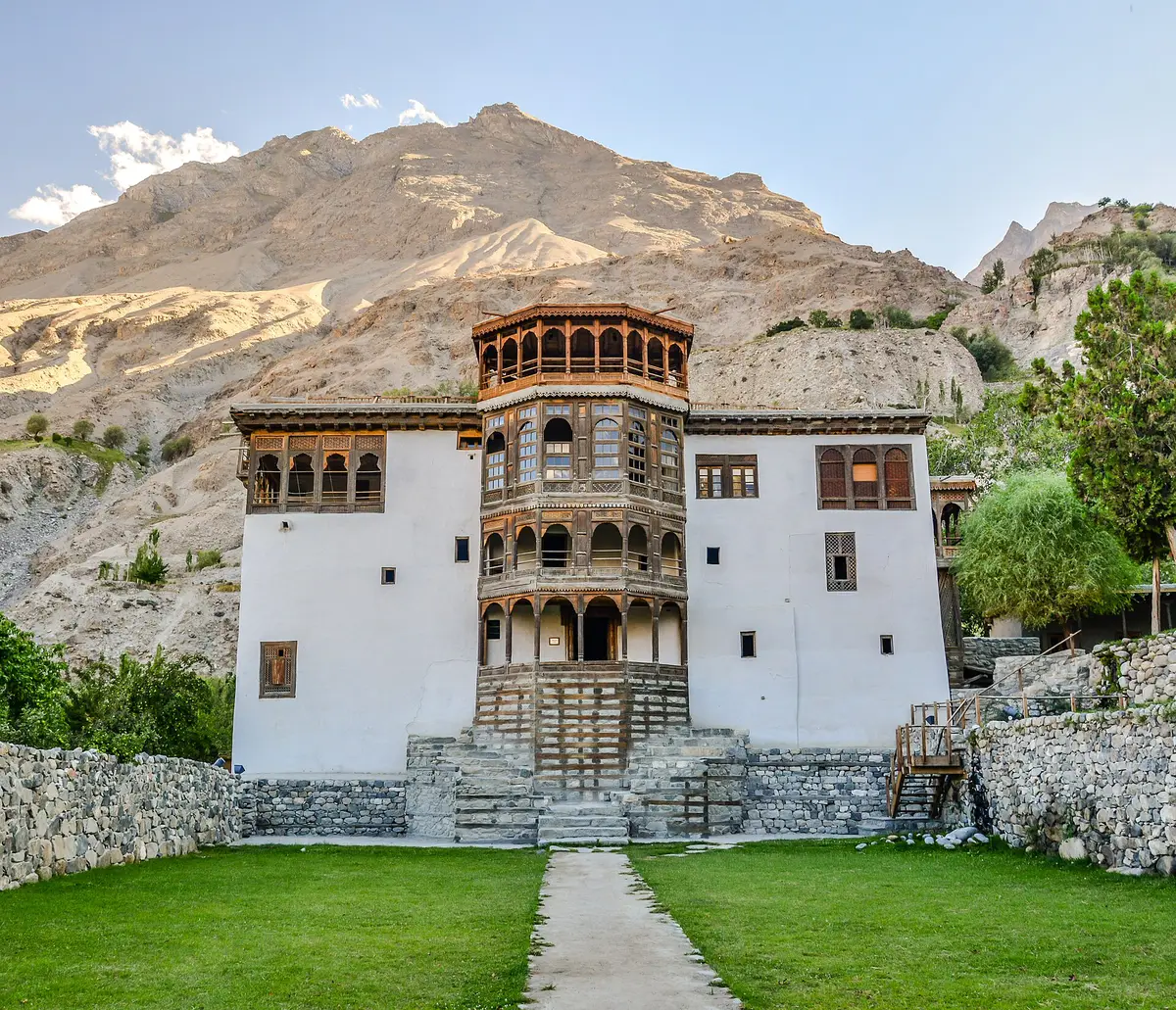
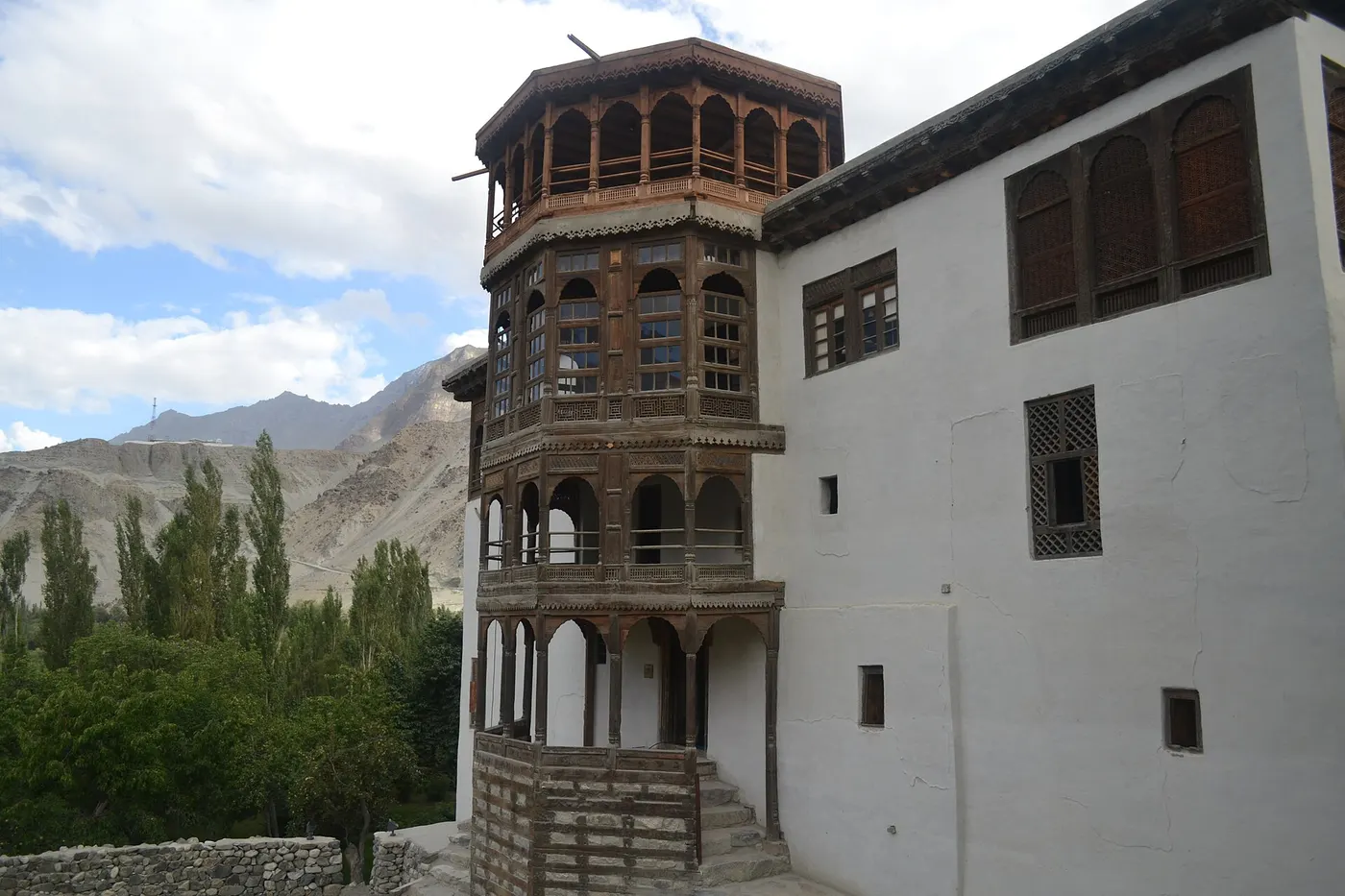
The front is the thing: four tiers of carved wooden balcony and lattice stacked up the middle of a plain white block, with a barren mountain wall rising straight behind it. The Aga Khan Trust for Culture finished the work in July 2011; it won a Virgin Responsible Tourism award in 2012 and the UNESCO Asia-Pacific conservation award in 2013. Like Shigar, it is now a hotel of 21 rooms, with the historic core kept as a museum.
Kharpocho Fort, the ruin above the Indus
Kharpocho is the odd one out, and the better for it. Built at the end of the 16th century by Ali Sher Khan Anchan, the Maqpon ruler who pushed Baltistan's reach as far as Ladakh, it stands on a crag directly above Skardu with the Indus curling underneath.
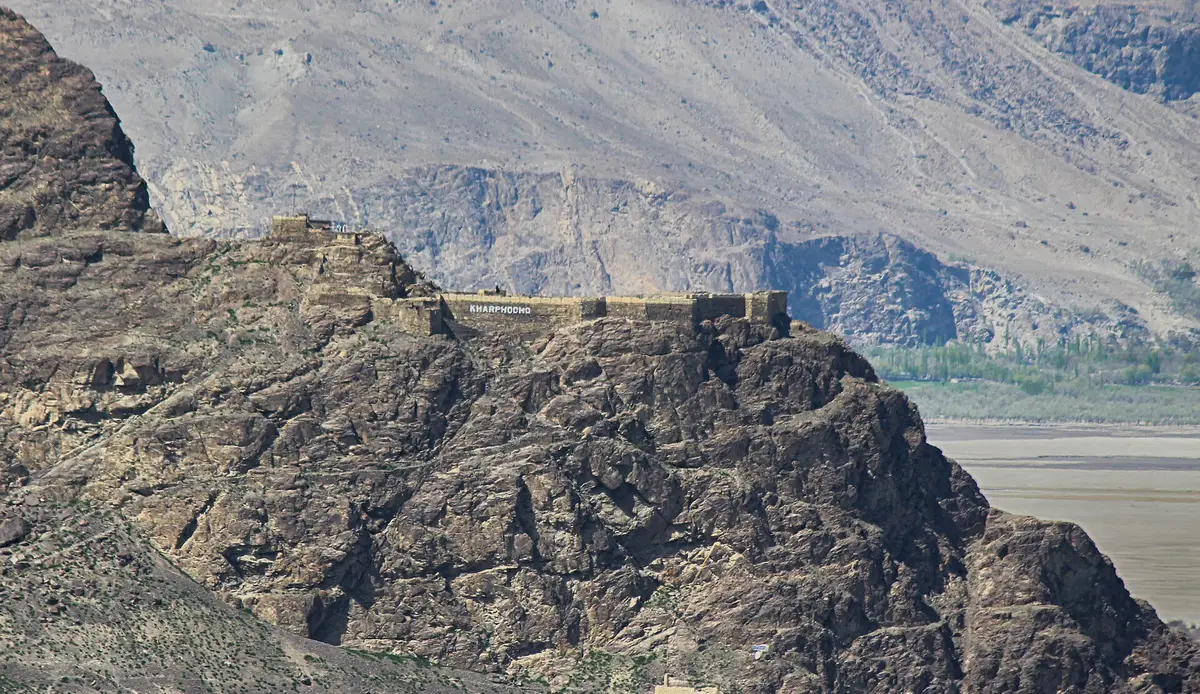
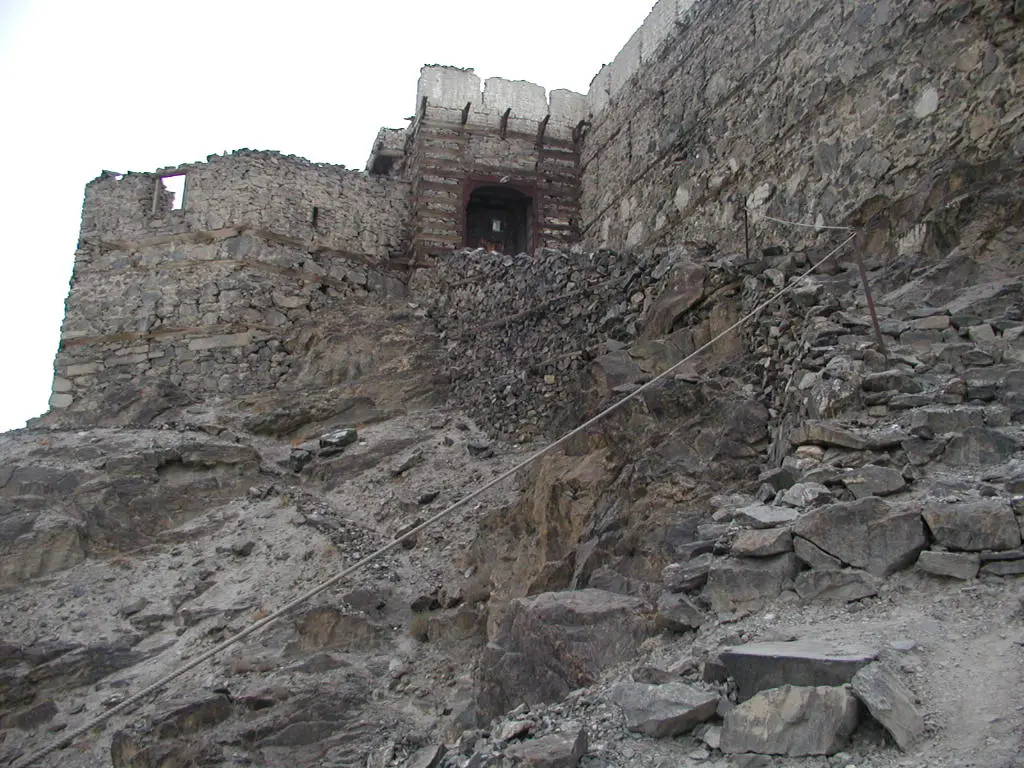
Nobody has restored it and nobody charges to get in. What is left is a rampart, some ruined chambers and an old mosque on the site. You climb it for the view rather than the building. The Indus curls below, the Sarfaranga sand spreads out downstream, and the whole Skardu bowl sits ringed by rock. Go late in the day and take water; the slope is exposed and there is no shade on it. Skardu makes a natural base for this and for Shigar, and our Skardu travel guide covers getting there and when to go.
Chaqchan Mosque, older than most of the forts
While you are in Khaplu, walk ten minutes into the old village to the Chaqchan mosque. It dates to 1370, which makes it older than most forts on this list (only Altit, whose tower is about 1,100 years old, and Baltit, about 700, are older), and it went up at the moment Baltistan was converting from Tibetan Buddhism to Islam.
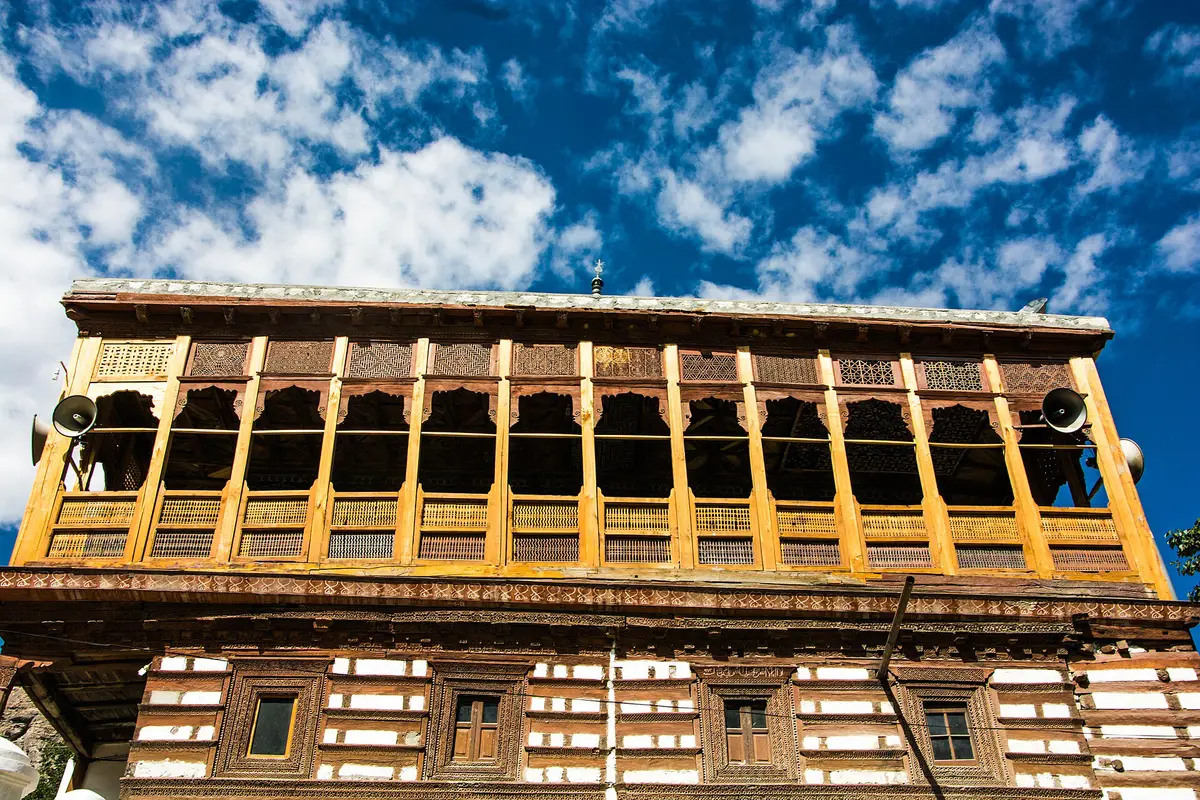
You can read that history in the building. The frame is Tibetan, the carving is Kashmiri, the geometry is Persian, and the mud-and-timber walls use a technique that has a Roman name, opus craticum. Sources disagree on who founded it. Some credit the Sufi saint Mir Sayyid Ali Hamadani, others a local raja who converted when Syed Nurbakhsh reached Baltistan from Kashmir. It is still a working mosque, so dress modestly and ask before going inside.
Qalandarchi Fort, Misgar: the Great Game outlier
One fort in Gilgit-Baltistan belongs to a completely different story, and it sits about as far up the map as you can drive. Qalandarchi Fort, also written Kalam Darchi, stands north of Misgar village in upper Gojal, and it was not built by a raja at all. British officers put it up in 1932 and 1933 to watch the Wakhan corridor and the traffic coming over the passes from China and the Soviet Union.
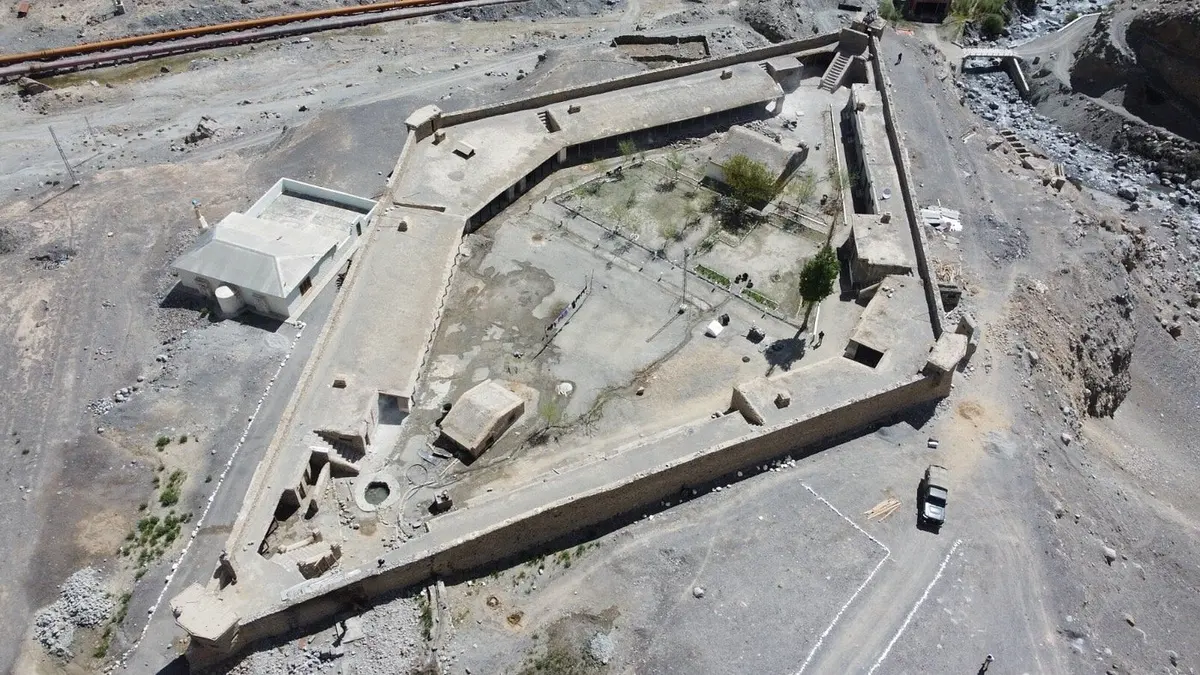
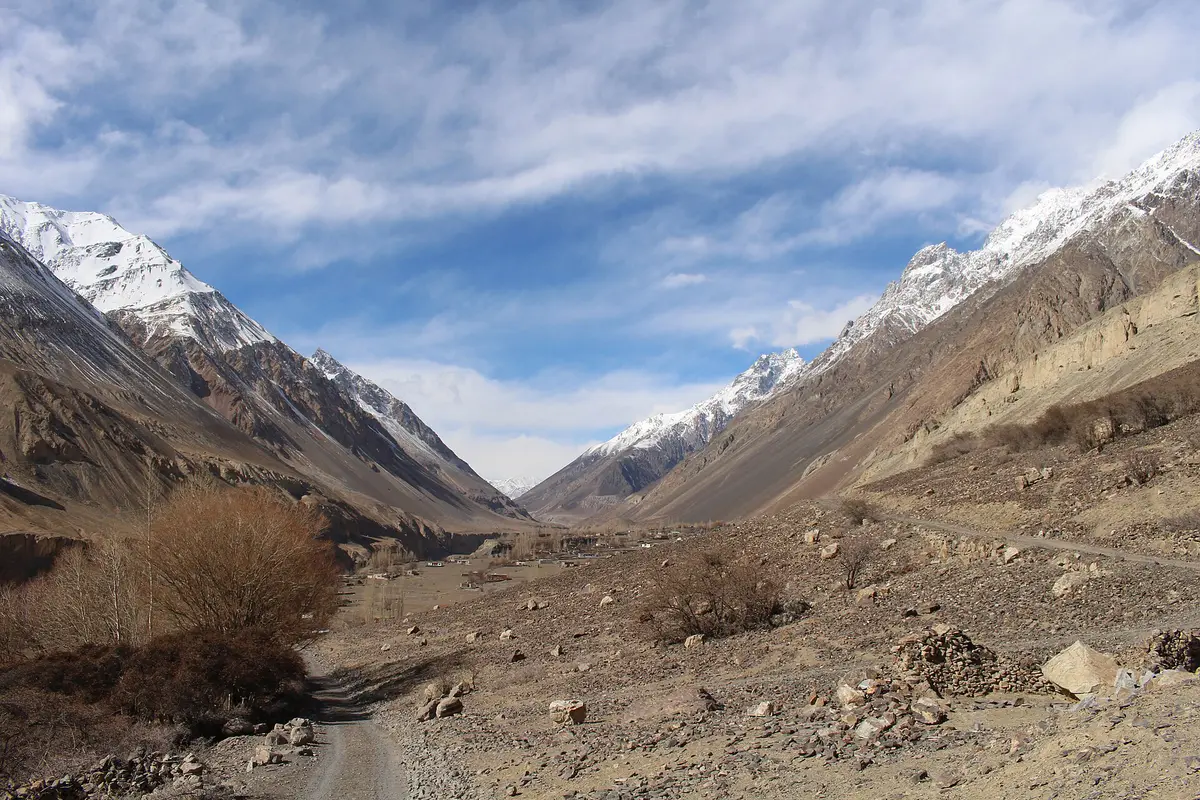
Look at where it was placed and the logic is obvious. The fort sits at the junction of three valleys: Kilik and Mintaka, both old Silk Road caravan routes over to Tashkurgan and the Tarim basin, and Dilisang, which runs towards the Afghan Wakhan. Before the Karakoram Highway existed this was the way people came, and whoever held this spot saw all of it. Reviewers call it the highest British-built fort in Pakistan.
Both passes can still be reached on foot. The trek starts at the fort itself, where the jeep track from Misgar ends, and our Kilik and Mintaka Pass trek guide covers each stage and camp altitude.
Afterwards it passed to the Gilgit Scouts, then the Northern Light Infantry and the Pakistan Army, and for a period it served as an army training school. It takes its name from a qalandar, a wandering ascetic, remembered locally as the naked saint.
Getting in is the part to check before you drive. The turning is off the KKH near Sost and the fort is about an hour up an unmetalled road. Visitors in 2018 were turned away because the army held it. By 2024 it had been restored to its British-era form, with a museum fit-out under way and reports of daily opening from 9am to 5pm without a permit. That is a fast-moving situation on a sensitive border, so ask in Sost or Gulmit on the day rather than assuming, and do not count on getting inside.
The Ghizer forts most guides leave out
Everything above sits in Hunza or Baltistan, which is where the money and the restoration work went. Head west from Gilgit into Ghizer and there is a second group of forts that almost nobody writes about, because none of them has been rescued. They are worth knowing about if you are driving the Ghizer road towards Shandur, and they are a fair warning about what the Hunza forts would have become without the Aga Khan Trust.
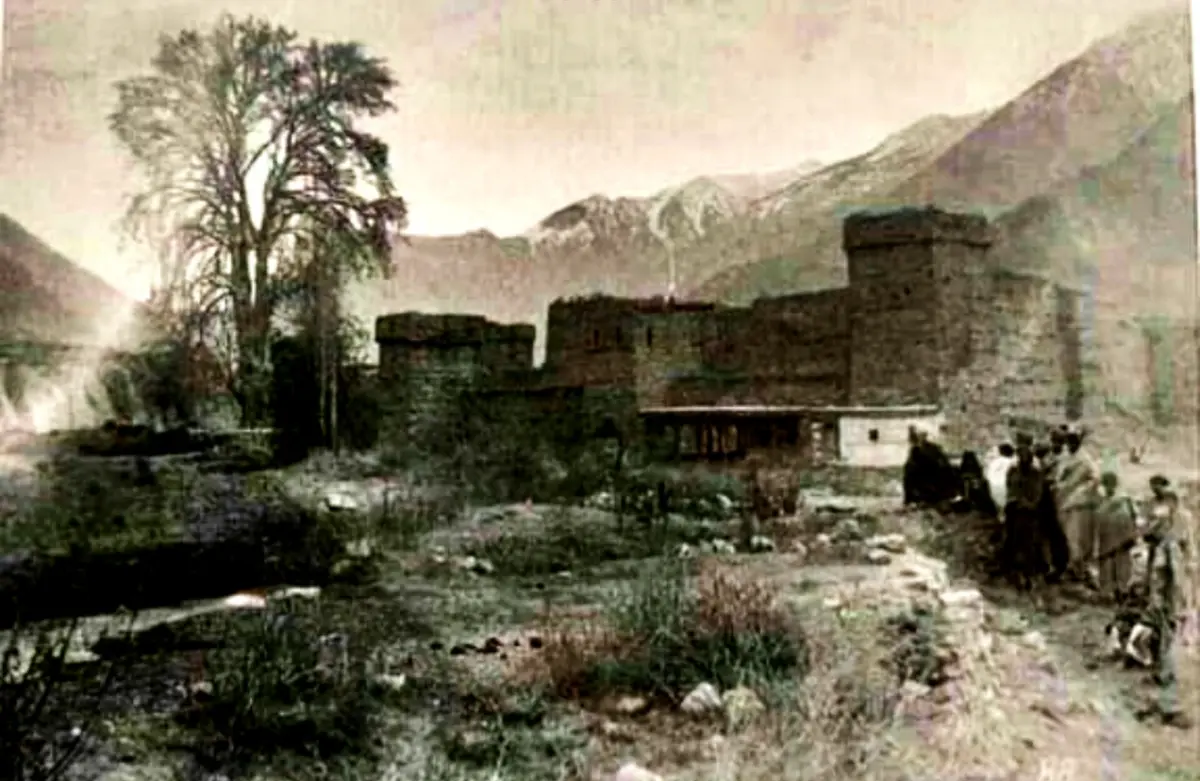
Sher Qilla, the Lion's Fort, stood by the river at Sherqilla village in Punial. It is usually given as around 380 years old, built under the Tarkhan dynasty and later held by the Burusho rulers of Punial, and it was the state capital from 1554 to 1856. The 1888 photograph above shows a substantial fortress. What survives today is neglected, and when a writer visited in 2019 the old mosque on the site had already been pulled down and replaced.
Yasin Fort, also called Dorkhand Fort, is the big one. It was begun under Shah Khoshwaqt of the Khoshwaqt dynasty around the 15th century and was once the largest fort in the region. It is now decaying in the open with no conservation programme behind it.
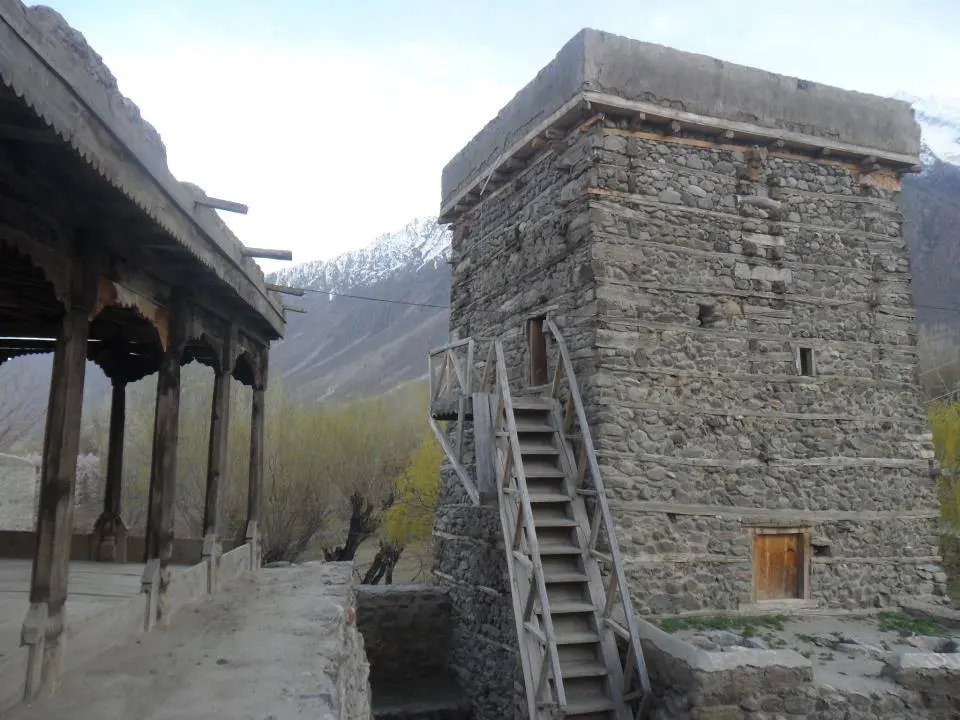
Gahkuch Fort in Punial was the raja's residence, and its stone tower and carved verandah are still standing. Gupis Fort, further up the valley, is the one with the muddled record: some sources date it to the 17th century under Raja Bahadur Khan of Punial State, others give a construction date of 1894, and it may well be both, a rebuild on an older site. It is on the Department of Archaeology's register and it is dilapidated.
Finally, Chilas Fort in Diamer, which people still ask about. There is nothing to see. The Chilasis besieged the Dogra garrison there in the winter of 1851 and were starved out, and the fort was levelled after the 1852 rebellion. It exists in the record and not on the ground.
None of the Ghizer forts has an entrance ticket, a guide or a guardrail. Ask locally before climbing on anything, and treat them as ruins rather than attractions.
How to see them all
The five sit in two clusters at opposite ends of Gilgit-Baltistan, so the practical route is Hunza first, then Baltistan:
- Hunza (1 day). Baltit and Altit are two kilometres apart. Both in one day with lunch in Karimabad is comfortable, and you can walk between them along the old irrigation channel.
- Skardu (half a day). Kharpocho in the late afternoon for the light. Shigar is about thirty minutes out of town and deserves its own morning.
- Khaplu (1 day). Roughly three hours from Skardu along the Shyok. The palace and Chaqchan mosque fill a relaxed day, and it is worth staying the night.
Hunza to Skardu is a long drive, so most people fly into Skardu or split the journey. Budget four to five days to see all five without rushing.
Tickets, timing and season
- Entry: Baltit ran at roughly Rs 1,000 for Pakistani nationals and Rs 1,200 for foreigners in the 2025/26 season, Altit a little less. Both are revised periodically, so treat these as a guide and check on the day. Kharpocho is free.
- Guides: the ticket at Baltit and Altit includes a guided walk-through, and it is not optional. You go round with someone. This is a good thing; the guides are from the village.
- Season: April to October. Spring blossom (late March to April) and autumn colour (October) are the two best windows. The forts stay open in winter but Skardu and Khaplu get hard to reach.
- Time needed: an hour each at Baltit, Altit and Khaplu; two if you linger. Kharpocho is a forty-minute climb and however long you want to sit at the top.
- Photography: Baltit faces west, so late afternoon. Khaplu's facade catches morning light. Altit works at either end of the day.
If Gilgit is on your route, the Kargah Buddha carved into a cliff outside town belongs to the Buddhist centuries that came before all of this, and it is twenty minutes off the highway.
Common questions
How old is Baltit Fort?
Baltit is usually given as around 700 years old, and it was the seat of the Mirs of Hunza for something close to seven centuries. The fabric you see today includes work from several periods. The Tibetan look comes from Balti craftsmen; the local story is that the fort arrived as part of a dowry when a Baltistan princess married the Mir. By the 1980s the family had moved out and the building was sliding. The Aga Khan Historic Cities Programme finished a full restoration in 1996, stabilising the whole structure, and it won the UNESCO Asia-Pacific Award for Excellence in 2004. Today it is a museum of Hunza history, with local guides included in the ticket. Altit, two kilometres down the valley, is roughly four centuries older. Give Baltit about an hour, and allow fifteen or twenty minutes for the cobbled climb up from the Karimabad bazaar.
Which is the oldest fort in Gilgit-Baltistan?
Altit. Its Shikari watchtower is reckoned at about 1,100 years old, which makes it the oldest standing monument in Gilgit-Baltistan, roughly four centuries older than Baltit, two kilometres up the valley. The Mirs of Hunza lived at Altit before they moved up to Baltit. The fort sits on a spur of rock with a sheer drop to the river on one side, which says a lot about why it was built there. Restoration finished in 2010 and won the UNESCO Award of Distinction in 2011, and the surrounding orchard was brought back at the same time. There is now a café, and the Leif Larsen Music Centre keeps Burusho music alive on site. The tower sits on top of the fort and is the part that gives Altit its date. If you only have time for one Hunza fort, we would choose Altit.
Can you stay overnight in a fort in Gilgit-Baltistan?
Yes, in two of them. Shigar Fort has 20 rooms and Khaplu Palace has 21, both run as heritage hotels with the historic cores kept as museums. Shigar, built by the Amacha dynasty in the 17th century, sits among apricot orchards about half an hour from Skardu; the old rooms are preserved as museum pieces and the guest rooms are built into the newer wings. Khaplu, finished around 1840 for the Yabgo rajas, lies on the Shyok, a drive of roughly three hours east of Skardu, and it is worth staying the night there rather than driving back. You do not have to stay to look round either building. Baltit and Altit in Hunza are museums only, and Kharpocho above Skardu is an unroofed ruin. At Shigar the restoration rebuilt the walls the old way, with timber laced through stone, and it won a UNESCO award in 2006.
How much does it cost to visit Baltit Fort?
Around Rs 1,000 for Pakistani nationals and Rs 1,200 for foreign visitors in the 2025/26 season. The ticket includes a guided walk-through, and the tour is not optional, so you go round with someone. That is a good thing, because the guides are from the village and know the building well. Altit, two kilometres away, costs a little less. Prices are reviewed from season to season, so treat these figures as a guide and confirm locally on the day. Allow about an hour inside, or two if you linger. Baltit faces west, so late afternoon is the best time for photographs. The fort is reached by a short, steep, cobbled walk from the Karimabad bazaar, which takes most people fifteen or twenty minutes with stops. For comparison, Kharpocho above Skardu costs nothing. Our Hunza cultural tour visits both Hunza forts in a single day.
How many days do you need to see the forts of Gilgit-Baltistan?
Four to five days covers all five comfortably, without rushing. Give one day to Hunza for Baltit and Altit, which are two kilometres apart; you can walk between them along the old irrigation channel and have lunch in Karimabad. In Skardu, half a day does Kharpocho, best climbed in the late afternoon for the light, and Shigar, about thirty minutes out of town, deserves its own morning. Khaplu is roughly three hours from Skardu along the Shyok, and the palace and Chaqchan mosque fill a relaxed day, so stay the night. The drive between Hunza and Baltistan is the part that eats time, which is why most people fly into Skardu or split the journey. The season runs April to October, with spring blossom and October colour the best windows. If you add the unrestored Ghizer forts or Qalandarchi near Sost, budget extra days, since both sit well away from this route.
How many forts are there in Gilgit-Baltistan?
Five are restored or substantial enough to plan a trip around: Baltit, Altit, Shigar, Khaplu and Kharpocho. Four of those were restored by the Aga Khan Trust for Culture between 1996 and 2011, and each won a UNESCO Asia-Pacific heritage award; Kharpocho has never been restored and is a ruin. Qalandarchi Fort at Misgar, built by British officers in 1932 and 1933 to watch the Wakhan corridor, has also been restored, with a museum fit-out under way. Beyond those, Ghizer has a further group that survives unrestored, including Sher Qilla in Punial, the Yasin or Dorkhand fort, Gahkuch and Gupis. None has a ticket, a guide or a guardrail, so treat them as ruins. Chilas Fort in Diamer was destroyed in 1852 and nothing of it is left. The Ghizer group is worth knowing about if you drive the road towards Shandur.
Is Kharpocho Fort worth visiting?
Yes, if you like a view and do not mind a steep forty-minute climb. There is little building left: a rampart, some ruined chambers, a gateway with timber lacing in the wall and an old mosque on the site. What you climb it for is the outlook, the best vantage point over Skardu, with the Indus curling below and the Sarfaranga sand spreading out downstream. It was built at the end of the 16th century by Ali Sher Khan Anchan, the Maqpon ruler who pushed Baltistan's reach as far as Ladakh. Unlike the restored forts it costs nothing, and nobody has restored it. Go late in the day for the light and take water, because the slope is exposed and there is no shade. Skardu makes a natural base for Kharpocho and for Shigar, half an hour away, so you can pair them on a single day in town.
Ready for Your Next Adventure?
Join our community of explorers and discover the journey of a lifetime. Our expert team is ready to help you plan your perfect expedition.