Kargah Buddha, Gilgit: A Complete Guide
A 7th-century Buddha carved into a cliff 10 km west of Gilgit, the ogress who is said to be pinned there, and the manuscript library found 400 metres upstream.
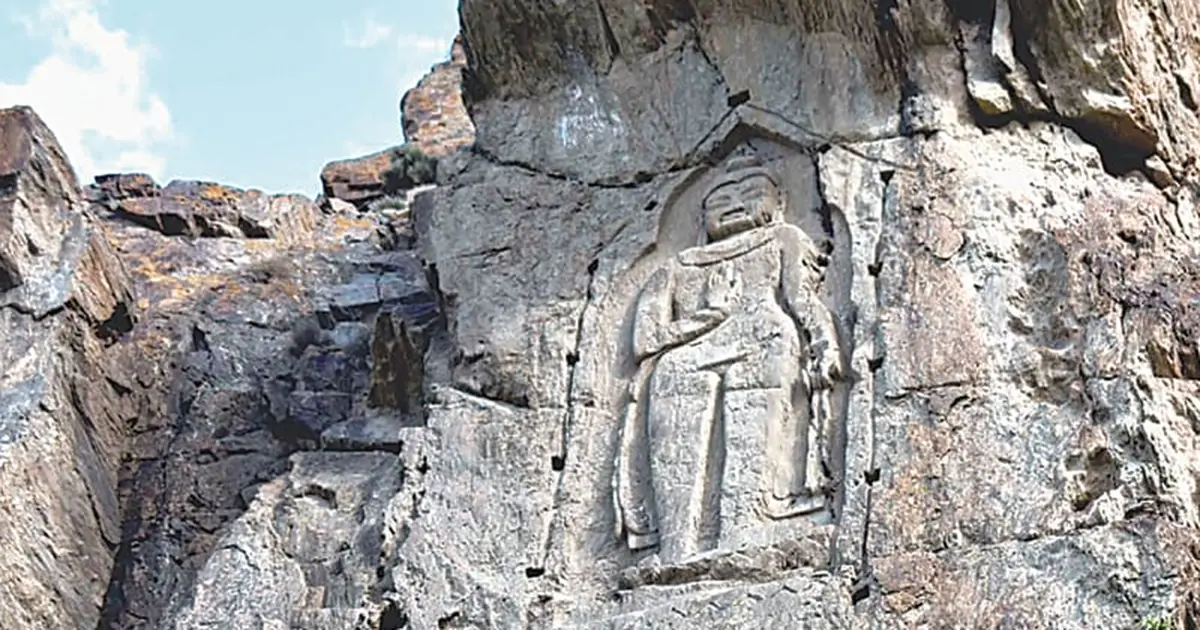
The Kargah Buddha is a standing Buddha carved into a cliff face about 10 km west of Gilgit, where the Kargah and Shukogah streams meet. It dates to roughly the 7th century. The figure itself is about 3 m tall and sits some 50 feet up the rock, so you view it from the ground rather than reach it. Access is open and free, and it takes about half an hour to get there from Gilgit.
Most people arrive at Kargah expecting a monument and find something quieter than that: a figure cut into a grey cliff above a stream, in a side valley with willows and a walkway, ten minutes off the road west of Gilgit. It is not signposted with much ceremony. You look up, and there he is.
It is also one of the few places in Gilgit-Baltistan where the region's Buddhist centuries are still visible on the landscape rather than sitting in a museum in another country. That is worth understanding before you go, because the carving on its own takes about twenty minutes to see, and the story around it is what makes the trip worth making.
How big is the Kargah Buddha, really?
This is where nearly every article about Kargah goes wrong, so it is worth settling first.
You will read that the Buddha is "some 50 ft (15 m) high". That figure comes from Wikipedia and has been copied into most of the travel pages that follow it. It conflates two different measurements, and one glance at the cliff tells you it cannot be right.
| Measurement | Figure | What it actually describes |
|---|---|---|
| Height of the carved figure | ~3 m (10 ft) | The Buddha himself, from foot to halo |
| Height above the base of the cliff | ~50 ft (15 m) | How far up the rock face the panel sits |
| Distance from Gilgit | ~10 km (6 miles) | West of the city, by road |
| Date | 7th century | Estimated; there is no dated inscription |
So: a three-metre figure, hung fifty feet up a cliff. That is the shape of what you are looking at, and it explains why photographs of Kargah so often disappoint. Standing beneath it, the scale reads properly. In a picture, without the cliff for reference, it flattens.
What you are actually looking at
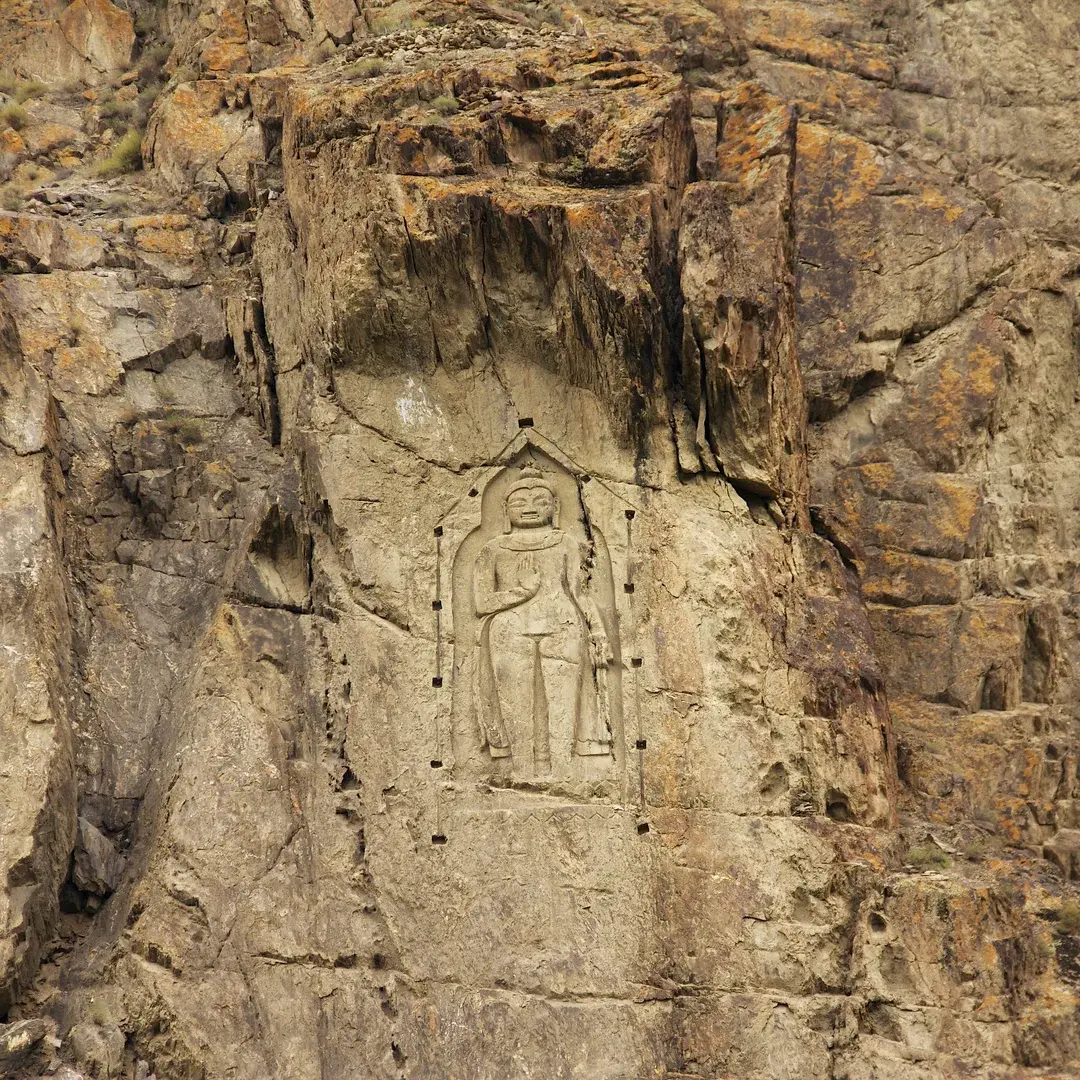
The Buddha stands in relief inside a shallow carved niche, one hand raised, robes falling in simple parallel folds, with a pointed arch cut above the head. The style belongs to the wider Buddhist art of the region and is echoed in carvings across Baltistan. There is no inscription giving a date, which is why the 7th century is an estimate rather than a fact.
Look at the rock around the figure and you will see something most visitors walk past: a series of neat square holes cut into the cliff in a rough rectangle around the panel. Those are sockets. They held the beams of a wooden structure that once stood over the carving and sheltered it from weather. The shelter is long gone. The holes are still there, and once you have seen them you cannot unsee them.
The ogress in the cliff
Ask anyone in Gilgit about the carving and you will not get an art-history answer. You will get the story of the Yakhshini, known locally as the ya-shaani or yacheni: a man-eating giantess who terrorised the valley and ate the villagers' children and livestock.
In the telling, a travelling holy man, a pir, agreed to rid them of her, on one condition. He pinned her to the cliff face, where she remains, and warned that she would be released the moment he died or the moment anyone disturbed the rock. In some versions the villagers buried the pir secretly so the ogress would never learn of his death.
It is a good story and it has done real work. A folk tradition that says "leave this rock alone or something terrible comes out of it" has probably protected the carving better than any heritage designation could. Whatever else changed in Gilgit over thirteen centuries, nobody chiselled the Buddha off the cliff.
The Gilgit Manuscripts, 400 metres upstream
This is the part that almost nobody tells you, and it is the reason the carving was ever properly recorded.
In 1931, at Naupur just up the valley from the carving, a find came out of the ruins of what was taken to be a stupa: a cache of Buddhist texts written on birch bark, in Sanskrit, in the Sharada script. They are thought to be the remains of a monastery library and to date from roughly the 5th to 7th centuries. Among them is a copy of the Lotus Sutra.
These are the Gilgit Manuscripts, and their significance is hard to overstate. They are the oldest manuscript collection surviving in Pakistan and among the oldest anywhere in the world, and they sit on the UNESCO Memory of the World register. Most of them are now held in New Delhi and Srinagar rather than in Gilgit.
It was that discovery that sent people looking, and the carving was documented in 1938 to 1939. Standing at Kargah, you are a few hundred metres from where a Buddhist library sat in the ground for something like fourteen hundred years.
A site that is still visited, not just looked at
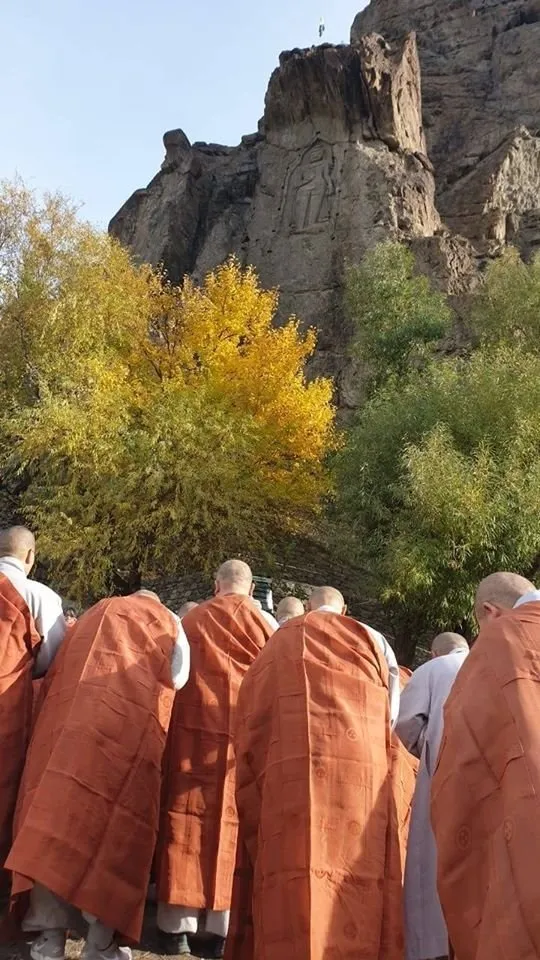
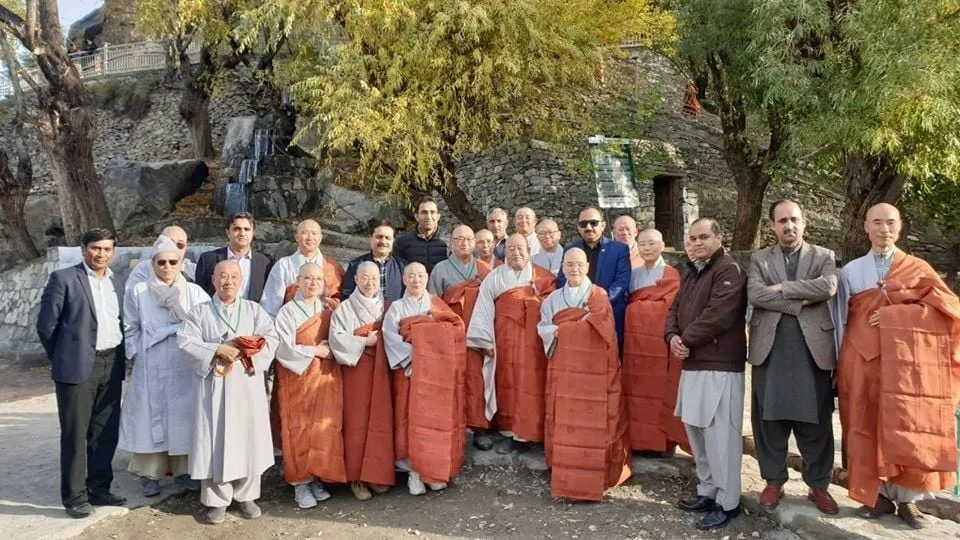
Kargah is not only an archaeological curiosity. Buddhist delegations travel here, and it is not unusual to find monks at the base of the cliff, robed, looking up at a figure carved by people who shared their religion in a valley that has been Muslim for centuries. For visitors from Japan and Korea in particular, this landscape is the far edge of Gandhara, and Kargah is a cliff-carved Buddha of exactly the kind their own traditions preserve.
If you happen to arrive on a day when a group is there, stand back and let them have it. It is a better sight than the carving alone.
How to get to Kargah Buddha from Gilgit
- Distance: about 10 km west of Gilgit city, roughly half an hour by road depending on the state of the track at the end.
- Vehicle: an ordinary car manages it in normal conditions. The last stretch into the nullah is rough but short.
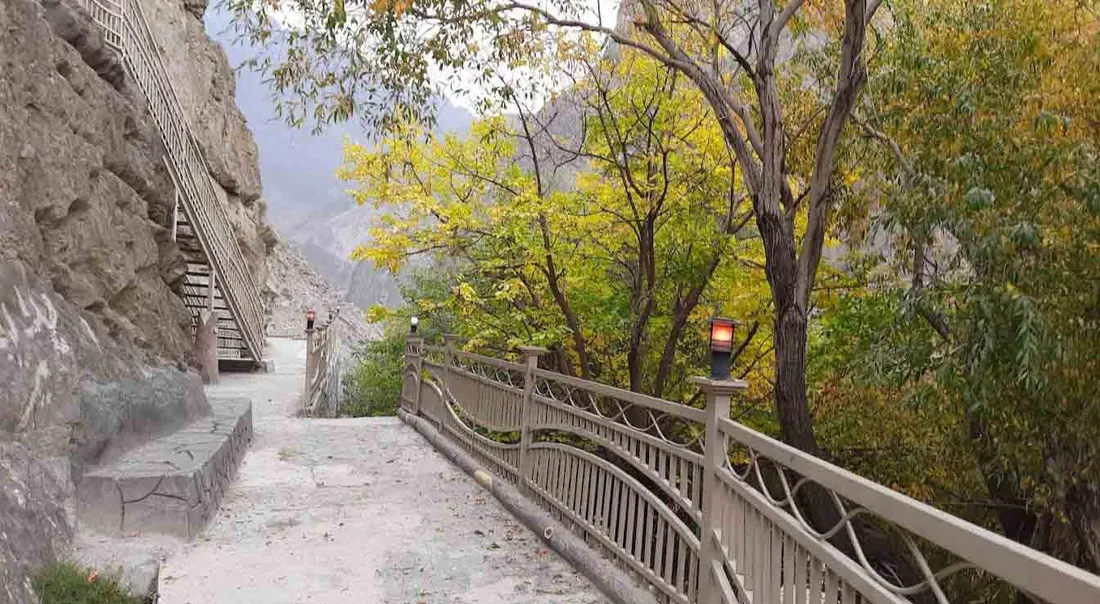
- On arrival: a paved walkway with railings and a flight of steps runs along the base of the cliff, so the viewing itself is easy and takes no scrambling.
- Access: open, with no ticket office. The site is listed by the Gilgit-Baltistan tourism department. You cannot reach the carving itself; it is fifty feet up and viewed from below.
- How long: twenty minutes to see it, an hour or two if you want to walk up the nullah as well.
When to go
Gilgit sits at around 1,500 m, which makes it hot in high summer and mild in the shoulder seasons. The valley at Kargah is green through the summer and turns gold in October, which is the prettiest time to see it and also the most comfortable. Winter is perfectly possible, the site being low and close to the city, though the light is thin and the willows are bare.
Go in the morning if you can. The cliff faces in a direction that takes early light well, and the carving is much easier to read and photograph before the sun is overhead and flattening the relief.
What else is nearby
Kargah is a half-day at most, so it pairs with the rest of Gilgit rather than standing alone. The city bazaar is worth an hour. The Danyore rock inscriptions sit on the other side of the river. Further out, the Naltar valley climbs into pine forest and alpine lakes. And Gilgit is the natural pause on any journey up the Karakoram Highway, which is how most travellers reach it in the first place.
If Buddhist rock art is what draws you, the other one to see is the Manthal Buddha Rock outside Skardu, a large carved boulder rather than a cliff panel, and the natural companion to Kargah. Our Gilgit-Baltistan travel guide sets out how the region fits together if you are still planning the shape of a trip.
We build Kargah into our Hunza cultural tour, usually on the way out, when a group has spent several days on forts and wants one last thing that is older than any of them.
Frequently asked questions
Where is the Kargah Buddha?
About 10 km (6 miles) west of Gilgit city in Gilgit-Baltistan, Pakistan, carved into a cliff at the junction of the Kargah and Shukogah streams. It takes roughly half an hour to drive there from Gilgit, depending on the state of the track at the end. The carving sits in a side valley, or nullah, with willows and a walkway, about ten minutes off the road west of the city. An ordinary car manages the trip in normal conditions; the last stretch into the nullah is rough but short. A paved walkway with railings and a flight of steps runs along the base of the cliff, so viewing is easy. The site is listed by the Gilgit-Baltistan tourism department but is not signposted with much ceremony. Gilgit itself is the natural stop on the Karakoram Highway, and we usually include Kargah on our Hunza cultural tour on the way out.
How old is the Kargah Buddha?
It is estimated to date from the 7th century. There is no dated inscription on the carving, so the age is based on its style rather than a written record, and you will see it placed anywhere from the 6th to the 8th century. The standing Buddha is cut in relief inside a shallow niche, with one hand raised, robes falling in simple parallel folds and a pointed arch above the head. That style belongs to the wider Buddhist art of the region and is echoed in carvings across Baltistan. The carving was documented in 1938 to 1939, after the discovery of the Gilgit Manuscripts nearby in 1931 sent people looking. Those birch-bark texts date from roughly the 5th to 7th centuries, from a monastery library a few hundred metres upstream. Whatever else changed in Gilgit over the following centuries, nobody chiselled the figure off the cliff.
How tall is the Kargah Buddha?
The figure is about 3 m (10 ft) tall and sits roughly 50 ft up the cliff face. Sources that describe the Buddha itself as 50 ft high have confused the height of the figure with how far up the rock it sits. The 50 ft, or 15 m, number comes from Wikipedia and has been copied into most travel pages since. One look at the cliff shows it cannot describe the carving, which measures around three metres from foot to halo. That is also why photographs of Kargah often disappoint. Without the cliff in the frame for reference, the panel flattens and looks small. Standing beneath it, the scale reads properly. While you are there, look at the rock around the figure for a rough rectangle of square holes. They are sockets that once held the beams of a wooden shelter built over the carving to keep the weather off it.
Is there an entry fee for the Kargah Buddha?
No. Access is open and there is no ticket office. A walkway and steps run along the base of the cliff, so no climbing is involved. The site is listed by the Gilgit-Baltistan tourism department, and the paved walkway has railings, which makes it easy for most visitors. Your only real cost is the transport. Kargah is about 10 km west of Gilgit, roughly half an hour by road, and an ordinary car manages it in normal conditions, though the last stretch into the nullah is rough. Seeing the carving takes about twenty minutes, or an hour or two if you walk up the nullah as well. Mornings are the best time, as the relief is easier to read and photograph before the sun is overhead. We build the visit into our Hunza cultural tour, usually on the way out of the region.
What is the legend of the Kargah Buddha?
Local tradition says the figure is a man-eating ogress, the Yakhshini or ya-shaani, who was pinned to the cliff by a holy man and would be freed if he died or if the rock were disturbed. The story is thought to have helped protect the carving over the centuries. Ask anyone in Gilgit about the carving and this is the answer you will get, not an art-history one. In the telling, the giantess terrorised the valley and ate the villagers' children and livestock until a travelling pir agreed to deal with her. Some versions add that the villagers buried the pir in secret so the ogress would never learn of his death. She is also known locally as the yacheni. A folk belief that says 'leave this rock alone' has probably done more for the carving than any heritage designation could, because nobody dared to touch it.
Can you climb up to the carving?
No. The panel is around fifty feet above the base of the cliff and is viewed from the ground. The walkway below gives you a clear line of sight to it. That walkway is paved, with railings and a flight of steps along the foot of the cliff, so the viewing takes no scrambling at all. The figure itself is about 3 m tall, and from below the scale reads well, far better than in photographs. Look for the rough rectangle of square sockets cut into the rock around the panel. They held beams for a wooden shelter that once covered the carving. Come in the morning if you can, because the early light shows the relief clearly before the overhead sun flattens it. Buddhist delegations sometimes gather at the base of the cliff, and if one is there when you arrive, give them space; it makes the visit better.
What are the Gilgit Manuscripts and where were they found?
They are birch-bark Buddhist texts in Sanskrit, written in the Sharada script and dating from roughly the 5th to 7th centuries, found in 1931 at Naupur about 400 m upstream from the carving. They came out of the ruins of what was taken to be a stupa and are thought to be the remains of a monastery library. Among them is a copy of the Lotus Sutra. They are the oldest manuscript collection surviving in Pakistan, among the oldest anywhere in the world, and are on the UNESCO Memory of the World register. Most are now held in New Delhi and Srinagar rather than Gilgit. The find also mattered for the Buddha: it sent people looking along the valley, and the carving was documented in 1938 to 1939. Standing at Kargah, you are a few hundred metres from where a library sat in the ground for something like fourteen hundred years.
Ready for Your Next Adventure?
Join our community of explorers and discover the journey of a lifetime. Our expert team is ready to help you plan your perfect expedition.