Laila Peak Base Camp Trek: 13 Days, Hushe | Go With Guide
Home
All Tours Holiday Types Cultural Tours Family Holidays Luxury Tours Camping Road Trips
K2 Treks Trending Treks High Passes Trekking Holidays All Treks
8000m Peaks 7000m Peaks 6000m Peaks High Passes All Expeditions
Cycle Touring Eco Tourism Motorcycle Touring Mountain Passes Festivals of Pakistan Ibex Hunting Snow Leopard International Travelers All Special Interests
About Us Vehicles Contact FAQs Blog
Plan Your Trip
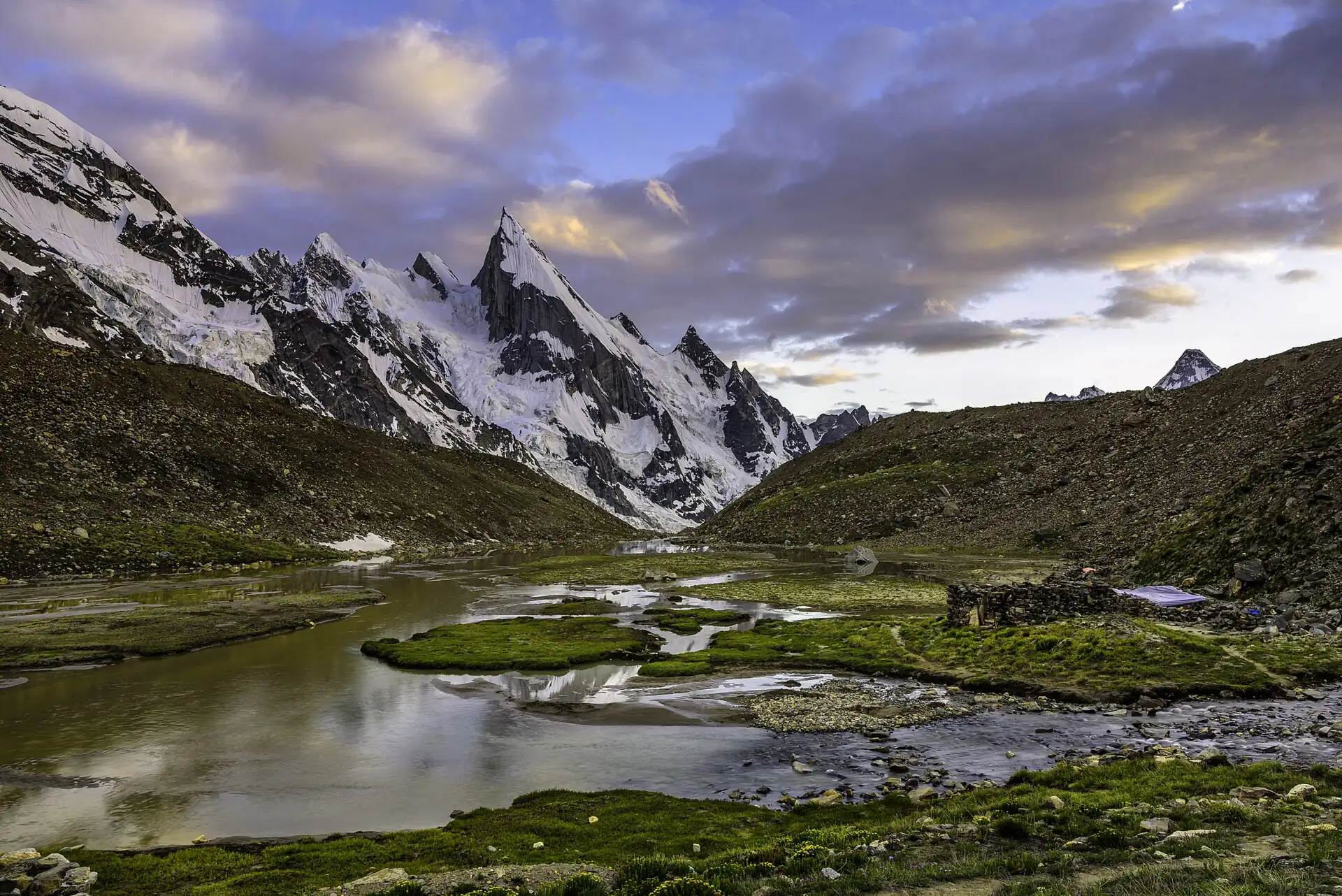
Laila Peak above the meltwater meadow at Dalsampa on the Gondogoro glacier, Hushe valley, Gilgit-Baltistan, Pakistan
Back to Trekking
Trekking Skardu

Laila Peak Base Camp Trek: Hushe Valley to Khuispang

Five days on foot up the Gondogoro valley from Hushe, Ghanche District, to Khuispang (4,695 m) under Laila Peak (6,096 m)

The Laila Peak Base Camp trek is a moderate 5-day walk in Pakistan's Hushe valley, from Hushe (3,050 m) via Saicho and Dalsampa to Khuispang (4,695 m), right under the 6,096 m spire of Laila Peak. It is 26.4 km each way and runs June to September. Our trip is 13 days from Islamabad, from US$1,800 per person.
Laila Peak above the meltwater meadow at Dalsampa on the Gondogoro glacier, Hushe valley, Gilgit-Baltistan, Pakistan
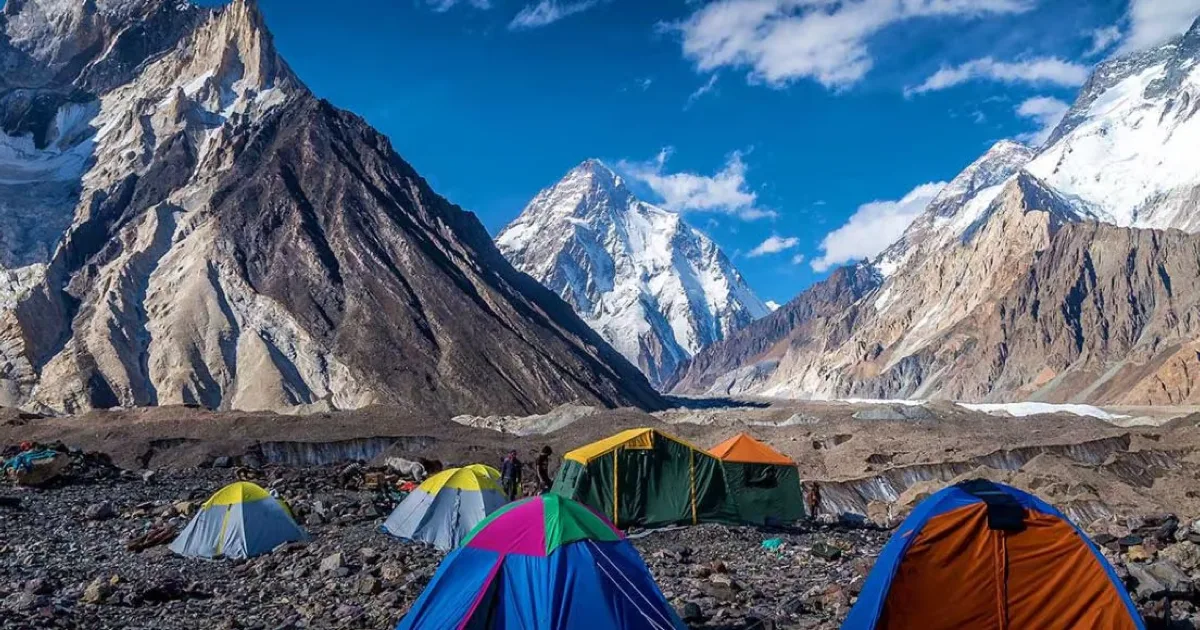
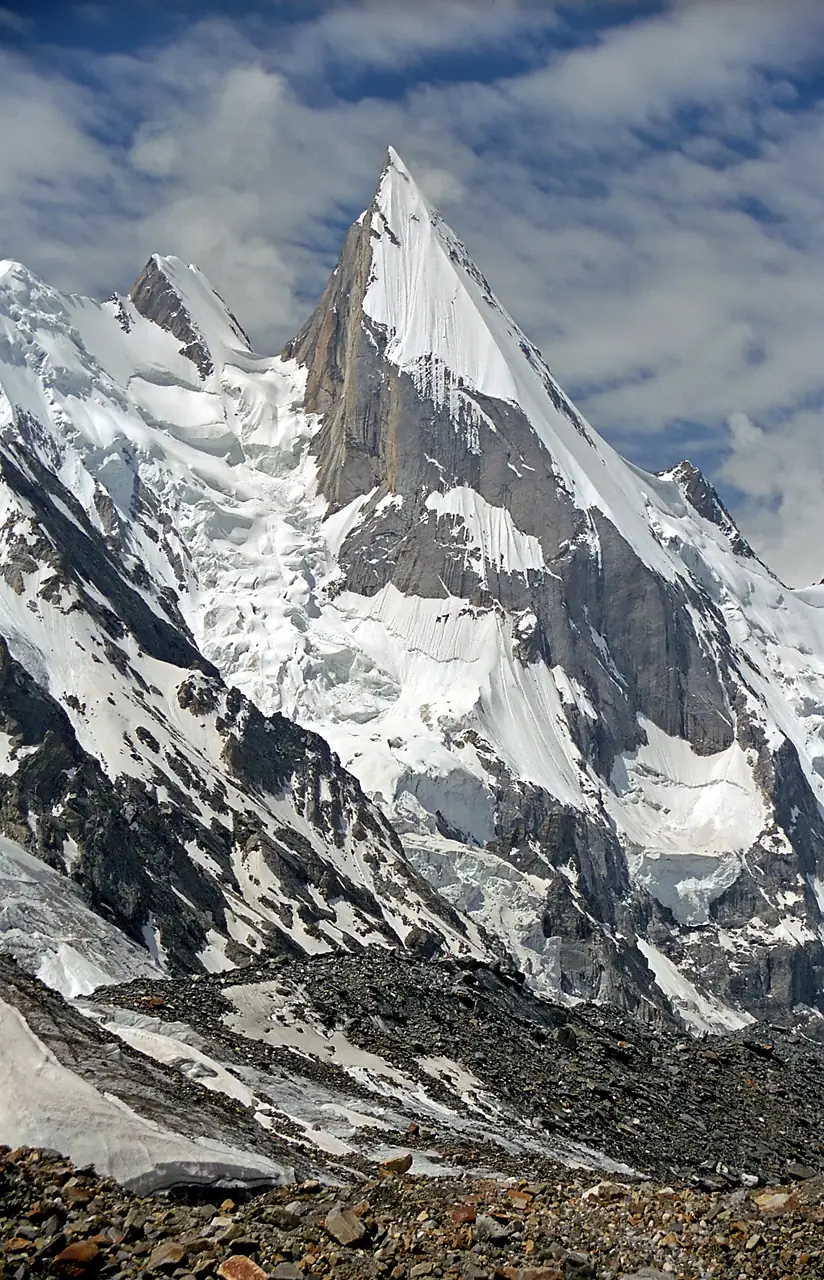
Laila Peak (6,096 m) rising above the moraine of the Gondogoro glacier near Khuispang, Hushe valley
The Gondogoro glacier running down from the Gondogoro La toward Khuispang and the Hushe valley
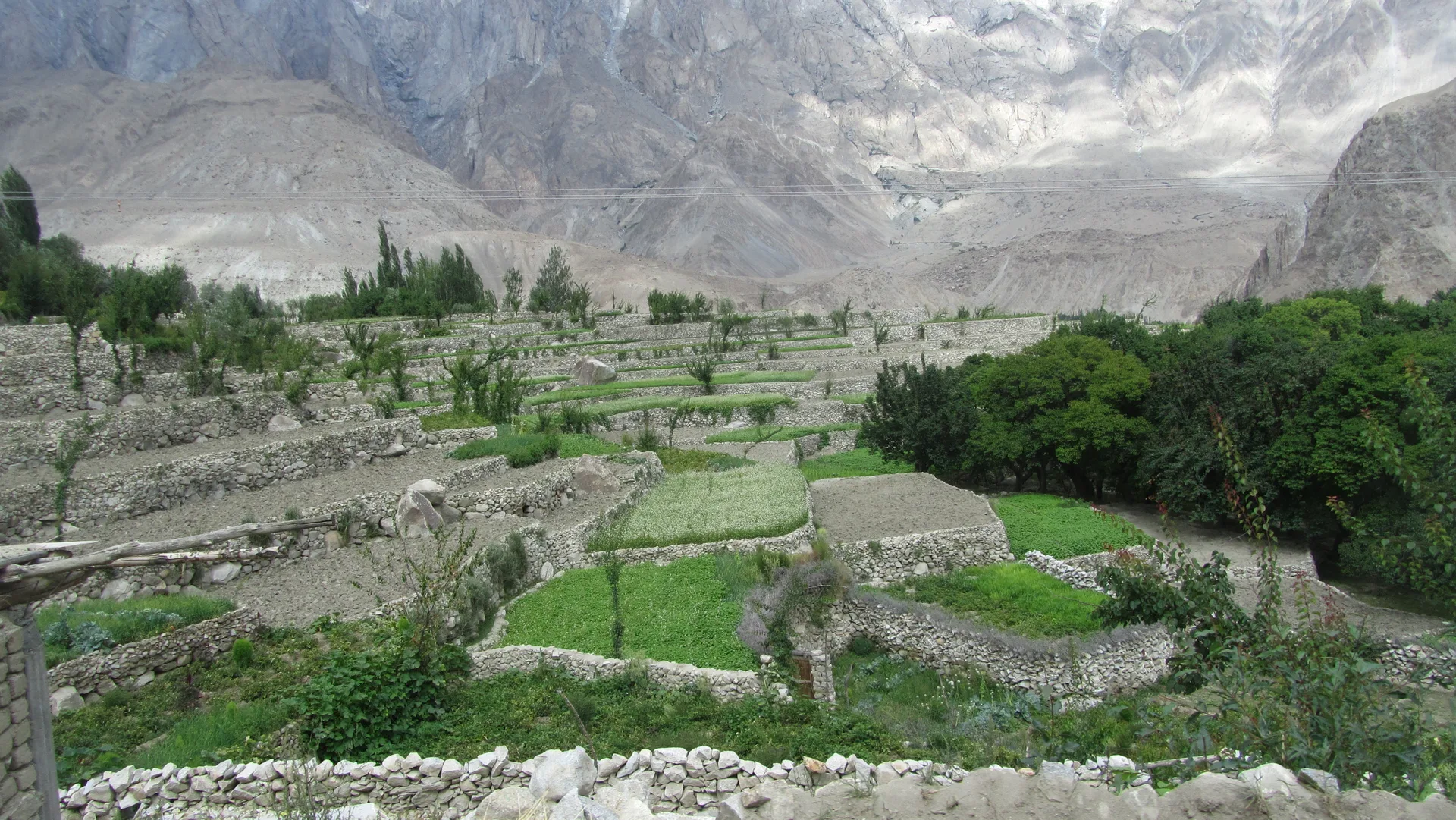
Green field terraces of Hushe village, the trailhead of the Laila Peak Base Camp trek, Ghanche District
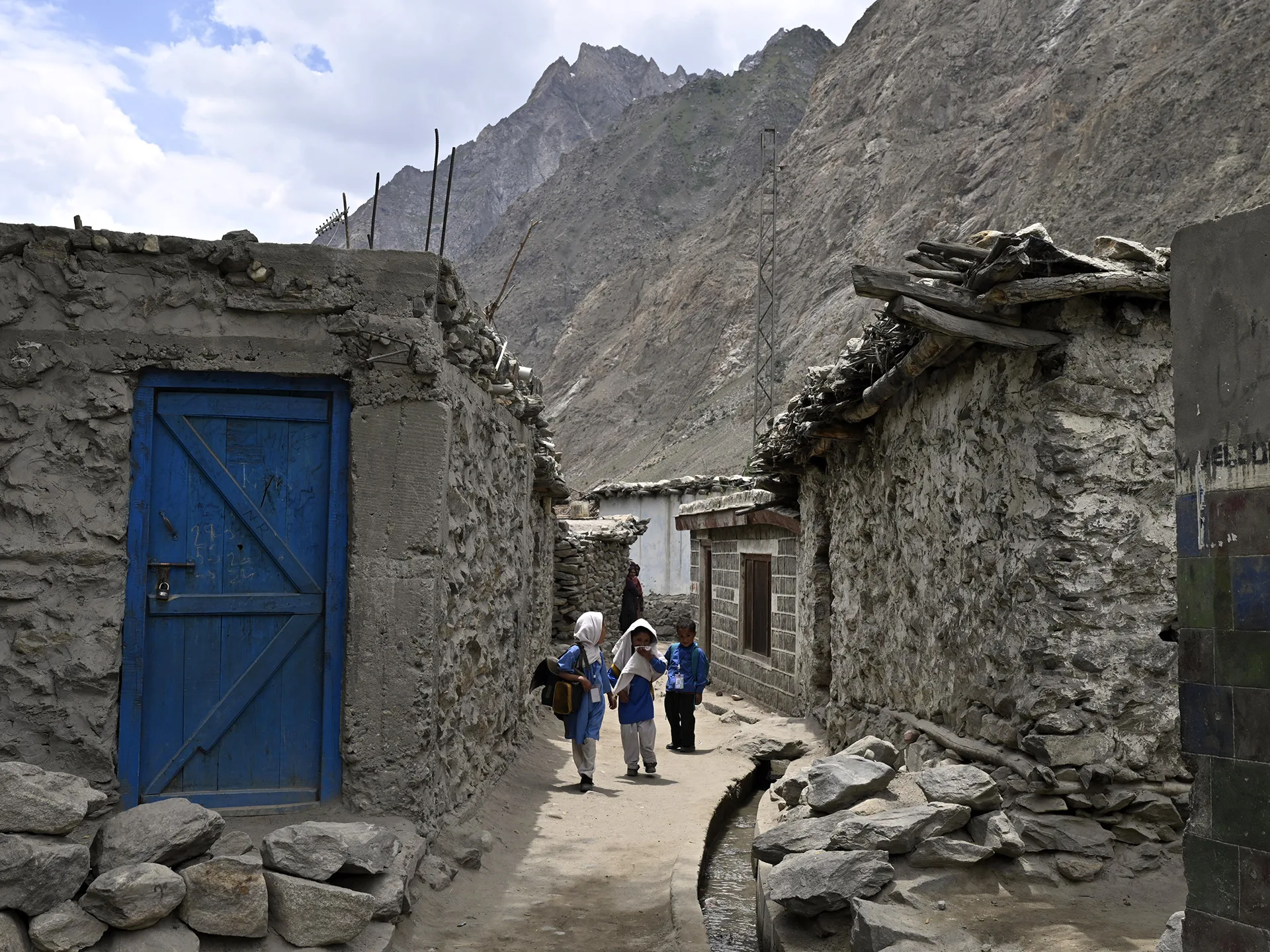
Stone houses and a lane in Hushe village, the last settlement on the road in the Hushe valley

Last updated: · Reviewed by Javeed Iqbal, Founder

About This Tour

Laila Peak is the 6,096 m spear of snow and ice that every Gondogoro La trekker photographs on the way down to Hushe. This trek walks you to its foot without the climb: five days on foot up the Gondogoro valley from Hushe, the last village in Ghanche District, to the glacier camp of Khuispang at 4,695 m, where the peak fills the sky across the ice.

Be careful with the name: Pakistan has at least three mountains called Laila. This trek goes to the 6,096 m Laila Peak in the Hushe valley, not the Laila Peak of about 6,985 m above the Chogolungma glacier in the Haramosh range, or the Laila in the Rupal valley below Nanga Parbat.

It is the short way into the big Karakoram. Most people who see Laila up close have spent two weeks on the Baltoro first. From Hushe you reach the same view in three walking days, with Masherbrum (7,821 m) at the head of the valley, the granite walls of the Charakusa opening up at Saicho, and wildflower meadows below Dalsampa in July.

Our trip is 13 days from Islamabad. We fly to Skardu, keep a day there for permits and the flight buffer, drive through Khaplu to Hushe, and walk in over three stages with a rest day at Khuispang before two days back out. A licensed Balti guide, a cook and porters from Hushe carry the camp, so you walk with a day pack.

No ropes or climbing skills are needed. The last stage is on glacier moraine and the top camp is real altitude, so we run it with small groups and a guide who has walked the Gondogoro many times. See our Laila Peak expedition for the climb

Key facts for the Laila Peak Base Camp trek from Hushe.
LocationHushe valley, Ghanche District, Gilgit-Baltistan, Pakistan, inside the Central Karakoram National Park.
RouteHushe, Saicho, Dalsampa (Laila Peak base camp) and Khuispang, then back the same way.
Distance26.4 km each way from Hushe to Khuispang, about 53 km on foot in all.
AltitudesHushe 3,050 m; Saicho about 3,350 m; Dalsampa about 4,200 m; Khuispang 4,695 m (highest point).
Walking daysFive, plus a rest day at Khuispang. 13 days from Islamabad to Islamabad.
GradeModerate. No climbing; the last stage is on glacier moraine.
SeasonJune to September; July and August are the most reliable.
Group sizeMinimum five, maximum twelve trekkers.
PermitsRestricted zone: trekking permit, Pakistan trekking visa and park fees. We arrange all of them.
PriceFrom US$1,800 per person for a group of five or more, Islamabad to Islamabad.

Curated Program

Day-by-Day Itinerary

All Transfers & Permits Included

1

Arrive in Islamabad

Airport pickup and transfer to the hotel. In the evening your guide runs the trip briefing and a kit check, so anything missing can be bought in Islamabad before the mountains.
  • Meet your guide
  • Hotel night
2

Fly Islamabad to Skardu (2,230 m)

2,230 m
About an hour along the Indus gorge, with Nanga Parbat off the wing when the sky is clear. If the flight is cancelled we drive the Karakoram Highway instead, which takes the best part of two days and uses the buffer days built into the trip.
  • Flight option
  • Hotel night
3

Skardu: permits and acclimatisation

2,230 m
Our team completes the trekking permit and Central Karakoram National Park paperwork while you rest. An easy walk up to Kharpocho Fort above Skardu keeps the legs moving at altitude. This day also absorbs a late flight.
  • Acclimatisation
  • Buffer day
4

Jeep Skardu to Hushe (3,050 m)

3,050 m
About 120 km and five to seven hours east along the Shyok river, through Khaplu and up the Hushe valley on a rough track to Hushe village, the last on the road. The porters join us here, loads are weighed, and we camp at the edge of the village.
  • Jeep road
  • Village visit
5

Hushe to Saicho (3,350 m)

3,350 m
Four to five hours of easy walking along the Hushe river through pasture and wild rose, crossing the Charakusa river before Saicho, a green camp where the Charakusa and Gondogoro valleys meet. K7 and the granite walls of the Charakusa show up the side valley.
  • Trekking day
  • Night in camp
6

Saicho to Dalsampa (about 4,200 m)

4,200 m
Five to six hours up the Gondogoro valley past the summer huts of the Hushe herders, steeper than day one. Dalsampa is a meadow with a small lake on the edge of the Gondogoro glacier, with Masherbrum behind and Laila Peak in front.
  • Trekking day
  • Lake
7

Dalsampa to Khuispang (4,695 m)

4,695 m
Four to five hours on the moraine and rubble of the Gondogoro glacier to Khuispang, the highest camp of the trek and the base for the Gondogoro La on its Hushe side. Laila Peak stands directly across the ice.
  • Glacier
  • Viewpoint
8

Rest and explore at Khuispang

4,695 m
A full day at the top to acclimatise and take in Laila, the Gondogoro glacier and the peaks at its head. Short walks above camp give the best angles on the spire. The day also absorbs bad weather on the way in.
  • Rest day
  • Viewpoint
9

Khuispang to Saicho

3,350 m
Six to seven hours, mostly downhill, back down the glacier and past Dalsampa to the greener ground and running water of Saicho.
  • Trekking day
  • Night in camp
10

Saicho to Hushe, jeep to Skardu

2,230 m
Three to four hours down to Hushe and a farewell to the porters, then the jeep back through Khaplu to a hotel in Skardu and a hot shower. A long day; if the group prefers, we sleep in Hushe and drive the next morning.
  • Trekking day
  • Jeep road
11

Fly Skardu to Islamabad

The morning flight back to Islamabad. If it is cancelled we use the buffer day, or drive down the Karakoram Highway.
  • Flight option
  • Road transfer
12

Buffer day

Held in reserve for flight cancellations or weather in the Hushe valley. If it isn't needed, it becomes a free day in Islamabad.
  • Buffer day
13

Depart Islamabad

Transfer to Islamabad airport for your flight home.
Walking stages from Hushe to Khuispang and back, with camp altitudes.
DayStageWalking timeNight
5Hushe (3,050 m) to Saicho4 to 5 hSaicho, about 3,350 m
6Saicho to Dalsampa5 to 6 hDalsampa, about 4,200 m
7Dalsampa to Khuispang4 to 5 hKhuispang, 4,695 m
8Rest day at KhuispangShort walksKhuispang, 4,695 m
9Khuispang to Saicho6 to 7 hSaicho, about 3,350 m
10Saicho to Hushe, jeep to Skardu3 to 4 h + driveHotel in Skardu

From

$1,800

per person

* Prices may vary. Contact us for accurate, customized pricing.

Duration13 Days
DifficultyModerate
Group Size5-12 people
Best SeasonJun-Sep
Max Altitude4,695m
Visa TypeTrekking visa
Which visa do I need?Check your trek in the Visa Checker

What's Included

  • Invitation letter for your Pakistan visa application
  • Islamabad to Skardu flights and return
  • Hotels in Islamabad and Skardu
  • Jeep transfers from Skardu to Hushe and back
  • Trekking permit, national park fees and liaison officer arrangements
  • Experienced local Balti guide from Hushe
  • Cook and porters from Hushe, 15 kg of your kit carried
  • Tents, mess tent, toilet and shower tents
  • All meals on the trek, cooked fresh in camp
  • Satellite phone (call charges extra) and solar charging

Not Included

  • International flights
  • Travel insurance with helicopter rescue cover
  • Personal expenses and tips

When Is the Best Time for the Laila Peak Base Camp Trek?

June to September. July and August are the most reliable months: the snow has gone from the moraine below Khuispang, the meadows at Saicho and Dalsampa are green, and the streams are easy to cross in the morning.

June is quieter but can still hold snow above Dalsampa. September brings the clearest skies and colder nights, well below freezing at Khuispang. From October to May the upper Hushe valley is snowbound and we don't run the trek.

What Permits Do You Need for Laila Peak Base Camp?

The upper Hushe valley is a restricted zone, and Hushe is on NADRA's official list of treks, so foreign trekkers need Pakistan's Mountaineering and Trekking visa (Trekking sub-category), not a tourist visa. We issue the sponsor letter for the application.

In Skardu we arrange the Gilgit-Baltistan trekking permit, the Central Karakoram National Park fees and any liaison officer requirement for the restricted zone, all included in the price. Your insurance must cover helicopter evacuation up to 5,000 m.

Laila Peak Base Camp Trek Guide

The Route: Skardu, Khaplu, Hushe and the Gondogoro

From Skardu the jeep runs east along the Shyok, through Khaplu, the old capital of the Yabgo rajas, and up the Hushe valley past Machulu and Kande to Hushe at about 3,050 m. It is roughly 120 km and five to seven hours, the last part on a rough track.

The walk follows the Hushe river north. Day one is gentle, four to five hours to Saicho at about 3,350 m, where the Charakusa valley comes in from the east. Day two climbs into the Gondogoro valley past the herders' summer huts to Dalsampa, a meadow and small lake at about 4,200 m that climbers use as Laila Peak base camp.

Day three leaves the grass for the Gondogoro glacier: four to five hours on moraine to Khuispang at 4,695 m, the camp below the Gondogoro La. From Hushe to Khuispang is 26.4 km, and you come back the same way in two days.

How Hard Is the Laila Peak Base Camp Trek?

It is a moderate trek with one demanding day. You need no ropes, crampons or climbing experience. Days run four to seven hours on good paths as far as Dalsampa, then on loose rock and glacier rubble for the last stage to Khuispang, where poles and steady ankles help.

The altitude is the real test. You go from 3,050 m at Hushe to 4,695 m at Khuispang in three walking days, so the first night at the top often brings a headache and poor sleep. That is why the rest day sits at Khuispang and not lower down. If you have walked above 4,000 m before, on the Annapurna Circuit, Kilimanjaro or a high route in the Alps, you have the right base. If not, train for two months with long uphill days carrying a pack.

Where Is Laila Peak, and How High Is Base Camp?

Laila Peak (6,096 m) rises on the west side of the Gondogoro glacier in the Hushe valley of Ghanche District, Gilgit-Baltistan, in the central Karakoram of northern Pakistan. Climbers put their base camp at Dalsampa, about 4,200 m, a few hours below the face. Trekkers usually go on to Khuispang at 4,695 m, which is closer to the peak and the highest point of this trek.

Published figures for Khuispang range from about 4,600 to 4,700 m, depending on where on the moraine the camp is pitched. We use 4,695 m, our own route figure for the camp.

What You See on the Way

Laila is in view from Saicho onward and closest from Khuispang, where its northwest face, a single smooth sheet of snow and ice, drops toward the glacier. Masherbrum (7,821 m), the K1 of the original Karakoram survey, stands at the head of the Hushe valley and shows from the village and from Dalsampa. From Saicho you look up the Charakusa valley to the granite of K6 and K7.

K2, Broad Peak and the Gasherbrums are not visible on this trek. They appear only from the top of the Gondogoro La, a technical 5,585 m pass above Khuispang. If you want both, see the extensions below.

How We Run the Camps

Every night is in tents: sleeping tents with mattresses, a mess tent and a kitchen tent, plus a toilet tent at every camp and a shower tent with water heated by the kitchen. Our cook makes three meals a day, with supplies carried from Skardu, and all drinking water is boiled or filtered.

There is no mobile signal above Hushe, so the guide carries a satellite phone, and we bring solar panels and power banks for charging. Porters carry up to 15 kg of your kit. If someone feels unwell at altitude, an assistant guide or porter walks them down while the group carries on, and a helicopter is called through your insurance if it is ever needed.

Extend It: Gondogoro Peak, Gondogoro La and Other Hushe Treks

Khuispang is the base camp for Gondogoro Peak (5,650 m), a first Karakoram summit with views to K2. It adds about three days, a skills day and a midnight start, and uses crampons, a harness and a jumar on three to five pitches of fixed rope. Crossing the Gondogoro La (5,585 m) to Concordia and K2 Base Camp is a separate, longer trip. If Laila makes you want to climb, our Laila Peak expedition covers the summit.

Why Book With Us

We are based in Gilgit-Baltistan and run the Hushe valley with guides and porters from Hushe itself, the village that supplies crews for the whole Baltoro. We keep a rest day at Khuispang and a buffer day for the Skardu flight instead of squeezing the trip, we keep groups small, and we tell you plainly what the altitude and the glacier stage involve before you book.

Safety First

Certified guides, comprehensive insurance, and rigorous safety protocols on every expedition.

  • Emergency protocols
  • Medical support
  • Satellite communication

Local Expertise

Our team includes local guides who know every trail, village, and hidden gem in the region.

  • Born & raised locally
  • Cultural ambassadors
  • Language fluency

Curated Experiences

Each journey is carefully designed to balance adventure, culture, and authentic encounters.

  • Handpicked routes
  • Hidden gems
  • Authentic stays

Sustainable Travel

Committed to responsible tourism that benefits local communities and preserves nature.

  • Community support
  • Leave no trace
  • Carbon offset

Stories from Our Travelers

5.0Google rating · 4 reviews
Google review
“We did a set of tours with Go Witu Guide, starting in Lahore and continuing in Shigar and Hunza Valley. Organisation was very good throughout. Knowledgeable guides. Fluent in English and all local languages. An excellent trip. Highly recommend using them.”
Google review
“We just visited Pakistan and Javeed was our driver and tour guide for the Northern Pakistan leg which included Skardu, Gilgit and Hunza. We had an exceptional experience! Javeed is a very experienced driver, very knowledgeable about the area, easy to talk to and he went out of his way to show us sites at sunset. We highly recommend his services.”
Google review
“Javeed Hunzai has been a wonderful guide, he identified exactly what I was looking for when even I did not know what I was in Hunza for, and showed me the best places to trek, and stop and absorb Nature. Highly recommend, 10/10. I came to Hunza with little idea of what I wanted to do or where I wanted to go, in upper Hunza alone, he showed me places I hadn't seen the last 4-5 times I had been to Hunza.”

Frequently Asked Questions

Where is Laila Peak Base Camp?

Laila Peak Base Camp is in the Hushe valley of Ghanche District, Gilgit-Baltistan, in the central Karakoram of northern Pakistan. Climbers camp at Dalsampa, a meadow and small lake at about 4,200 m on the edge of the Gondogoro glacier, and trekkers usually continue to Khuispang at 4,695 m, the glacier camp closest to the peak. The trailhead is Hushe, the last village on the road, at about 3,050 m and roughly 120 km by jeep from Skardu through Khaplu. From Hushe it takes three walking days to reach Khuispang, with nights at Saicho and Dalsampa. Laila Peak itself, 6,096 m, rises on the west side of the Gondogoro glacier, across the ice from the camp. The same valley leads on to the Gondogoro La, the pass that links Hushe with Concordia and K2, so this is also the last stretch of the classic Gondogoro La trek, walked in the opposite direction.

How many days is the Laila Peak Base Camp trek?

Our Laila Peak Base Camp trek is 13 days from Islamabad to Islamabad. The walking takes six of them: three days in from Hushe to Khuispang, a rest day at Khuispang, and two days back out. The other days cover the flight to Skardu, a day there for permits and acclimatisation, the jeep drive to Hushe, the drive and flight back, and a buffer day for the Skardu flight, which is cancelled whenever the cloud is low. Other operators sell anything from 12 to 17 days. Shorter versions cut the rest day or the flight buffer, and we don't recommend either, because you climb about 1,650 m in three walking days. If you have extra time, add a night in Khaplu on the way back, or three to four days for Gondogoro Peak from Khuispang. Climbing Laila Peak itself is a separate expedition of about three weeks.

How much does the Laila Peak Base Camp trek cost?

Our Laila Peak Base Camp trek costs from US$1,800 per person for a group of five or more, for the full 13 days from Islamabad to Islamabad. That price includes the return flights between Islamabad and Skardu, hotels in Islamabad and Skardu, the jeep to Hushe and back, the trekking permit, national park fees and liaison officer arrangements, a Balti guide, cook and porters from Hushe, all tents and meals on the trek, and a satellite phone in camp. Groups run with a minimum of five and a maximum of twelve trekkers; if you are fewer than five, tell us your dates and we will match you with other trekkers to make up a group. Not included are international flights, travel insurance with helicopter cover, the Pakistan visa fee, personal spending and tips for the crew, which are customary at the end of the trek; your guide will tell you what is usual for the size of your team.

How hard is the Laila Peak Base Camp trek?

The Laila Peak Base Camp trek is graded moderate, with one harder day. You need no ropes, crampons or climbing experience. The first two walking days, to Saicho and Dalsampa, are four to six hours on clear paths through meadows. The third day, to Khuispang, is four to five hours on the loose rock and rubble of the Gondogoro glacier, where trekking poles and steady ankles help. The harder part is altitude: you go from 3,050 m at Hushe to 4,695 m at Khuispang in three walking days, so the first night at the top often brings a headache and poor sleep, which is why we keep the rest day there. If you can walk uphill for five or six hours with a light day pack and have been above 4,000 m before, you will manage well. If not, train for two months with long hill days and some stair work carrying a pack.

What is the maximum altitude on the trek?

The highest point of the trek is Khuispang, at 4,695 m, the glacier camp below the Gondogoro La where we spend two nights. Dalsampa, the meadow that climbers use as Laila Peak base camp, is at about 4,200 m. Saicho is at about 3,350 m and Hushe, where the walk starts, at about 3,050 m. You will see other figures for Khuispang, from about 4,600 to 4,700 m, because the camp is pitched in slightly different places on the moraine from year to year; 4,695 m is our route figure. Laila Peak itself is 6,096 m, so you are still almost 1,400 m below the summit at Khuispang. The rest day there gives your body time to adjust before you descend, and our guides watch everyone for signs of altitude sickness: headache that won't go, loss of appetite, unusual tiredness. Anyone who gets worse goes down, with a member of the crew.

Is this the trek to base camp or the climb to the summit?

This is the trek to the base of Laila Peak, not the climb. You walk to Dalsampa and Khuispang, the camps below the peak, with no ropes or technical sections. The climb is a different trip. Laila's normal route is the northwest face, 1,500 to 1,800 m of continuous snow and ice at 45 to 55 degrees up to a narrow summit, and it has killed experienced mountaineers. Climbing it takes about three weeks from Islamabad, with acclimatisation rotations and a summit day of eight to ten hours above 5,600 m, and you need solid crampon and ice-axe skills. We run that separately as our Laila Peak expedition. If you want a first summit on a trekking trip, Gondogoro Peak, 5,650 m, from Khuispang is the usual choice: roped glacier walking and three to five pitches of fixed rope, about three extra days including a skills day, with views to K2 from the top.

Do I need a permit or a special visa for Laila Peak Base Camp?

Yes. The upper Hushe valley lies in a restricted zone, and Hushe is on NADRA's official list of treks, so foreign trekkers need Pakistan's Mountaineering and Trekking visa, Trekking sub-category, rather than an ordinary tourist visa. You apply online at visa.nadra.gov.pk with your passport, a photo, the trekking application form and a sponsor letter from a tour operator authorised by the Department of Tourist Services, which we issue for our trekkers. Processing normally takes about four weeks, so apply early. Once you are in Pakistan, we arrange the Gilgit-Baltistan trekking permit, the Central Karakoram National Park fees and any liaison officer requirement for the restricted zone in Skardu, and all of these are included in our price. Pakistani nationals don't need the visa, but the park fees and registration at the checkposts still apply.

When is the best time to trek to Laila Peak Base Camp?

The season is June to September, and July and August are the most reliable months. By July the snow has gone from the moraine below Khuispang, the meadows at Saicho and Dalsampa are green and full of flowers, and the side streams are easy to cross in the morning. June is quieter, with snow still lying above Dalsampa in some years, which makes the last stage slower. September brings the clearest skies and the sharpest views of Laila and Masherbrum, but nights at Khuispang drop well below freezing, so you need a warmer sleeping bag. Days in the valley are warm in midsummer, and the top camp turns cold as soon as the sun goes. From October to May the upper Hushe valley is snowbound and the trek doesn't run. Book flights with a buffer day, because the Skardu flight is cancelled in bad weather in any month.

How do you get to Hushe?

Most trekkers fly from Islamabad to Skardu, about an hour when the weather allows, and drive from Skardu to Hushe by jeep. The drive is about 120 km and takes five to seven hours, east along the Shyok river, through Khaplu and up the Hushe valley past Machulu and Kande, with the last part on a rough unpaved track. Hushe, at about 3,050 m, is the last village on the road and home to many of the porters who work on the Baltoro and the Gondogoro La. If the Skardu flight is cancelled, the alternative is the Karakoram Highway and the Skardu road via Chilas, which takes about two days by road, so our trip keeps a day in Skardu and a buffer day at the end to absorb it. All transport, including the jeep to Hushe and back, is included in our price, and your guide travels with you from Islamabad.

Can I combine it with the Gondogoro La or Gondogoro Peak?

Yes, both start at Khuispang. Gondogoro Peak, 5,650 m, adds about three days: a skills day at Khuispang learning to walk roped, use crampons and an ice axe and climb a fixed rope, then a summit day that starts around midnight, with three to five pitches of fixed rope near the top and, on a clear morning, a view across to K2, Broad Peak and the Gasherbrums. No previous climbing experience is required, only fitness and a head for altitude. The Gondogoro La, 5,585 m, is a technical pass with fixed ropes that links Khuispang with Ali Camp and Concordia on the Baltoro. Most parties cross from the Baltoro side after K2 Base Camp, so the usual way to do both is our K2 Base Camp trek with the Gondogoro La exit to Hushe. Tell us which combination interests you and we will plan the days and quote the difference.

What are the camps like, and is there a toilet and shower?

Every night on the trek is in tents. You sleep in tents with mattresses, eat in a mess tent, and our cook works from a separate kitchen tent. Every camp has a toilet tent, and we carry a shower tent with water heated by the kitchen, though at Khuispang most people settle for a quick wash because of the cold. Saicho is the greenest camp, with trees and running water. Dalsampa has a small lake and the herders' huts nearby. Khuispang is a rocky camp on the moraine, cold at night but right under Laila. Meals are cooked fresh: porridge, eggs and chapati in the morning, a packed or hot lunch, and soup, rice or pasta, dal, vegetables and meat curries for dinner. Water is boiled or filtered for you. There is no electricity, so we carry solar panels and power banks.

Is the Laila Peak Base Camp trek safe?

Yes, with the right preparation. The Hushe valley is a quiet farming area where trekkers and climbers have been welcomed for decades, and the villagers of Hushe work as guides and porters across the Karakoram. The risks on this trek are mountain risks: altitude at Khuispang, rockfall and uneven ground on the moraine, cold nights, and weather that can change quickly. We manage them with a guide who knows the valley, a rest day at the top camp, a satellite phone because there is no mobile signal above Hushe, and buffer days so nobody is rushed. If someone feels unwell, an assistant guide or porter walks them down to a lower camp while the group continues. Helicopter rescue in Gilgit-Baltistan needs a guarantee arranged in advance, so your travel insurance must cover evacuation at altitude, and we check it before departure.

Start Your Journey

Tell us about your trip

No commitment: we'll send back a free itinerary.
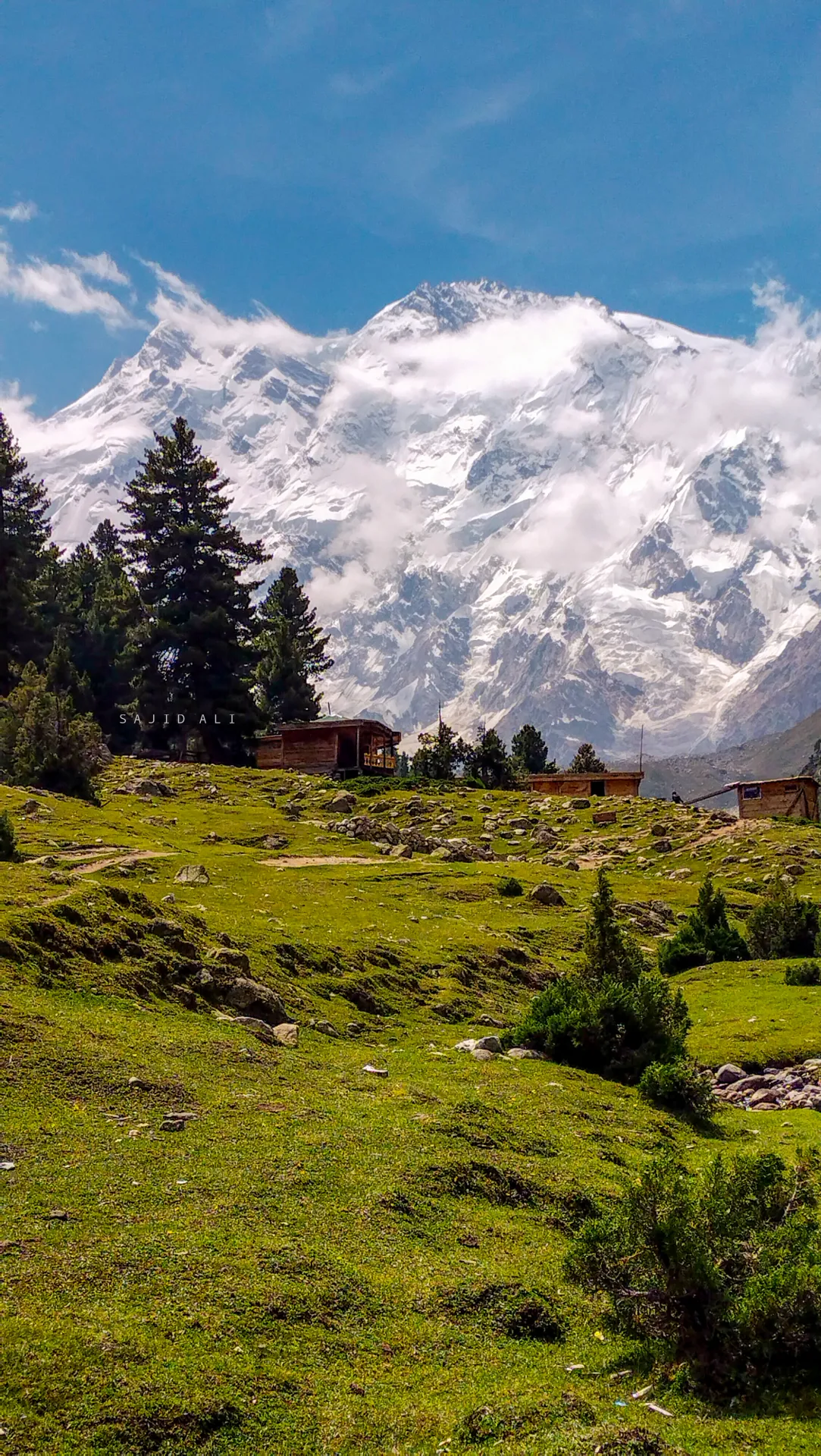
Wooden huts scattered across the meadows beneath Nanga Parbat at Fairy Meadows

Related Reading

Route guides, seasons and practical advice from our team in Gilgit-Baltistan.
View All Blogs