Best Time to Visit Hunza Valley: Month-by-Month Weather and Seasons
Blossom in late March, high summer from June, golden poplars in October and snow in January: temperatures, what is open and what it costs in every season.
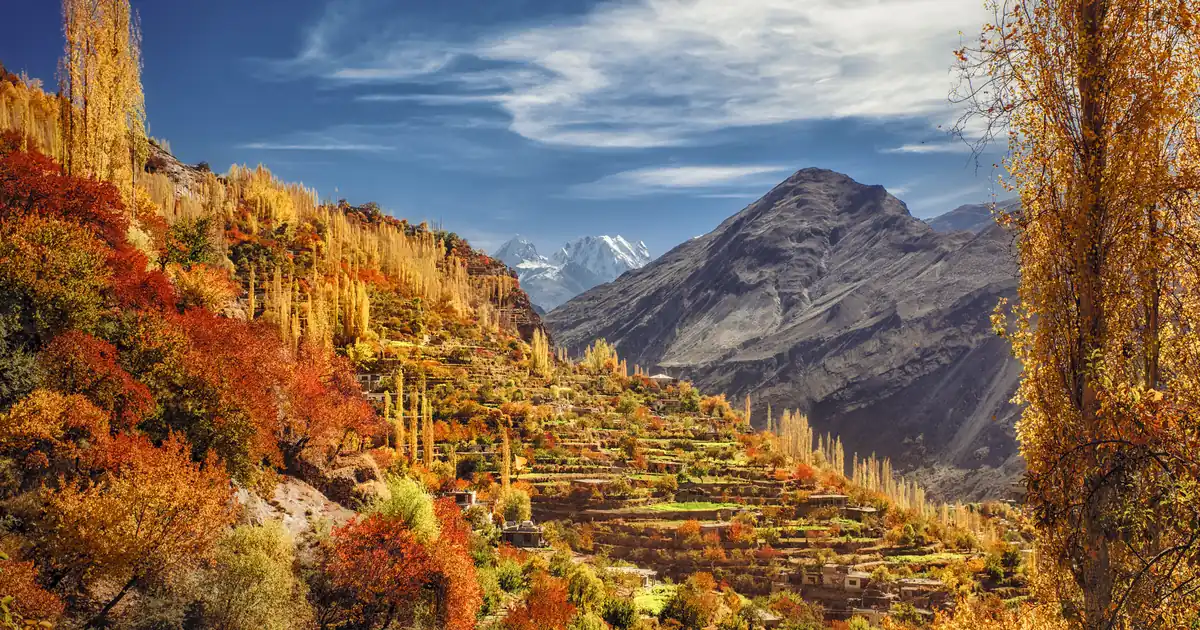
Hunza has four real seasons, and each one changes the trip. The same orchard at Karimabad is white in late March, deep green in July, orange in October and bare under snow in January. Roads, passes, flights and hotel prices all follow the calendar too, so the month you choose decides what you can do as much as what you will see.
This guide goes through Hunza month by month: temperatures, what is open, what it costs and what each season is good for. We take guests to Hunza through the year, and our Hunza Valley tour is planned around the same seasons described here.
Hunza seasons at a glance
| Season | Months | Best for | Watch out for |
|---|---|---|---|
| Spring | March to May | Cherry and apricot blossom, Navroz, snow still on the peaks | Cold mornings, the odd snow shower, some upper roads still closed |
| Summer | June to August | Trekking, Khunjerab Pass, Babusar road, Ginani festival | Domestic crowds, peak hotel prices, landslides on the highway after rain |
| Autumn | September to November | Clear skies, autumn colour, photography, fewer people | Short days and freezing nights from November |
| Winter | December to February | Snow, frozen lakes, empty valleys, the lowest prices | Many hotels closed, power cuts, flights and roads at the mercy of the weather |
Hunza weather month by month
Long-term weather averages for Karimabad itself are not widely published, so the most reliable starting point is Gilgit, about 100 km down the valley. The Pakistan Meteorological Department publishes long-term averages for Gilgit, at about 1,500 m. Karimabad, the main town in central Hunza, sits about 900 m higher at roughly 2,400 m. Air cools by around 6.5°C for every 1,000 m you climb, so we have taken about 6°C off the Gilgit figures to estimate Karimabad. Treat the Karimabad columns as a planning guide, not station data. Passu and upper Gojal run a few degrees colder again.
| Month | High / low °C | What is happening in Hunza |
|---|---|---|
| January | Karimabad 4 / -9 Gilgit 10 / -3 | Coldest month, snow on the ground, lakes freezing |
| February | Karimabad 7 / -6 Gilgit 13 / 0 | Still winter, the first thaw in the lower valley |
| March | Karimabad 12 / -1 Gilgit 18 / 5 | Navroz on 21 March, blossom starts in the last week |
| April | Karimabad 18 / 3 Gilgit 24 / 9 | Peak blossom early in the month, upper Hunza a week later |
| May | Karimabad 23 / 6 Gilgit 29 / 12 | Fresh green, the wettest month, quiet before summer |
| June | Karimabad 28 / 9 Gilgit 34 / 15 | Summer season opens, Babusar road and Ginani festival |
| July | Karimabad 30 / 12 Gilgit 36 / 18 | Warmest month, busiest roads and hotels |
| August | Karimabad 29 / 12 Gilgit 35 / 18 | Still hot and busy, trekking season at its height |
| September | Karimabad 26 / 6 Gilgit 32 / 12 | Clear, settled and calmer, the first colour up high |
| October | Karimabad 20 / 0 Gilgit 26 / 6 | Autumn colour peaks in central Hunza mid to late month |
| November | Karimabad 12 / -6 Gilgit 18 / 0 | Leaves fall, nights below freezing, very few visitors |
| December | Karimabad 6 / -8 Gilgit 12 / -2 | Winter sets in, many hotels close until March |
Two things stand out. Hunza is dry, with Gilgit getting barely 110 mm of rain a year, because the high ranges block the monsoon. April and May are the wettest months at about 25 mm each, and November the driest at 2 mm. And the swing between day and night is big: a bright October afternoon in Karimabad can reach 20°C, and the same night falls to around freezing. Pack layers whatever the month.
Spring in Hunza (March to May): blossom season
Spring is short and it is the season people plan the furthest ahead for. The cherry and apricot orchards of central Hunza (Karimabad, Altit and Ganish) usually peak from the last week of March to the first week of April. Upper Hunza, around Gulmit and Passu, flowers about a week later, so a trip in early April often catches both. A mild February can bring the bloom forward by a week and a cold one can push it back, so build in a little flexibility. Our Hunza cherry blossom guide has the full village-by-village dates.
Spring also brings Navroz on 21 March, the Persian new year, which the Ismaili communities of Hunza celebrate with prayers, family gatherings, food and music. It is a lovely time to be in the valley.
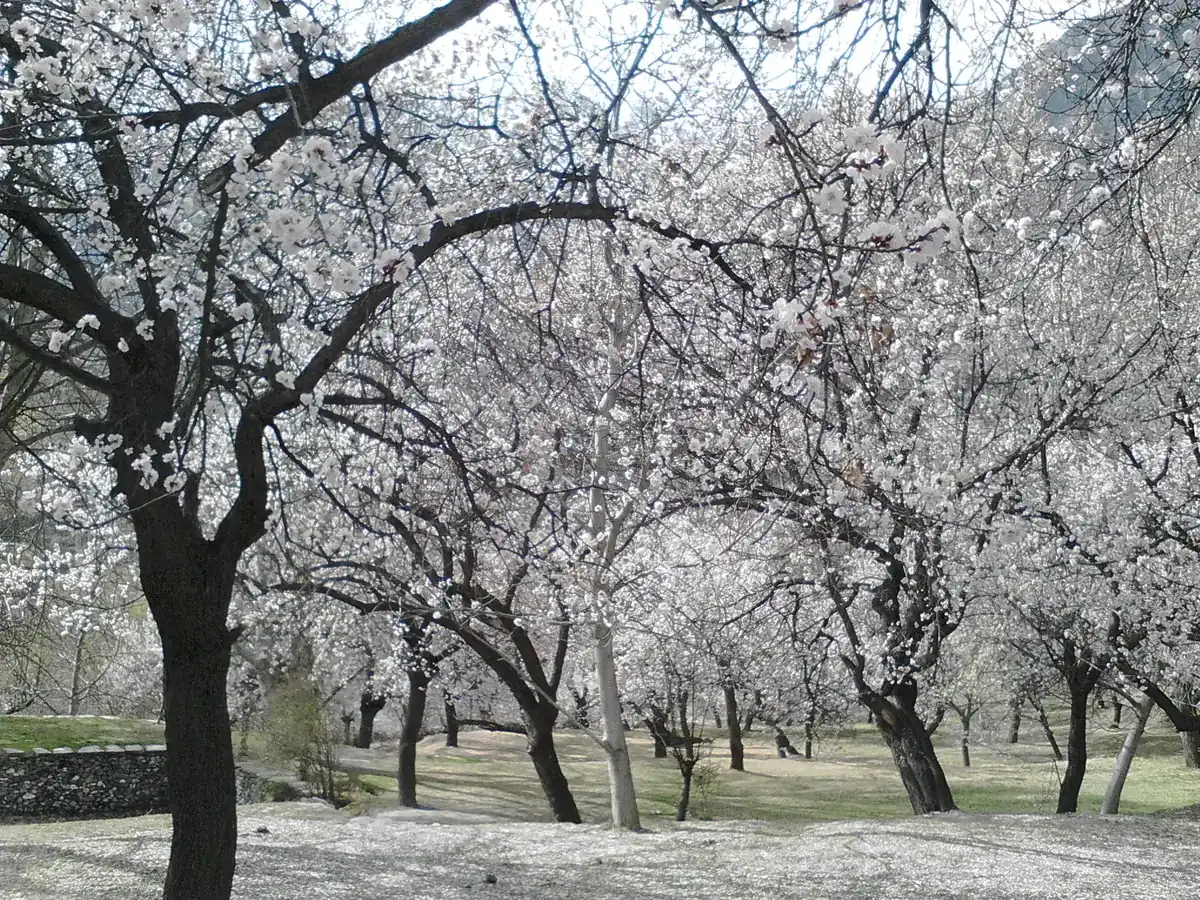
The catch is the cold. Mornings in late March are close to freezing, the peaks are still heavy with snow (which is what makes the blossom photos so good) and an April snow shower is not unusual. The Khunjerab road above Sost can still be blocked by snow, and Babusar Pass stays closed until about June, so everyone comes up the Karakoram Highway or flies to Gilgit. May is the overlooked month: the blossom has gone, but the valley is fresh green, the fields are being planted and you will have it largely to yourself.
Summer in Hunza (June to August): high season
Summer is when everything is open. Days in Karimabad are warm, around 28 to 30°C in July, while nights stay cool enough for a jacket. The high trails are clear of snow, which makes June to September the window for treks like Rush Lake, Patundas and the Shimshal valley. The Babusar Pass road from Naran usually opens around mid-June, and the drive up to the Khunjerab Pass on the China border (4,693 m) is at its most reliable.
Hunza's harvest festival, Ginani, falls in summer too. It is traditionally held around the solstice in late June, when the first wheat ripens, with the main celebration at Baltit Fort in Karimabad: music, sword dances and a ceremonial visit to the ripening wheat fields. The exact date is set locally each year, so check before you build a trip around it (Wikipedia has a good background).
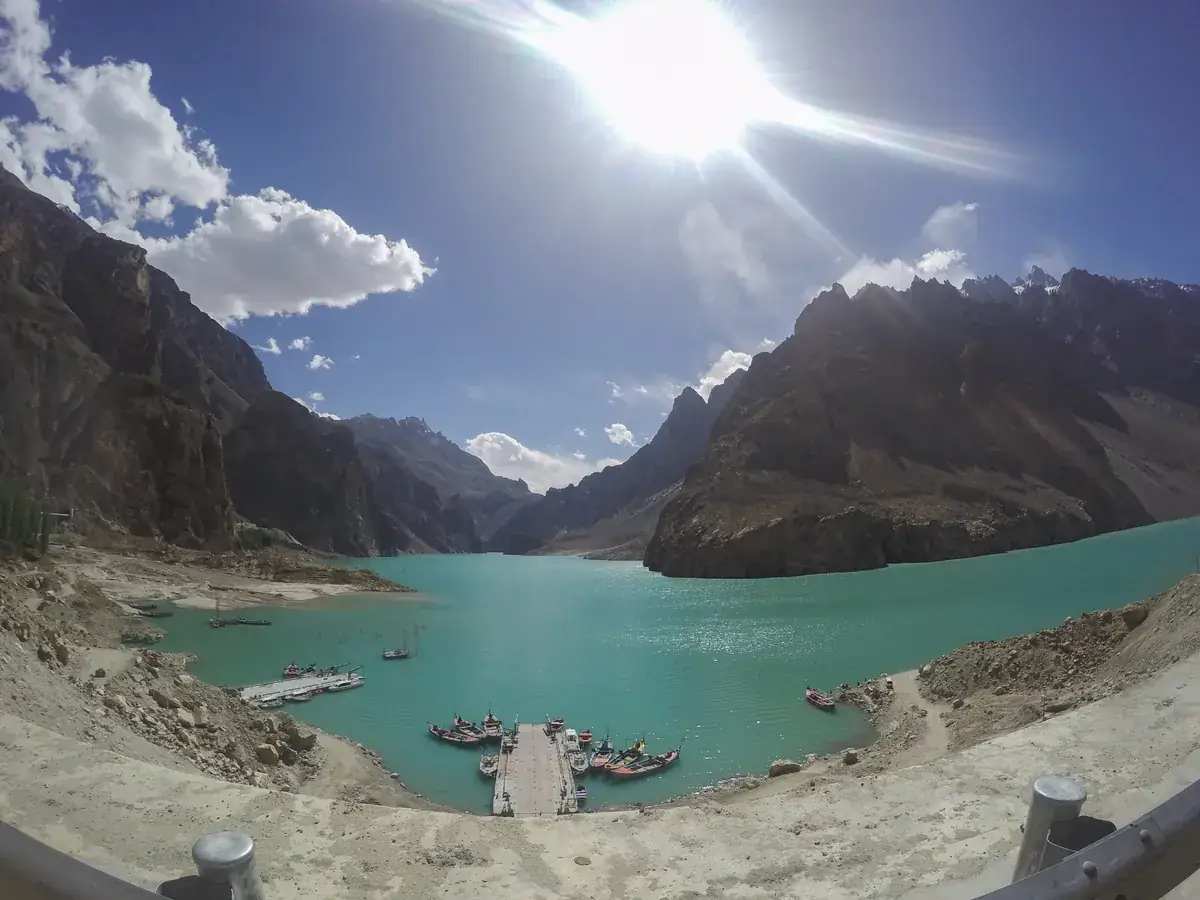
The downside is people. Pakistani school holidays run through roughly June to August, and Eid weeks bring a further rush, so Karimabad, Attabad Lake and the Hussaini bridge get busy and hotel rates are at their highest. The monsoon barely reaches Hunza itself, but heavy rain lower down the Karakoram Highway can trigger landslides that close the road for hours, occasionally for days. If you travel in July or August, book rooms early and keep a buffer day.
Autumn in Hunza (September to November): colour and clear skies
If we had to pick one month, it would be September. The weather is still summer-like, the skies are at their clearest, the crowds have gone home and every road and pass is open. Then the colour arrives. The higher valleys turn first, with upper Gojal and Shimshal going gold from late September to mid-October, while central Hunza around Karimabad and Altit peaks in mid to late October. The poplars go yellow, and the apricot and cherry orchards turn orange and red against the snow peaks.
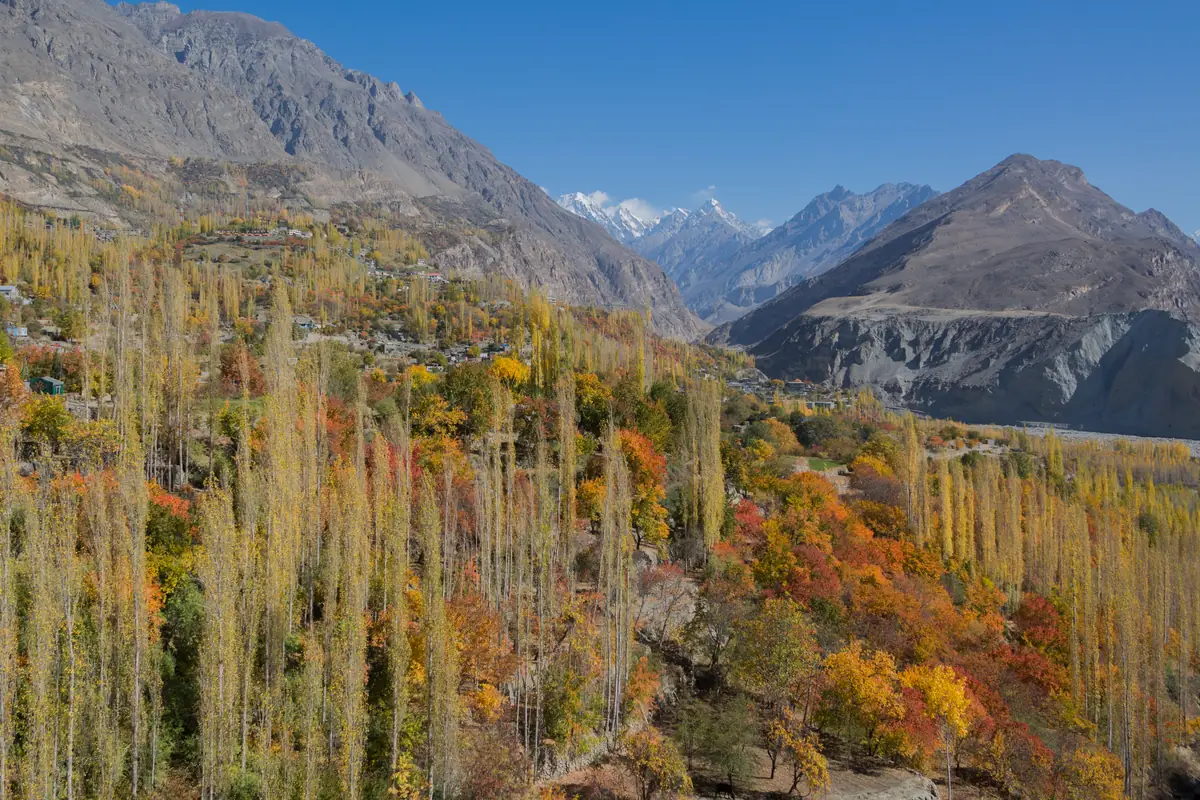
October is the season serious photographers come for, and it is also one of the two busy windows of the year (the other being blossom), so the best rooms with a view of Rakaposhi go early. November is cold, with nights well below freezing, and the leaves are mostly down by the middle of the month, but it is very quiet and you will see Hunza as the people who live there do. For timing across the whole north, see our guide to autumn colours in Pakistan.
Winter in Hunza (December to February): snow and silence
Winter is not the season for most first-timers, but it is not closed either. Karimabad sees highs of around 4°C in January and nights well below freezing, with snow on the ground for weeks at a time. Attabad Lake freezes at the edges, and smaller lakes like Borith near Gulmit freeze over completely. The valley is silent and the light on Rakaposhi and Ultar can be extraordinary.
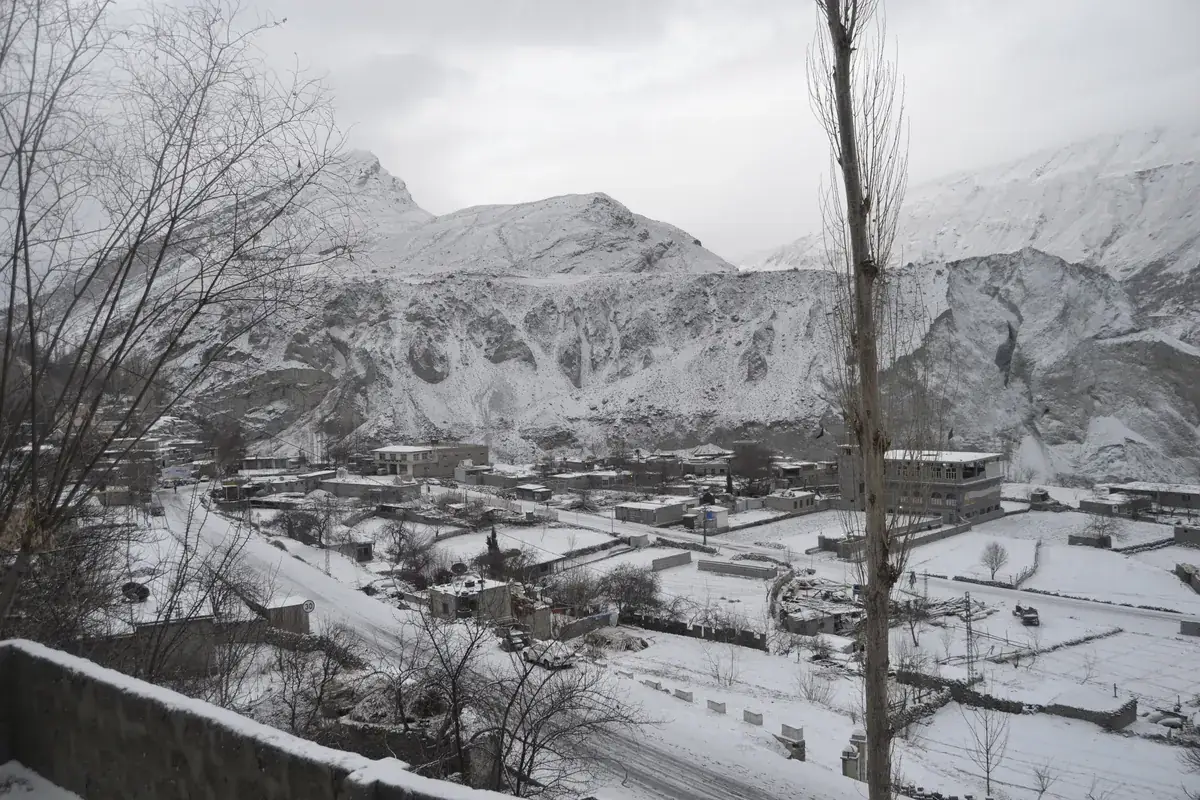
Plan carefully. Many hotels in Karimabad and Gojal close from about November to March, and the ones that stay open rely on wood stoves and generators, as power cuts are common. The Khunjerab Pass has officially operated year-round since December 2024, when Pakistan and China extended the old April to November season (Dawn reported the change), but heavy snow still closes the road above Sost at times, so a winter trip to the border is never guaranteed. Babusar is shut, and the Gilgit flight is often cancelled by low cloud. For snow and solitude, though, it is a rewarding time to go.
Best time to visit Hunza for what you want
| If you want | Go in | Why |
|---|---|---|
| Cherry and apricot blossom | Last week of March to mid-April | Central Hunza first, upper Hunza a week later |
| Autumn colour | Mid to late October | Peak gold in Karimabad and Altit, earlier up in Gojal |
| Trekking | June to September | High trails free of snow, long days |
| Khunjerab Pass | May to October | The road is most reliable outside winter |
| Clear mountain views | September and October | Driest, most settled skies of the year |
| Fewest people | May, November, winter | Outside the school holidays and the two colour seasons |
| Lowest prices | November to February | Hotels discount heavily, though many close |
| Snow and frozen lakes | Late December to February | Coldest weeks, with Borith Lake frozen over |
Getting to Hunza in each season
Hunza is about 600 km from Islamabad by road. There are three ways up, and the season decides which ones are available:
- Fly to Gilgit, about an hour from Islamabad, then drive 2.5 to 3 hours to Karimabad. This is the fastest option, but the flight is weather-dependent and often delayed or cancelled, especially in winter and spring, so always keep a spare day.
- The Karakoram Highway via Besham and Chilas, open all year, two long days of driving. Note that the UK Foreign Office advises against all travel on the Mansehra to Chilas section, so foreign visitors should check their own government's advice first.
- Naran and the Babusar Pass (4,173 m), which joins the highway at Chilas and avoids that section, but is only open from about mid-June to the end of October.
In practice that means spring and winter trips depend on the Gilgit flight or the highway, while summer and early autumn give you all three. The Karakoram Highway guide has the full route, distances and driving times.
What a Hunza trip costs through the year
Season moves prices more than anything else. Hotels in Karimabad charge the most in July, August, early April and October, give their best rates in September and May, and are cheapest (when open) in winter. As a rough guide, a 7-day spring road trip from Islamabad for a couple starts around PKR 250,000 to 300,000 all in, depending on hotel standard. Our guided Hunza Valley tour starts from $1,200 per person, and the Khunjerab Pass trip from $950. Whenever you go, book the blossom and October weeks early, because the good rooms fill months ahead.
For the wider picture, including Skardu, Fairy Meadows and the south, see our guide to the best time to visit Pakistan.
Frequently asked questions
What is the best month to visit Hunza?
The best month to visit Hunza for most travellers is September. The weather is still warm, with days in Karimabad around 26°C, the skies are at their clearest, all the roads and passes are open, and the summer crowds have gone home. If you want something specific, the answer changes. For cherry and apricot blossom, aim for the last week of March or the first week of April. For autumn colour, mid to late October is the peak in central Hunza, with upper Gojal turning a couple of weeks earlier. For trekking, June to September is the window, when the high trails are free of snow. July and August are the warmest months but also the busiest and most expensive, because they fall in the Pakistani school holidays. Winter is cold and many hotels close, but it suits travellers who want snow and empty valleys.
When is cherry blossom season in Hunza?
Cherry blossom season in Hunza usually peaks from the last week of March to the first week of April in central Hunza, around Karimabad, Altit and Ganish. Upper Hunza, around Gulmit and Passu, flowers about a week later, so a trip in early April often lets you see both. The exact timing moves with the weather: a mild February can bring the bloom forward by a week, while a cold one can push it back, so keep your dates a little flexible. Expect cold mornings close to freezing, mild afternoons and plenty of snow still on the peaks, which is what makes the blossom photos so striking. Navroz, the Persian new year on 21 March, falls at the start of the season and is celebrated across the valley. Blossom weeks are busy, so book rooms early.
When do the autumn colours peak in Hunza?
The autumn colours in central Hunza usually peak in mid to late October, when the poplars around Karimabad and Altit turn gold and the apricot and cherry orchards go orange and red. The higher valleys turn first, so upper Gojal and Shimshal are at their best from late September to mid-October, while central Hunza is still green. That means a two-week window from early to late October lets you follow the colour down the valley. The weather is usually clear and dry, with afternoons around 20°C in Karimabad and nights close to freezing, so bring warm layers. By the middle of November most of the leaves are down. October is one of the two busiest times of year in Hunza, along with blossom season, so the hotels with the best mountain views book up well in advance.
Is Hunza worth visiting in winter?
Hunza is worth visiting in winter if you want snow, frozen lakes and a quiet valley, and you are prepared for the cold. In January, Karimabad has highs of around 4°C and nights well below freezing, with snow on the ground for weeks. Attabad Lake freezes at the edges and Borith Lake near Gulmit freezes over completely. The light on peaks like Rakaposhi and Ultar can be superb. The trade-offs are real, though. Many hotels close from about November to March, the ones that stay open depend on wood stoves and generators because power cuts are common, and the Gilgit flight is often cancelled by low cloud. Babusar Pass is closed, so you either fly or take the Karakoram Highway. Winter is also the cheapest season. Pack serious cold-weather clothing and keep spare days.
Is the Khunjerab Pass open all year?
The Khunjerab Pass has officially been open all year since December 2024, when Pakistan and China agreed to extend the old season, which ran only from April to November, to year-round operation. In practice, though, the road up to the pass at 4,693 m still depends on the weather. Heavy snow in winter can close the highway above Sost for days at a time, and there are few facilities on the Pakistani side in the coldest months. For a sightseeing visit, May to October is still the most reliable window, with June to September the safest bet. If you plan to go in winter, check road conditions in Sost the day before and be ready to turn back. Foreign visitors should carry their passport, because there are checkpoints on the way to the border.
What is the weather like in Hunza in July?
July is the warmest month in Hunza. Days in Karimabad reach about 28 to 30°C, while Gilgit, lower down the valley, averages around 36°C. Nights in Karimabad drop to around 12°C, so you still want a jacket in the evening, and it is colder again at Passu and up towards the Khunjerab Pass. July is mostly dry, because the high mountains keep out most of the monsoon, but heavy rain further down the Karakoram Highway can set off landslides that close the road for hours, occasionally for days. July is also the busiest month, with Pakistani school holidays filling hotels and the main sights, and room rates are at their highest. All the trekking routes and high roads are open, so it is a good month for walking, as long as you book early.
When is Hunza cheapest and least crowded?
Hunza is cheapest from November to February, when hotels that stay open offer their lowest rates, though many close completely for the winter. For low prices without the cold, the best months are May and September. May falls between blossom season and the summer holidays, and the valley is fresh and green. September has summer weather and clear skies after the school holidays end. The busiest and most expensive times are July and August, when Pakistani families travel during the school holidays, along with the blossom weeks in early April and the autumn colour in October, when the best rooms book up months ahead. Eid holiday weeks also bring a sharp rush from the cities. If you have to travel at a peak time, book early and avoid the weekend crowds at Attabad Lake.
Ready for Your Next Adventure?
Join our community of explorers and discover the journey of a lifetime. Our expert team is ready to help you plan your perfect expedition.