Qaqlasht Meadows: Festival, Route & Season
A grass plateau at 2,500 m above Booni in Upper Chitral, and the four-day spring festival that fills it. Including the five years it did not run.
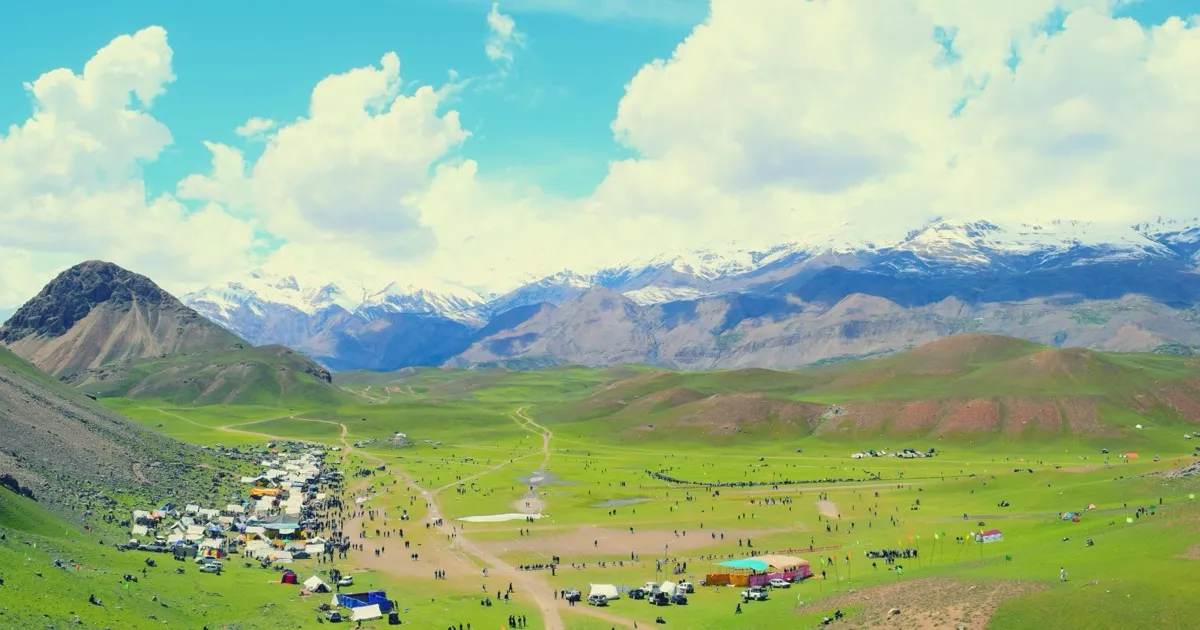
Qaqlasht Meadows is a high grass plateau in Upper Chitral at about 2,500 m, sitting roughly 415 m directly above the town of Booni, not 22 km away as most guides claim. It is best known for Jashn-e-Qaqlasht, a four-day spring festival of polo, horse sports and Kho music. The festival ran 17 to 20 April in 2025, but it was cancelled for five years before 2024, so confirm the dates before you build a trip around it.
Qaqlasht is not a valley or a lake. It is a broad shelf of grass tilted above the Chitral river, wide enough that a polo match, a cricket game and a few hundred tents can all happen on it at once without anyone getting in the way. For four days each spring that is exactly what happens.
The rest of the year it is empty, and reaching it is far easier than the published guides suggest. That gap between what is written and what is actually there is worth clearing up first.
Where Qaqlasht Meadows actually is
Qaqlasht sits in Upper Chitral District, Khyber Pakhtunkhwa, at 36°17′09″N 72°14′01″E, at an elevation of about 2,500 m. The nearest town is Booni, the district headquarters, at 2,085 m.
Here is the part worth correcting. The two guides that currently rank for this place both state that Booni is 22 km from Qaqlasht. Run the coordinates and the real distance is about 2.8 km in a straight line. Wikipedia's own entry on Booni says the meadows are "located near the town". The plateau is not a separate destination reached by a long drive. It is the high ground immediately above Booni, roughly 415 vertical metres up.
| Detail | Commonly published | What the record shows |
|---|---|---|
| Distance to Booni | 22 km | About 2.8 km |
| Elevation | 8,000 ft / 2,438 m | 2,500 m / 8,200 ft |
| Festival dates | rarely given at all | 2025: 17 to 20 April; 2024 opened 18 April |
| Festival continuity | described as annual | Paused for five years, revived 2024 |
That difference matters for planning. If you think the plateau is 22 km from the nearest town you budget a half day and a vehicle for it. In practice you can be staying in Booni and walk up.
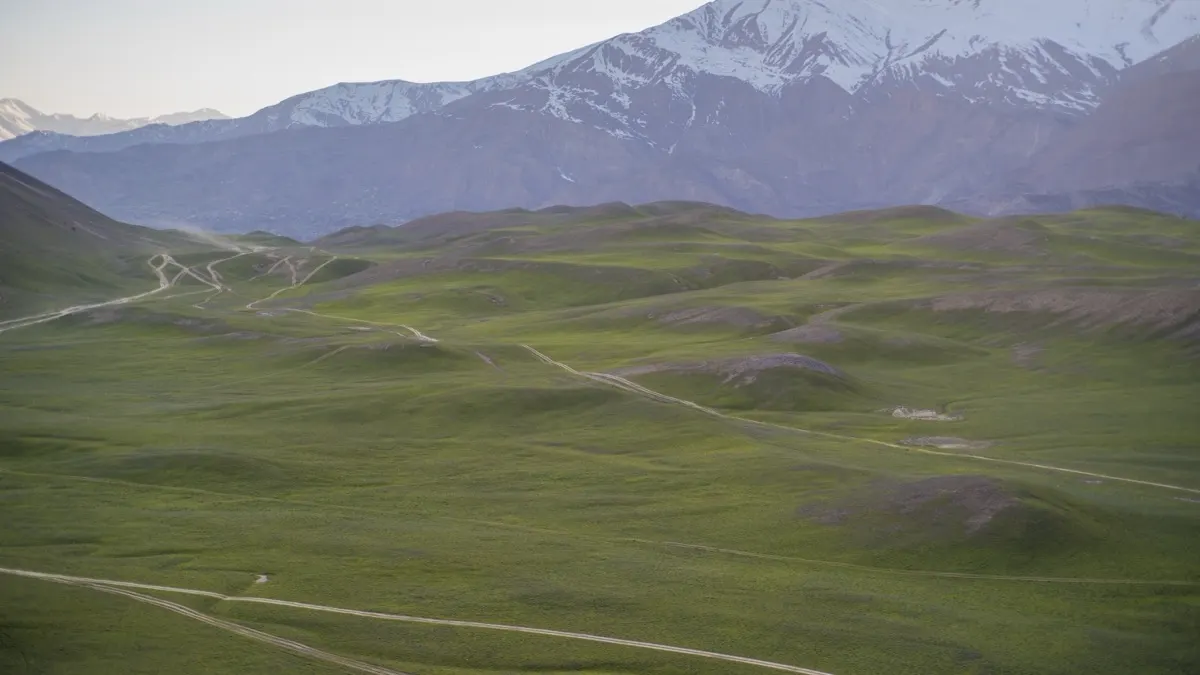
Jashn-e-Qaqlasht: the spring festival
The festival is the reason most people have heard of the plateau. It belongs to Kho culture, the language and traditions of Chitral proper, and it is distinct from the Kalash festivals further south in Bumburet and Rumbur. Not the same people, not the same valleys, not the same calendar. Guides that fold them together are wrong to.
What actually happens over the four days
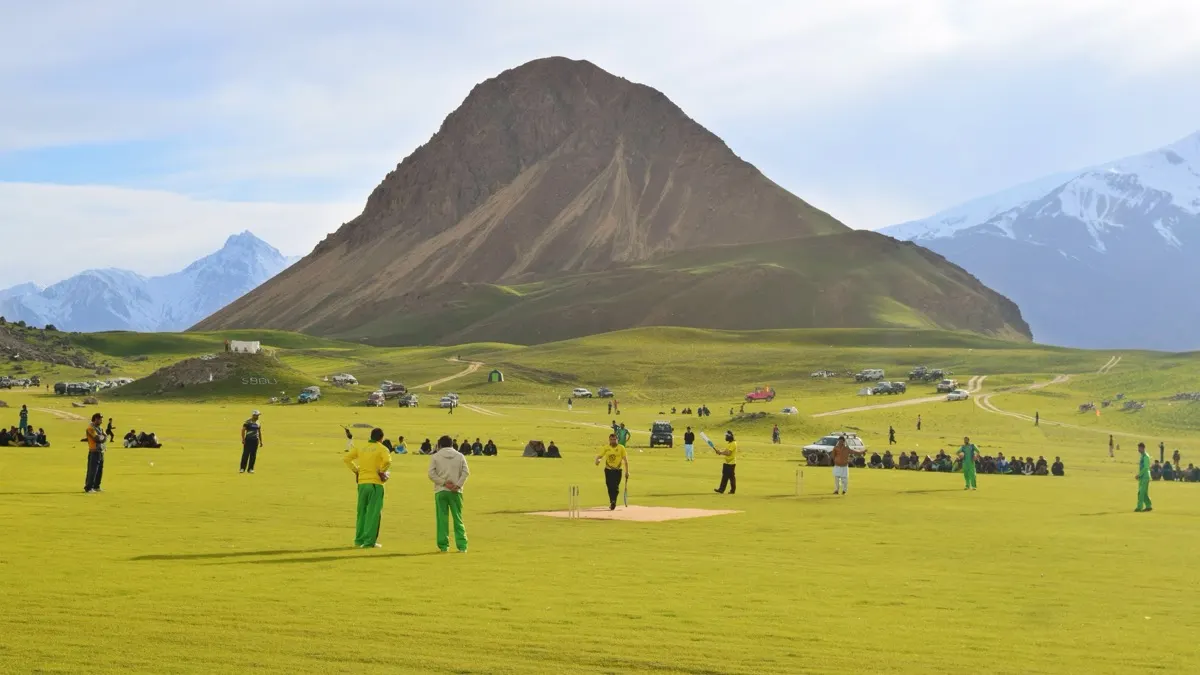
The anchor events are equestrian and traditional: free-style polo of the kind Chitral and Ghizer play, horse racing, and tug of war. Around those the organisers run a long list of everything else, and the list has grown as the festival has been rebuilt:
- Sports: cricket, football, volleyball, table tennis, a marathon
- Adventure: paragliding off the plateau edge, zip-lining, rock climbing
- Traditional: archery, skeet shooting, Kho music and dance, a musical night
- Food stalls serving Chitrali cuisine, and a literary programme
Paragliding is worth singling out. A grass shelf with 400 m of clean air below it and a valley to land in is unusually good terrain for it, and it is one of the few places in Pakistan where you will see paragliders and polo ponies sharing a field.
When it runs, and why you must check
The festival is four days in spring. Recent editions:
| Year | Dates | Note |
|---|---|---|
| 2019 to 2023 | not held | Five-year gap |
| 2024 | Opened 18 April | First edition after the pause |
| 2025 | 17 to 20 April | Organised by the Jashn-e-Qaqlasht Committee |
| 2026 | Not yet confirmed at the time of writing | Expect mid to late April |
This is the single most important thing to know about Qaqlasht, and no other guide says it. The festival is described everywhere as annual. It was not held at all between 2019 and 2023. It came back in 2024, ran again in 2025, and the dates have shifted each year. Booking flights around an unconfirmed date is how people end up on an empty plateau in April.
The event is run by the Jashn-e-Qaqlasht Committee, with members of the Chitral royal family among the organisers and the district administration providing security and logistics. Announcements usually come a week or two ahead through local outlets such as Chitral Today. If you are travelling specifically for the festival, that is where to look, and it is worth having a plan that still works if the dates move.
How old is it really?
You will read that the celebration goes back 2,000 years. That claim appears on Wikipedia and is repeated widely, and we have not found a primary source for it, so treat it as tradition, not documented history. What is better established is the modern record: the festival was revived in 2003 after a gap of around 35 years, ran until 2018, stopped, and returned in 2024. A festival interrupted twice in living memory is a better story than an unbroken 2,000-year one, and far more useful to a traveller.
How to get to Qaqlasht
Everything runs through Chitral town first.
| Leg | Distance | Time | Notes |
|---|---|---|---|
| Islamabad to Chitral by road | via Lowari Tunnel | 10 to 12 hours | The tunnel keeps the route open in winter |
| Peshawar to Chitral by road | via Lowari | 8 to 10 hours | |
| Islamabad to Chitral by air | about 1 hour | Weather-dependent, cancellations are common | |
| Chitral town to Booni | about 80 km | 2 to 3 hours | Chitral to Shandur road, paved but slow |
| Booni up to the plateau | about 2.8 km | short drive or walk up | The part everyone overstates |
The flight is the variable. Chitral's airstrip sits in a valley and services are cancelled for weather often enough that you should not build a four-day festival trip around a same-day arrival. Most of our groups drive at least one direction.
The road from Chitral to Booni is the Chitral to Shandur road, which continues east over the Shandur pass into Ghizer. That matters if you are planning a longer loop, because Qaqlasht is on the way to somewhere, not a dead end.
Best time to visit
Two different answers depending on what you want.
| Season | Months | What you get |
|---|---|---|
| Spring | April to May | The grass is at its greenest and the festival falls here. Also the busiest the plateau ever gets. |
| Summer | June to August | Warm, long days, empty plateau. Good for camping and paragliding. |
| Autumn | September to October | Clear air and the best mountain visibility. Grass is going gold rather than green. |
| Winter | November to March | Snow and cold. A separate local winter sports festival has run in early January. |
If the photographs of a vivid green plateau are what brought you here, that is spring. If you want the place to yourself, come in summer. For a wider view of how the seasons behave across northern Pakistan, our guide to the best time to visit Pakistan covers the whole country.
Where to stay
There is no hotel on the meadow itself. Your options are:
- Booni, immediately below, which has guesthouses and a government rest house. Being the district headquarters it has more beds than you would expect for its size.
- Camping on the plateau, which is what most people do during the festival and is straightforward the rest of the year. There is no infrastructure, so carry everything.
- Chitral town, 2 to 3 hours back down the road, if you want a proper hotel.
During festival week Booni fills up. If you are going for the festival and you want a bed rather than a tent, arrange it well in advance or plan to stay in Chitral and drive up each morning.
What to combine it with
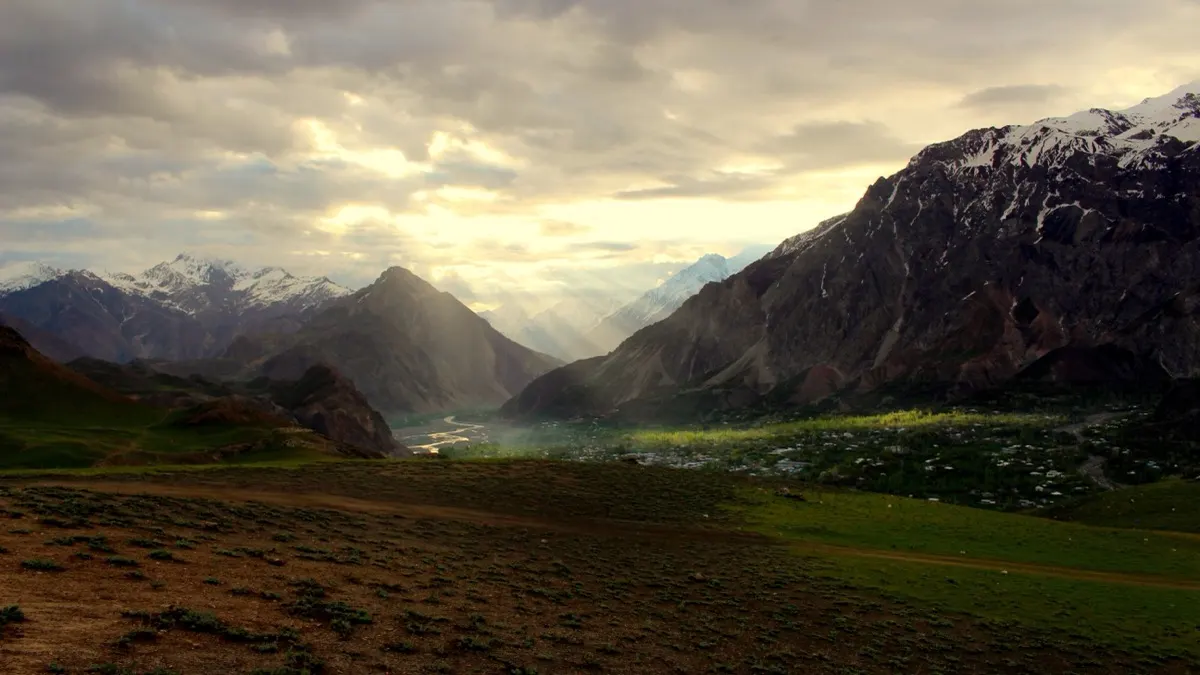
Qaqlasht is a half-day stop on its own. It earns a trip when you build a Chitral route around it.
- The Kalash valleys, south of Chitral town, where the Chilam Joshi festival runs in May. Another people and another festival, but the two sit naturally in one itinerary. We run that one as a scheduled departure, and you can see the shape of it on our Chilam Joshi festival tour.
- Shandur Pass, continuing east on the same road, home to the polo tournament held at 3,700 m each summer, in June in recent years (11 to 13 June in 2026).
- Phandar Valley, over the pass in Ghizer, which turns Qaqlasht into the first stop of a Chitral to Gilgit crossing instead of an out-and-back.
- Booni itself, which most travellers drive straight through and which has the only real services for a long way in either direction.
Is it worth going?
For the festival, yes, with the caveat that you confirm it is running. Four days of polo, paragliding and Kho music on a green shelf under the Hindu Kush is not something you can see anywhere else, and it is a genuine local event, not a staged one.
Outside festival week, be honest with yourself about what it is: a very beautiful empty field. Worth an afternoon and a night of camping if you are passing through on the Shandur road. Not worth a dedicated 12-hour drive from Islamabad on its own.
Common questions
Where is Qaqlasht Meadows?
Qaqlasht Meadows is in Upper Chitral District, Khyber Pakhtunkhwa, Pakistan, at 36°17′09″N 72°14′01″E. It is the high plateau directly above the town of Booni, about 2.8 km away and roughly 415 m higher, not 22 km as several guides state. Booni is the district headquarters, so the meadow sits on the doorstep of the only real services for a long way in either direction. The plateau is a broad shelf of grass tilted above the Chitral river, wide enough for a polo match, a cricket game and a few hundred tents at once. It is not a valley or a lake, and it is not a separate destination reached by a long drive. That matters for planning. If you believe the 22 km figure you budget half a day and a vehicle for the detour. In practice you can stay in Booni and walk up, or make the short drive.
How high is Qaqlasht?
Qaqlasht is about 2,500 m above sea level, or 8,200 ft. Some guides give 8,000 ft (2,438 m) instead, which is close but not quite the figure the record supports. Booni below it sits at 2,085 m, so the plateau rises a little over 400 m above the town, roughly 415 vertical metres. That height keeps summer days warm and long rather than hot, and autumn brings the clearest mountain views of the year. The drop below the plateau edge is the more striking number. With around 400 m of clean air under the grass and a valley to land in, it is unusually good terrain for paragliding, which is why the festival programme includes it. In spring the grass at this height is at its greenest, and from November to March it carries snow.
When is the Qaqlasht Festival?
The Qaqlasht Festival, Jashn-e-Qaqlasht, is a four-day spring festival, usually held in the second half of April. It ran 17 to 20 April in 2025 and opened on 18 April in 2024. The 2026 dates were not confirmed when our guide was written, though mid to late April is the pattern to expect. Dates shift each year and are announced only a week or two ahead, so confirm before booking travel. The event is run by the Jashn-e-Qaqlasht Committee, with members of the Chitral royal family among the organisers and the district administration handling security and logistics. Announcements usually come through local outlets such as Chitral Today, and that is the place to watch if the festival is the reason for your trip. Because flights to Chitral are often cancelled for weather, we suggest building in spare days and driving at least one direction so a moved date does not leave you stranded.
Was the Qaqlasht Festival cancelled?
Yes. The festival was not held between 2019 and 2023, a five-year gap, and was revived in 2024. It had also been revived once before, in 2003, after roughly 35 years without it, and then ran until 2018 before stopping again. Treat it as a festival that usually runs, not one that always does. This is the most important thing to know before planning a trip, because most sources still describe it as annual. After the 2024 revival it ran again in 2025, on 17 to 20 April, and the dates have moved each year. You may also read that the celebration goes back 2,000 years. That claim is widely repeated, but we have not found a primary source for it, so we treat it as tradition rather than documented history. If you are travelling for the festival, make a plan that still works if it is postponed, such as a Chitral route with other stops.
What happens at the Qaqlasht Festival?
Free-style polo and horse racing are the anchor events, of the kind Chitral and Ghizer play, alongside tug of war, archery and Kho music and dance. The wider programme includes cricket, football, volleyball, table tennis, a marathon, paragliding, zip-lining, rock climbing, skeet shooting, food stalls serving Chitrali cuisine, a literary programme and a musical night. The list has grown as the festival has been rebuilt after each break. The plateau is flat and wide enough to run several events side by side, so you can wander from a polo match to a cricket game without leaving the grass. Paragliding is the one to watch for. With a grass shelf and around 400 m of clean air below it, this is one of the few places in Pakistan where paragliders and polo ponies share a field. It is a genuine local event belonging to Kho culture, not one staged for tourists.
How do you get to Qaqlasht from Islamabad?
Drive to Chitral via the Lowari Tunnel, which takes 10 to 12 hours, or fly to Chitral in about an hour when the weather allows. From Chitral town it is roughly 80 km and 2 to 3 hours north to Booni on the Chitral to Shandur road, then a short climb to the plateau. That last stretch from Booni is only about 2.8 km, a short drive or a walk. The Lowari Tunnel keeps the road open in winter, and from Peshawar the drive to Chitral is 8 to 10 hours. The flight is the variable. Chitral's airstrip sits in a valley and services are cancelled for weather often enough that a same-day arrival is a poor basis for a four-day festival trip, so most of our groups drive at least one direction. The road beyond Booni continues east over the Shandur Pass into Ghizer, so Qaqlasht can be the first stop on a longer crossing.
Is Qaqlasht the same as the Kalash festivals?
No. Qaqlasht is a Kho festival on a plateau in Upper Chitral, and Kho is the language and culture of Chitral proper. The Kalash festivals, including Chilam Joshi, belong to the Kalash people in the Bumburet, Rumbur and Birir valleys south of Chitral town. Separate communities in separate valleys, on their own calendars, though both can sit in one Chitral itinerary. Guides that fold the two together are simply wrong. The timing differs too. Qaqlasht falls in spring, usually the second half of April, while Chilam Joshi runs in May. The setting is different as well: Qaqlasht is an open grass shelf above Booni, around 2 to 3 hours up the road from Chitral town, and the Kalash valleys lie in the other direction. We run Chilam Joshi as a scheduled departure, and a spring trip can link the two if the Qaqlasht dates are confirmed in time.
Can you camp at Qaqlasht Meadows?
Yes, and during the festival most visitors do. There is no infrastructure on the plateau, so carry water, shelter and everything else in and out. Outside festival week you will likely have the place to yourself. Booni immediately below has guesthouses and a government rest house if you would rather have a bed. Camping is straightforward for the rest of the year too, and summer, from June to August, brings warm long days on an empty plateau that suit both camping and paragliding. Autumn gives the clearest air and the best mountain views, with the grass turning gold. From November to March expect snow and cold. During festival week Booni fills up, so if you want a bed rather than a tent, arrange it well in advance or stay in Chitral town and drive up each morning, which is 2 to 3 hours each way.
Ready for Your Next Adventure?
Join our community of explorers and discover the journey of a lifetime. Our expert team is ready to help you plan your perfect expedition.