Kalash Festivals 2027: Dates, Rituals & Etiquette
Chilam Joshi, Uchal, Pul and Chawmos: the 2027 dates, why they move, what happens on the days, how to reach the valleys, permits and the photography rules.
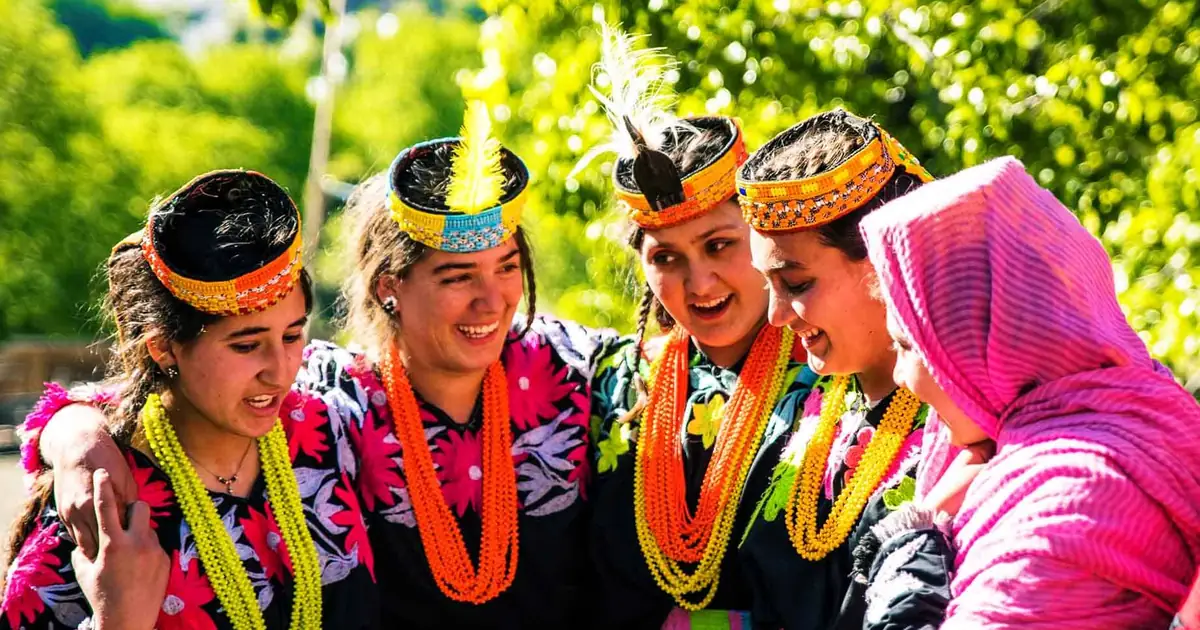
The Kalash festivals in 2027: Chilam Joshi, the spring festival, runs 12 to 17 May; Uchal, the harvest festival, falls around 20 to 22 August; Pul is held in Birir in September; and Chawmos, the winter festival, runs roughly 7 to 22 December, with only the second week open to visitors. All take place in the three Kalash valleys of Bumburet, Rumbur and Birir in Chitral, north-west Pakistan. Foreigners need no NOC to attend. Around Chitral the festivals are often just called the Kailash mela, and you will see Chilam Joshi spelled Joshi or Chelam and Chawmos spelled Choimus.
The Kalash are a community of about 7,500 people (the 2023 census counted 7,466 Kalasha speakers) who keep their own religion, language and calendar in three narrow valleys of the Hindu Kush. Four times a year that calendar brings everyone out to dance. I have guided groups through all of these festivals, and the questions are always the same: which dates, which valley, can I take photos, and how do I get there. This guide answers them.
Kalash festival dates 2027: the full calendar
These are the four festivals of the Kalash year, and the main Chitral festivals worth planning a trip around.
| Festival | 2027 dates | What it marks | Where | Open to visitors? |
|---|---|---|---|---|
| Chilam Joshi | 12 to 17 May | Arrival of spring, blessing of the herds | All three valleys; biggest in Bumburet | Yes, the busiest |
| Uchal | about 20 to 22 Aug | Wheat and barley harvest; herders back from the pastures | All three valleys | Yes, small crowds |
| Pul | September | Walnut and grape harvest, full moon | Birir only | Yes, rarely visited |
| Chawmos | about 7 to 22 Dec | Winter solstice and the new year; honours the god Balimain | All three valleys | Second week only (about 15 to 22 Dec) |
Treat every date as provisional until the spring before. The elders confirm them, and in some years Chilam Joshi has shifted by a day or two. If you are booking flights, build in a spare day either side.
Join us in 2027: booking is open. We run small-group trips for Chilam Joshi (12 to 17 May), Uchal (August) and the public week of Chawmos (December), with Kalash-run guesthouses, a local guide and all permits included. See dates and prices for our 2027 Kalash festival tours or ask us to hold a place.
Why the Kalash festival dates change
The Kalash do not run their year by the Gregorian calendar. Festival dates are set by Suri Jagek, "observing the sun": elders watch where the sun rises and sets against fixed points on the mountains, and read the moon and stars, from traditional observatories in each valley. In November 2018 UNESCO added Suri Jagek to its list of intangible heritage in need of urgent safeguarding. It was Pakistan's first ever independent nomination.
For a traveller that means two things. The dates are real and they are reliable within a day or two. And they are announced by the community, not by a tourism office, so a date you read online for "Kalash festival 2027" is only as good as whoever checked it with the valleys.
Chilam Joshi festival 2027: the spring festival (12 to 17 May)
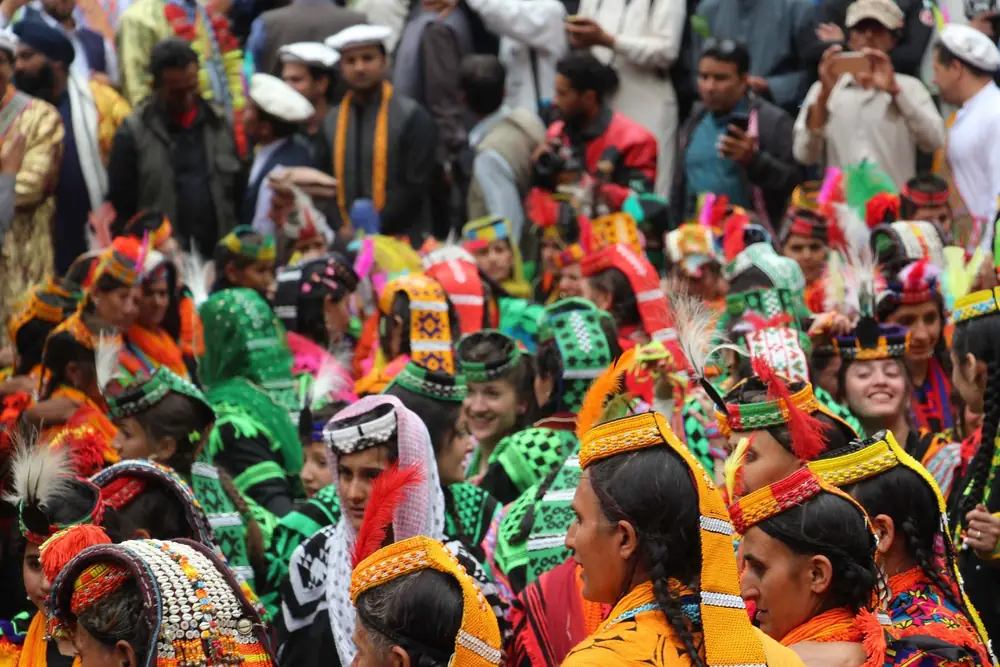
The Chilam Joshi festival dates for 2027 are 12 to 17 May. Chilam Joshi is the one most people mean when they say "the Kalash festival". It welcomes spring and asks the god Goshidai to protect the goats as they go up to the summer pastures. Women and girls wear new dresses, often sewn over the winter, with their beaded shushut headbands and, for older women, the heavy cowrie-shell kupas headdress. Houses and heads are decorated with walnut leaves and flowers.
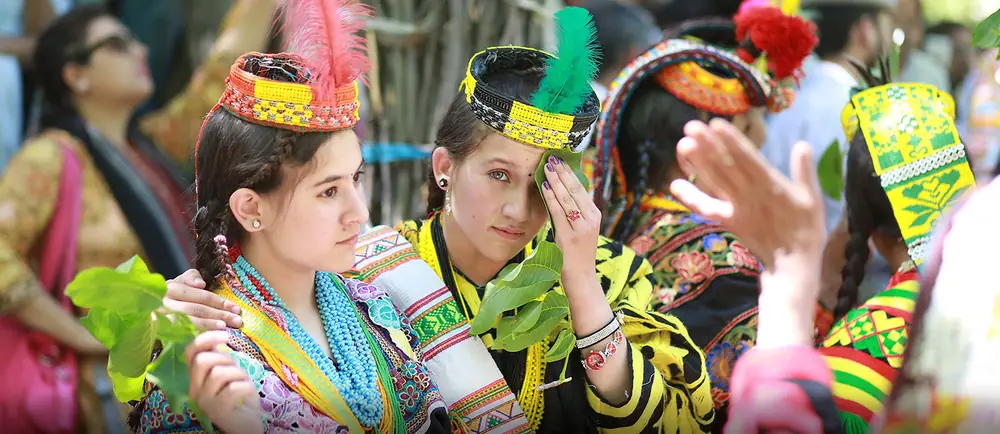
The days build towards the dancing. Early on there are milk offerings and family rituals that visitors mostly do not see. The public heart of the festival is the last two or three days, when hundreds of women link arms in long circles on the dancing ground, the charsu, while men drum and sing. Chilam Joshi is also when couples announce matches, so the final day can bring cheering, eloped brides and a lot of happy noise.
- Busiest valley: Bumburet, which gets several thousand visitors, most of them domestic tourists.
- Quieter option: Rumbur, where the dancing feels far more like a village celebration.
- Book early: guesthouses in Bumburet fill for May by early spring.
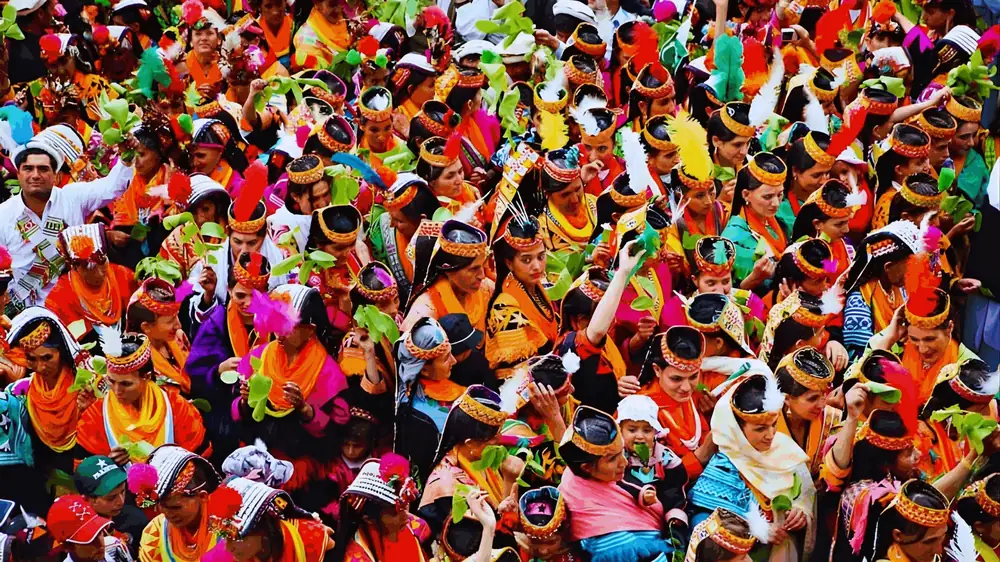
Our Chilam Joshi festival tour is timed to arrive before the final days and stays with a Kalash family-run guesthouse, so you see the dancing from the community side of the crowd.
Uchal festival: the summer harvest (about 20 to 22 August)
Uchal gives thanks for the wheat and barley harvest and for the summer's milk and cheese. Herders come down from the high pastures, and the celebrations move between villages over two or three days, with dancing that runs late into the night. It is much smaller than Chilam Joshi, and I think it is the best introduction to Kalash life: the valleys are green, the walnut and apricot trees are heavy, and you are a guest at a harvest supper rather than one camera among a thousand.
Pul (Phool) festival: Birir's autumn festival (September)
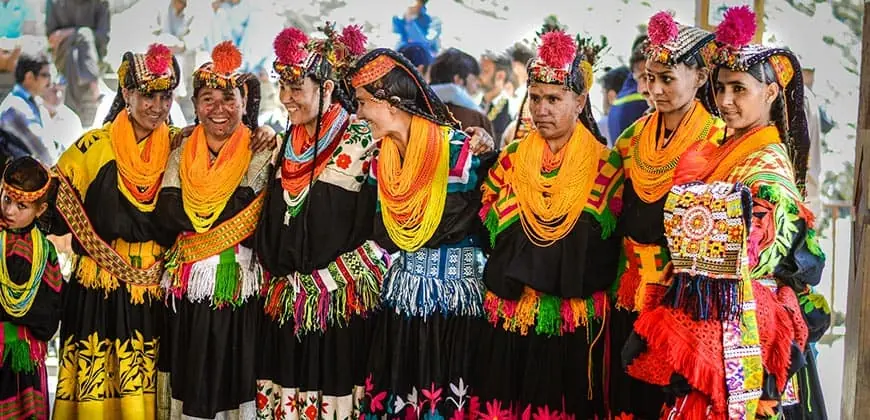
Pul, also written Phool or Phul, is held only in Birir, the most traditional and least visited of the three valleys, around the September full moon when the walnuts and grapes come in. Few outsiders know about it and fewer attend. If you are in Chitral in September, ask your guide to check the date with Birir before you plan around it; it is the festival most likely to move.
Chawmos (Choimus): the winter festival (about 7 to 22 December)
Chawmos, often spelled Choimus or Chaumos, is the most sacred festival of the Kalash year. It marks the winter solstice and the new year, and honours Balimain, a god believed to visit the valleys from the Kalash homeland for its duration. It lasts about two weeks and is split in two:
- First week (about 7 to 14 December): for the Kalash only. Purification rituals with fire and juniper, offerings to the ancestors, and much of it indoors. Visitors should not attend.
- Second week (about 15 to 22 December): public. Torch processions, singing, goat sacrifices at the clan shrines and dancing on the snow, often through the night.
The rules on purity matter here more than at any other time. Outsiders count as ritually impure, so stay where your Kalash hosts tell you to stand, and never walk into a shrine or a group without being invited. For background, the Chawmos entry on Wikipedia is a fair summary. Practically, December is cold, flights to Chitral are often cancelled, and the road can be slow in snow, so give yourself two spare days.
How to get to the Kalash valleys
All the festivals start from Chitral town.
- By air: Islamabad to Chitral takes about 50 minutes, but flights are small and cancelled whenever the weather turns.
- By road: Islamabad to Chitral through Swat and the Lowari Tunnel is a 10 to 12 hour day. The tunnel keeps the road open in winter.
- Chitral to the valleys: drive south to Ayun, then up the side valley to Bumburet, about 35 to 40 km and around 1.5 hours. Rumbur branches off before Bumburet; Birir is reached by a separate road from the Chitral river.
Permits, fees and safety
Foreigners currently need no NOC to visit the Kalash valleys or attend the festivals. You will register your passport at police checkposts on the way in, so carry copies. A small community fee is charged to foreign visitors at the valley entrance; it was Rs 600 when last widely reported. The valleys are calm and the festivals are well policed. For the wider picture, see our guide to whether Pakistan is safe to visit, and check the Pakistan tourist visa rules before you book.
Festival etiquette and photography rules
The festivals are religious occasions that the Kalash have chosen to share. The biggest complaint I hear from Kalash friends is about visitors who treat them as a show. Be the guest they are glad to have:
- Ask before you photograph anyone, especially women and girls, and accept a no. Never push a phone into a face during the dancing.
- Do not walk onto the dancing ground unless someone takes your hand and invites you in.
- Never enter the bashali (the women's house) or touch shrines, altars or carved ancestor figures.
- Dress modestly and keep drones on the ground.
- Spend money locally: Kalash-run guesthouses, handmade beadwork and embroidered belts bought from the women who made them.
Which Kalash festival should you go to?
For colour and spectacle, Chilam Joshi, accepting the crowds. For a closer, quieter experience, Uchal in August. For the deepest look at Kalash belief, and if you can handle the cold, the public week of Chawmos. Our Kalash festival tour runs for all three, 7 to 10 days from Islamabad, from US$1,450 per person with permits, fees and a local guide included.
Join us at the Kalash festivals in 2027. Booking is open now, and places for Chilam Joshi in May go first because valley guesthouses are small. Trips run 7 to 10 days from Islamabad, from US$1,450 per person, with free cancellation up to 30 days before departure. Book your 2027 Kalash festival tour or send us your dates and we will plan it around them.
Kalash festival FAQ
When is the Kalash festival in 2027?
There are four Kalash festivals in 2027, not one. Chilam Joshi, the spring festival and the one most people mean, runs from 12 to 17 May 2027, with the biggest public dancing on the last two or three days. Uchal, the harvest festival, falls around 20 to 22 August. Pul is held only in Birir valley around the September full moon. Chawmos, the winter festival, runs roughly from 7 to 22 December, and only its second week, about 15 to 22 December, is open to visitors. All four take place in the Kalash valleys of Bumburet, Rumbur and Birir in Chitral district, north-west Pakistan. The dates are set by the Kalash elders through Suri Jagek, their traditional observation of the sun, so treat them as provisional until the spring before and keep a spare day either side when you book flights.
Why do the Kalash festival dates change each year?
The dates change because the Kalash set their calendar by watching the sun, not by the Gregorian calendar. Elders practise Suri Jagek, which means observing the sun: they note where the sun rises and sets against fixed points on the surrounding mountains and read the moon and stars from traditional observatories in each valley. Festivals, sowing, harvest and the movement of herds all follow that reckoning. UNESCO added Suri Jagek to its list of intangible heritage in need of urgent safeguarding in November 2018, Pakistan's first independent nomination. In practice the dates are reliable to within a day or two. Chilam Joshi, for example, falls in mid-May every year, and in 2027 it runs from 12 to 17 May. Because the community announces the dates, not a tourism office, confirm them with a local guide before you fix travel.
Can tourists attend the Chawmos winter festival?
Yes, but only the second week. Chawmos lasts about two weeks around the winter solstice, roughly 7 to 22 December. The first week, about 7 to 14 December, is reserved for the Kalash: it is a time of purification with fire and juniper, offerings to the ancestors and rituals held mostly indoors, and outsiders should stay away. The second week, about 15 to 22 December, is public, with torch processions, singing, goat sacrifices at the clan shrines and dancing on the snow, often late into the night. Because outsiders are considered ritually impure during Chawmos, stand where your Kalash hosts ask, never walk into a shrine or a group uninvited, and always ask before taking photographs. Plan for cold nights and cancelled flights, and allow two spare days for the road.
Do foreigners need a permit for the Kalash festivals?
No. Foreign visitors currently need no NOC to visit the Kalash valleys or attend any of the festivals. You will be asked to register your passport details at police checkposts on the way in, so carry several photocopies of your passport and Pakistani visa. A small community fee is charged to foreign visitors at the valley entrance, and it was Rs 600 per person when last widely reported, so check the current amount locally. Rules in border districts can change at short notice, which is one reason many travellers go with a licensed operator who handles registration. On our Kalash festival tours all entry permits and community fees are included, and the guide deals with the checkposts. You will also need a valid Pakistan tourist visa, which most nationalities can apply for online before travel.
Can I take photos of Kalash women at the festivals?
Only with permission, and you should accept a refusal without arguing. The Kalash festivals are religious occasions, and many Kalash women are tired of being filmed by crowds of visitors, especially at Chilam Joshi in Bumburet. Ask before photographing any individual, particularly women and girls, and never push a phone or lens into someone's face during the dancing. Wide shots of the dancing ground are generally accepted, but close portraits need consent. Do not walk onto the dancing ground unless someone invites you, never enter the bashali, the women's house, and do not touch shrines or carved ancestor figures. Keep drones on the ground. A good local guide can introduce you to families who are happy to be photographed, and buying beadwork directly from the women who made it is a far better souvenir than a stolen portrait.
How do I get to the Kalash valleys from Islamabad?
First get to Chitral town, then drive to the valleys. Flights from Islamabad to Chitral take about 50 minutes, but they use small aircraft and are often cancelled when the weather closes in, especially in December. By road, Islamabad to Chitral through Swat and the Lowari Tunnel is a long 10 to 12 hour day, and the tunnel keeps the route open in winter. From Chitral, drive south to Ayun and then up the side valley to Bumburet, about 35 to 40 km and around an hour and a half. Rumbur branches off before Bumburet, and Birir is reached by its own road from the Chitral river. Guesthouses in Bumburet fill quickly for Chilam Joshi in May, so book early, and allow at least one spare day each way in case of cancelled flights or slow roads.
Ready for Your Next Adventure?
Join our community of explorers and discover the journey of a lifetime. Our expert team is ready to help you plan your perfect expedition.