Du Hunza au Khunjerab
Le Hunza en profondeur, puis la montée vers la plus haute frontière goudronnée de la planète
Dernière mise à jour: · Révisé par Javeed Iqbal, fondateur
Durée
7-9 jours
Difficulté
Facile
Taille du groupe
2-12 voyageurs
Meilleure saison
Avr-Oct
À propos de ce circuit
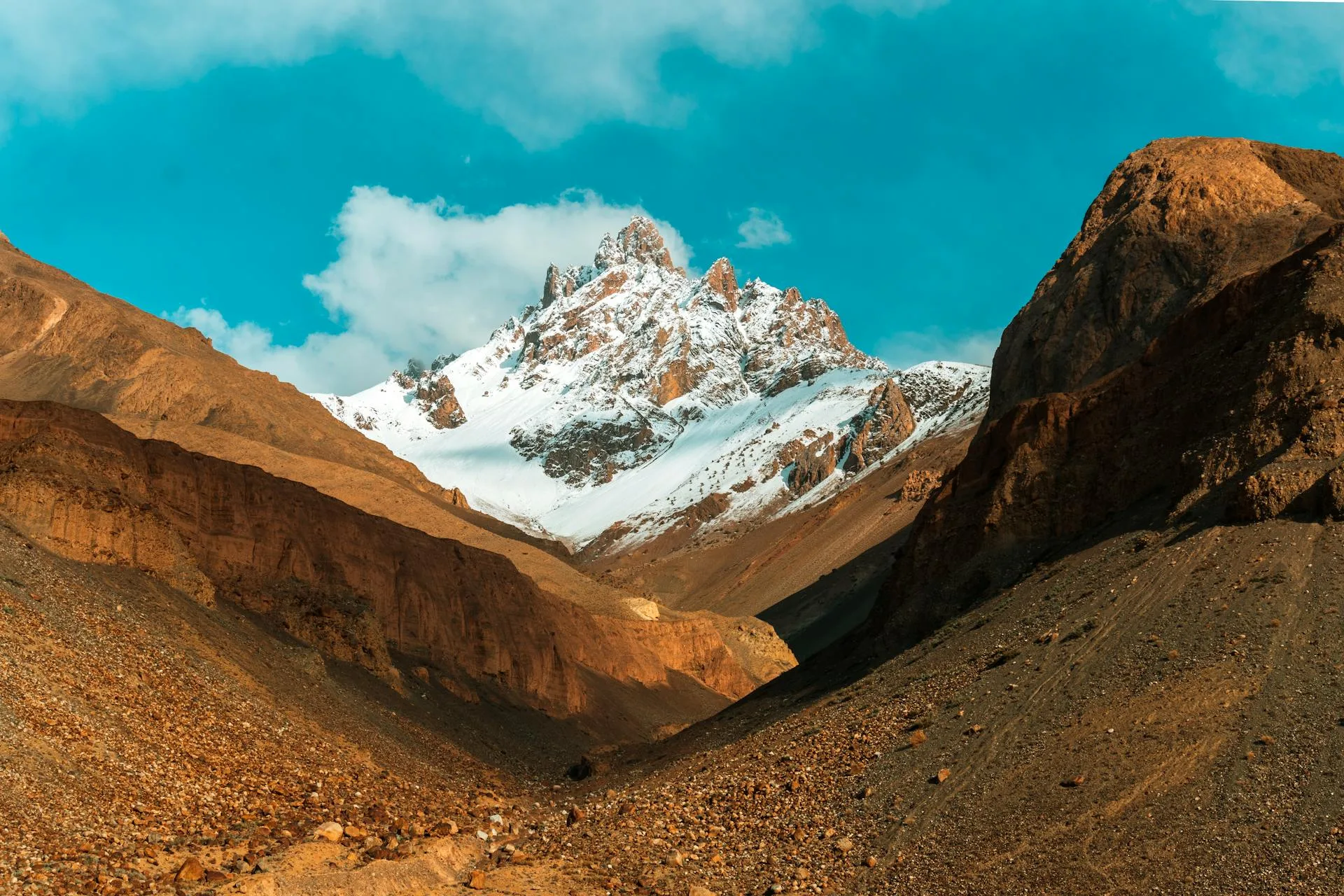
Ce voyage de 8 jours vous donne d'abord la vallée du Hunza comme il se doit, puis fait du Khunjerab Pass son apogée. L'itinéraire suit la Karakoram Highway supérieure vers le nord depuis Karimabad, par Gulmit, Passu et Sost, sortant des vergers pour gagner un haut pays dénudé jusqu'au col à 4 693 m sur la frontière Pakistan-Chine, le plus haut poste-frontière international goudronné au monde. Le changement de décor en montant, des terrasses d'arbres fruitiers à la roche glaciaire et à la toundra, est tout l'intérêt de le vivre comme un voyage.
Karimabad est la base culturelle et nous y passons un vrai moment avant de mettre le cap sur la frontière. Vous parcourez le Baltit Fort, restauré par l'Aga Khan Trust for Culture et inscrit sur la liste indicative de l'UNESCO depuis 2004, et le plus ancien Altit Fort au-dessus de la rivière, tous deux sièges des Mirs du Hunza. La vallée est le foyer du peuple Burusho, dont la langue, le bourouchaski, n'a aucun parent connu. En avril les terrasses fleurissent ; juin et juillet apportent la récolte d'abricots ; octobre dore les peupliers.
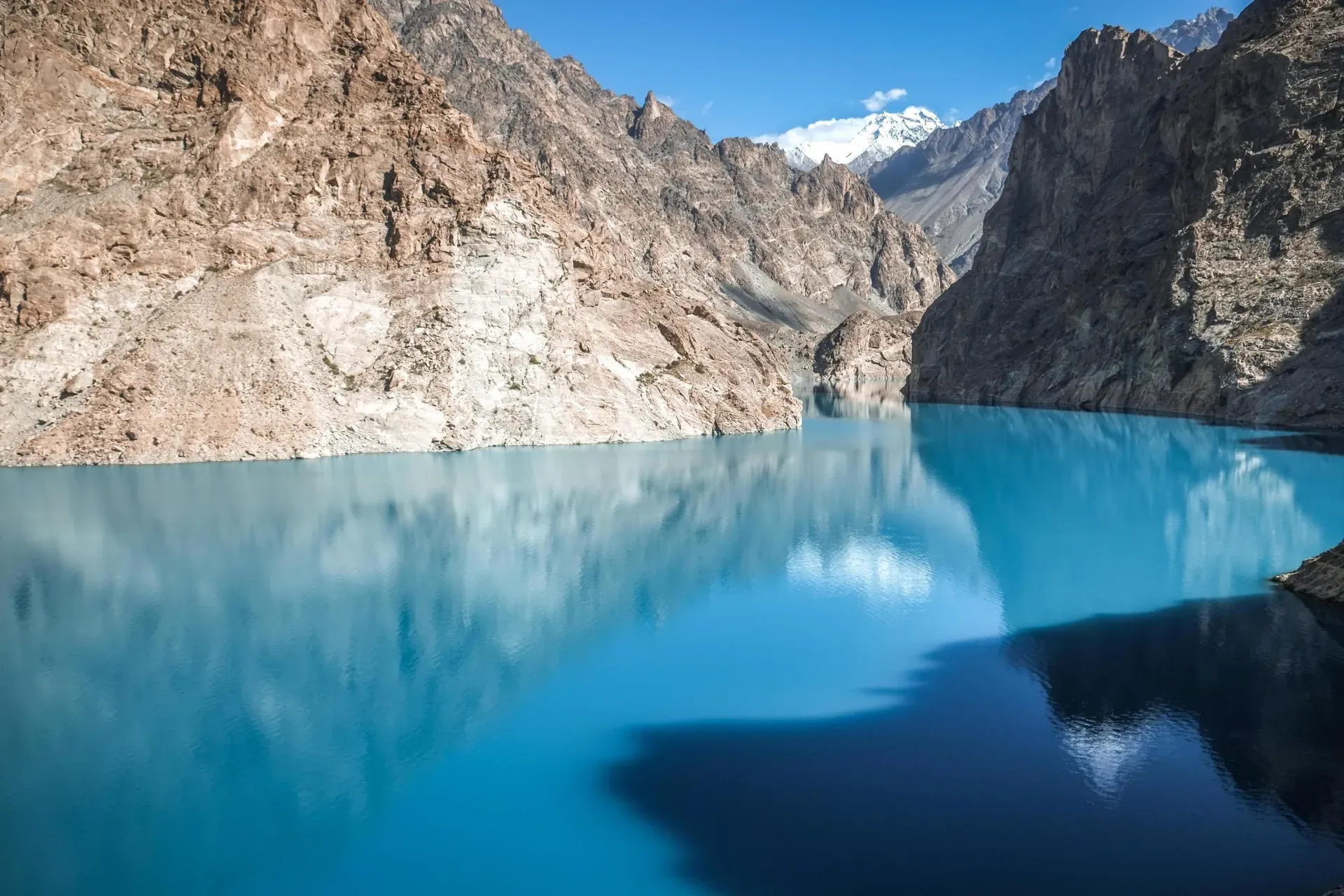
Au nord de Karimabad, la grande route enfile les morceaux de bravoure du haut Hunza. Le lac d'Attabad, formé par un glissement de terrain en 2010 et désormais contourné par les Friendship Tunnels, offre une balade en bateau sur une eau turquoise profonde. Les Passu Cones s'élèvent à 6 106 m au-dessus de la route, avec le pont suspendu de Hussaini et le lac de Borith à proximité. Sost, à environ 75 km en contrebas du col, est la dernière ville pakistanaise et son poste de douane avant la montée dans le Khunjerab National Park.
Comme les journées au Hunza font l'acclimatation à votre place, la montée au repère devient une seule sortie difficile plutôt qu'un sujet d'inquiétude. Ces journées plus lentes en contrebas, à parcourir les forts, s'asseoir dans un verger, monter dans le bateau, sont ce autour de quoi le voyage est vraiment bâti ; la frontière est la récompense que vous gagnez à la fin de la semaine. Le niveau est facile hormis une journée d'altitude exigeante, le groupe compte de 2 à 12 personnes, et le prix est de 1 200 $. Nous ne menons la journée du col que dans la fenêtre sans neige.
La route vers le nord jusqu'au col
Depuis Karimabad, la Karakoram Highway file vers le nord, passe le lac d'Attabad, traverse les Friendship Tunnels qui ont remplacé la route noyée par le glissement de 2010, et monte jusqu'à Gulmit, ancienne capitale du Hunza. Au-delà, les Passu Cones bordent la route et le lac de Borith se cache sur le côté près du glacier de Ghulkin. Ce tronçon supérieur est court sur la carte mais dense en sites, c'est pourquoi nous lui consacrons une journée entière plutôt que de foncer vers la frontière.
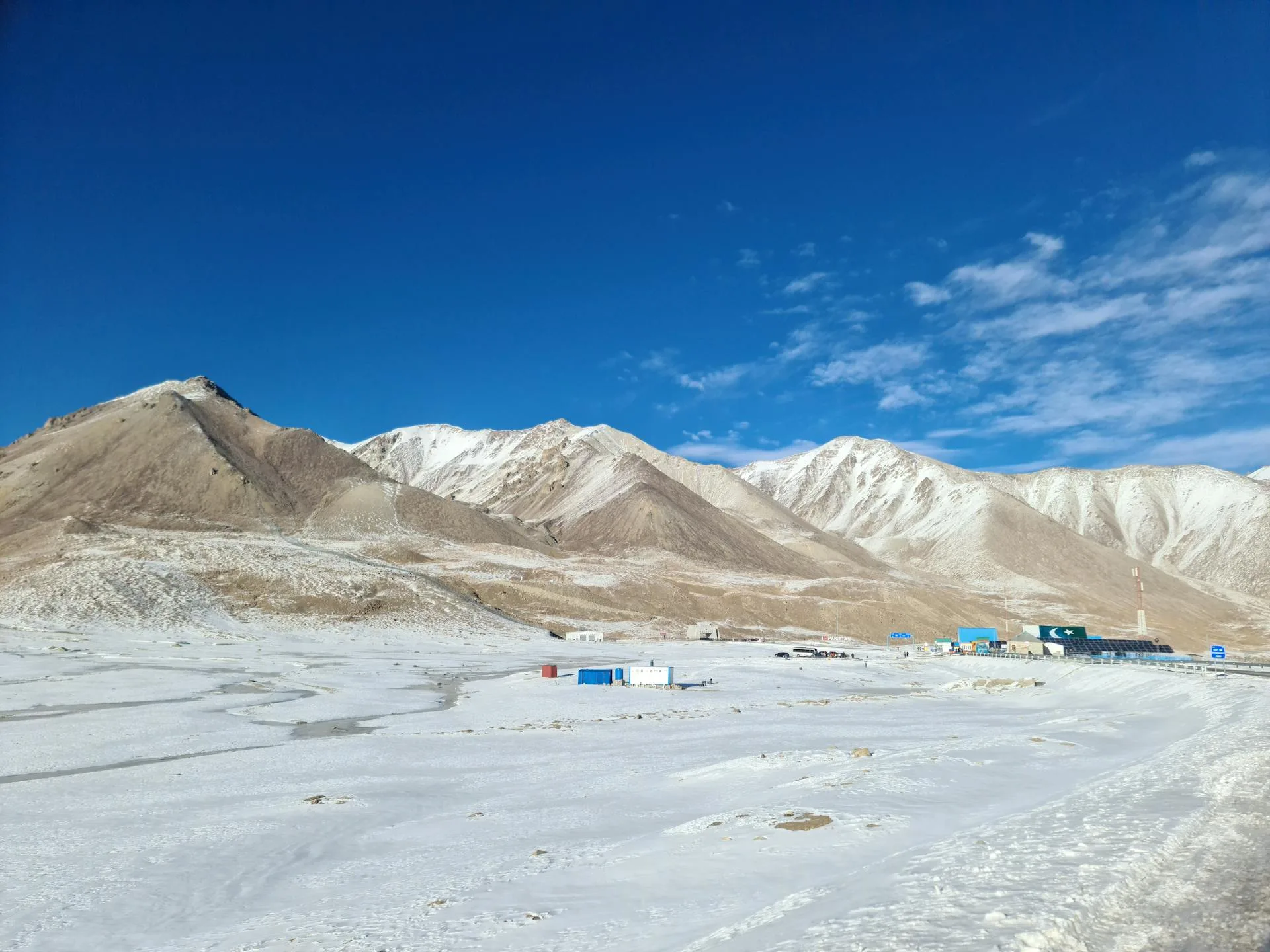
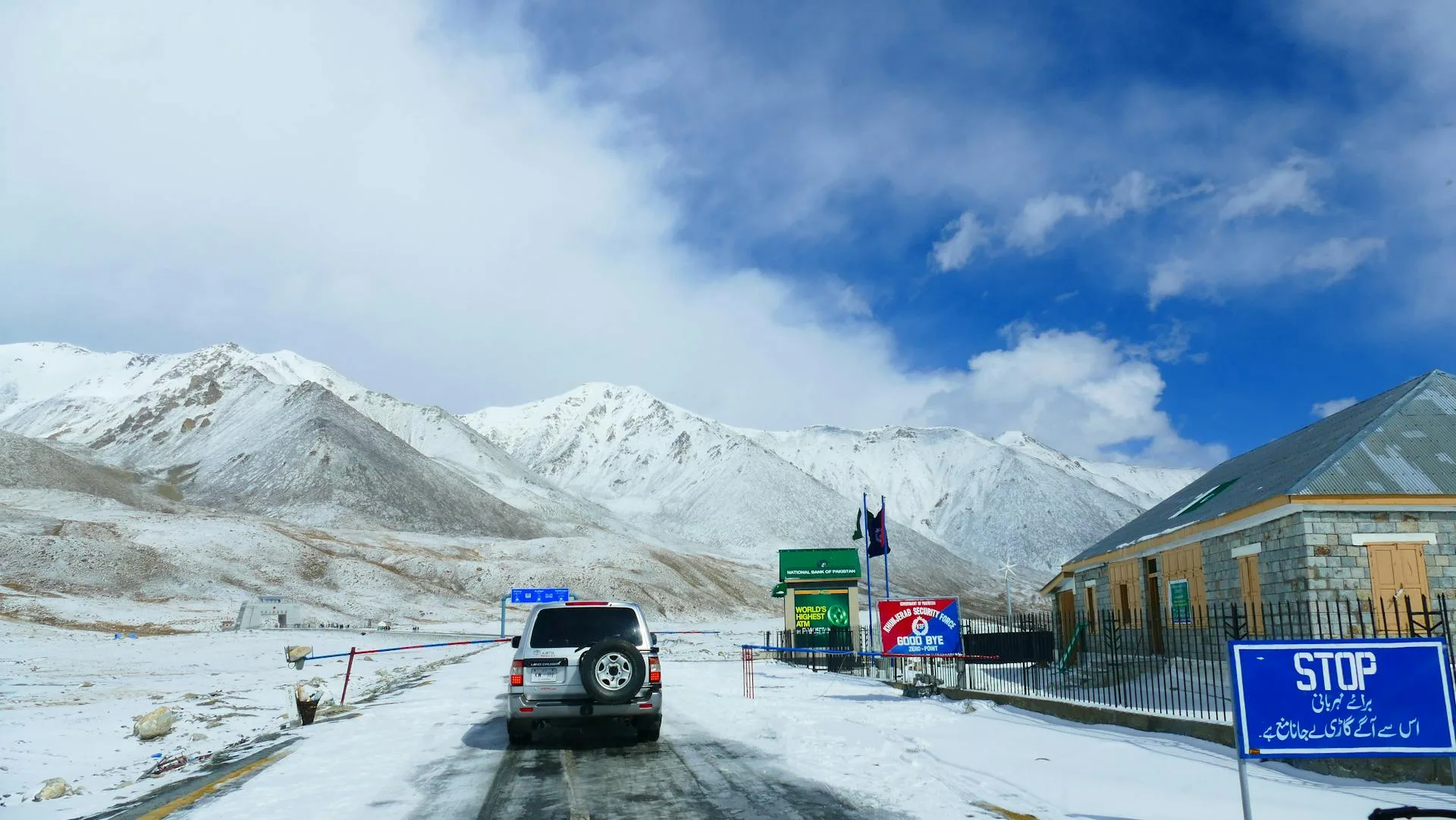
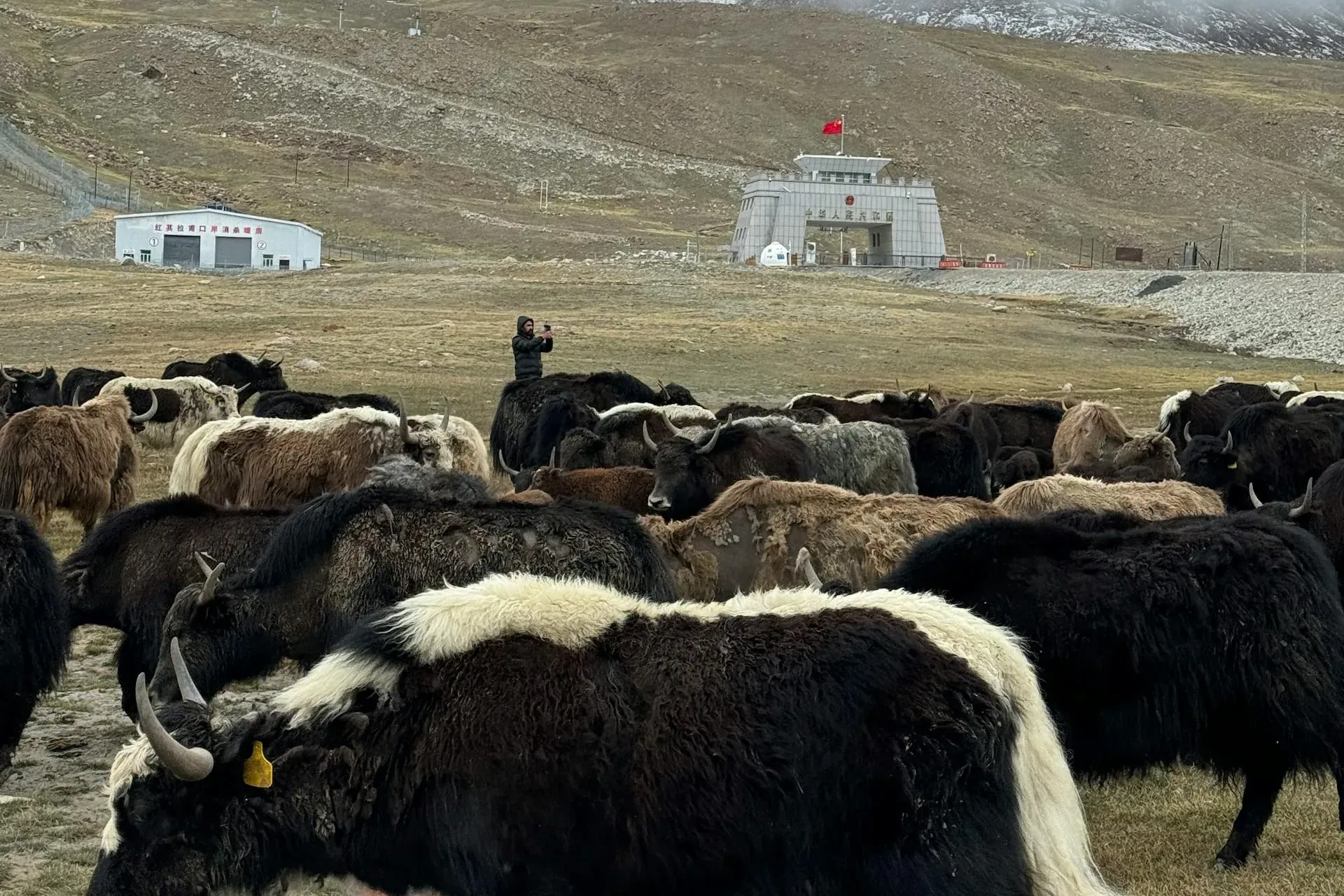
La vie sédentaire s'efface à Sost, la dernière ville avant la frontière, à environ 75 km et deux heures du sommet. Au-delà, les vergers sont derrière vous et la route s'élève dans le haut pays protégé du Khunjerab National Park, où marmottes et bouquetins sont les animaux que vous avez le plus de chances de voir et où quelques yaks paissent les marges supérieures. Nous gardons volontairement la prose sur le parc légère ici, car la faune et la géographie du repère sont l'affaire de notre Khunjerab Pass Explorer dédié ; sur ce voyage, le col est une grande journée au sein d'une semaine au Hunza, posé à 4 693 m avec la porte frontière et un distributeur de billets célèbre pour son altitude.
Itinéraire jour par jour
1Islamabad-Gilgit
Islamabad-Gilgit
2Gilgit-Karimabad
Gilgit-Karimabad
3Forts et vergers de Karimabad
Forts et vergers de Karimabad
4Lac d'Attabad et Passu
Lac d'Attabad et Passu
5Montée au Khunjerab Pass
Montée au Khunjerab Pass
6Lac de Borith et vue sur le glacier
Lac de Borith et vue sur le glacier
7Karimabad-Gilgit
Karimabad-Gilgit
8Retour à Islamabad
Retour à Islamabad
Meilleure période pour le Khunjerab Pass et quand il ouvre
Pour les excursions touristiques d'une journée, comptez de mai à octobre, et considérez-le comme tributaire de la neige. Les chutes de neige gouvernent le sommet de la route, donc le début et la fin de cette fenêtre peuvent varier d'une année à l'autre, et nous ne promettons pas le col au début du printemps ni en fin d'automne. Les départs de début et de fin de saison portent le plus de risque météo, et nous gardons un plan souple pour la journée du col afin de la déplacer vers la matinée la plus dégagée.
Là où vous lisez que la route est ouverte d'avril à novembre, ce calendrier appartient au fret circulant vers et depuis la Chine, et ne dit rien sur la possibilité pour un visiteur d'atteindre le repère un matin donné. C'est la raison pour laquelle nous chargeons la semaine de Hunza plutôt que du col : si une neige fraîche scelle le sommet le jour de votre montée, vous avez déjà eu les forts, le lac et les vergers, et le séjour ne perd rien d'essentiel.
Quelle est la difficulté de la journée du col ?
Ce qui fatigue ici, c'est l'air raréfié, pas la marche. Le véhicule fait la distance, et pourtant en une seule fois la journée d'altitude vous hisse du Hunza vers 2 400 m jusqu'à 4 693 m et vous ramène aussitôt en bas, et ce bond est raide. La semaine de nuits passées dans la vallée d'abord est notre principale défense ; le jour même, nous écourtons le temps au repère, faisons circuler l'eau et surveillons les visages pour le mal de tête, l'essoufflement ou les nausées qui signalent un léger mal d'altitude.
Ce n'est tout de même pas un voyage pour des hôtes ayant de sérieux problèmes cardiaques ou pulmonaires, et nous préférons le savoir à l'avance et adapter plutôt que de voir quelqu'un souffrir au repère. Pour la plupart des voyageurs raisonnablement en forme, c'est une grande journée gérable avec une récompense mémorable à la porte frontière.
À qui s'adresse ce voyage
Réservez ceci si vous voulez vivre au Hunza la plus grande partie d'une semaine et traiter la frontière comme le dernier acte, plutôt que d'y monter et de redescendre aussitôt. Les forts, les vergers et les belvédères de la haute vallée viennent d'abord, et la journée d'altitude couronne le tout. Les voyageurs en quête d'un parcours plus sobre, frontière en tête et avec moins de nuits en vallée, prendront plutôt notre Khunjerab Pass Explorer de 7 jours. Et si la porte de Chine ne vous attire pas et que vous préférez rester en bas au cœur de la culture, notre Hunza Valley Explorer ou notre séjour culturel au Hunza vous conviendront mieux.
Pourquoi réserver avec nous
Basés au Gilgit-Baltistan et parcourant ce tronçon de route à chaque saison depuis 2015, nous bâtissons la semaine pour que le corps soit prêt avant d'avoir à grimper : d'abord des journées au Hunza, la frontière gardée pour la fin. Nos chauffeurs connaissent par cœur la grande route supérieure et les guides connaissent les vergers, les forts et les familles qui les habitent. Nous vous disons clairement que le repère dépend de la neige et que la journée d'altitude est un vrai effort, et nous avons rendu la moitié Hunza du voyage assez riche pour qu'elle porte le séjour à elle seule si le sommet venait à être fermé.
Ce qui est inclus
Non inclus
Questions fréquentes
Quelle est l'altitude du Khunjerab Pass ?
Quelle est l'altitude du Khunjerab Pass ?
Le Khunjerab Pass est-il ouvert, et quels mois ?
Le Khunjerab Pass est-il ouvert, et quels mois ?
Quelle distance sépare le Hunza du col ?
Quelle distance sépare le Hunza du col ?
Vais-je avoir le mal d'altitude au Khunjerab ?
Vais-je avoir le mal d'altitude au Khunjerab ?
Quelle faune puis-je voir au Khunjerab ?
Quelle faune puis-je voir au Khunjerab ?
Puis-je passer en Chine au col ?
Puis-je passer en Chine au col ?
Ai-je besoin de permis pour ce voyage ?
Ai-je besoin de permis pour ce voyage ?
Combien coûte ce voyage ?
Combien coûte ce voyage ?
Prêt pour votre prochaine aventure ?
Rejoignez notre communauté d'explorateurs et découvrez le voyage d'une vie. Notre équipe d'experts est prête à planifier votre expédition parfaite.