How to Visit Pakistan in 2026: Visa, Best Time & Where to Go
A licensed local operator's plain-English guide to visas, seasons, and the regions worth your time.
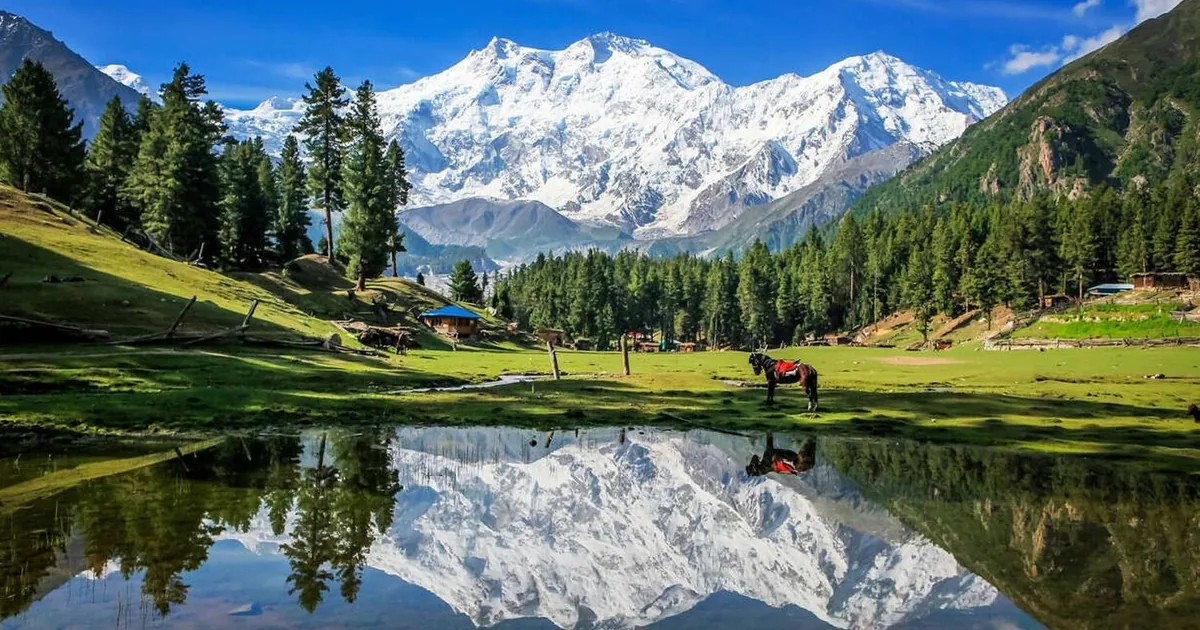
Pakistan rewards the travellers who actually show up. In a single trip you can stand beneath an 8,000-metre Himalayan giant in the morning and walk through a 17th-century Mughal city a day later. The thing that catches first-timers out is the practical side, the visa, the timing, and which regions to string together, and a lot of that changed in 2026. Most of the advice still floating around online is out of date. Here is the current picture, written by a licensed operator who runs these trips for a living.
Do you need a visa for Pakistan in 2026?
Quick answer: as of 1 January 2026, Pakistan's free visa-on-arrival and "visa prior to arrival" schemes are suspended. Nearly every foreign visitor now needs an e-Visa, applied for online in advance through the official NADRA portal.
This caught a lot of people out this year. The free scheme had been open to 126 nationalities since 2024, and it is gone. The online e-Visa is now the standard route for almost everyone.
The short version:
- Apply through the official NADRA online visa portal before you travel. Citizens of around 192 countries are eligible to apply online.
- Allow 7 to 10 working days for processing, and give yourself more slack in peak season, when some applicants have waited closer to three weeks.
- Fees are modest: roughly US$35 for most EU passports and about US$60 for US, UK and Canadian citizens, for a three-month single-entry tourist visa.
- Gulf nationals (Saudi Arabia, UAE, Qatar, Kuwait, Bahrain, Oman) still enter without applying in advance.
Rules and fees move around, so confirm your own nationality's status on the official portal rather than trusting a blog that may still describe last year's free scheme. If you would rather not wrangle the paperwork yourself, visa support and an invitation letter are part of what a ground operator handles; we cover the essentials in our guide for international travellers.
When is the best time to visit?
For the mountains the season runs roughly May to October, but the right month depends on where you are headed. Here is the quick version, valley by season:
| Season | What's open | Best for |
|---|---|---|
| April | Lower valleys only; high passes still under snow | Cherry and apricot blossom in Hunza and Nagar |
| May | Skardu, Fairy Meadows and Naran roads reopen | Green valleys, comfortable temperatures, fewer crowds |
| June-July | Almost everything, incl. Deosai, Khunjerab Pass, Skardu | The peak window for a full northern loop |
| August | Open but monsoon; landslide risk on Naran-Kaghan-Swat roads | Lush scenery if you keep the route flexible |
| Sept-Oct | Most high country still open before the close | Golden autumn foliage, clear skies, thin crowds |
| Nov-March | Most high valleys closed by snow | Swat and Malam Jabba skiing; winter photography |
If your dates are already fixed, tell us and we will steer the itinerary toward whatever is open and at its best. Lonely Planet's best-time-to-visit guide reaches much the same conclusion: aim for late spring through autumn.
The north: Hunza Valley and Gilgit-Baltistan
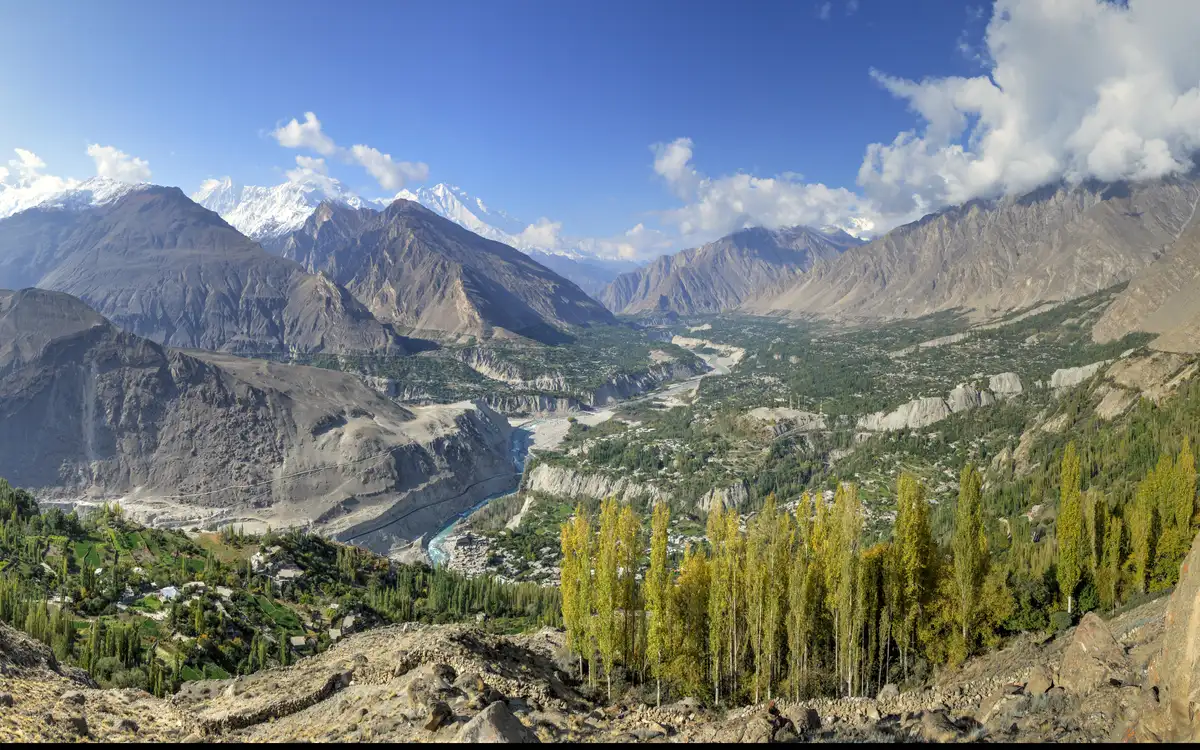
This is the Pakistan most people come for. Gilgit-Baltistan is where the Karakoram, Himalaya and Hindu Kush converge, and it holds five of the world's fourteen 8,000-metre peaks, K2 among them. You do not need to be a climber to feel the scale of it.
In and around Hunza Valley, base yourself in Karimabad for the 700-year-old Baltit and Altit forts, the turquoise Attabad Lake, the jagged Passu Cones, and sunrise on Rakaposhi from the Eagle's Nest viewpoint. Carry on north and the Karakoram Highway climbs to the Khunjerab Pass at 4,693 m, the highest paved border crossing on earth. East of Gilgit, Skardu opens the door to the Deosai Plateau, the Shangrila lakes and the trailheads for K2.
For a first visit, the simplest way to see the highlights without losing days to logistics is a single loop that links them. Our guided Gilgit-Baltistan grand tour threads Hunza, the Khunjerab, Skardu and Deosai into one route, which is how most first-timers should approach the north.
Azad Kashmir and the Neelum Valley
When people search for "Jammu and Kashmir," the part open to visitors from the Pakistan side is Azad Kashmir, and its showpiece is the Neelum Valley, a 200-kilometre river valley running northeast from Muzaffarabad to villages like Keran, Kel and Arang Kel. It is greener, lower and gentler than the Karakoram, and best from May to October.
One practical point that trips people up: foreign passport holders need a No Objection Certificate (NOC) from the AJK Home Department in Muzaffarabad to travel up the Neelum, because the valley follows the Line of Control. Pakistani nationals do not. We arrange the NOC as part of the trip.
Swat: the green valley
Often called the Switzerland of Pakistan, Swat sits in Khyber Pakhtunkhwa and trades the bare Karakoram for pine forest, rivers and the alpine meadows above Kalam and Mahodand Lake. Malam Jabba has the country's main ski resort, and the valley carries deep Gandhara-era Buddhist history. It is more conservative than the cities, so dress modestly, but it is well set up for visitors and lovely in late spring and autumn.
Don't skip the cities: Islamabad and Lahore
Most northern trips begin or end in Islamabad, and the capital is worth a day in its own right. It is calm, green and easy to navigate, with the vast Faisal Mosque at the foot of the Margalla Hills, the Trail 3 walk, the city views from Daman-e-Koh, and the Pakistan Monument. It is the natural staging point for the journey north, by road or by the scenic flight to Skardu.
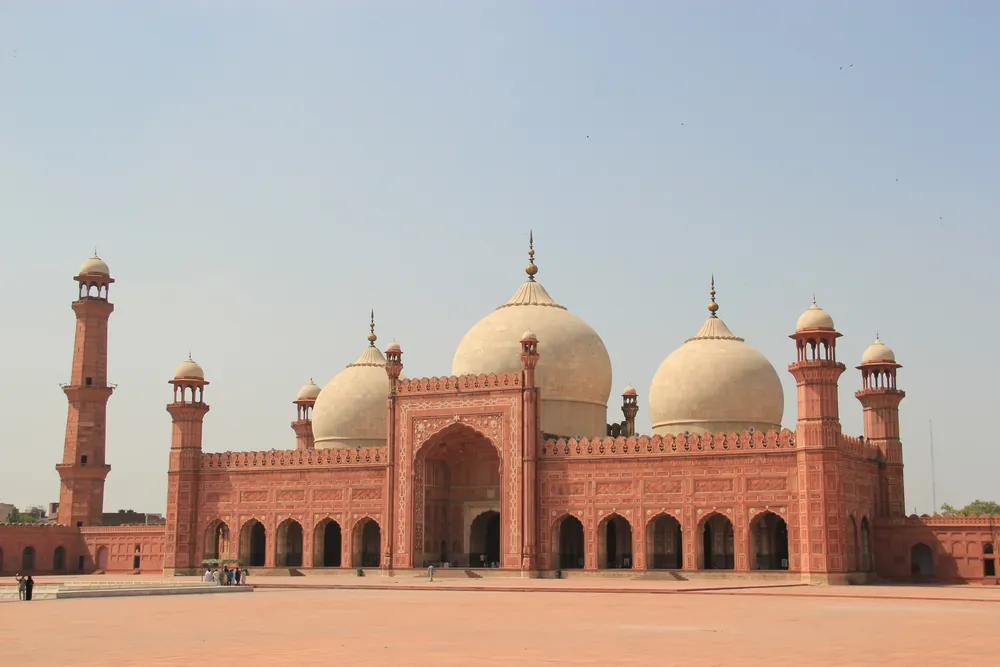
If you only have time for one cultural city, make it Lahore. This is the heart of the country's history and food: the Mughal-era Badshahi Mosque and Lahore Fort, the lanes of the Walled City, the theatrical Wagah border ceremony, and food streets that stay busy long after dark. Locals here are well used to foreign visitors, and tourist police patrol the main sites. A well-balanced first trip often pairs three or four days in the north with a couple of days in Lahore, using Islamabad as the hinge between them.
Is Pakistan safe to visit?
For the regions tourists actually travel, Gilgit-Baltistan, Hunza, Skardu, Islamabad, Lahore, Swat and Azad Kashmir, the honest answer is that it is far safer than the headlines suggest. These areas host well over a million foreign visitors a year with very few incidents involving tourists, and dedicated tourist police operate across Gilgit-Baltistan, Islamabad, Lahore and Murree. Ordinary common sense covers most of it. Parts of Balochistan and the tribal belt near the Afghan border do carry real travel advisories and sit well off any normal tourist route, so check your own government's current advice (the UK FCDO travel pages are a sober, up-to-date reference) and leave those for another life. Solo female travel in the north is increasingly common with sensible precautions and modest dress.
How long you need, and the small practicalities
Ten to fourteen days is the sweet spot for a first trip: enough for a proper northern loop plus a city or two, without rushing the long mountain drives. A week works if you focus on a single region. Pick up a local SIM at the airport (Zong has the best coverage up north), carry cash once you leave the cities because ATMs thin out quickly, and pack warm layers even in midsummer, since nights at altitude are cold whatever the calendar says. Tap water is not safe to drink, so stick to bottled or filtered.
The short version
Sort your e-Visa early, aim for May to October if the mountains are the point, and build a route that pairs the Karakoram north with a taste of Lahore and Islamabad. Get those three decisions right and Pakistan tends to exceed expectations rather than simply meet them. When you are ready to turn this into real dates and a route, that is exactly what we do.
Frequently asked questions about visiting Pakistan
Do you need a visa to visit Pakistan?
Almost every foreign traveller needs a Pakistan visa, and for tourism the main route is the online e-Visa. Citizens of more than 120 countries apply through the official government portal at nadra.gov.pk, upload a passport scan, a photo, and a hotel booking or a tour invitation, and usually receive approval by email in about seven to ten working days. The standard tourist e-Visa allows a stay of up to three months and carries a small processing fee that varies by nationality. Pakistan also runs a Tourist Visa on Arrival facility for citizens of around 50 countries when the trip is booked through an approved local operator, which is something we arrange for our guests as part of the booking. Whichever route applies to you, apply two to three weeks before you fly so there is room to answer any follow up questions, and carry a printed copy of the approval for the airport.
Can US, UK and European citizens visit Pakistan?
Yes. American, British, Canadian, Australian, and most European Union passport holders can all visit Pakistan on the tourist e-Visa, and every one of those nationalities is also eligible for the Visa on Arrival when a registered Pakistani tour company sponsors the application. You do not need to visit an embassy in person for the standard e-Visa, and there is no rule against solo or fully independent travel on any of these passports. The paperwork is the same whether you come to trek in the Karakoram, drive the Karakoram Highway, or explore the Mughal cities of Punjab. The one practical extra to know about is Azad Kashmir and the upper Neelum Valley, where foreign passport holders need a separate No Objection Certificate that we obtain for you. Beyond that the process is straightforward, and travellers from these countries make up a large share of Pakistan's growing tourist numbers.
Can Indian citizens visit Pakistan?
Indian passport holders follow a separate and much narrower process, not the tourist e-Visa that other nationalities use. India and Pakistan issue each other's citizens visas mainly for visiting close family, for religious pilgrimage to specific shrines, or for business, and each visa is tied to named cities and usually a local sponsor rather than open tourism. One well known exception is the Kartarpur Corridor, which lets Indian Sikh pilgrims visit the Gurdwara Darbar Sahib near the border for the day without a full visa. If you hold an Overseas Citizen of India card or a second passport from another country, you travel on that passport under its own rules instead, which for most countries means the ordinary e-Visa. Because the rules here shift with the political relationship between the two countries, check the current position with the Pakistan High Commission before making any firm plans.
Is Pakistan safe to visit in 2026?
For the areas tourists actually travel, Gilgit-Baltistan, Hunza, Skardu, Islamabad, Lahore, Swat, and Azad Kashmir, Pakistan is far safer than its old reputation suggests. The northern mountain regions in particular have an excellent record with visitors, and dedicated tourist police now operate across Gilgit-Baltistan and the main cities. Most Western governments reflect this in their advice: the UK Foreign Office, for example, places no blanket warning on Gilgit-Baltistan or the main tourist cities, while advising against travel to parts of Balochistan and the districts bordering Afghanistan. Those higher risk areas sit well off any normal tourist route, so the practical rule is simple. Stay on the established trail, check your own government's current advisory before you go, and travel the long mountain roads in daylight. Petty crime is low by regional standards, and the bigger day to day hazards are altitude and mountain driving rather than security.
Is Pakistan safe for solo and female travellers?
Solo travel in Pakistan, including for women, has grown a great deal in recent years, and the northern valleys are now well used to independent visitors arriving on their own. A steady stream of solo female travellers and vloggers have documented the region, and many describe the north as one of the friendliest and most hospitable places they have been. Sensible precautions still apply and cover most of the risk: dress modestly with shoulders and knees covered, keep long road transfers to daylight hours, stay in known guesthouses or homestays, and book a guide for the more remote treks and valleys. Family run guesthouses in Hunza and Skardu are a comfortable base for women travelling alone, and small group departures are an easy option if you would rather not travel entirely solo. If it helps, we can arrange a female friendly itinerary with vetted drivers and hosts.
When is the best time to visit Pakistan?
The best time to visit Pakistan for the mountains is May to October, when the high passes, the Deosai Plateau, Skardu, and the Karakoram Highway are all open and the weather is settled. Late April brings the cherry and apricot blossom to Hunza and Nagar, one of the loveliest sights in the calendar, while September and October deliver golden autumn colour, crisp air, and the clearest mountain views of the year. Midsummer, from June to August, is the peak window for the highest treks and for crossing the Khunjerab Pass into the far north. The season also carries some of the country's best festivals, including the Shandur polo tournament, played on the highest polo ground on earth and held in June in recent years (11 to 13 June in 2026), with dates announced each year. If your focus is cities and culture rather than peaks, the cooler months from October to March suit Lahore and Islamabad, though most high valleys are closed by snow then.
How much does a trip to Pakistan cost?
Pakistan is inexpensive by most standards once you are on the ground. Backpackers travelling on local transport and staying in simple guesthouses can get by on roughly 30 to 50 US dollars a day, while a comfortable guided trip with a private vehicle, a driver, and mid range hotels tends to run about 80 to 150 dollars a day per person. A dedicated expedition or a technical peak sits far above that because of permits, staff, and logistics. The largest variables on an ordinary trip are the private transport for the long northern drives, the season, and group size, since sharing a vehicle brings the per person cost down quickly. Some regions add small fixed costs, such as the Deosai national park fee or the No Objection Certificate for the Neelum Valley. Tell us your dates, your group size, and the style you want, and we will price a real route rather than a guess.
What are the best things to do in Pakistan?
The headline experiences are in the Karakoram: the Hunza Valley with its 700 year old Baltit and Altit forts, the turquoise Attabad Lake, the Khunjerab Pass at the Chinese border, Skardu, and the vast Deosai Plateau, the second highest plateau on earth. Serious trekkers come for the walk to K2 base camp and Concordia, while the view of Nanga Parbat from Fairy Meadows is within reach of almost anyone. Away from the peaks, Lahore offers the Badshahi Mosque, the Walled City, and the theatrical Wagah border ceremony, and Swat and the Neelum Valley give greener, gentler mountain scenery. Culture seekers can add the ancient Buddhist ruins around Taxila or the living Kalash valleys near Chitral. For a first visit, a loop that links the northern highlights with a couple of days in Lahore covers the best of both the mountains and the history.
Ready for Your Next Adventure?
Join our community of explorers and discover the journey of a lifetime. Our expert team is ready to help you plan your perfect expedition.