K2大本营徒步 — 16天Baltoro冰川 | Go With Guide
Home
All Tours Cultural Tours Family Holidays Luxury Tours Camping Road Trips
K2 Treks Trending Treks High Passes Trekking Holidays All Treks
8000m Peaks 7000m Peaks 6000m Peaks High Passes
Cycle Touring Eco Tourism Motorcycle Touring Mountain Passes Festivals of Pakistan Ibex Hunting Snow Leopard International Travelers
About Us Vehicles Contact FAQs
Plan Your TripExplore Tours
🇺🇸 English
🇷🇺 Русский
🇫🇷 Français
🇨🇳 中文
🇯🇵 日本語
🇹🇭 ไทย
🇮🇹 Italiano
🇻🇳 Tiếng Việt
🇲🇾 Bahasa Melayu
Trekkers crossing the Baltoro Glacier moraine on the K2 Base Camp trek in the Karakoram
Back to Tours
Trekking Gilgit-Baltistan

K2 Base Camp Trek

16 days up the Baltoro to Concordia and the foot of K2

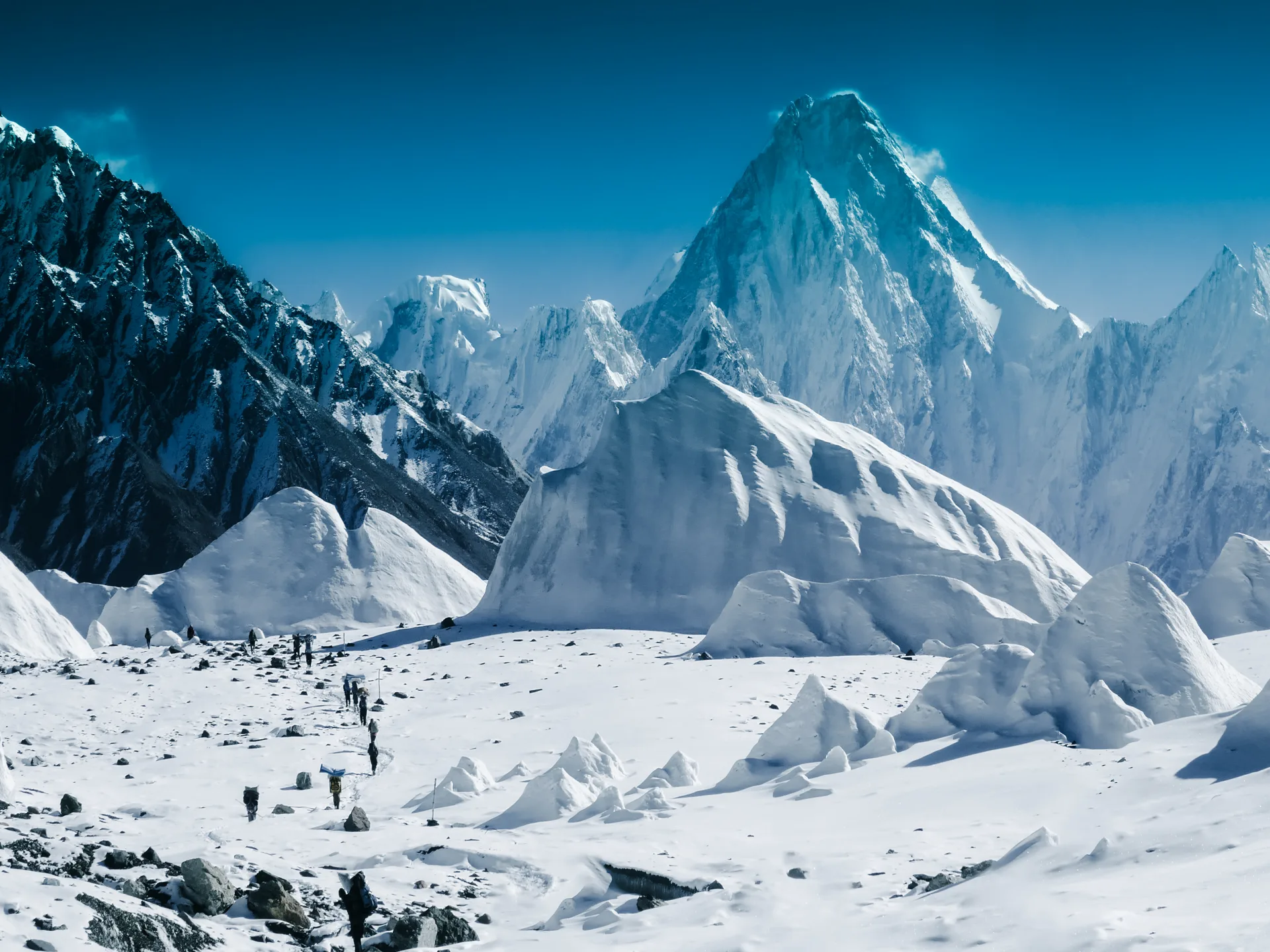
Trekkers crossing the upper Baltoro Glacier snowfield toward a Karakoram peak near Concordia on the K2 Base Camp trek
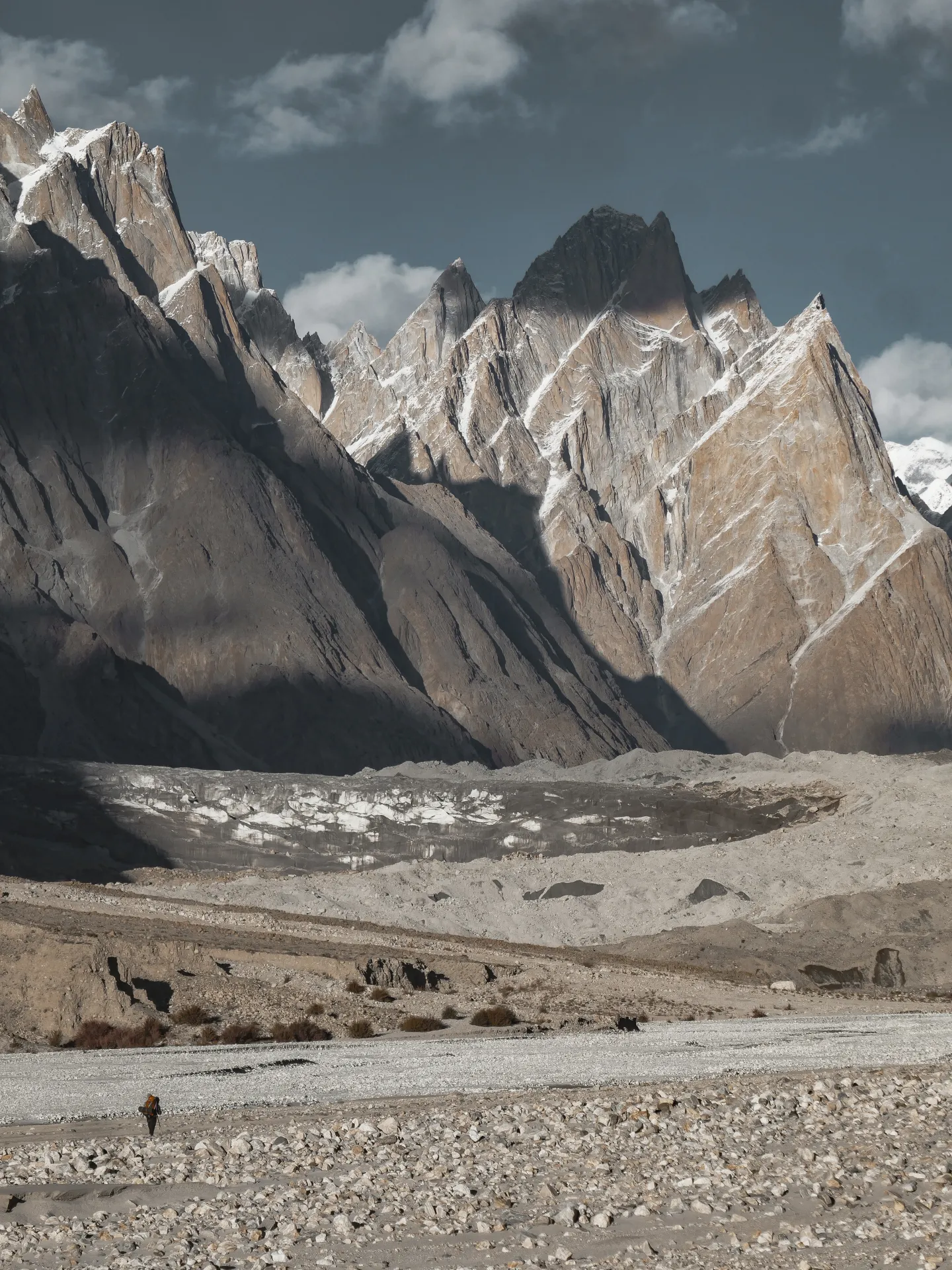
Granite spires above the Baltoro Glacier moraine on the trek to K2 Base Camp, with a porter crossing the gravel riverbed
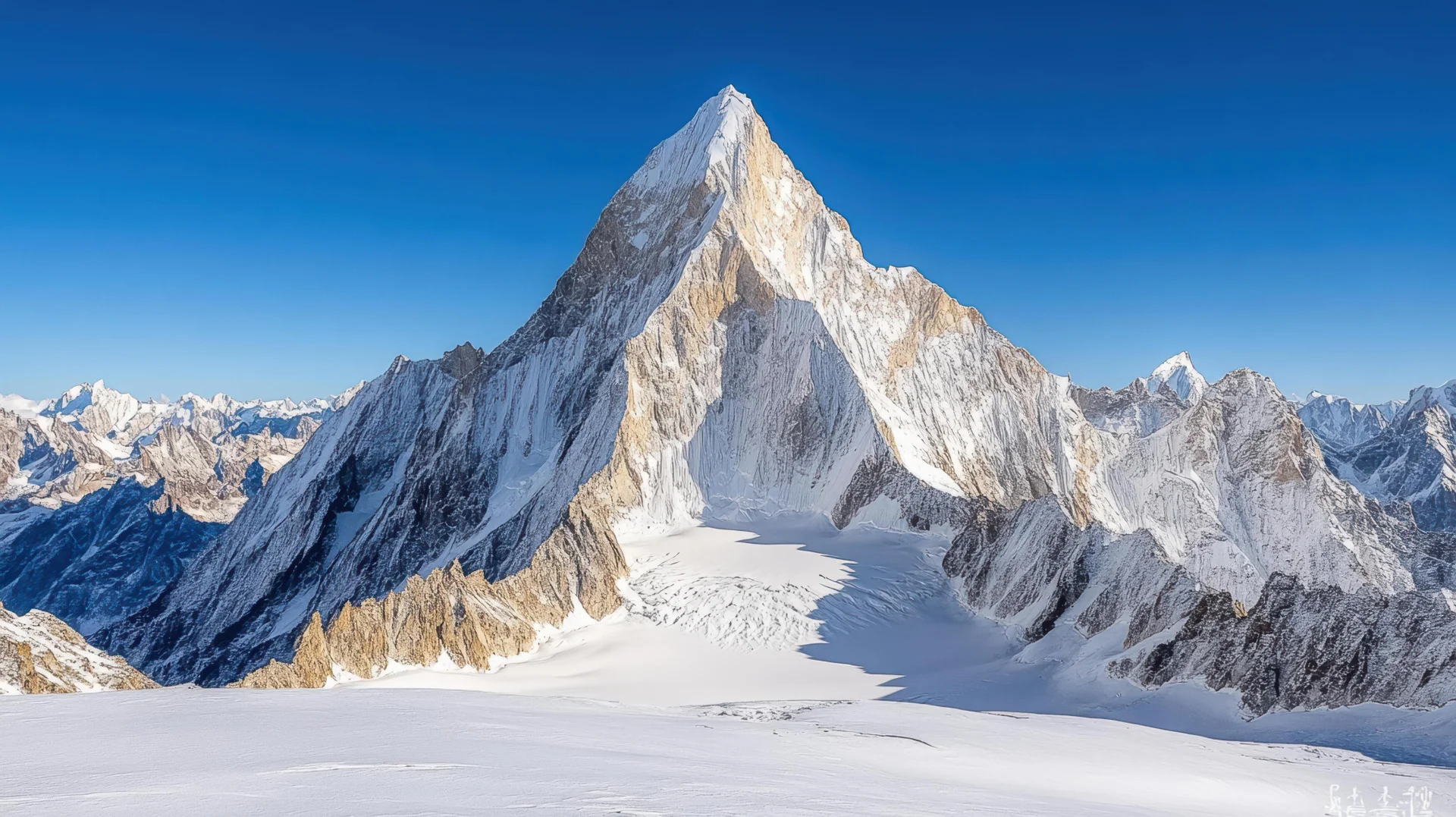
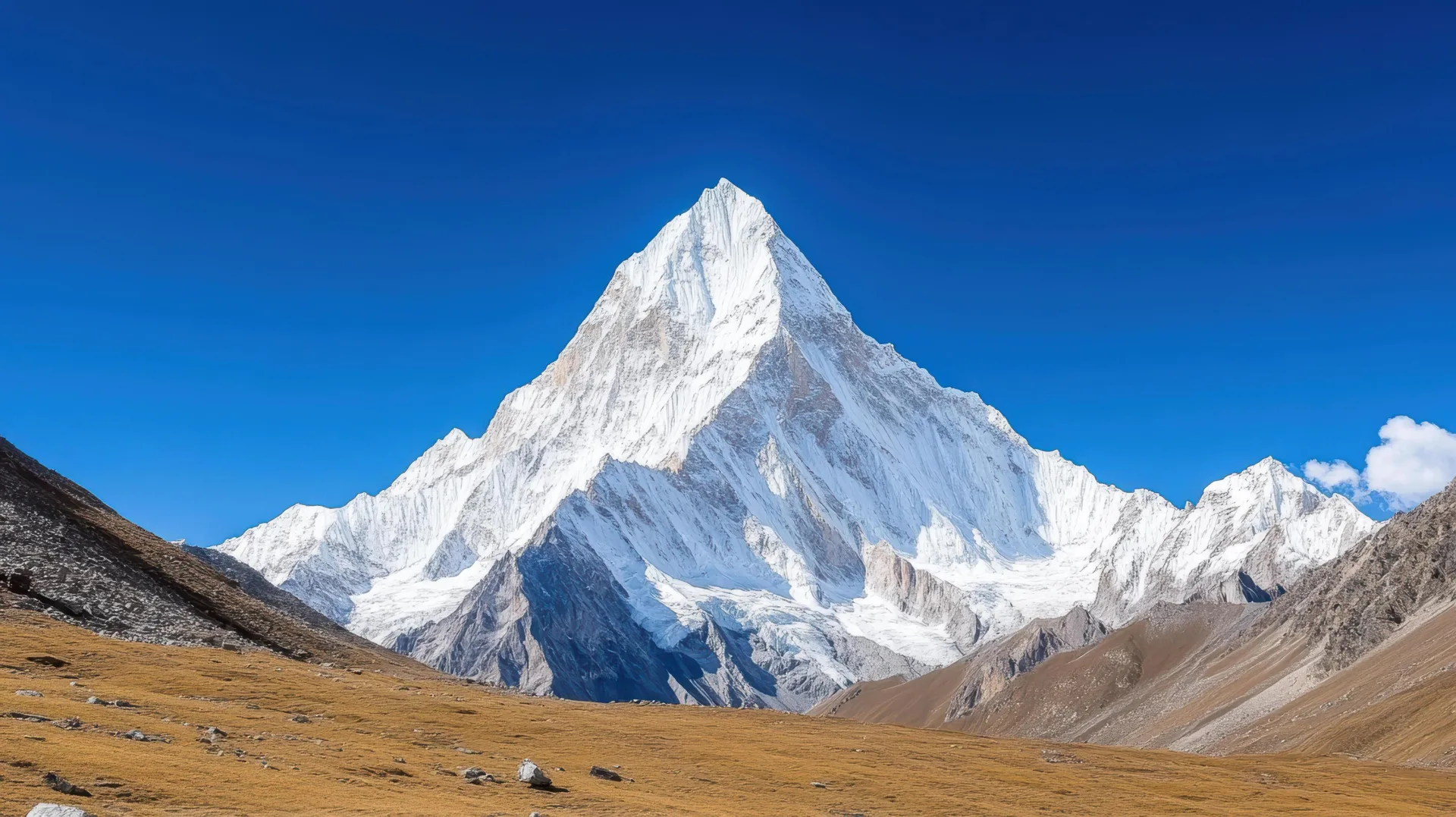
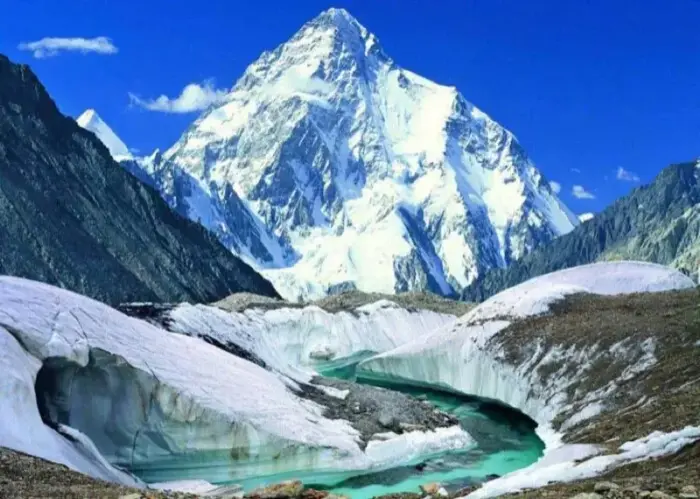
The pyramid summit of K2 at 8,611 metres seen from the Godwin-Austen Glacier
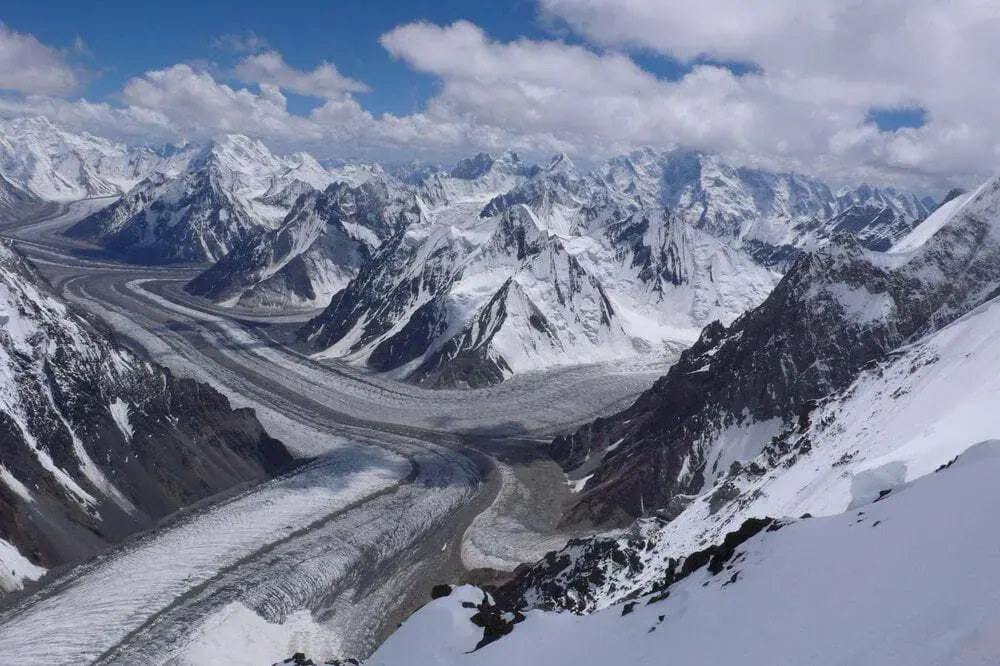
Ice towers and moraine on the Baltoro Glacier on the walk to Concordia
K2, the second-highest mountain on Earth, rising above the Karakoram

Duration

16 Days

Difficulty

Extreme

Group Size

4-15 People

Best Season

Jun – Sep

About This Tour

This is the walk to the foot of the second-highest mountain on Earth. Over 16 days you go up the Baltoro Glacier from Askole, the last village in the Braldu valley, to Concordia and then on to K2 Base Camp at about 5,150 metres. K2 itself is 8,611 metres of rock and ice, and you stand at its base after a week on the ice. No road comes close. Everything is carried in by porters and walked out the same way.

What makes the Baltoro special is the density of giants. At Concordia, where the Baltoro and Godwin-Austen glaciers meet at roughly 4,600 metres, four of the world's fourteen 8,000-metre peaks ring the basin: K2, Broad Peak, and Gasherbrum I and II. The walk in passes the Trango Towers and Cathedral spires above Urdukas, and Masherbrum fills the sky near Goro. Few places on the planet pack this much vertical relief into one day's view.

Be clear about the difficulty. The route to K2 BC is non-technical, but it is strenuous: long days, sustained moraine and glacier underfoot, real altitude, and no easy exit once you are committed past Paiju. Altitude sickness is the main hazard, along with rockfall on the lower Baltoro and poor drinking water that makes a filter essential. The optional Gondogoro La crossing at 5,585 metres is a different order of seriousness, with fixed ropes, crampons and a pre-dawn start on ice.

We have run the Baltoro for years and build the trip around acclimatisation and weather margin, not a fixed dash. Sixteen days covers the flight to Skardu, the jeep to Askole, the walk in and out, and a rest day to absorb altitude before Concordia. A licensed guide, full porter team, all camping kit, and every permit and CKNP fee are included. The price is USD 2,950 per person.

Highlights

  • Stand at the foot of K2 (8,611m) — the world's most formidable mountain
  • Walk the 62km Baltoro Glacier through a cathedral of Karakoram giants
  • Camp at Concordia — the Throne Room of the Mountain Gods
  • See four 8,000m peaks: K2, Broad Peak, Gasherbrum I & II
  • Pass iconic granite spires: Trango Towers, Cathedral, Lobsang Spire

The Baltoro Route, Stage by Stage

From Skardu (around 2,300 metres) a long jeep day climbs the Shigar and Braldu valleys to Askole at about 3,015 metres, the last village and the start of the walk. The first stages follow the Braldu gorge: Askole to Jhola at roughly 3,200 metres, then on to Paiju at about 3,400 metres, the last green camp with running water before the glacier. We build in a rest day here to acclimatise and prepare for ice travel.

Above Paiju you mount the snout of the Baltoro and the world turns to moraine. Khoburtse (about 3,560 metres) leads to Urdukas at roughly 4,130 metres, a grassy ledge perched above the glacier with the Trango and Cathedral towers opposite. From Urdukas the route stays on the ice to Goro II near 4,300 metres, then to Concordia at about 4,600 metres, the junction the early surveyors called the Throne Room of the Mountain Gods.

From Concordia the final push goes up the Godwin-Austen Glacier to K2 Base Camp at roughly 5,150 metres, passing Broad Peak base camp on the way. You stand directly under the south side of K2, then return the same day. The walk out retraces the glacier to Paiju and Askole, where jeeps carry you back to Skardu. It is roughly 90 to 100 kilometres each way.

How Hard Is the K2 Base Camp Trek, Really?

Strenuous, and we do not soften that. You are out for two weeks, walking six to eight hours on most days over uneven glacier moraine, sleeping in tents, and gaining altitude steadily to over 5,000 metres. No climbing skill is needed for K2 BC itself, but you need genuine hill fitness and the patience to walk slowly high up. People with previous multi-day trekking at altitude cope far better than first-timers.

The real risks are altitude and the environment, not technical ground. Acute mountain sickness can hit anyone, and HAPE or HACE are possible the higher you go, which is why our schedule paces the ascent. Add loose rockfall on the lower Baltoro, crevasses on the open glacier, and the chance of being weathered in. A helicopter evacuation here runs into many thousands of dollars and usually needs an insurance deposit, so cover for high-altitude trekking and evacuation is not optional.

Day-by-Day Itinerary

1

Arrive in Islamabad

Arrive in Islamabad and transfer to the hotel. Evening briefing, paperwork and a full gear check with your expedition leader before the flight north.
2

Fly to Skardu

Fly over the Karakoram to Skardu at about 2,300 metres, with the road kept in reserve if cloud closes the flight. Afternoon free to rest and walk the bazaar.
3

Skardu to Askole (3,015m)

Altitude: 3,000m

A long jeep day up the Shigar and Braldu valleys on rough track to Askole at roughly 3,015 metres, the last village before the wilderness. Final supplies sorted with the porter team.
4

Askole to Jhola (3,200m)

Altitude: 3,200m

A long first walking day of around 20 kilometres down the Braldu gorge, crossing wire bridges above the river to camp at Jhola near 3,200 metres.
5

Jhola to Paiju (3,400m)

Altitude: 3,400m

Continue through the gorge for about 20 kilometres to Paiju at roughly 3,400 metres, the last camp with trees and running water before the glacier. Paiju Peak rises across the valley.
6

Rest Day at Paiju

An acclimatisation day to absorb altitude and ready the team for ice travel. An optional walk gives a first look at the Baltoro snout and the Trango Towers.
7

Paiju to Khoburtse (3,560m)

Altitude: 3,800m

Mount the snout of the Baltoro and start the glacier proper, picking through ice and moraine to Khoburtse at about 3,560 metres beneath Uli Biaho and the Trango group.
8

Khoburtse to Urdukas (4,130m)

Altitude: 4,000m

Climb the glacier to Urdukas at roughly 4,130 metres, a grassy ledge above the ice. The Cathedral spires, Trango Towers and Lobsang Spire line the far wall.
9

Urdukas to Goro II (4,300m)

Altitude: 4,300m

A full day out on the open glacier to Goro II near 4,300 metres, with Masherbrum at 7,821 metres filling the head of the valley.
10

Goro II to Concordia (4,600m)

Altitude: 4,650m

Walk up to Concordia at about 4,600 metres, the meeting of the Baltoro and Godwin-Austen glaciers. K2, Broad Peak and Gasherbrum I and II ring the basin.
11

Concordia to K2 Base Camp (5,150m) and back

Altitude: 5,150m

Trek up the Godwin-Austen Glacier past Broad Peak base camp to K2 Base Camp at roughly 5,150 metres, standing under the south side of K2, then return to camp at Concordia.
12

Concordia to Goro II

Begin the walk out, descending the Baltoro to Goro II. The same peaks read completely differently in the afternoon light.
13

Goro II to Khoburtse

Continue down the glacier past Urdukas to Khoburtse, retracing the route as the big towers slide back into view above.
14

Khoburtse to Paiju

Leave the ice and drop back to Paiju and its running water and green camp. A celebration dinner marks the end of the glacier stages.
15

Paiju to Askole, jeep to Skardu

A long walking day back to Askole, then the jeep transfer down the Braldu valley to Skardu and a hotel bed.
16

Skardu to Islamabad

Fly or drive back to Islamabad, where the trip ends.

Best Time to Trek the Baltoro

Mid-June to early or mid-September is the working season. July and early August give the most settled weather and the longest daylight, which matters on the long glacier stages and is the safest window if you plan to add Gondogoro La. Early June can still hold deep snow high on the glacier, and by late September nights at Concordia are bitterly cold and the first storms close in.

Even in the best weeks, weather here does what it wants. We hold spare days in the plan and treat any forecast as a guide, not a promise. A whiteout or a heavy snowfall can pin a group at Urdukas or Concordia for a day, and pushing on regardless is how people get hurt.

Permits and Logistics

The entire Baltoro sits inside a restricted zone that begins at Askole and covers K2, Broad Peak, the Gasherbrums, Concordia and Gondogoro La. A trekking permit is mandatory for everyone, foreign trekkers pay a CKNP trekking fee of roughly USD 150 per person in summer plus a CKNP environment and waste fee in the region of USD 150 to 190, and a licensed guide and porters are required in practice. We arrange all of it, including the registration this border-adjacent region requires.

Access is by air or road to Skardu from Islamabad, then jeep to Askole. We hold the road option in reserve because the Skardu flight is cancelled often when cloud builds over the Karakoram. From Askole everything moves on foot and on porters' backs, so packing discipline matters: there are no shops, no resupply and no road for the next two weeks.

Why Book With Us

We are a Gilgit-Baltistan operator and have run the Baltoro since 2015 with the same core guides and porter teams, not a subcontracted crew booked for the week. That shows up in the things that keep you safe and moving: a guide who knows where the rockfall slopes are, porters who have crossed these crevasse fields a hundred times, a schedule with real acclimatisation and spare days, and clean water and food handling on the glacier. All permits, the CKNP fees, flights, camping kit and the full support team are included in the price.

What's Included

All camping equipment, tents, and sleeping mats
Experienced high-altitude guide and assistant guides
Full porter team for carrying equipment
All meals during the trek
Islamabad–Skardu flights
All permits and national park fees
Hotel accommodation in Islamabad & Skardu

Not Included

International flights
Travel insurance
Personal expenses and tips
Personal trekking gear and sleeping bag
Emergency evacuation (helicopter)

Frequently Asked Questions

How hard is the K2 Base Camp trek?

It is strenuous but non-technical. You walk six to eight hours a day for two weeks over glacier moraine, gaining altitude to about 5,150 metres, so you need solid hill fitness rather than climbing skill. Previous multi-day trekking at altitude makes a real difference.

Is the K2 Base Camp trek safe?

It is safe for fit, well-prepared trekkers with a guided team, which is why a licensed guide and porters are mandatory here. The main hazards are altitude sickness, rockfall on the lower glacier and weather, all of which we manage through pacing, spare days and route knowledge.

How long is the trek and how many days does it take?

Our trip is 16 days door to door, including the Skardu flight, the jeep to Askole and the walk in and out. On the ground it is roughly 90 to 100 kilometres each way along the Baltoro glacier system to K2 Base Camp.

What is the altitude of K2 Base Camp?

K2 Base Camp sits at about 5,150 metres, reached up the Godwin-Austen Glacier from Concordia at around 4,600 metres. Some operators quote 5,000 metres; the figures vary slightly with the exact camp used.

When is the best time to do the K2 Base Camp trek?

Mid-June to mid-September, with July and early August the most settled and the safest window for adding Gondogoro La. Early June can hold deep snow high on the glacier, and late September brings hard cold and the first storms.

What permits do I need for the Baltoro?

The whole Baltoro is a restricted zone, so a trekking permit is mandatory, plus a CKNP environment fee and a licensed guide. We arrange the permits, fees and the security registration this border-adjacent region requires; you do not handle any of it yourself.

Should I add the Gondogoro La crossing?

Only if you are fit and comfortable on snow and ice. Gondogoro La is 5,585 metres and genuinely serious, with fixed ropes, crampons, crevasses and a pre-dawn start on a 10 to 12 hour pass day. It is a spectacular exit toward Hushe but not a casual add-on, and weather can shut it entirely.

How does it compare to Everest Base Camp?

It is wilder and harder. There are no teahouses, lodges or villages once you pass Askole, so everything is carried and you camp the whole way, and the Baltoro packs four 8,000-metre peaks around a single basin at Concordia. It demands more self-sufficiency and a slightly higher altitude than the Everest trek.

From

$2,950

per person

* Prices may vary. Contact us for accurate, customized pricing.

Duration16 Days
DifficultyExtreme
Group Size4-15 people
Best SeasonJun – Sep
Max Altitude5,150m
Book This Tour Ask a Question

Free cancellation up to 30 days before departure

Ready for Your Next Adventure?

Join our community of explorers and discover the journey of a lifetime. Our expert team is ready to help you plan your perfect expedition.