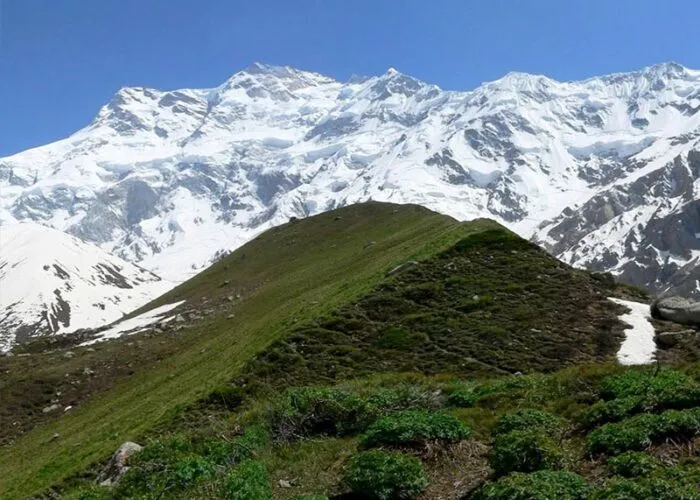
Nanga Parbat — The Killer Mountain
8,126m | The world's largest mountain face
Photo Gallery
The Ninth-Highest Peak on Earth
Nanga Parbat (8,126m) rises dramatically above the Indus Valley in the western Himalayas of Pakistan. Its name means "Naked Mountain" in Sanskrit, a reference to its enormous, exposed flanks that dominate the surrounding landscape. It is also known as "The Killer Mountain" due to the high number of fatalities suffered during early expedition attempts in the 1930s and 1940s, when the mountain claimed dozens of lives before it was finally climbed.
The Rupal Face is the largest mountain face on Earth, rising an astonishing 4,600 metres from its base to the summit — a sheer wall of rock and ice that is visible from over 100 kilometres away. This colossal south face remains one of the most awe-inspiring sights in all of mountaineering. On the western side, the Diamir Face offers a more commonly attempted route, while the northern Rakhiot Face was the scene of the historic first ascent.
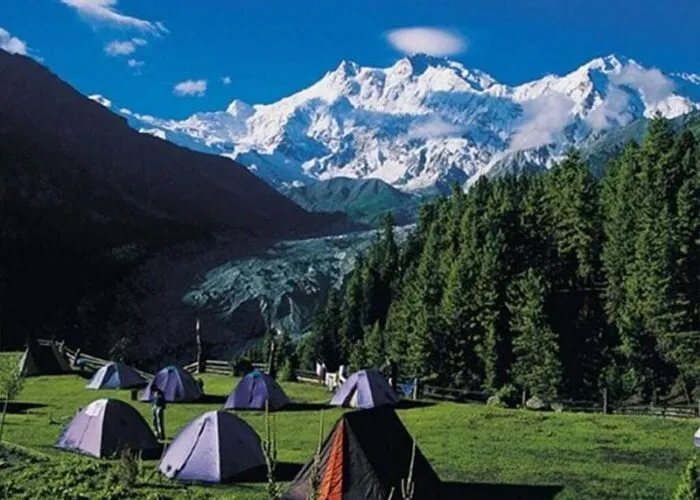
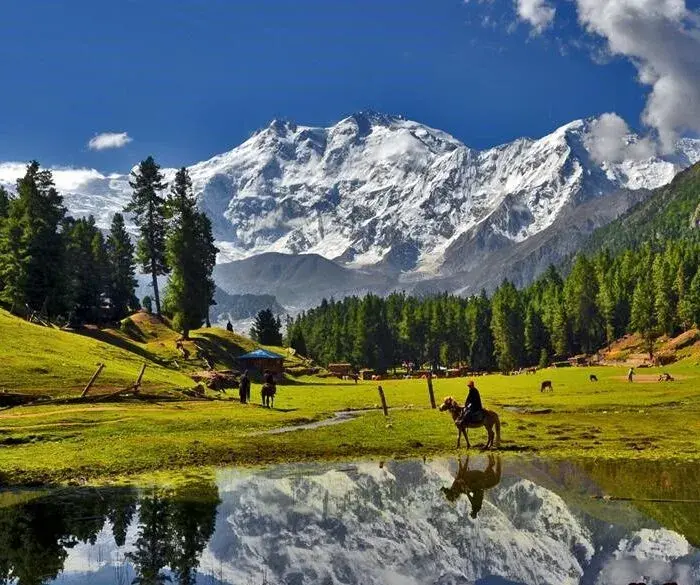
Despite its fearsome reputation, modern expeditions to Nanga Parbat benefit from dramatically improved weather forecasting, better equipment, and experienced local guides who know the mountain intimately. The approach through Fairy Meadows — a stunning alpine plateau at 3,300m with unobstructed views of the Rupal Face — is one of the most beautiful and accessible base camp treks in the Himalaya, making Nanga Parbat a uniquely rewarding expedition both for the climb and the journey to reach it.
Quick Facts
8,126m
Elevation (26,660 ft)
1953
First Ascent (Hermann Buhl, solo)
~22%
Success Rate
Jun–Aug
Best Season
45–55 Days
Duration
Extreme
Difficulty
The Diamir Face Route
The Diamir Face, also known as the Kinshofer Route, is the most commonly attempted route on Nanga Parbat today. First climbed in 1962 by a German-Austrian expedition led by Karl Herrligkoffer, the route ascends the western face of the mountain and offers a more direct line to the summit than the historically significant Rakhiot Face on the north.
The expedition begins with a drive from Chilas along the Karakoram Highway to the Diamir valley, followed by a 2-day approach trek to Base Camp at approximately 4,100 metres. From Base Camp, the route ascends through a series of progressively higher camps: Camp 1 is established at around 4,800m on the lower glacier, Camp 2 at approximately 5,500m on the Diamir flank, and Camp 3 at roughly 6,100m where the route steepens significantly through mixed terrain of ice and rock.
Above Camp 3, the Kinshofer Wall presents the route's main technical challenge — a steep, icy headwall that requires fixed ropes and careful movement. Camp 4 is placed at approximately 6,900m above the wall, and the high camp for summit attempts is established around 7,400m. The summit push from high camp involves a long traverse across the upper slopes, negotiating crevasses and steep snow before reaching the 8,126-metre summit. Clear weather windows are critical, as the exposed upper mountain is highly vulnerable to sudden storms sweeping in from the west.
What's Included
- Expedition permit and peak royalty fee
- Liaison officer and base camp staff
- All camps, tents, and high-altitude equipment
- Supplemental oxygen and medical supplies
- Diamir valley approach trek logistics
- Experienced high-altitude Sherpa team
Join Our Next Nanga Parbat Expedition
Contact us for upcoming expedition dates, detailed itineraries, and pricing information